Breathing Techniques for Kids: A Gentle Guide for Parents
Why Breathing Works
Deep breathing is a powerful tool for children to manage emotions and stress. When a child engages in deep breathing, it activates the vagal nerve, which plays a crucial role in the parasympathetic nervous system. This system helps calm the body by lowering heart rate and blood pressure, creating a feeling of relaxation. Vagal tone is an important aspect of self-regulation, and improving it through deep breathing can enhance a child's ability to manage emotions 1. This article is part of our complete guide to Self-Regulation in Kids: A Parent's Complete Guide.
In my practice, I've observed that children who regularly practice deep breathing exhibit improved focus and reduced anxiety. It's akin to giving them a toolbox with an essential instrument for calming themselves when life feels overwhelming.

Technique 1: Balloon Breath (Ages 3+)
Balloon breathing is a simple yet effective technique that can be introduced to children as young as three. It involves imagining a balloon inflating and deflating in their belly.
How to do it:
- Have your child sit comfortably and place their hands on their belly.
- Ask them to breathe in deeply through the nose, imagining their belly expanding like a balloon.
- Slowly exhale through the mouth, imagining the balloon deflating.
- Repeat 3-5 times.
Situation: This technique works well for general practice and can be used before a meltdown to prevent escalation.
Example: Imagine your child, Aria, is feeling anxious about starting a new preschool. Before leaving home, you guide her through balloon breathing. "Let's blow up our belly balloon, Aria," you say. Together, you inflate and deflate your "balloons," helping her calm her nerves.
Additional Benefits
Balloon breathing not only calms the immediate nerves but also teaches children how to consciously control their breathing. Over time, this practice can enhance their ability to self-soothe in various situations. In my practice, parents have reported seeing their children naturally resort to balloon breathing during stressful moments like doctor's visits or thunderstorms.
Technique 2: Pinwheel Breath (Ages 3+)
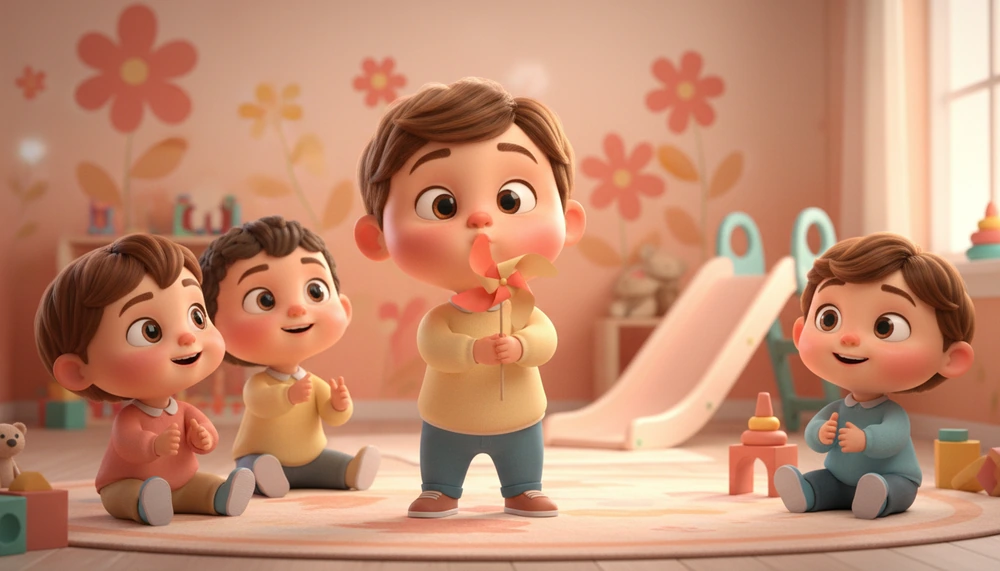
Pinwheel breathing is a fun, visual way to teach deep breathing.
How to do it:
- Give your child a pinwheel.
- Ask them to take a deep breath in through their nose.
- Slowly blow out through their mouth to make the pinwheel spin.
- Repeat several times.
Situation: Ideal for in-the-moment calming, such as during a playdate when emotions run high.
Example: During a playdate, your child, Leo, becomes frustrated. You hand him a pinwheel and say, "Let's see how long we can keep it spinning with our breath." This redirection calms Leo and prevents a meltdown.
Practical Insights
Using a pinwheel is not just fun but also visually stimulates the child, which can be particularly engaging for neurodivergent children who might benefit from visual cues. Parents have noted that having a physical object like a pinwheel makes it easier for children to focus on the act of breathing itself.
Technique 3: Lazy 8 (Ages 5+)
Lazy 8 breathing combines deep breathing with visual tracing, perfect for slightly older children.
How to do it:
- Draw a large figure 8 on a piece of paper.
- Ask your child to trace the 8 with their finger, breathing in as they trace up and out as they trace down.
- Continue for several minutes.
Situation: Great for winding down after an exciting activity.
Example: After a thrilling game of tag, your child, Ethan, is still full of energy. Sitting together, you say, "Let's draw some Lazy 8s to slow down our hearts." Together, you trace the 8s, bringing a sense of calm.
Engagement Tip: Encourage your child to use different colors to trace the Lazy 8 each time, adding an element of creativity to the exercise. This small change can increase their interest and make the activity a part of their routine.
Techniques 4-8 with Ages + Situations
Technique 4: Bumblebee Breath (Ages 4+)
How to do it:
- Sit comfortably and close eyes.
- Inhale deeply through the nose.
- Hum while exhaling, mimicking the sound of a bumblebee.
Situation: Use it for transition times, like moving from play to dinner.
Example: Imagine after playtime, your child is reluctant to come to the dinner table. You suggest, "Let's do our bumblebee buzz to fly to dinner!" This playful approach often results in laughter and a smoother transition.
Technique 5: Rainbow Breathing (Ages 6+)
How to do it:
- Stand and stretch arms above the head.
- As you inhale, arc arms over to one side.
- Exhale and return to center.
Situation: Perfect as a morning energizer.
Technique 6: Starfish Breathing (Ages 4+)
How to do it:
- Spread fingers wide like a starfish.
- Trace each finger with the opposite hand, breathing in as you go up, and out as you go down.
Situation: Helps during bedtime routines.
Example: At bedtime, you say, "Let's count the stars on our hand before we sleep." Using this method, the child focuses on the rhythm of breathing, gradually lulling them into relaxation.

Technique 7: Five-Count Breath (Ages 7+)
How to do it:
- Inhale while counting to five.
- Hold the breath for a count of five.
- Exhale for a count of five.
Situation: Useful during stressful moments at school.
Technique 8: Ocean Breath (Ages 8+)
How to do it:
- Inhale deeply through the nose.
- Exhale while making a "haaa" sound, like ocean waves.
Situation: Ideal for calming down after sports.
What to Do When Your Kid REFUSES to Breathe
During a meltdown, your child might refuse to engage in breathing exercises. Stay calm and model the behavior. Show empathy by acknowledging their feelings, "I see you're feeling upset. I'm here. Let's breathe together when you're ready." Offer choices or a comforting item, like a favorite toy.
Example: In my practice, I've seen many parents struggle with this. One strategy that worked was introducing a "breathing buddy," a small stuffed animal that "breathes" with the child. This made the process more engaging for the child.
- Create a Breathing Routine: Regular practice at calm times makes it feel more natural during stress.
- Use Visuals: Charts or videos can guide children who are visual learners.
Practice Schedule: When to Do It Preventatively
Integrate deep breathing into your child's daily routine to scaffold their ability to self-regulate.
- Morning: Start the day with Rainbow Breathing.
- Before meals: Use Starfish Breathing to transition smoothly.
- Evening: Wind down with Lazy 8s or Ocean Breath.
Creating a regular practice reinforces these skills and prepares them for challenging moments.
Regular practice not only supports emotional regulation but also builds confidence in your child's ability to handle stress. I've seen families who incorporate these practices report a more harmonious household environment.
Try One Now
Encourage your child to try a breathing exercise using our interactive widget. Breathe with me—a simple, guided session that helps children practice in real-time.
References
1 Porges, S. (2011). The Polyvagal Theory — Understanding the Vagal Tone.
2 Brackett, M. (2019). Permission to Feel — Emotional Intelligence in Education.
Try It This Week
Reading is the easy part. Skills build through small, repeated practice — here's a low-pressure plan you can try with your child.
- 1Introduce Balloon BreathDay 1Guide your child through Balloon Breath daily to familiarize them with deep breathing. This helps build a calming routine.👉 What this looks likeIn the morning, after breakfast, say, "Let's blow up our belly balloon before we start our day." Sit together, hands on bellies, and breathe deeply in sync. Repeat 3-5 times. This sets a calm tone for the day.
- 2Use Pinwheel Breath During PlaydatesThis weekBring a pinwheel to playdates and encourage its use to manage excitement or frustration.use this story →👉 What this looks likeDuring a playdate, if emotions run high, hand your child a pinwheel and say, "Let's see how long we can keep it spinning together." This encourages focus and calmness.
- 3Practice Lazy 8 Before BedNightlyUse Lazy 8 breathing before bed to help your child wind down and prepare for sleep.in the SocialBlossom app →👉 What this looks likeAfter bedtime stories, draw an 8 together and say, "Let's trace our Lazy 8s to say goodnight to our busy day." This helps calm their mind for a restful sleep.
- 4Create a Breathing BuddyOnce this weekIntroduce a stuffed animal as a breathing buddy to make exercises more engaging.👉 What this looks likeChoose a favorite stuffed toy and say, "This is Teddy. He needs help with his breaths. Can you show him how we do it?" Guide your child as they demonstrate breathing to their buddy.
- 5Incorporate Rainbow BreathingEvery morningStart the day with Rainbow Breathing to energize and prepare your child for school.👉 What this looks likeStand together, arms stretched. Say, "Let's make a rainbow with our arms as we breathe in and out." This energizes and encourages a positive start to the day.
Frequently Asked Questions
What age can children start learning breathing techniques?
How often should my child practice these breathing techniques?
What if my child refuses to do the breathing exercises?
Can breathing techniques help with anxiety in children?
Are there specific techniques better for bedtime?
References