The SocialBlossom Blog
Research-backed, neurodiversity-affirming parenting guides on social-emotional learning, autism, ADHD, and age-by-age child development.
✨ Latest
Fresh from this week.
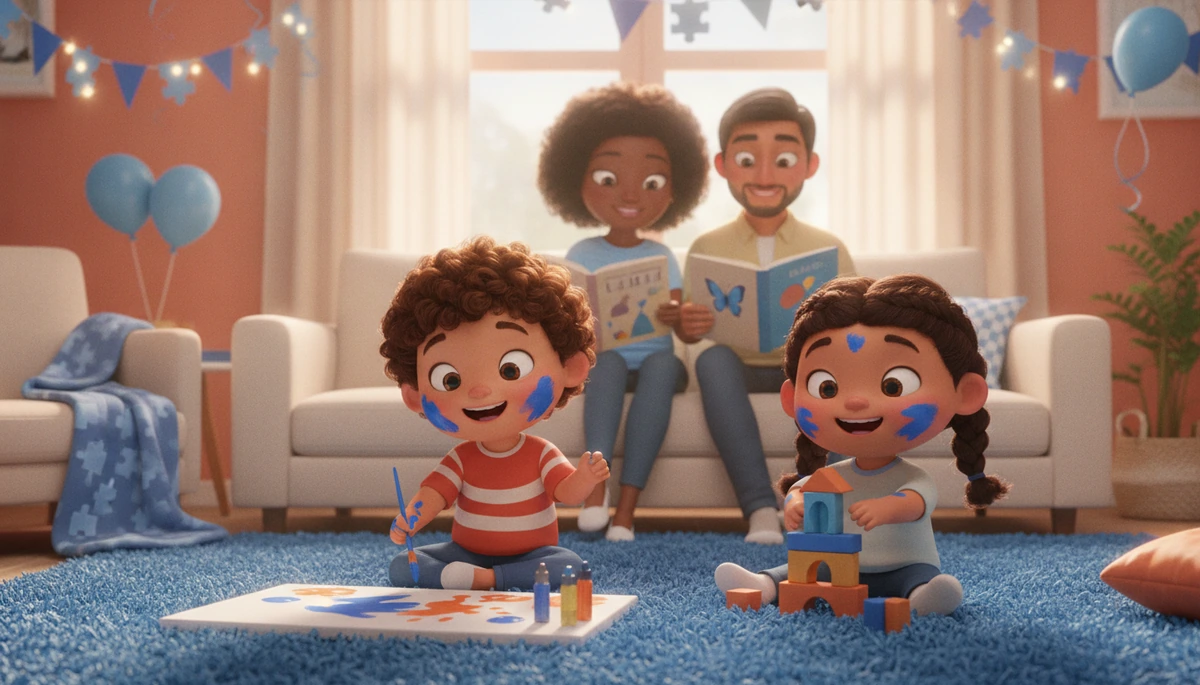
Celebrating World Autism Day: Activities and Resources for Families
World Autism Day on April 2 encourages acceptance and understanding of autism. Families can engage in activities like creating art, reading books, and watching films that promote empathy and inclusivity. Open discussions with children about autism can foster a more accepting environment.

The Role of Better Speech and Hearing Month in Promoting SEL
Better Speech and Hearing Month (BSHM) raises awareness about communication's role in child development, linking speech milestones to social-emotional learning (SEL). This connection highlights how effective communication fosters emotional regulation and relationship building.

Supporting Children's Mental Wellness Through SEL During Mental Health Awareness Month
May is Mental Health Awareness Month, emphasizing the importance of mental wellness for all ages, including children. By integrating Social-Emotional Learning (SEL) into daily routines, families can support children's emotional development, helping them manage stress and build resilience. Engage with practices like mindfulness, gratitude journaling, and reading SEL-focused stories to nurture your child's mental wellness.
Myth-Busting ADHD: Conversations and Support through the SEL Lens
October is ADHD Awareness Month, a time to dispel myths and foster understanding. Through SEL, parents can guide conversations with their children about ADHD, emphasizing empathy, self-awareness, and inclusivity. Learn how to address common misconceptions to support all children effectively.

April: From Autism Awareness to Acceptance in Your Home
Transforming autism awareness into acceptance involves focusing on understanding, embracing neurodiversity, and fostering inclusivity. Engage in activities that highlight your child's unique strengths and encourage open discussions about autism. Utilize resources like storybooks and community events to build empathy and connection at home and beyond.
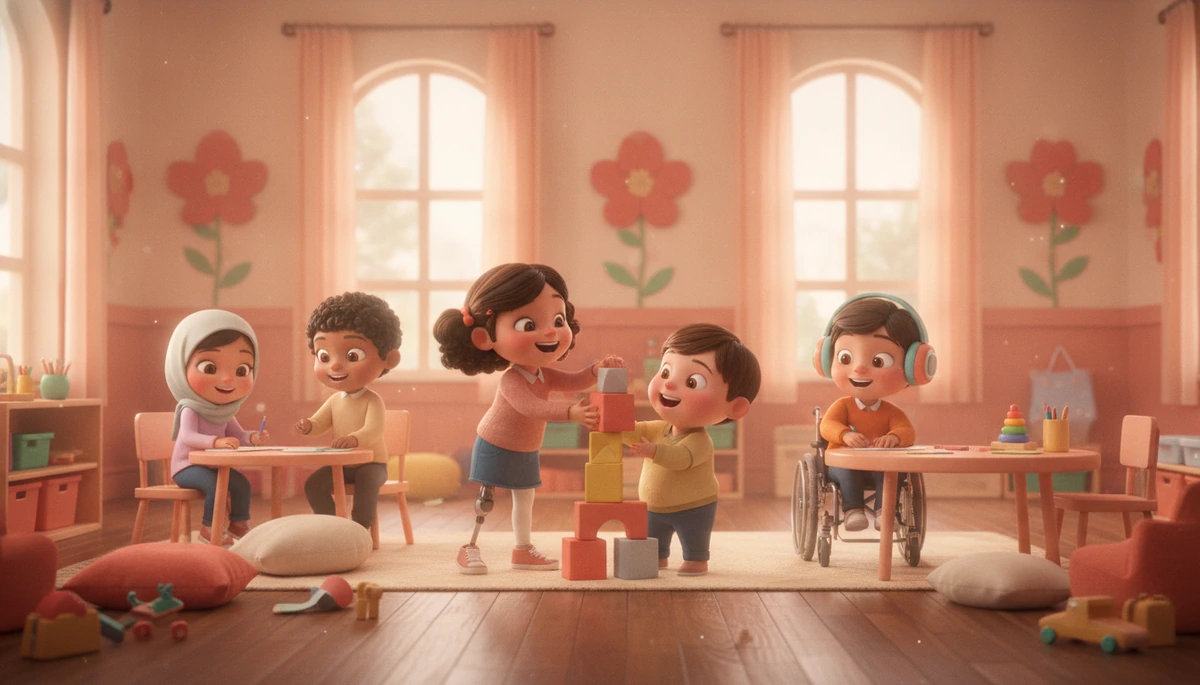
Creating an Inclusive SEL Classroom for Neurodivergent Students
To create an inclusive SEL classroom for neurodivergent students, incorporate anti-masking practices, adapt curricula, and engage culturally responsive methods. Parents can advocate for these changes through communication with educators and involvement in PTA activities.
🌱 The CASEL 5
The 5 core social-emotional competencies every child grows: self-awareness, self-management, social awareness, relationship skills, decision-making.

Guiding Your Child's Moral Development: A Parent's Guide
Guiding your child's moral development involves understanding key theories like Kohlberg's and Gilligan's, and applying age-appropriate strategies. Through empathy, fairness, and ethical reasoning, parents can nurture their child's ethical growth with practical discussions and activities. Discover how to support your child's journey towards becoming a compassionate and principled individual.

Supporting ADHD Impulse Control Through SEL: Strategies for Parents
ADHD impulse control is not about willpower but developmental differences. SEL strategies like pause-prompt-praise and 'If-then' planning can help children manage impulses effectively. Consult your pediatrician if challenges persist.

Nurturing Decision-Making Skills in Children: A Developmental Guide
Decision-making in children evolves through stages. Starting from simple choices at age four to identity-based decisions by twelve, each stage requires unique support strategies. This guide helps parents nurture these skills using age-appropriate activities and examples.

Understanding Natural vs Logical vs Punitive Consequences for Children
Natural consequences naturally occur without intervention, logical consequences require adult involvement and relate to actions, while punitive consequences are unrelated punishments. Understanding these helps guide children toward responsible decision-making and empathy through social-emotional learning.
 Complete Guide
Nurturing Decision-Making Skills in Children: A Guide for Parents
Fostering decision-making skills in children is vital for their growth. By encouraging self-awareness and ethical thinking, and providing opportunities for practice, parents can support their children in making responsible choices. This guide offers strategies to nurture these skills through everyday interactions and social stories.

Fostering Cultural Awareness in Children Through SEL
Cultural awareness, integral to social-emotional learning (SEL), enriches children's understanding and empathy. By engaging in age-appropriate activities, children learn to appreciate diversity, build meaningful relationships, and make responsible decisions.
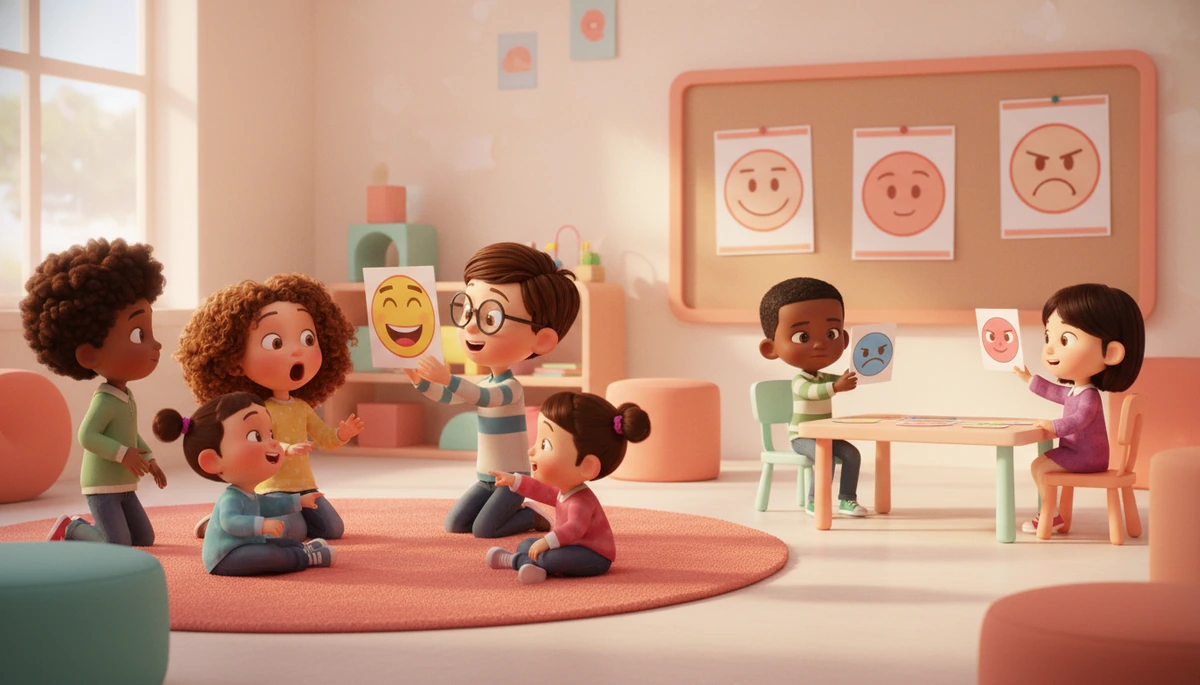
Understanding Facial Expressions: A Guide for Parents of Neurodivergent Children
Learn how to support neurodivergent children in recognizing and interpreting facial expressions. Enhance their social awareness and empathy with practical activities.

Nurturing Empathy in Autistic Children: A Strengths-Based Approach
Autistic children often exhibit profound empathy, though it may manifest differently. By focusing on strengths and employing tools like social stories, parents can nurture empathy without forcing traditional expressions. Understanding cognitive versus affective empathy helps in supporting their unique empathetic expressions.
 Complete Guide
Nurturing Social Awareness in Children: A Guide for Parents
Social awareness in children involves understanding and empathizing with others. Parents can nurture this through empathy-building activities, perspective-taking exercises, and cultural competence. Creating a supportive environment and engaging in practical activities like social stories can enhance these skills.

Understanding Theory of Mind in Neurodiverse Children
Theory of Mind (ToM) helps children understand others' thoughts and feelings. It's crucial for empathy and effective communication. This article explores ToM development, its impact on neurodiverse children, and offers practical strategies to support this essential skill.
Supporting Authentic Social Connections for Autistic Children
Supporting autistic children in forming authentic friendships involves embracing their unique ways of connecting. Encourage special-interest-based friendships, parallel play, and neurodivergent-first connections to help them thrive socially without masking.

Resolving Children's Conflicts with Restorative Practices
Restorative practices guide children in resolving conflicts effectively by enhancing their self-awareness, empathy, and relationship skills. This 5-step framework encourages children to cool down, express themselves, brainstorm solutions, and repair relationships, promoting responsible decision-making and social awareness.
 Complete Guide
Nurturing Social Skills in Neurodivergent Children: A Comprehensive Guide
Social skills are vital for children's development, enabling them to form meaningful relationships. This guide explores SEL strategies to support children, especially those who are neurodivergent, in developing these skills without the pressure to conform.

Teaching Children to Share: Strategies for Building Empathy
Teaching children to share involves recognizing developmental stages and using strategies like the "when you're done" approach. Encouraging empathy and understanding through SEL can lead to more genuine sharing. Learn how to create a supportive environment for children to practice and value sharing as they grow.

Understanding Friendship Skills by Age: A Guide for Parents
Friendship skills evolve significantly from ages 3 to 12, moving from simple playmates to deep, mutual bonds. Understanding these stages helps parents support social-emotional growth through empathy, cooperation, and trust.

Self-Awareness Milestones in Children: A Guide for Parents
Self-awareness in children evolves from early declarations of "mine" at age two to identity exploration by age twelve. Understanding these milestones helps parents support their child's social-emotional development, fostering skills like self-management and responsible decision-making. This guide offers practical strategies and examples.
 Complete Guide
Cultivating Self-Awareness in Children: A Comprehensive Guide
Self-awareness in children involves recognizing emotions and understanding their influence on behavior. It develops through stages from ages 2 to 12, with unique paths for neurodivergent children. Nurturing self-awareness supports emotional regulation, empathy, and decision-making. Explore practical strategies to enhance this vital skill.

Understanding Self-Awareness in Autistic Children Through SEL
Self-awareness in autistic kids often manifests through unique sensory sensitivities and special interests. By embracing these expressions, parents can better support their child's growth. SEL strategies like sensory exploration and personalized social stories enhance understanding and emotional regulation.

Enhancing Body Awareness in Neurodivergent Children: Strategies and Activities
Body awareness is crucial for fostering self-awareness and emotional regulation in children. Through activities like heartbeat detection and hunger/fullness scales, children learn to connect physical sensations with emotions. These strategies, especially beneficial for neurodivergent children, lay the groundwork for improved social interactions and decision-making.

Building Emotional Vocabulary: A Guide for Parents of Neurodivergent Children
Building an emotional vocabulary helps children articulate feelings, fostering self-awareness and emotional intelligence. By introducing age-appropriate feeling words, parents support emotional development and decision-making skills. Neurodivergent children might require tailored approaches, like using social stories to express emotions effectively.
 Complete Guide
Supporting Self-Regulation in Children: Strategies and Insights
Supporting self-regulation in children involves teaching them to manage their emotions, behaviors, and thoughts. Through co-regulation, parents can model calmness and guide children in developing these crucial skills. Activities like deep breathing, mindfulness, and creating calm spaces can further enhance self-regulation, particularly for neurodivergent kids.

Supporting Self-Regulation in Autistic Children: Strategies for Parents
Self-regulation in autistic children can be nurtured through tailored strategies that prioritize sensory needs, leverage special interests, and emphasize co-regulation. Unlike masking or compliance, these approaches empower children to manage their emotions and behaviors genuinely. Explore sensory-first methods and interest-led activities to effectively support your child's self-regulation journey.

Breathing Techniques for Kids: A Gentle Guide for Parents
Teaching kids breathing techniques can enhance their self-regulation and emotional management. Techniques like Balloon Breath and Lazy 8 are simple yet effective for children from ages 3 and up. Regular practice helps integrate these skills into daily routines, aiding children in managing stress and emotions effectively.

Creating a Calm-Down Corner: A Guide to Supporting Your Child's Emotional Regulation
A calm-down corner is a dedicated space with sensory tools and activities that supports children's emotional regulation. Unlike punitive time-outs, it encourages self-awareness and self-management through tailored items like weighted lap pads, emotion charts, and calming activities such as coloring or listening to music. Engage your child in the setup for a personalized experience.

Co-Regulation: Helping Your Child Navigate Emotions
Co-regulation is a supportive process where caregivers help children manage emotions. It's essential for developing self-regulation, providing external guidance as children learn to handle their reactions. Understanding and practicing co-regulation can transform emotional challenges into opportunities for growth and connection.
🧩 SEL for Autistic Kids
Strengths-based, anti-masking, neurodiversity-affirming approaches. Social stories, visual supports, and emotion regulation that respect how autistic kids think.
Empowering Autistic Children: Fostering Self-Advocacy Skills from Age 8
Fostering self-advocacy in autistic children from an early age enhances their social-emotional skills, boosts confidence, and prepares them for future challenges. This article guides parents in teaching kids to articulate their needs and navigate educational settings effectively.

Empowering Autistic Children to Disclose Their Autism Identity
Supporting your autistic child's choice to disclose their autism identity is crucial. Using age-appropriate strategies, from "My brain works differently" to full self-advocacy, can empower them. Role-play and social stories can aid in practicing disclosure, fostering confidence and social awareness.
Navigating Language and Autism: Embracing Identity and Empowerment
Language significantly impacts self-perception, especially in autism. Identity-first language, preferred by many in the autistic community, emphasizes autism as an integral identity aspect. Learn how to discuss autism with your child, encouraging self-awareness and acceptance, and navigate conversations with well-meaning relatives.

Teaching Self-Advocacy: Empowering Kids to Ask for Breaks
Teaching children to ask for breaks is a foundational self-advocacy skill, especially for autistic kids. It empowers them to manage sensory overload and emotional distress, fostering independence and confidence. Explore strategies for both pre-verbal and verbal children, and learn how to honor break requests effectively.
Navigating Peer Conflict Between Autistic and Neurotypical Children
Navigating peer conflict between autistic and neurotypical children involves understanding mutual communication challenges. The concept of 'double empathy' highlights that both groups may struggle to interpret each other's social cues. Employing social stories, open parent communication, and professional support from teachers or SLPs can help bridge this gap. Autistic-only friendships often provide a comfortable environment where shared communication styles foster better understanding.

Supporting Autistic Children in Social Play: A Guide for Parents
Autistic children often experience social play differently. Using SEL frameworks, scripts, and visual aids can help them engage meaningfully without pressure to conform. Recognizing their unique needs supports authentic interactions.
Rethinking Eye Contact: Autistic Communication and Connection
For autistic children, eye contact isn't the sole marker of engagement. They express connection through parallel orientation, shared interests, and more. Understanding these diverse communication styles fosters authentic interactions without the pressure of eye contact.
Understanding Autism Masking: A Guide for Parents
Autism masking involves suppressing autistic traits to fit in socially, often leading to mental health struggles. Parents can support unmasking by creating safe environments, promoting self-awareness, and using social stories to practice communication skills.

Co-Regulation Strategies for Supporting Autistic Children
Co-regulation is vital for autistic children, providing a foundation for emotional development. Parents can support this by managing their own emotions, using effective language, and gradually guiding their child towards self-regulation with patience and professional support.
 Complete Guide
Empowering Autistic Children Through Self-Advocacy: A Comprehensive Guide
Self-advocacy empowers autistic children to express their needs, fostering independence and confidence. By teaching early skills, using social stories, and encouraging identity-first language, parents can support their child's journey to self-advocacy. This guide offers practical strategies for everyday situations and school environments.

Calming Strategies for Autistic Children: Tailoring to Sensory Needs
Autistic children require calming strategies tailored to their unique sensory profiles. Generic advice often fails due to sensory differences. Strategies for sensory seekers include deep pressure activities and swinging, while sensory avoiders benefit from quiet spaces and dim lighting. Personalizing approaches can enhance emotional regulation.

Supporting Autistic Children Through Sensory and Emotional Dysregulation
Sensory dysregulation can lead to emotional challenges for autistic children. Parents can support their children by understanding sensory triggers, building sensory profiles, and using both preemptive and reactive strategies. Consulting an OT can also provide tailored support.

Meltdowns vs. Tantrums: Understanding and Supporting Your Child
Meltdowns and tantrums are distinct in origin and expression. Meltdowns stem from neurological overload, while tantrums are intentional behaviors. Understanding these differences helps parents respond more effectively, using strategies like co-regulation for meltdowns and clear communication for tantrums.
 Complete Guide
Fostering Genuine Social Skills in Autistic Children: A Guide to Avoiding Masking
Developing social skills in autistic children involves respecting their unique communication styles. By focusing on genuine interactions, shared interests, and supportive tools like visual aids and technology, we can foster an environment where autistic children feel valued and understood, enhancing their social skills without the harmful effects of masking.
Empowering Autistic Children Through Choice Boards: An SEL Approach
Choice boards are powerful tools for promoting autonomy and decision-making in autistic children. By offering structured choices, choice boards help children express preferences, build self-awareness, and foster responsible decision-making within the framework of social-emotional learning.
Visual Schedules for Neurodivergent Kids: A Path to Independence
Visual schedules help neurodivergent kids by providing structure and predictability, enhancing self-management and decision-making skills. Tailoring these schedules to the child's needs and preferences, while involving them in the process, can increase effectiveness. Consult professionals for personalized strategies.

Using First-Then Boards: A Simple Guide to Supporting Autistic Children
First-Then boards offer a straightforward visual aid to help autistic children manage transitions and routines. They simplify communication by focusing on immediate tasks, reducing anxiety and enhancing predictability. These boards support SEL competencies by promoting self-management and responsible decision-making in everyday scenarios.
 Complete Guide
Supporting Emotional Regulation in Autistic Children: A Comprehensive Guide
Supporting emotional regulation in autistic children involves understanding their unique responses to stimuli, distinguishing meltdowns from tantrums, and using sensory-aware strategies. Through co-regulation and structured environments, parents can foster emotional awareness and help children develop self-management skills. Explore tools and stories to aid this journey.

Emotion Charts for Autistic Kids: SEL-First Alternatives
Emotion charts tailored for autistic kids can enhance emotional understanding. Alternatives like the 5-Point Scale and body sensation maps support SEL competencies. These tools help children recognize, label, and manage emotions, fostering self-awareness and decision-making.
Understanding Social Stories vs. Visual Schedules for Autism Support
Social stories and visual schedules are tools for supporting autistic children. Social stories teach social concepts through narratives, while visual schedules outline steps for daily tasks. Knowing when to use each can enhance your child's social-emotional growth.

Using Social Stories to Help Autistic Children Identify and Manage Emotions
Social stories are effective tools for helping autistic children identify and manage their emotions. These narratives use simple language and illustrations to explain emotions like anger, sadness, and fear. By incorporating co-regulation strategies, parents can further support their child's emotional development. Customizing stories to address specific triggers enhances their impact.
 Complete Guide
Harnessing the Power of Visual Supports for Social-Emotional Learning in Autistic Children
Visual supports, such as schedules and choice boards, enhance social-emotional learning in autistic children by promoting skills like self-awareness, self-management, and decision-making. These tools help children navigate daily interactions and foster independence.

Using Social Stories to Ease Transitions for Autistic Children
Social stories help autistic children navigate transitions by providing structured narratives that reduce anxiety. They align with SEL competencies, promoting self-awareness and self-management. By introducing social stories early, parents can prepare their children for new experiences, fostering a sense of security and capability.
Crafting Effective Social Stories: A Guide for Parents
Social stories help autistic children navigate social situations by providing clear, respectful guidance through descriptive, perspective, directive, and affirmative sentences. Tailor stories to your child's needs by setting clear goals, understanding their perspective, and using visuals. Avoid common pitfalls like being too directive or generic.
 Complete Guide
How Social Stories Enhance Emotional and Social Learning for Autistic Children
Social stories are tailored narratives that support autistic children in understanding social cues and managing emotions. By integrating these stories into daily routines, children can develop key SEL competencies like self-awareness and relationship skills. Effective social stories use descriptive, directive, and affirmative sentences to guide behavior in a positive, supportive way.
⚡ SEL for Kids with ADHD
Emotional regulation, executive function, self-esteem, and friendships through the ADHD lens — practical and shame-free.
Understanding Homework Shame in ADHD: An SEL Approach
Homework often triggers shame in ADHD children due to rejection-sensitive dysphoria. Parents can support their kids by recognizing early signs of distress, using strategies like movement breaks and co-regulation, and maintaining open communication with teachers.

ADHD Homework Strategies: Finding the Right Balance for Your Child
Supporting a child with ADHD in homework involves a delicate balance. Provide enough guidance to prevent overwhelm but allow independence to foster self-regulation and problem-solving skills. Tailor your approach to your child's age and needs, and don't hesitate to consult with teachers if the workload is excessive.
Breaking Down Homework: An SEL Approach to Support Kids with ADHD
Breaking down homework into smaller tasks can help kids with ADHD manage stress and improve self-regulation. Using chunking, visual planners, and visible progress tools like checklists or sticker charts, parents can support their children in building executive functions and achieving homework success. Empowering children to take control of their task management leads to greater independence and confidence.

Harnessing the Power of Body Doubling for Kids with ADHD
Body doubling involves having another person present to help children with ADHD stay focused and manage tasks better. This technique taps into social-emotional learning by providing external regulation and fostering independence over time. Parents or siblings can serve as effective body doubles, offering support and reducing anxiety.

Understanding ADHD Behaviors Misread as Rudeness: A Guide for Parents
Children with ADHD may appear rude due to behaviors like interrupting or fidgeting. These actions are often misinterpreted but reflect neurological challenges rather than intentional disrespect. Understanding and supporting your child through SEL can improve their social interactions.

Understanding Social Cues: Differentiating ADHD and Autism in Children
ADHD and autism affect social cue reading differently in children. ADHD may cause missed cues due to distraction, while autism can lead to misinterpretation. This article explores strategies to support social development, including games and real-world practice.

Navigating Friendships: Supporting Children with ADHD in Building Strong Connections
Children with ADHD face unique challenges in forming friendships due to impulsivity and emotional regulation difficulties. By focusing on SEL competencies like self-awareness and relationship skills, parents can guide their children in building and maintaining strong friendships. Supportive peers and structured group activities can further enhance these skills.

Supporting ADHD Children with Interruptions: An SEL Approach
Interruptions in ADHD children often stem from executive function challenges, not rudeness. Using SEL strategies like visual cues and supportive scripts can help children manage impulses and improve social interactions.
Why 'Lazy' is Never the Right Word for ADHD: Supporting Children with Compassion
Labeling children with ADHD as 'lazy' disregards their executive function challenges. Use supportive language and practical strategies to nurture self-esteem and growth.
Decoding ADHD and Dyslexia: Effective SEL Strategies for Parents
ADHD and dyslexia often co-occur, affecting many children. Understanding their overlap helps in crafting effective support strategies. Incorporating SEL principles can aid in managing challenges, fostering self-esteem, and enhancing learning. Learn how to identify specific needs, create IEP/504 plans, and utilize school accommodations.

Recognizing and Nurturing ADHD Strengths: A Guide for Parents
Explore how a strengths-based approach to ADHD can transform parenting. Focus on creativity, hyperfocus, and justice sensitivity to build self-esteem and empower your child.

The Power of Positivity: Transforming Negative Feedback for Children with ADHD
Children with ADHD often hear negative feedback, impacting their self-image. By implementing a 5:1 positive-to-negative comment ratio, parents can help enhance self-esteem and emotional regulation.

Supporting ADHD Transitions with SEL: Strategies and Insights
Children with ADHD often struggle with transitions due to executive function challenges. Supporting them through SEL strategies, such as the 5-minute warning, visual aids, and transition rituals, can make these changes smoother and less stressful.

Understanding ADHD Task Initiation Challenges: A Guide for Parents
Children with ADHD often experience task initiation challenges due to neurological differences, not laziness. Understanding the role of dopamine, using strategies like body doubling, and celebrating task starts can support them. This guide offers practical tools to help ADHD kids begin tasks and build confidence.
 Complete Guide
Supporting ADHD Homework Challenges with Social-Emotional Learning
Homework can be challenging for ADHD children due to difficulties with executive function and emotional regulation. By integrating social-emotional learning (SEL) strategies, parents can transform homework time into an opportunity for growth. Techniques like breaking tasks down, using visual aids, and practicing emotional regulation can foster independence and resilience.

Supporting Kids with ADHD: Making Time Tangible
Children with ADHD often experience time blindness, making it hard to perceive or estimate time accurately. Support them by using visual tools like Time Timers and analog clocks, incorporating games to develop time estimation skills, and establishing routines with visual schedules. Consultation with a pediatrician can also help explore medication options for managing symptoms.
Enhancing Working Memory in Children with ADHD: Practical Strategies
Working memory is essential for learning and daily tasks in children with ADHD. Strengthening this skill involves using visual aids, daily exercises, school accommodations, and consulting professionals. This article provides practical strategies and emphasizes the importance of SEL skills in supporting working memory development.

Managing ADHD and Anxiety: A SEL Approach for Parents
ADHD and anxiety often overlap in children, creating unique challenges. Understanding these conditions through a Social Emotional Learning (SEL) lens helps parents support emotional regulation and self-awareness, vital for managing both ADHD and anxiety. Strategies like incorporating movement, establishing predictability, and using accommodations can aid in managing these conditions effectively.
 Complete Guide
Enhancing Social Skills in Children with ADHD Through SEL
Children with ADHD can improve social skills through SEL strategies like mindful listening, emotional regulation, and empathy-building. These approaches support children in forming meaningful relationships by focusing on self-awareness and management. Parents and educators play a crucial role in guiding this development, fostering a supportive environment for growth.

Understanding ADHD Meltdowns: Effective Strategies for Parents
ADHD meltdowns differ from tantrums and autistic meltdowns, often arising from emotional dysregulation. Understanding these differences and employing strategies like movement, sensory tools, and post-meltdown recovery can help manage these episodes. Building routines and using SEL practices are key in reducing their frequency over time.
Embracing Barkley's 30% Delay Rule for Children with ADHD
Barkley's 30% delay rule helps parents understand why children with ADHD often appear emotionally younger than their peers. This perspective is crucial for adjusting expectations and providing appropriate support, emphasizing empathy and strategic intervention. Learn how to tailor strategies across different ages to enhance emotional regulation skills in children with ADHD.

Understanding Rejection Sensitive Dysphoria in Children with ADHD
Rejection Sensitive Dysphoria (RSD) is a heightened emotional response to perceived rejection, often seen in children with ADHD. Understanding RSD can help parents support their children's emotional resilience through social-emotional learning (SEL) strategies. This involves recognizing emotions and developing coping mechanisms to manage these intense feelings effectively.
 Complete Guide
Building Self-Esteem in Kids with ADHD: A Parent's Guide
Boosting self-esteem in kids with ADHD requires understanding their unique challenges and strengths. By focusing on positive reinforcement, self-awareness, and social-emotional learning, parents can help their children build confidence and resilience. Key strategies include acknowledging achievements, fostering supportive environments, and using social stories to model positive interactions.
 Complete Guide
Enhancing Executive Function Skills in Children with ADHD: A Guide for Parents
Enhancing executive function skills in children with ADHD involves improving working memory, time management, task initiation, emotional regulation, and planning. Through SEL strategies and practical examples, parents can effectively support their child's growth and success.
 Complete Guide
Emotional Regulation Strategies for Children with ADHD: A Comprehensive Guide
Children with ADHD often struggle with emotional regulation, experiencing intense feelings like anger and frustration. By understanding these challenges and using SEL strategies, parents can support their kids in managing emotions effectively. Techniques like breathing exercises, co-regulation, and social stories can help build self-management skills.
📈 SEL by Age
Toddler · Preschool · Early Elementary · Late Elementary · Tween. What's typical, what helps, and when to worry.

Empowering Tweens: The Art of Boundary-Setting through SEL
Tweens are at a key developmental stage where setting boundaries is vital for their social-emotional learning (SEL). Encouraging privacy, body autonomy, and time management helps children develop self-awareness and responsible decision-making. Support your tween's independence while maintaining connection through open communication and empathy.
Helping Your Tween Navigate Social Media Through SEL
Navigating social media can be challenging for tweens. Equip them with essential social-emotional learning (SEL) skills before they enter this digital space. Focus on developing self-awareness, responsible decision-making, and privacy management to help them interact positively and safely online.

Understanding Tween Mood Swings: A Parent's Guide Through Social-Emotional Learning
Tween mood swings arise from rapid brain development, especially in the limbic system and prefrontal cortex. Understanding these changes helps parents support their children with empathy and effective communication strategies.

Understanding Tween Identity Formation: A Guide for Parents
Tween identity formation is crucial during the ages of 11-13, as children explore who they are. Support this journey by understanding their need for self-expression through choices in hair, clothes, and music. Open conversations, provide space for exploration, and maintain connections to help tweens discover their identities safely and confidently.

Navigating Early Puberty: Supporting Your Child's Emotional Journey
Early puberty can affect a child's self-awareness and emotional well-being. Support your child by fostering open conversations, understanding their feelings, and encouraging positive body image. Recognize the difference between puberty-related mood swings and anxiety. Use SEL skills to help children navigate these changes confidently.

Navigating Cliques and Social Dynamics for Kids Aged 8-11
Children aged 8-11 often form cliques to explore social identity and belonging. This phase is crucial for developing self-awareness and social skills. Parents can support their children by recognizing normal versus concerning behaviors, encouraging resilience, and fostering inclusive interactions. Collaborate with schools for additional support.

Navigating Self-Esteem Dips in Children Aged 8-10: An SEL Approach
Children aged 8-10 often experience a dip in self-esteem due to increased social awareness. SEL strategies, like focusing on strengths and fostering mastery experiences, can support them through this phase. Reinforce unique qualities, encourage new activities, and use strengths-based parenting to nurture confidence.

Understanding Anxiety in Tweens: A Social-Emotional Learning Approach
Anxiety often resurfaces in tweens aged 8-10 due to cognitive and emotional development. Key strategies include validating feelings, using cognitive techniques, and encouraging physical activities. Social-Emotional Learning (SEL) provides a framework for parents to support their children effectively. Consult professionals when needed.
Understanding Childhood Anxiety: A Guide for Parents of 5-8 Year Olds
Children aged 5-8 often face increased anxiety due to social and academic pressures. Understanding this through an SEL lens helps in supporting them effectively. Techniques like the 'worry brain' and setting a daily 'worry-time' can assist children in managing their fears. Always consult a pediatrician if anxiety affects daily life.

Teasing and Bullying: How to Support Your Child Through Early Elementary Challenges
Understanding the difference between teasing and bullying is critical for parents of children aged 5-8. Bullying involves repeated, intentional harm with a power imbalance, while teasing can be playful or harmful. Learn how to support your child by recognizing signs, involving schools, and building resilience through SEL activities.
Navigating School Anxiety and Refusal in Early Elementary
Understanding the distinction between school anxiety and refusal is crucial for parents. While anxiety involves worry about attending school, refusal is an active avoidance due to deeper issues. Early support is key, using SEL strategies to guide your child through these challenges.
Understanding Early Friendships: SEL Insights for Parents
Children aged 6-8 develop important social-emotional skills through friendships. Understanding Selman's stages helps parents guide their kids through friendship dynamics. Supporting conflict resolution and promoting mutual sharing are key strategies for fostering healthy relationships.

Why Your 4-Year-Old is Lying: A Developmental Milestone
Lying in 4-year-olds is often a sign of developing Theory of Mind, a cognitive milestone. It shows they understand that others have different beliefs and perspectives. Parents can guide children toward honesty by fostering open communication, modeling honesty, and using social stories to reinforce truthful behavior.
Understanding Preschool Friendships: A Parent's Guide to SEL
Preschool friendships evolve through stages from 'momentary playmates' to budding reciprocity. Supporting your child's social-emotional development involves understanding these stages, encouraging parallel play and turn-taking, and using social stories to teach empathy and cooperation.

Supporting Preschoolers' Big Feelings through SEL
Preschoolers often experience intense emotions due to their developing brains. Utilizing tools like Buron's 5-Point Scale and emotion thermometers, parents can help children understand and regulate their feelings. Celebrating small emotions and using co-regulation techniques are also key strategies in supporting emotional growth.

Imaginary Friends and Your Child's Social-Emotional Development
Imaginary friends, common in preschoolers, foster social-emotional growth by enhancing creativity, empathy, and communication. They help children practice theory of mind skills, vital for understanding others' perspectives. Parents should support this play while knowing when to step back. Imaginary friends usually fade as real friendships develop, marking social maturity.

Fostering Social Skills Through Parten's Stages of Play
Parten's stages of play offer a roadmap for understanding social development in children. From solitary play's independence to cooperative play's teamwork, each stage is crucial. Recognizing these phases helps parents support their child's social-emotional growth effectively.

Understanding Toddler Tantrums Through Social-Emotional Learning
Toddler tantrums are a normal part of development, reflecting emotional overwhelm. Using SEL strategies, parents can learn to co-regulate with their child, identify triggers, and repair emotional connections post-tantrum. Consult a pediatrician if tantrums are unusually frequent or intense.
Helping Toddlers Name Their Feelings: A Guide for Parents
Teaching toddlers to name their feelings supports social-emotional learning (SEL) by fostering self-awareness and communication skills. Start with basic emotion words like "happy" and "sad" by age 1, and gradually introduce more complex terms as they grow. Use techniques like the "sportscaster" approach to model empathy and understanding.
 Complete Guide
Navigating Tween Emotional Development: A Guide for Parents
Tween emotional development involves identity exploration, mood swings, and technology's impact. Parents can support through open dialogue, modeling emotional regulation, and encouraging peer relationships. Engaging in SEL activities helps build empathy and decision-making skills. This guide explores key areas to help parents navigate this crucial stage.

Navigating the Toddler 'No': Fostering Autonomy and Building Decision-Making Skills
Toddlers saying 'no' is a normal developmental phase marking autonomy. By respecting their 'no' and offering choices, parents can foster decision-making skills while ensuring safety and teaching boundaries. This approach supports their growing independence and self-awareness.
 Complete Guide
Social Emotional Learning for 8-11 Year Olds: A Comprehensive Guide
Social emotional learning (SEL) during the late elementary years involves developing empathy, self-regulation, and complex social skills. This guide explores typical milestones, potential challenges, and practical activities to support your child's growth. Understanding these dynamics can help parents nurture their child's emotional and social well-being.
 Complete Guide
Supporting Social Emotional Learning in Early Elementary Years
Children aged 5-8 develop crucial social emotional skills through increased empathy, emotion regulation, and complex friendships. Parents can support this growth by engaging in activities like emotion charades and storytime discussions. Understanding social cues and managing school anxiety are common challenges, but with guided support, children can thrive.
 Complete Guide
Nurturing Preschoolers' Social-Emotional Skills: A Comprehensive Guide
Preschoolers experience rapid social-emotional growth between ages 3 to 5. This guide explores the development of empathy, emotional expression, and social interactions. Learn about key milestones, engaging activities, and the vital role parents play in supporting their child's SEL, fostering lifelong skills.
 Complete Guide
Nurturing Toddler Emotional Development: A Guide for Parents
Toddler emotional development is a crucial phase where children learn self-awareness and co-regulation. By recognizing and validating their emotions, engaging in parallel play, and using social stories, parents can support their toddler's emotional growth effectively. This guide offers strategies and examples to aid parents in navigating this developmental stage.
🛠 Tools for SEL Practice
Social stories, emotion charts, visual schedules, mindfulness, role-play. The how-to of teaching SEL skills.

Understanding the Transition from Pretend Play to Other Forms of Play
As children age, pretend play naturally fades around 9-11 years, making way for structured activities like story-writing, video games, and nuanced role-play in friendships. These new forms of play continue to support social-emotional learning by enhancing skills such as empathy, communication, and problem-solving.
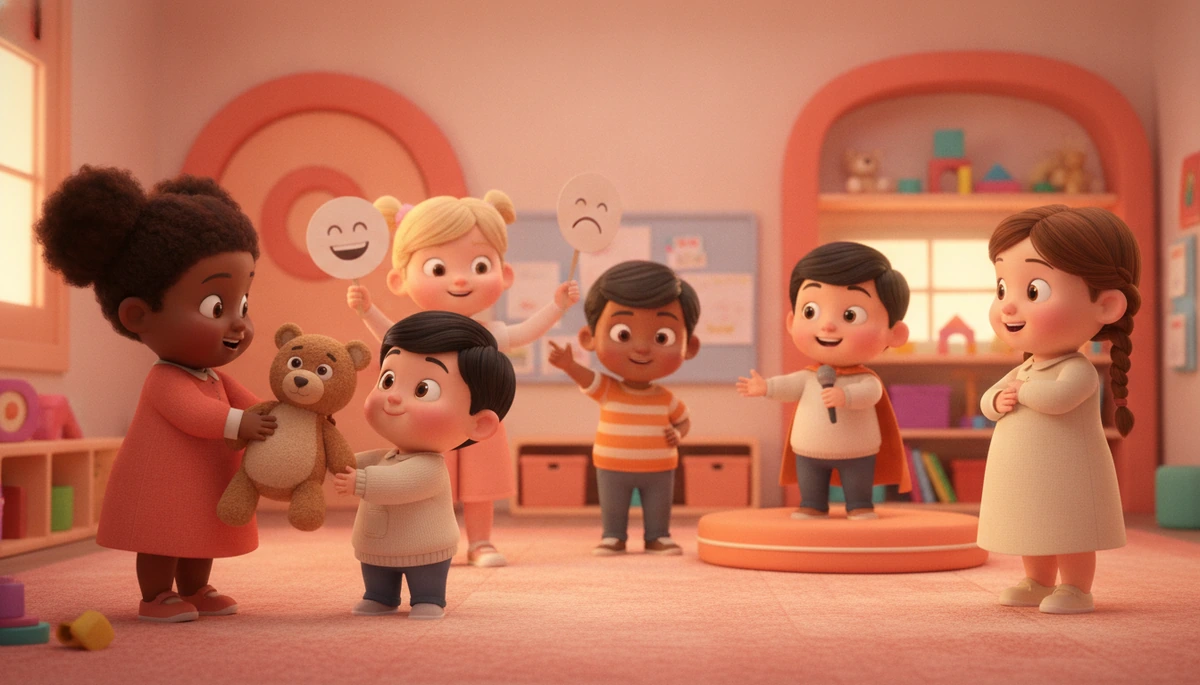
Mastering Difficult Conversations: Role-Play Scripts Every Child Should Know
Role-playing helps children master difficult conversations by developing key social-emotional skills like empathy and effective communication. Key scripts include real apologies, asking for help, saying no, and handling exclusion, which teach self-awareness, social awareness, and relationship skills. Parents can practice these with their children to enhance confidence and social interactions.
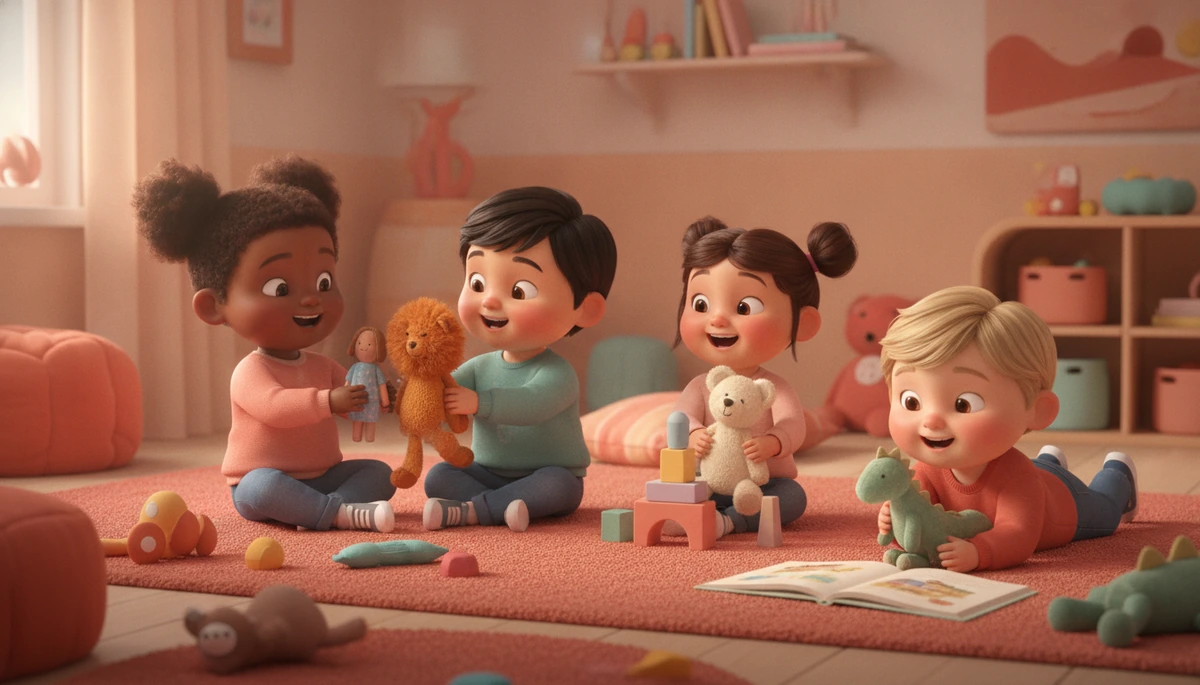
Dolls and Stuffed Animals: Essential Tools for Social-Emotional Learning
Dolls and stuffed animals are valuable tools for developing social-emotional skills in children. They offer a safe space for exploring emotions, practicing empathy, and enhancing self-awareness. Incorporating these toys into playtime can significantly support a child's emotional growth and understanding of social dynamics.
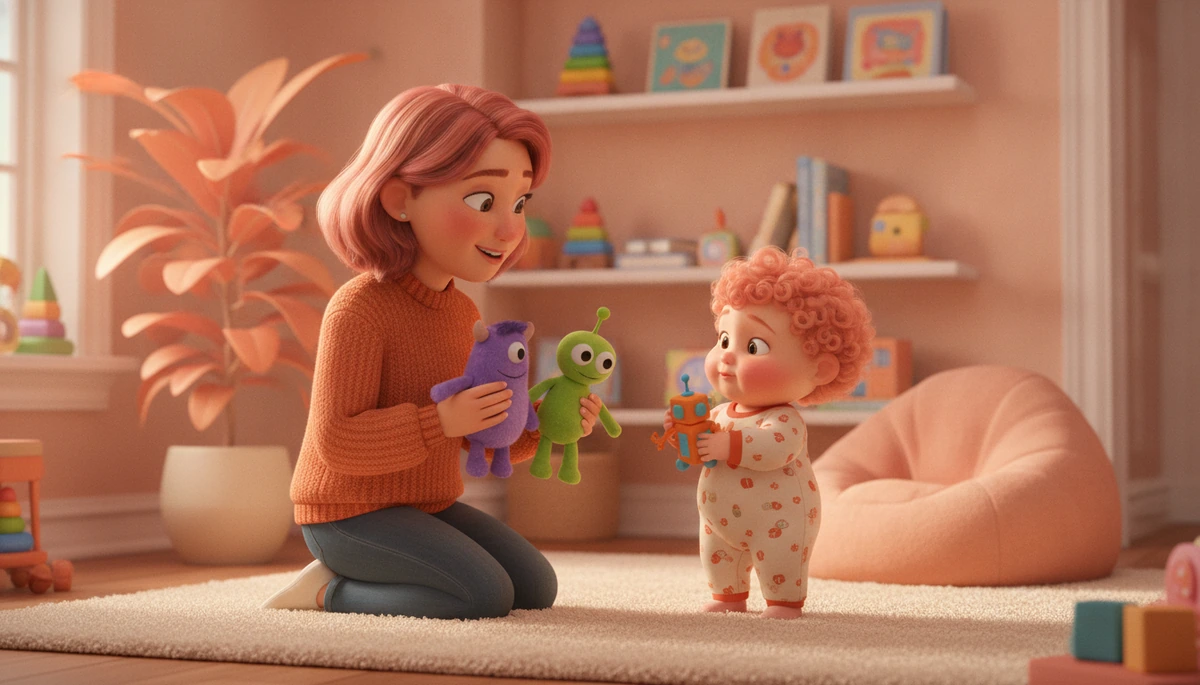
The 3-Step Role-Play Method for Social-Emotional Learning
The 3-step role-play method enhances social-emotional learning by replaying real situations, introducing variations, and applying skills in real life. This approach helps children internalize social skills, build resilience, and adapt to different interactions effectively. Learn how to implement this method with practical examples and tips.

Mindfulness and Deep Breathing: Choosing the Right Tool for Emotional Support
Mindfulness builds self-awareness over time, enhancing emotional regulation and empathy. Deep breathing offers immediate relief in stressful situations by calming the nervous system. Combining these techniques can provide both quick stress relief and long-term emotional resilience. Choose based on the situation's needs.

Mindfulness for ADHD Kids: Realistic Expectations and Strategies
Mindfulness can aid ADHD kids in emotional regulation and focus when combined with tailored strategies. Short, engaging exercises and movement are key. It's not a cure but a valuable tool in a broader support system. Explore practical ways to integrate mindfulness effectively.

Body Scans for Kids: Enhancing SEL Through Mindfulness
Body scans are mindfulness exercises that help children develop interoception, the awareness of internal body sensations. These scans support social-emotional learning by enhancing self-awareness and self-regulation. Tailored for different ages, body scans can be fun and engaging while promoting emotional understanding and management.

Mindfulness for Kids: Movement, Stories, and the Power of Adaptation
Traditional meditation doesn't suit children's active minds. Instead, adapt mindfulness through movement-based and sensory activities. Use stories to wrap mindfulness in engaging narratives, enabling kids to connect better with the practice and enhance their social-emotional learning.

Adapting Visual Schedules for Neurodivergent Children
Visual schedules must be customized for each child's needs, especially for neurodivergent children. Autistic kids may thrive on detailed schedules, while neurotypical and ADHD children often benefit from simpler or brief versions. Adjust schedules to foster independence and adapt during transitions.
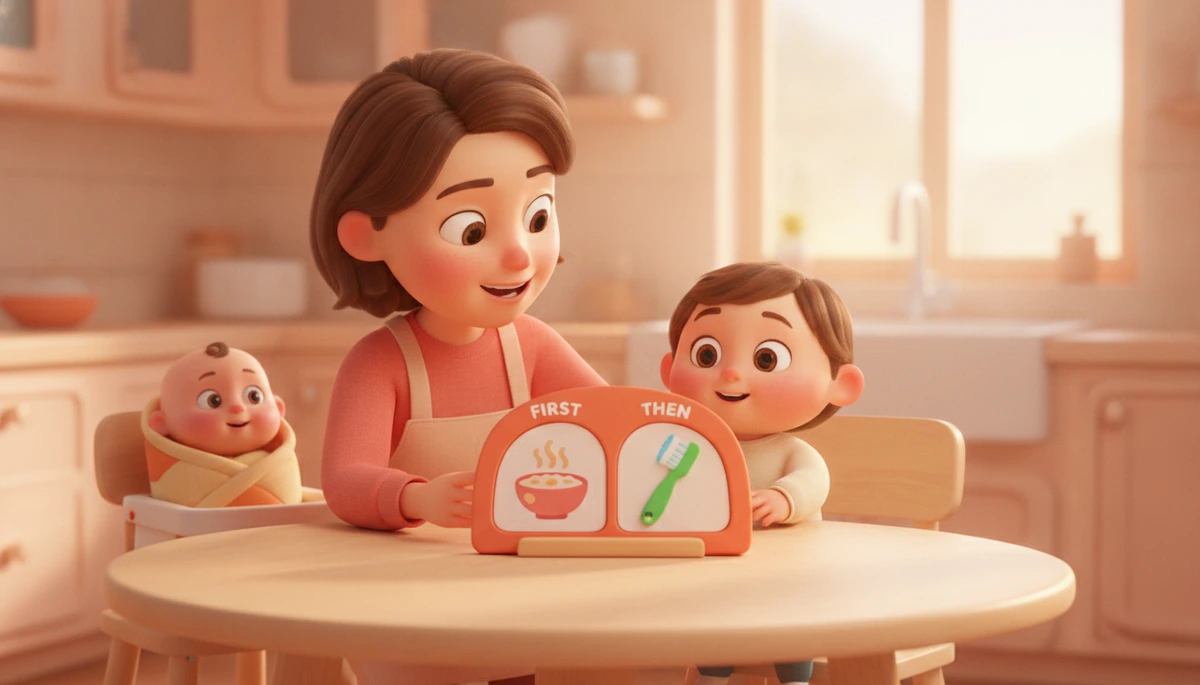
Harnessing the Power of First-Then Boards for Children
First-then boards are visual tools that help children, especially those who are neurodivergent, manage transitions and routines by providing clear, simple steps. These boards reduce anxiety, support emotional regulation, and can be adapted for various daily activities such as mealtimes and bedtimes. Explore practical strategies to implement them effectively.

Creating a Holistic Bedtime Routine for Neurodivergent Children
Transform bedtime routines with a calm-down arc, focusing on self-regulation and emotional awareness for neurodivergent children. Discover practical steps and real-life examples to create a peaceful bedtime experience.

Crafting the Perfect Morning Routine Visual Schedule for Neurodivergent Children
A morning routine visual schedule can help neurodivergent children start their day smoothly. By using age-appropriate visual aids like icons or words, introducing the routine during calm times, and adapting strategies for ADHD or autism, parents can create a supportive environment. Download our free templates to get started.

Emotion Charts for Autistic Kids: Personalized Approaches for Better Emotional Understanding
Standard emotion charts often fail autistic children due to difficulties with facial recognition and interoception. Personalized approaches, such as the 5-point scale and body sensation maps, offer more effective alternatives. These methods accommodate individual needs and interests, enhancing emotional understanding and expression.

Using Emotion Charts to Support Your Child's Emotional Development
Emotion charts are effective tools for children to identify and express emotions. They are age-appropriate, visually engaging, and foster self-awareness. Use these charts to enhance your child's emotional vocabulary and understanding.

The Power of Daily Emotion Check-Ins for Kids: A Guide for Parents
Daily emotion check-ins help kids develop self-awareness and social skills by fostering consistent emotional awareness. Short, regular routines like morning and bedtime check-ins support emotional growth and relationship skills. Use tools like emotion charts for non-verbal children to ensure meaningful participation.

How to Use Plutchik's Emotion Wheel to Support Young Children's Emotional Development
Plutchik's Emotion Wheel helps children articulate and understand their emotions. For young kids, simplified versions of the wheel aid in emotional expression. As they grow, more complex versions can be introduced to enhance their emotional literacy.
The Essential SEL Tools for Supporting Neurodivergent Children
Social-Emotional Learning (SEL) tools like social stories, visual schedules, and role-play are vital for supporting neurodivergent children. These tools help teach concepts, sequence steps, and practice behaviors, enhancing self-awareness and social skills. By using tools like first-then boards and emotion charts, parents can support their child's emotional and social development effectively.
Harnessing Social Stories for Neurodivergent Children's SEL
Social stories are essential tools for enhancing SEL in neurodivergent children. By using structured narratives, parents can support their child's self-awareness, self-management, and social skills. Explore strategies and examples to integrate these stories effectively into daily routines, transitions, and emotional management.

How to Create Social Stories for Children: A Step-by-Step Guide
Learn to write social stories using Carol Gray's method to support your child's social-emotional learning. This guide walks you through each step, from selecting a situation to reading aloud, ensuring your child is prepared for new experiences.
Creating Effective Social Stories with Carol Gray's 10.2 Criteria
Carol Gray's 10.2 criteria guide parents in crafting effective social stories for neurodivergent children. These criteria ensure stories are goal-oriented, structured, inclusive, and reviewed for clarity, fostering social-emotional learning (SEL).
 Complete Guide
Unleashing Potential: Role Play Activities for Kids and SEL
Role play activities for kids are essential for developing social-emotional learning (SEL) skills. They allow children to explore emotions, practice communication, and build empathy in a safe environment. Structured play activities enhance understanding of emotions, improve problem-solving skills, and prepare children for real-life interactions.
 Complete Guide
Mindfulness for Kids: A Practical Guide for Parents
Mindfulness for kids is crucial in developing self-awareness and emotional regulation. Tailor practices to engage children through movement and creativity, such as mindful breathing and visualization techniques. Integrating these into daily routines can enhance emotional and social skills.
 Complete Guide
Mastering Visual Schedules: A Comprehensive SEL Guide for Parents
Visual schedules help children manage daily routines by providing structure and predictability. They support SEL by enhancing self-management and reducing anxiety. While beneficial, they should be flexible to avoid rigidity. Explore practical tips and templates.
 Complete Guide
How to Use Emotion Charts and Wheels to Support Your Child's Emotional Growth
Emotion charts and wheels are effective tools for helping children articulate and manage their emotions. By integrating these tools into daily routines and customizing them for neurodivergent needs, parents can foster emotional intelligence and social-emotional learning (SEL) in their children.
 Complete Guide
Mastering Social Stories for Social-Emotional Learning: A Comprehensive Guide
Social stories are powerful tools for teaching social-emotional skills to neurodivergent children. Based on Carol Gray's 10.2 criteria, these stories help children understand social scenarios and respond appropriately. Learn how to craft and use them effectively for your child's SEL needs.
🏠 SEL at Home
Routines, mealtimes, siblings, screen time, parent co-regulation, and discipline without damage.

Setting Limits with Compassion: A Guide for Neurodiverse Families
Setting limits with neurodiverse children is about kindness and guidance, not punishment. Using empathy and communication, parents can establish boundaries that foster safety and emotional growth. Techniques like the "I won't let you" template help maintain these limits while nurturing SEL skills. Consistency and compassion are key.

Repairing Conflicts: Fostering Emotional Growth in Children
Repair conversations help children learn self-awareness and relationship skills. Timing is key; wait until both parties are calm. Use age-appropriate scripts to guide the discussion. Encourage empathy and mutual understanding for emotional growth.
Natural, Logical, and Punitive Consequences: An SEL Perspective
Natural consequences occur without intervention, teaching self-awareness. Logical consequences are imposed, related to the behavior. Punitive consequences, like unrelated punishments, often lead to resentment rather than learning. For effective discipline, focus on fostering understanding and empathy through SEL practices.

Time-Out vs Time-In: Making the Right Choice for Your Child
Time-outs can provide a calm-down period, while time-ins foster emotional connection. Choose based on your child's needs, and consider SEL principles to guide your approach.

Bridging the Gap: Real Self-Care vs. Instagram Self-Care for Parents
Real self-care for parents involves modeling self-regulation, showing children how to manage emotions effectively. Unlike Instagram's consumer-driven self-care, authentic practices teach kids vital skills like setting boundaries and seeking meaningful connections. Prioritizing rest, asking for help, and engaging in fulfilling activities are key to true well-being.

Understanding Polyvagal Theory in Parenting: A Guide to Co-Regulation
Polyvagal Theory, developed by Dr. Stephen Porges, explains how our nervous system states affect parenting. Understanding these states helps parents co-regulate with children, fostering emotional safety and connection. This approach emphasizes managing one's own emotions to support the child's well-being.

Repairing Relationships: How to Connect After Emotional Ruptures
Repairing relationships after emotional ruptures is crucial for resilience and connection. Learn how to use SEL strategies to mend rifts through acknowledgment, emotional expression, sincere apologies, and future planning.

Modeling Emotions for Kids: Building Emotional Intelligence Through Example
Modeling emotions effectively teaches children emotional regulation and empathy. By expressing feelings aloud, parents provide a template for kids to identify and manage their emotions, fostering emotional intelligence crucial for social interactions.

Navigating Screen Time with Social-Emotional Learning
Transform screen time from a battle to a co-regulation opportunity by emphasizing predictability, family involvement, and negotiation. Develop routines that foster cooperation and emotional support while using the AAP's Family Media Plan for guidance.
The Power of Co-Watching: Enhancing SEL Through Shared TV Experiences
Co-watching TV with your child can enhance their social-emotional learning by fostering communication, empathy, and decision-making skills. By pausing to discuss characters' emotions and actions, you offer real-time lessons in self-awareness and social awareness. This shared activity strengthens emotional bonds and helps children apply SEL competencies in daily life.

The Power of Quality Content in Children's Media: Enhancing SEL Through Screen Time
Quality content in children's media significantly enhances social-emotional learning (SEL). Shows like Bluey and apps such as Breathe, Think, Do with Sesame offer valuable lessons in empathy, cooperation, and emotional regulation. Parents should prioritize content that supports SEL, ensuring screen time becomes a co-regulation moment.
Navigating Screen Time Meltdowns: Understanding and Supporting Your Child
Screen time meltdowns occur due to sudden dopamine drops when devices are turned off. Understanding this and applying SEL strategies, like bridge activities and visual countdowns, can help children transition smoothly. Persistent issues may need professional advice.

Supporting Neurotypical Siblings in Neurodivergent Families: An SEL Perspective
Neurotypical siblings in neurodivergent families often feel overlooked as the focus shifts to siblings with more apparent needs. Using SEL strategies like celebrating achievements, open communication, and structured one-on-one time can promote empathy, self-awareness, and strong family bonds. Discover more ways to support these siblings through dedicated resources and insights.
Navigating Sibling Dynamics: An SEL Guide for Parents
Understanding different SEL needs in siblings is essential for fostering harmony at home. This guide explores strategies for managing sibling dynamics, from encouraging parallel play among toddlers to navigating tween independence. SEL tools and examples support parents in creating a balanced family environment.

Navigating Sibling Conflict: Building Social-Emotional Skills
Sibling conflict can enhance social-emotional learning by teaching children to navigate emotions and resolve disagreements. Understand signs of healthy conflict, intervention points, and strategies for fostering positive sibling relationships. This approach strengthens empathy and negotiation skills, essential for lifelong interactions.
Mastering Sharing: Strategies for Parents of Neurodivergent Kids
Teaching sharing to neurodivergent children involves respecting their developmental stage. Approaches like 'when you're done' and using timers foster patience and autonomy. Learn how to support your child in developing social-emotional skills through effective sharing strategies.

Bedtime Routines as Emotional Anchors for Neurodivergent Kids
Bedtime routines serve as emotional anchors for neurodivergent children, offering a space to process daily events, develop self-regulation, and strengthen parent-child bonds. Through practices like 'roses and thorns' and co-regulation, parents can transform bedtime from a rushed necessity into a nurturing ritual, fostering emotional growth and resilience.

Creating Meaningful Transitions: Rituals to Support Emotional Development
Transitions demand cognitive energy from children, impacting their emotional state. Rituals can smooth these moments, fostering skills like self-awareness and relationship-building. This article explores practical rituals for key transitions, enhancing children's social-emotional learning.

Transforming Family Mealtime: SEL Approaches for Every Child
Satter's Division of Responsibility helps transform mealtime from a battleground to a nurturing family experience. By respecting children's autonomy in food choices and fostering self-awareness, parents can alleviate stress and create positive environments. Explore strategies to engage children in conversation, practice empathy, and support neurodivergent needs.

Transforming Morning Routines into Moments of Connection and Growth
Transform chaotic mornings into peaceful starts by understanding cortisol spikes and transitions, using visual schedules, and incorporating simple rituals. Focus on connection, empathy, and strategic planning to support your child's emotional regulation, making mornings smoother and more positive.
 Complete Guide
Integrating Social-Emotional Learning into Positive Discipline
Integrating Social-Emotional Learning (SEL) into discipline helps children develop self-awareness, empathy, and decision-making skills. This approach emphasizes teaching over punishment, promoting a nurturing environment where children learn to manage emotions and build strong relationships.
 Complete Guide
Emotional Regulation for Parents: A Guide to Building Stronger Families
Emotional regulation in parents is crucial for fostering a nurturing environment where children can learn and mirror positive emotional responses. Parents who model calmness and self-regulation not only improve their well-being but also support their children's social-emotional development, leading to better outcomes in relationships and mental health.
 Complete Guide
Transforming Screen Time into Social-Emotional Learning Opportunities
Screen time can be a powerful social-emotional learning tool. By understanding its emotional dynamics and integrating SEL strategies, parents can transform screen time from a source of conflict to an opportunity for growth. Learn how to manage transitions and build emotional intelligence through co-regulation.
 Complete Guide
Fostering Positive Sibling Relationships Through Social-Emotional Learning
Sibling relationships offer a rich context for social-emotional learning (SEL). By focusing on SEL skills like empathy and responsible decision-making, parents can turn sibling rivalry into opportunities for growth and connection. Strategies include cooperative play, empathy modeling, and using social stories to teach sharing. Tailoring approaches for neurodivergent siblings fosters inclusive family dynamics.
 Complete Guide
Integrating Social-Emotional Learning into Daily Routines for Neurodivergent Children
Integrating SEL into daily routines transforms moments like morning preparations, mealtimes, and transitions into opportunities for emotional growth and skill-building. By focusing on predictability, communication, and emotional regulation, parents support their neurodivergent children in developing resilience and forming positive relationships.
🎒 SEL at School & Therapy
IEPs, 504 plans, working with school SLPs and OTs, IDEA basics, and bridging therapy to real life.
Creating an Inclusive SEL Classroom for Neurodivergent Students
To create an inclusive SEL classroom for neurodivergent students, incorporate anti-masking practices, adapt curricula, and engage culturally responsive methods. Parents can advocate for these changes through communication with educators and involvement in PTA activities.
Identifying When SEL Turns Into Behavior Management
Social-Emotional Learning (SEL) should focus on empowering children through emotional intelligence and self-awareness, not just behavior control. Key red flags include using SEL only for misbehavior, relying on rewards and punishments, setting uniform goals for all kids, and excluding student input.
How to Effectively Discuss SEL With Teachers: A Parent's Guide
Effectively discussing SEL with teachers can strengthen your child's development. Approach with curiosity and respect, use email templates, and ask targeted questions during conferences to build a collaborative relationship focused on social-emotional growth.
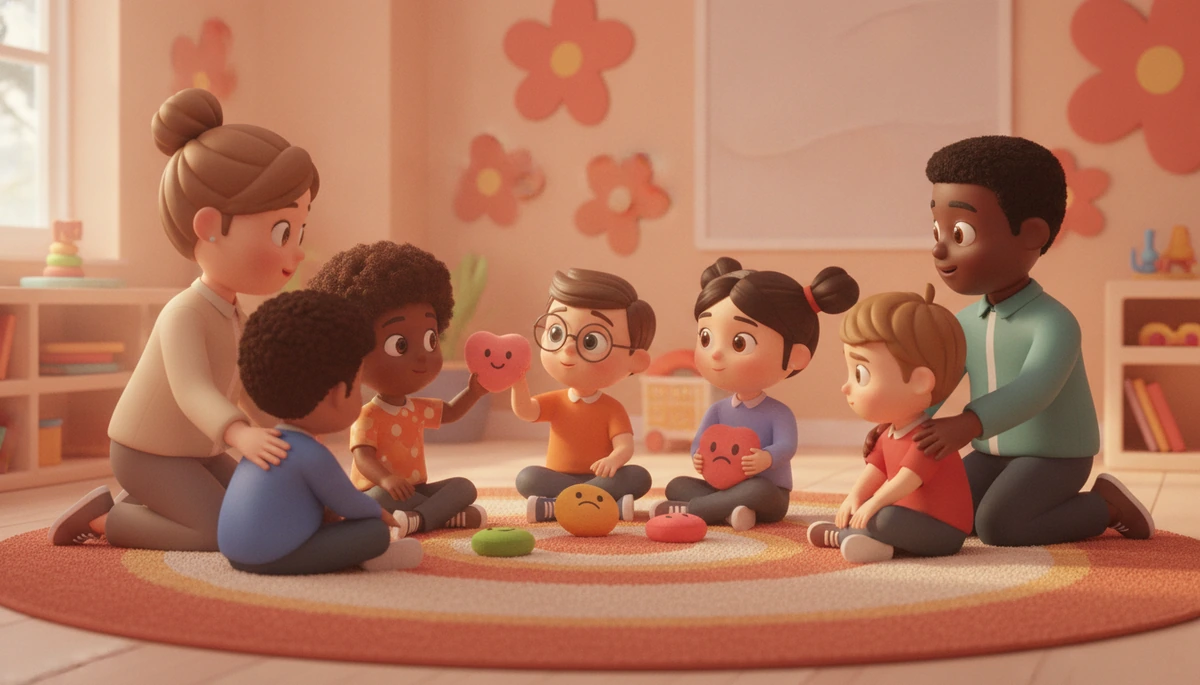
A Comprehensive Guide to SEL Curricula for Elementary Schools
This guide compares essential SEL curricula for elementary schools, highlighting their strengths and challenges. Discover how programs like Second Step, Sanford Harmony, and Yale RULER enhance social-emotional skills such as empathy, emotional regulation, and relationship building.

When and How to Switch Therapists for Your Child: A SEL Approach
Switching therapists can impact your child's emotional growth. Explore signs indicating it's time to switch, ways to address issues first, and how to transition smoothly. Focus on social-emotional learning to support responsible decision-making and relationship skills.
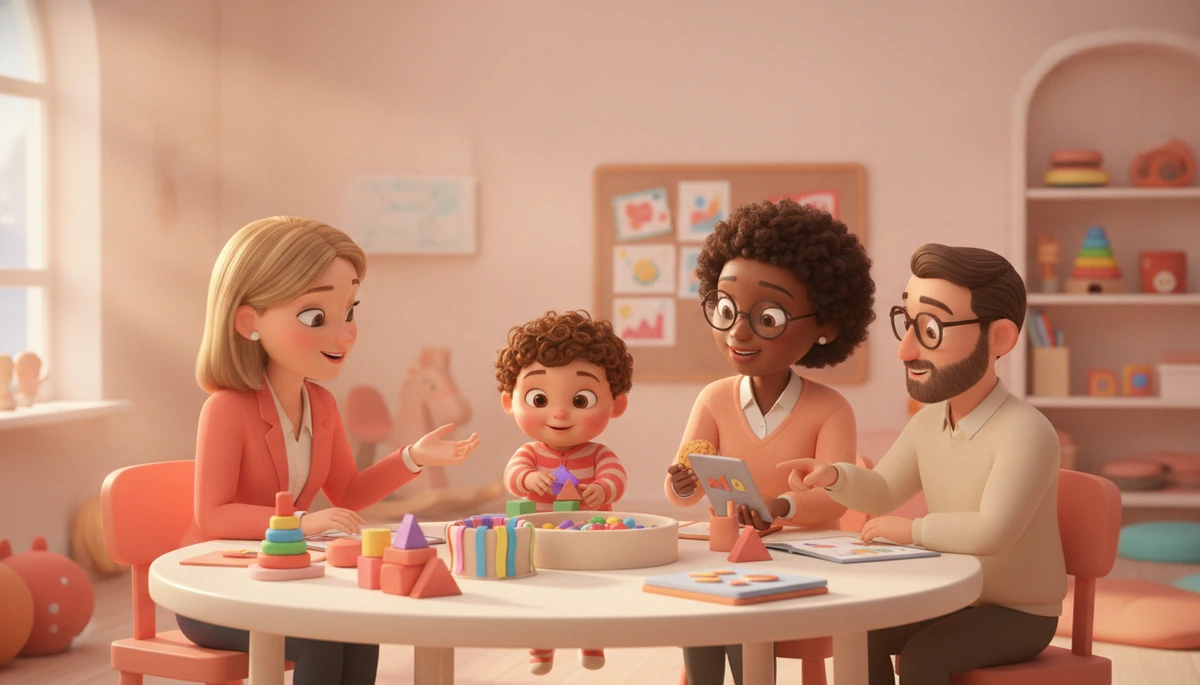
The Essential Guide to Navigating Communication Between Home, School, and Therapy
Effective communication between home, school, and therapy is crucial for supporting neurodivergent children. Parents play a key role in coordinating efforts to ensure consistency and tailor support. By understanding privacy laws like FERPA and HIPAA, and using tools like email updates and meetings, parents can foster a productive dialogue that benefits their child's development.
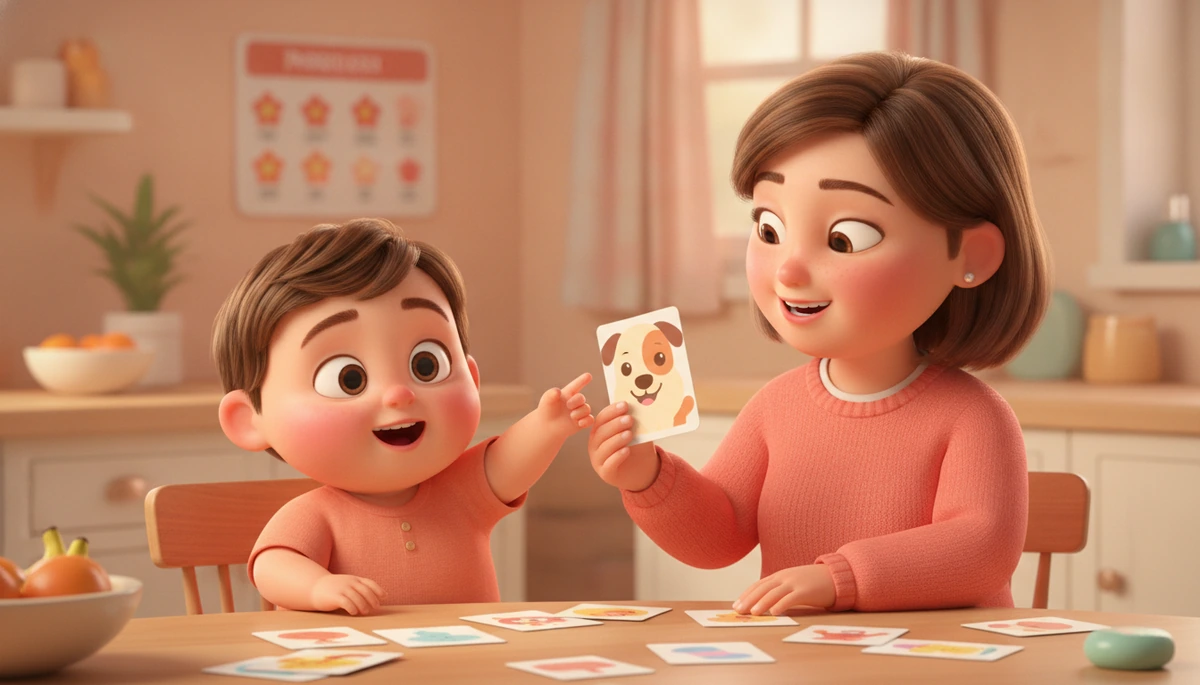
Maximizing Speech Therapy Success: The Art of Carryover Plans
Carryover plans in speech therapy help integrate learned skills into daily life, ensuring children can apply them across various settings. These plans involve structured daily practices, embedding skills into routines, tracking progress, and maintaining communication with therapists. It's about meaningful practice, not just repetition.

Why Skills Don't Generalize from Therapy to Real Life: A Parent's Guide
Generalization is the ability to apply learned skills in various settings—a challenge for many kids in therapy. By understanding principles like train loosely and train sufficient exemplars, parents can support their child's skill transfer from therapy to home. Communication with therapists is key for effective carryover plans. SEL practices at home can ease the transition.
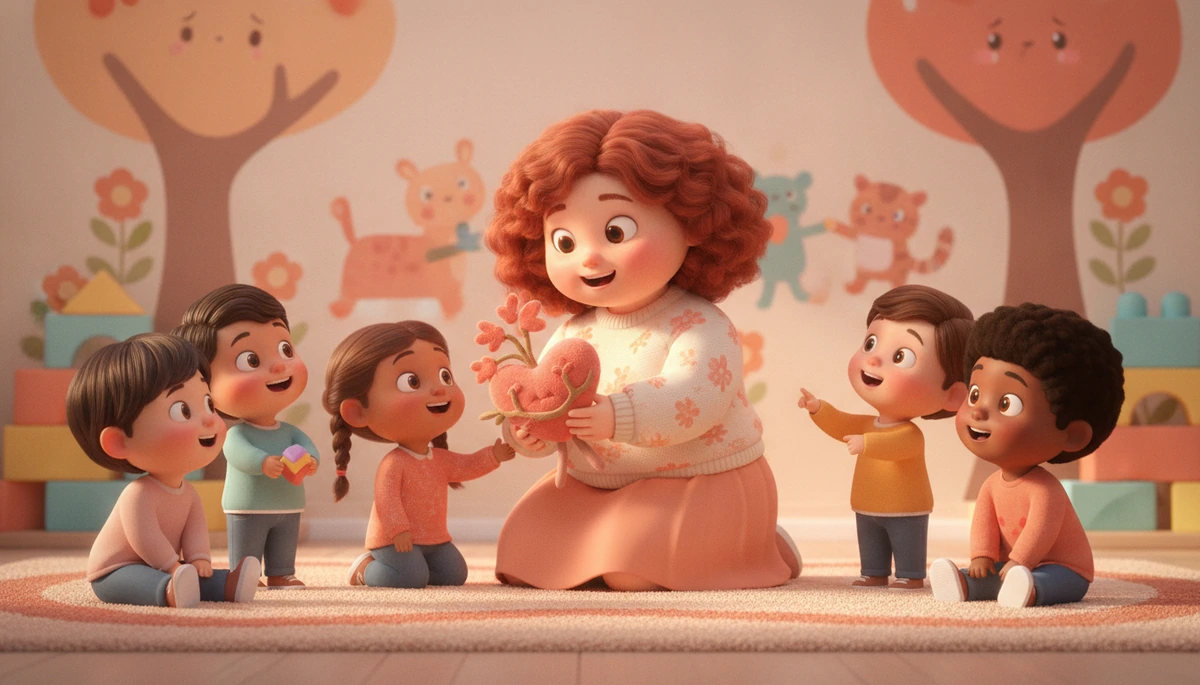
Navigating School Counselors: A Parent's Guide to SEL Support
School counselors play a vital role in supporting your child's social-emotional learning (SEL). Engage them proactively for academic, emotional, and social support. Understand their role, how to collaborate effectively, and when to seek their help. Building a positive relationship with the school counselor can significantly enhance your child's school experience.

Integrating Occupational Therapy and Social-Emotional Learning Goals for Holistic Student Support
Occupational therapy (OT) and social-emotional learning (SEL) often overlap in schools to support neurodivergent students. By integrating OT and SEL goals, educators can enhance both sensory and emotional regulation, promoting holistic development. This article explores practical strategies for parents and educators to align these goals effectively.

Push-In vs Pull-Out Services: Navigating the Best Approach for Your Child
Push-in and pull-out services are two key approaches in special education. Push-in involves therapists working within the classroom, promoting social skills and reducing stigma. Pull-out offers focused, individualized attention in a separate setting. Choosing the right approach depends on your child's unique needs and goals.

The Essential Guide to Your First Meeting with Your Child's SLP
Meeting your child's SLP is crucial for setting a collaborative tone. Ask about goals, service delivery, home alignment, and progress monitoring. This ensures a supportive partnership that enhances your child's development through SEL.

Understanding the Crucial Role of Annual IEP Reviews for Neurodivergent Children
Annual IEP reviews are vital for adapting to a neurodivergent child's evolving educational needs. Regular assessments ensure goals align with current challenges and strengths, fostering continuous growth. Engage actively in these reviews to optimize support and development.

Navigating IEP Denials: A Step-by-Step Guide for Parents
When a school denies an IEP, parents can request a written evaluation report, seek an Independent Educational Evaluation, and consider mediation. Understanding your rights under IDEA, such as Prior Written Notice, is crucial. If necessary, due process is a formal avenue to appeal the decision. Consult professionals for guidance.

Creating Effective 504 Plans for Students with ADHD: A Comprehensive Guide
A 504 plan supports students with ADHD by providing accommodations that help them succeed in general education settings. It includes academic and social-emotional learning (SEL) accommodations tailored to each child's needs. Parents should collaborate with schools, document all communications, and attend annual reviews to ensure plans remain effective.
Understanding IEP and 504 Plans: Essential Guide for Parents of Neurodivergent Children
An IEP offers specially designed instruction under IDEA for students needing intensive support, while a 504 Plan provides accommodations to ensure access to education. Understanding these options helps parents support their neurodivergent child's educational journey. Choose based on your child's specific needs and consult educators for guidance.

Understanding SEL as Related Services in IEPs: A Comprehensive Guide
Social-emotional learning (SEL) services can be classified as related services in an IEP if they assist a child's educational progress. Understanding this distinction helps ensure appropriate support and resource allocation. Parents should advocate for clarity on service types to best meet their child's needs.
Empowering Neurodivergent Children: Crafting Authentic IEP Social Skills Goals
Crafting IEP goals for neurodivergent children requires a focus on authentic social skills that respect and affirm autistic identities. Avoid masking by emphasizing natural communication and interaction. Explore 10 specific goals to nurture genuine engagement, enhance peer connections, and foster emotional regulation.
Crafting Effective Self-Management IEP Goals for Neurodivergent Students
Self-regulation IEP goals are key for supporting students with ADHD or autism in schools. These goals, like emotion identification and task initiation, help children manage emotions and behaviors, fostering academic and personal development. Tailoring goals to individual needs ensures effectiveness. Consult with professionals for best results.

Crafting Measurable IEP Goals: A Comprehensive Guide for Parents
Measurable IEP goals are specific, trackable objectives that help educators and parents monitor a child's progress. Using the SMART framework (Specific, Measurable, Achievable, Relevant, Time-bound) ensures clarity and effectiveness, enhancing educational outcomes for students with unique needs.
 Complete Guide
Understanding SEL in Schools: A Parent's Guide to Social Emotional Learning
Social Emotional Learning (SEL) enhances children's emotional and social skills. Programs like Second Step and Sanford Harmony integrate SEL into classrooms. Parents can support SEL by engaging with educators, using social stories at home, and reinforcing emotional skills. Recognize differences between SEL and behavior management for effective development.
 Complete Guide
Bridging the Gap: Supporting Skill Generalization in Neurodivergent Children
Skill generalization ensures that neurodivergent children apply learned skills from therapy to everyday life. Challenges include context-specific learning and inconsistent reinforcement. Strategies such as collaborating with therapists, creating consistent routines, and integrating SEL aid in bridging these gaps. Effective communication with schools and using visual supports further enhance skill transfer.
 Complete Guide
Working with School-Based Professionals: A Guide for Parents of Neurodivergent Children
Collaborating with school-based professionals like SLPs, OTs, and counselors is vital for supporting neurodivergent children. By understanding their roles and using strategies like IEPs and 504 plans, parents can enhance their child's social-emotional learning and academic success.
 Complete Guide
Navigating Educational Support for Neurodivergent Children: A Comprehensive Guide
Understanding IDEA and Section 504 is crucial for supporting neurodivergent children in education. This guide covers IEPs and 504 Plans, offers advocacy tips, and emphasizes the importance of social-emotional learning integration.
 Complete Guide
Creating Effective IEP Goals for Social and Emotional Learning
Creating effective IEP goals for social and emotional learning involves setting specific, measurable outcomes that support children's self-awareness, self-management, social skills, and decision-making. This guide explores practical steps to advocate for and implement these goals, enriching your child's educational journey.
📅 Trending Days, Months & News
Awareness months, holidays, big days, and breaking news — interpreted through the SEL lens.
Celebrating World Autism Day: Activities and Resources for Families
World Autism Day on April 2 encourages acceptance and understanding of autism. Families can engage in activities like creating art, reading books, and watching films that promote empathy and inclusivity. Open discussions with children about autism can foster a more accepting environment.
The Role of Better Speech and Hearing Month in Promoting SEL
Better Speech and Hearing Month (BSHM) raises awareness about communication's role in child development, linking speech milestones to social-emotional learning (SEL). This connection highlights how effective communication fosters emotional regulation and relationship building.
Supporting Children's Mental Wellness Through SEL During Mental Health Awareness Month
May is Mental Health Awareness Month, emphasizing the importance of mental wellness for all ages, including children. By integrating Social-Emotional Learning (SEL) into daily routines, families can support children's emotional development, helping them manage stress and build resilience. Engage with practices like mindfulness, gratitude journaling, and reading SEL-focused stories to nurture your child's mental wellness.
Myth-Busting ADHD: Conversations and Support through the SEL Lens
October is ADHD Awareness Month, a time to dispel myths and foster understanding. Through SEL, parents can guide conversations with their children about ADHD, emphasizing empathy, self-awareness, and inclusivity. Learn how to address common misconceptions to support all children effectively.
April: From Autism Awareness to Acceptance in Your Home
Transforming autism awareness into acceptance involves focusing on understanding, embracing neurodiversity, and fostering inclusivity. Engage in activities that highlight your child's unique strengths and encourage open discussions about autism. Utilize resources like storybooks and community events to build empathy and connection at home and beyond.
 Complete Guide
Understanding Autism Through the Lens of Social-Emotional Learning
Explore how autism intersects with social-emotional learning through media portrayals, celebrity disclosures, and new research. Discover practical ways to discuss these topics with your child, fostering empathy, self-awareness, and responsible decision-making. Learn to navigate school policies and integrate SEL into everyday life to support your child's unique growth and confidence.
 Complete Guide
Supporting Neurodivergent Kids During Holiday Festivities: A Guide for Parents
Holidays can be overwhelming for neurodivergent kids due to sensory overload. Parents can support their children by using social stories, planning routines, and providing sensory tools. Fostering self-awareness and relationship skills helps kids manage these challenges, turning the festivities into a more enjoyable experience.
 Complete Guide
Back-to-School Success for Neurodivergent Kids: An SEL Guide
Support neurodivergent children during back-to-school transitions with SEL strategies. Focus on self-awareness, routines, and social connections to reduce anxiety and foster growth.
 Complete Guide
Celebrating Special Days with Neurodivergent Families: A Social-Emotional Learning Approach
Special days offer unique opportunities for neurodivergent families to foster self-awareness, social skills, and empathy. Through SEL-based activities, families can celebrate World Autism Day, Mother's Day, Father's Day, and more in meaningful, inclusive ways. Discover how these celebrations enhance emotional connections and community involvement.
 Complete Guide
Integrating SEL into Awareness Months: A Year-Round Guide for Families
Awareness months offer families a chance to integrate Social-Emotional Learning (SEL) into daily life, fostering acceptance of neurodiversity. By aligning activities with SEL competencies such as self-awareness and empathy, families can grow understanding and support for each other. This guide provides strategies to leverage these months for deeper engagement.