Myth-Busting ADHD: Conversations and Support through the SEL Lens

Why October Matters: ADHD Awareness Month
October is a significant month for raising awareness about Attention Deficit Hyperactivity Disorder (ADHD). It offers a chance to dispel prevalent myths and promote understanding. This article is part of our complete guide to Awareness Months: A Year-Round SEL Calendar for Families. By using Social-Emotional Learning (SEL) strategies, parents can guide conversations with their children about ADHD, whether they have the condition or know someone who does.
ADHD Awareness Month is coordinated by organizations like CHADD, which work to disseminate accurate information and resources. As parents, embracing this opportunity to educate your children can foster empathy, understanding, and inclusivity. Let's dive into some common myths about ADHD and how to talk about them.

Myth 1: ADHD = Bad Behavior
A pervasive myth is that ADHD is simply a result of bad behavior. In reality, ADHD is a neurodevelopmental condition that affects the brain’s ability to regulate attention and impulses. Self-awareness and self-management, two essential SEL competencies, can help children with ADHD learn to navigate their environments more effectively.
Example: Consider a child named Alex, who struggles to sit still during class. Instead of labeling this as bad behavior, teachers and parents can use SEL strategies to help Alex recognize his feelings and develop coping mechanisms, such as taking short movement breaks or using fidget tools. This approach supports Alex in managing his impulses without judgment.
In My Practice: I've seen many parents initially misunderstand their child's inability to sit still as purely behavioral. Once these families begin to implement SEL strategies like recognizing and naming emotions, they notice significant improvements in their child's ability to self-regulate. This shift from judgment to support makes a profound difference in family dynamics.
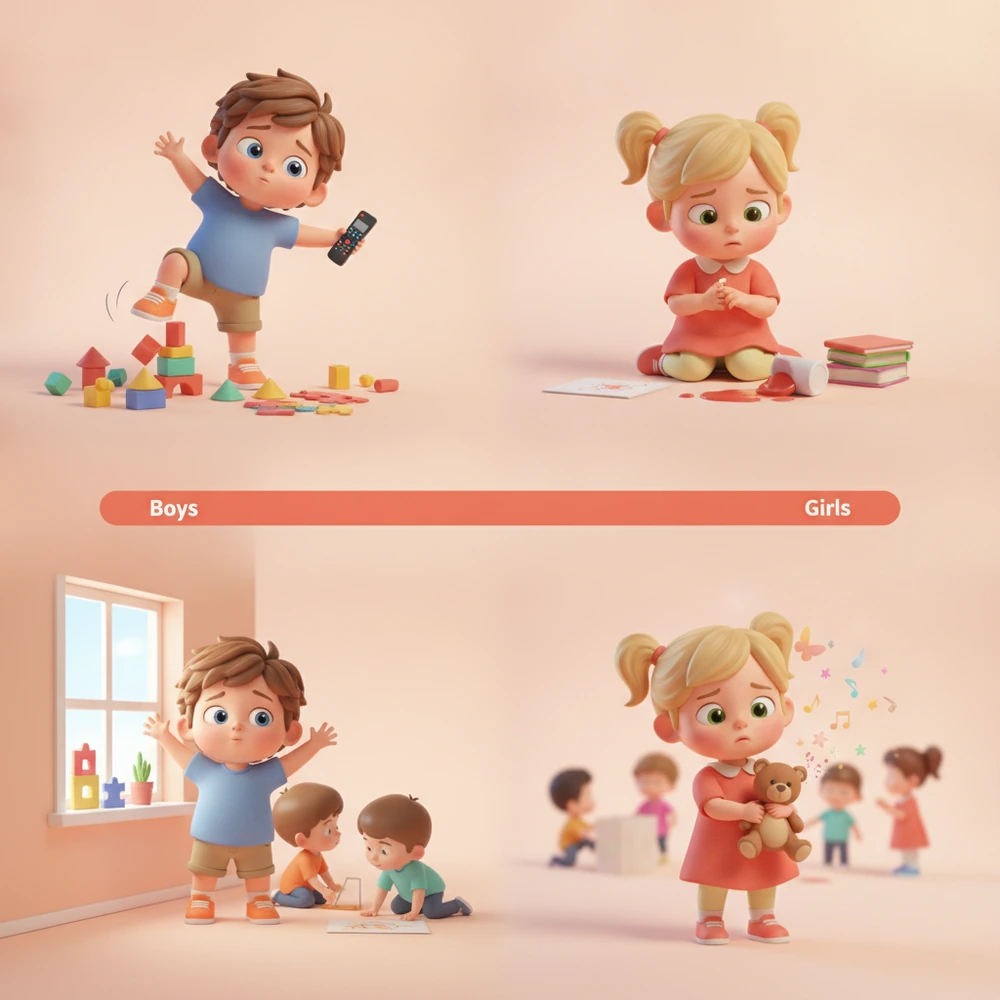
Myth 2: ADHD = Boys Only
Another common misconception is that ADHD only affects boys. This myth can lead to underdiagnosis or misdiagnosis in girls, who might exhibit different symptoms, such as inattentiveness without hyperactivity.
In My Practice: I've worked with many parents who initially overlooked ADHD symptoms in their daughters. Girls often present with quieter signs, such as daydreaming or inattentiveness, rather than hyperactive behavior. Recognizing these differences is crucial for early support and intervention.
Example: Imagine a girl named Lucy, who often seems lost in thought and has difficulty completing tasks. Her teachers might see her as merely "dreamy" unless there's an awareness of ADHD's diverse presentations. By fostering social awareness, educators and parents can better support children like Lucy.
Myth 3: Medication = First or Only Solution
Many believe that medication is the only way to manage ADHD. While medication can be effective, it's not the sole option. Responsible decision-making involves considering a variety of strategies, including behavioral therapy, environmental adjustments, and SEL techniques.
Example: Picture a family exploring options for their son, Ethan. They choose to incorporate mindfulness practices alongside his medication, helping him develop focus and self-management skills. These combined efforts result in noticeable improvement in Ethan's ability to concentrate during homework time.
Scripted Dialogue:
- Parent: "I've heard that medicine is the only way to help with ADHD."
- Child: "Really? I thought there were other ways, like talking to someone who helps us learn new skills."
- Parent: "Yes, that's right! We can use different methods, like practicing focusing skills or learning how to manage time better."
Myth 4: ADHD Kids Will Grow Out of It
Some people believe that children with ADHD will eventually "grow out of it." However, ADHD often continues into adulthood, though symptoms may change over time. Understanding and social awareness can help children and adults alike recognize and adapt to these changes.
Example: Picture Maya, a teenager who has learned to manage her ADHD through structured routines and self-awareness. As she transitions to college, her strategies adapt to include digital tools for organization and time management, showcasing how support evolves.
In My Practice: I've observed that when parents and children acknowledge the ongoing nature of ADHD, they can prepare for transitions, such as moving to high school or college, with tailored strategies that build on existing strengths.
Myths 5-10 (Continued)
Myth 5: ADHD is Overdiagnosed
Despite perceptions, ADHD is not overdiagnosed. Research indicates that many children with ADHD remain undiagnosed, particularly girls and minority groups who don't fit the typical "hyperactive boy" profile. Social awareness is key in addressing these disparities and ensuring all children receive appropriate support.
Myth 6: ADHD is Caused by Poor Parenting
ADHD is a neurological condition, not a result of parenting styles. However, positive parenting techniques and relationship skills can enhance a child's ability to manage symptoms through supportive environments.
Example: Consider parents who use consistent routines and positive reinforcement, helping their child feel secure and understood. This stability aids in managing ADHD symptoms and fosters a trusting parent-child relationship.
Myth 7: All ADHD Looks the Same
ADHD manifests differently in each individual. Some may struggle with hyperactivity, while others face concentration challenges. Self-awareness helps children understand their unique experiences with ADHD.
Myth 8: Sugar Causes ADHD
There's no scientific evidence linking sugar intake to ADHD. While diet can influence behavior, it doesn't cause ADHD. Social awareness about these misconceptions can prevent stigma.
Myth 9: ADHD Is a Result of Too Much Screen Time
Though excessive screen time can affect behavior, it is not a cause of ADHD. Balance and responsible use of technology are key for all children. Responsible decision-making can guide families in setting healthy screen time boundaries.
Myth 10: ADHD Always Includes Hyperactivity
Not all children with ADHD are hyperactive. Many experience inattentive symptoms, which require different management strategies focused on self-management and attention skills.
Conversation Guide: Telling Your Child They Have ADHD
When explaining ADHD to your child, focus on their strengths and the support available. Self-awareness and self-management are vital here.
- Start by affirming their feelings: "It's okay to feel different or confused."
- Use simple language: "ADHD means your brain works a bit differently, and that's okay."
- Highlight strengths: "You're creative and energetic, and these are wonderful traits."
In My Practice: Parents often find that children respond positively when the conversation about ADHD focuses on strengths and support rather than deficits. This approach can significantly enhance a child's self-esteem and willingness to engage with strategies designed to help them thrive.

Conversation Guide: Explaining ADHD to NT Siblings + Friends
Helping neurotypical (NT) siblings and friends understand ADHD fosters social awareness and empathy.
- Simple explanations: "ADHD is like having a super-fast brain that can sometimes be hard to slow down."
- Encourage questions: "What do you want to know about ADHD?"
- Promote empathy: "Imagine if your brain was always racing; it might be hard to focus."
Example: A family discusses ADHD with their younger child to help them understand their sibling's needs. By using relatable analogies and encouraging open dialogue, they foster a supportive home environment.
References
- CHADD — ADHD Awareness Month coordinator
- Dodson, W. (2017). RSD in ADHD. ADDitude.
- Hallowell, E. & Ratey, J. (2021). ADHD 2.0.
Try It This Week
Reading is the easy part. Skills build through small, repeated practice — here's a low-pressure plan you can try with your child.
- 1Discuss ADHD MythsDay 1Talk with your child about common ADHD myths to build understanding and empathy.👉 What this looks likeAfter dinner, sit down with your child and say, "Let's talk about something important—ADHD. Some people think it's just bad behavior, but it's not. It's how some brains work differently." Encourage your child to ask questions, showing openness and understanding.
- 2Use Simple ADHD AnalogiesDay 2-3Explain ADHD using simple analogies to help your child relate and understand better.👉 What this looks likeWhile playing a board game, say, "Imagine if this game was super fast and hard to follow. That's sometimes how ADHD feels." This helps them visualize and empathize with how ADHD affects focus and attention.
- 3Highlight StrengthsDaily, 5 minFocus on your child's strengths related to ADHD to boost confidence and self-awareness.👉 What this looks likeDuring bedtime, say, "You have such a creative mind that's full of amazing ideas. That creativity is part of what makes you special." Reinforce this positive view consistently to build self-esteem.
- 4Role-Play ConversationsThis weekendPractice conversations about ADHD with siblings or friends to enhance empathy and social skills.👉 What this looks likeSet up a role-play with your child and a sibling. "Pretend you're explaining ADHD to your friend. How would you do it?" Help them craft simple, kind explanations. "You might say, 'My brain works fast, and sometimes it's hard to keep up with everything.'"
- 5Create a Coping StrategyOnce this weekDevelop a simple strategy with your child for when they feel overwhelmed or distracted.use this story →👉 What this looks likeTogether, identify a calming activity, like squeezing a stress ball or taking deep breaths. Say, "Next time you feel overwhelmed, try squeezing this ball and counting to ten." Practice this together so your child feels prepared.
Frequently Asked Questions
What are some common myths about ADHD?
How can I explain ADHD to my child?
Does ADHD only affect boys?
Is medication the only way to manage ADHD?
Will my child grow out of ADHD?
References