 Free
Safe or Not Safe?
Look at everyday moments and decide: safe, or not safe?
Make good choices · for autistic and ADHD kids, 3 to 10
Make choices small and visible: two options, with pictures if they help. Practise “what might happen next?” and “what's our Plan B?” in play, so the words are familiar when a real problem comes. Talk about choices, not about being a good or bad kid.
What it is
Responsible decision-making is making caring and helpful choices about what we do and how we treat others. For young children, it is mostly small moments: stopping before acting, guessing what might happen, and staying safe.
Schools call this Responsible decision-making, one of the five CASEL social-emotional skills.
For autistic and ADHD kids
Open questions like “What do you want to do?” can be a lot to process. Two clear options, with pictures if they help, make choosing easier, and still give your child real control.
In a school trial with autistic 8 to 11 year olds, a program using short scripts like “Plan A, Plan B” and “big deal or little deal” improved problem-solving and flexibility more than a social skills group.
In the largest trial of social stories (249 autistic children aged 4 to 11), children met more of their own personal goals, but wider social measures didn't change. Use them for specific, real situations.
Age by age
A rough guide. Autistic and ADHD children often build these skills on their own timeline, and that is fine: start from where your child is today, not from their age.
3 to 5
Often: Starting to avoid danger, like not touching a hot oven, and changing behaviour depending on where they are.
Practise: Two-picture choices. “Safe or not safe?” games about home and the street.
6 to 8
Often: Guessing simple consequences and understanding why rules exist, especially with examples.
Practise: “What happens next?” and “Plan B” games. Simple fairness talks.
9 to 10
Often: Weighing a few options and thinking about others. Planning ahead keeps developing through the teen years.
Practise: “Big deal or little deal?” Talking through a choice afterwards: what helped?
Try this at home · 5 minutes
Small, made-up problems, practised in play, so “Plan B” is a familiar idea when a real one comes.
Practise it in SocialBlossom
11 games, from Starter to Challenging. 3 are free. No wrong answers, no timers, and a calm voice reads everything.
FreeLook at everyday moments and decide: safe, or not safe?
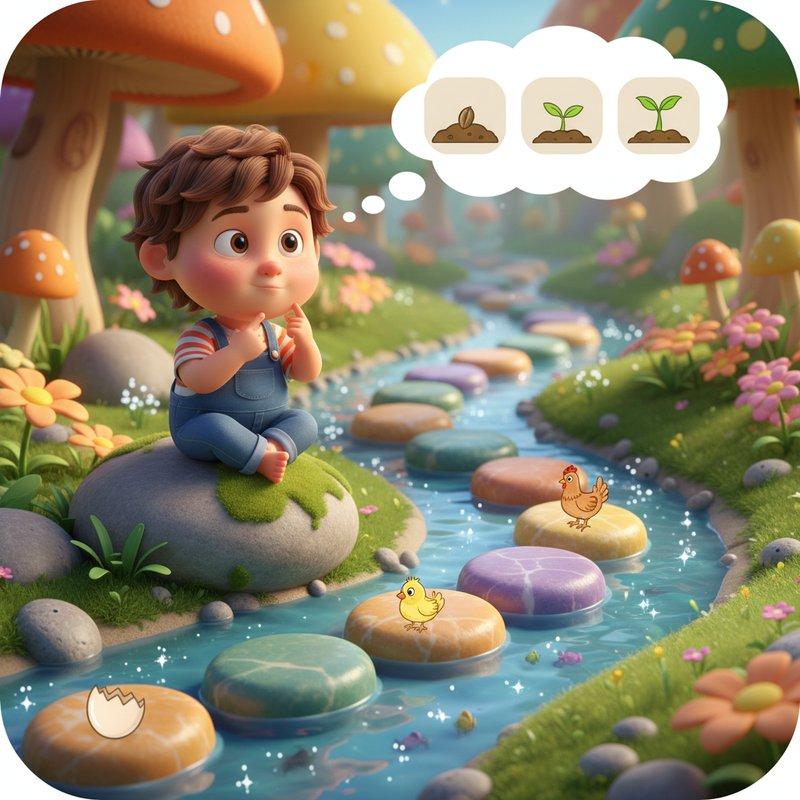
Look at what's happening and guess what comes next.
 Free
Check what really happened before deciding what to do.
Read more
 Supporting ADHD Impulse Control Through SEL: Strategies for Parents
 Empowering Autistic Children Through Choice Boards: An SEL Approach
 Nurturing Decision-Making Skills in Children: A Guide for Parents
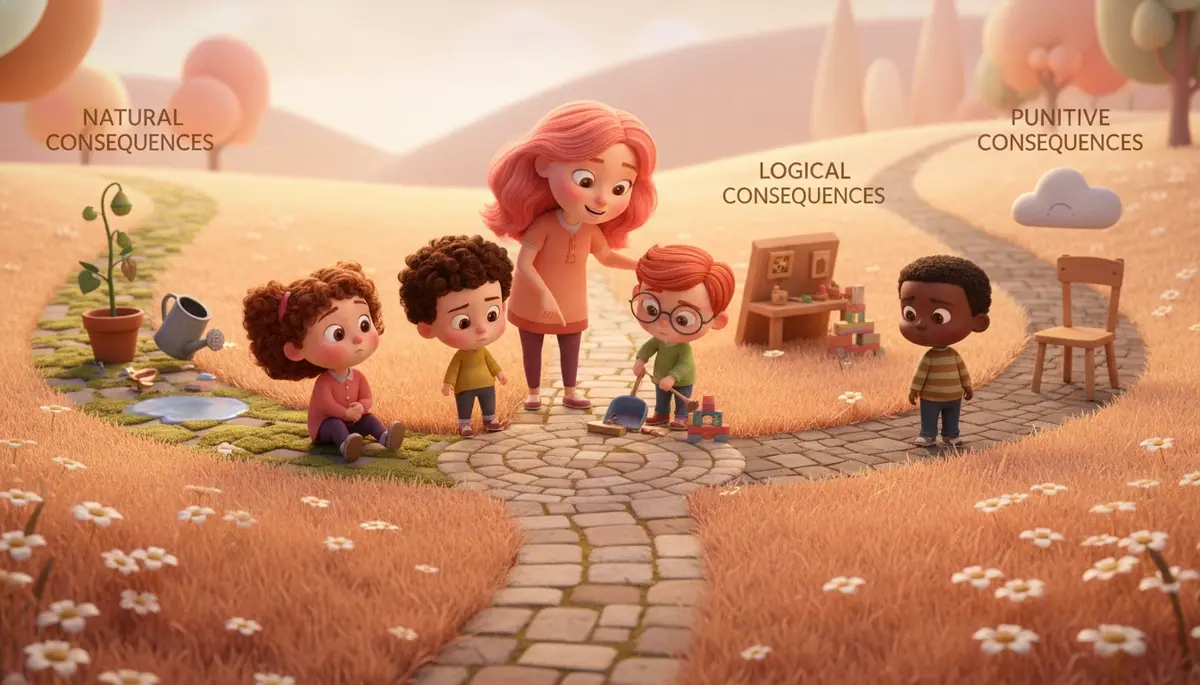 Understanding Natural vs Logical vs Punitive Consequences for Children
 Nurturing Decision-Making Skills in Children: A Developmental Guide
Questions
Be concrete and visual: talk about specific actions and what happens after them, not about being good or bad. Stories and games with clear examples, like safe or not safe, help, and so does explaining the reason behind a rule.
Practise concrete rules for real places (“stay where I can see you”, “ask me first”), use pictures or a short story about your own situations, and practise in play more than once. Simple, repeated rules work better than general warnings.
Practise flexibility on small, low-stakes changes first, using the same short words each time, like “Plan B” or “little deal”. A school program built on these scripts improved flexibility in autistic children in a trial.
Offer two options, show them if you can, and give time to answer. If your child can't choose, it's fine to choose for them this time and try again later.
Written by the SocialBlossom team for parents. It is general information, not a diagnosis or a plan for your child.
It's free, and a calm way to talk about staying safe at home and outside.