Harnessing the Power of Body Doubling for Kids with ADHD

What Body Doubling Is (and Why It Works)
Body doubling is a productivity strategy gaining traction, especially within adult ADHD communities. It involves having another person present while you work, creating an atmosphere of accountability and focus. This approach can be remarkably effective for children with ADHD as well. The presence of another person can serve as a form of external regulation, helping children stay on task and manage their attention better.
In my practice, I've seen many parents discover that simply being present while their child does homework can turn the tide on homework battles. The child feels supported, and the parent's presence acts as a calming influence, reducing anxiety and the feeling of being overwhelmed.
This technique aligns well with the self-awareness and self-management components of social-emotional learning (SEL), as it helps children understand their emotional states and develop strategies to manage them. By recognizing the support they need, children become more aware of their own needs and learn to manage distractions effectively.
This article is part of our complete guide to ADHD Homework Battles: An SEL-First Approach, where we explore various strategies to support your child's learning journey.

The Neuroscience: External Regulation Borrowed from Another Brain
The concept of body doubling taps into the neuroscience of co-regulation. When another person is present, the brain perceives this as a safety signal, reducing stress and promoting focus. This is similar to how infants learn to regulate emotions by being soothed by their caregivers 3. By borrowing calmness from another person's brain, children with ADHD can manage their emotional intensity and anxiety better.
Research supports this approach, revealing that social connections and supportive environments can significantly impact emotional regulation and executive function 3. Understanding this can help parents tailor their support strategies effectively.
In my practice, I've observed that even a simple presence can transform a child's ability to focus. For instance, one 8-year-old I worked with struggled to complete tasks alone but thrived when his older sister sat quietly reading beside him. This dynamic not only improved his productivity but also strengthened their sibling bond.
How to Body-Double for Your Kid (Presence > Coaching)
The key to effective body doubling is presence rather than active involvement in the task. Here's how you can implement it:
- Sit in the Same Room: Simply being in the same room can reassure your child.
- Focus on Your Task: Engage in a parallel activity like reading or working on your laptop.
- Minimize Distractions: Ensure the environment is conducive to concentration.
Example: Implementing Body Doubling
Imagine your child, Alex, struggling with math homework. You sit nearby, working on your own project. Occasionally, Alex glances at you, feeling reassured by your presence. Without saying a word, your calm demeanor helps Alex stay focused on the task.
Tips to Enhance Presence:
- Maintain a Calm Environment: Keep noise levels low and avoid sudden movements.
- Use Body Language: Smile or nod to convey support without interrupting.

Sibling Body Doubling
Sometimes, siblings can be effective body doubles. This approach can foster teamwork and empathy, enhancing their relationship skills. Here’s how to make it work:
- Pair Siblings for Homework Time: Encourage siblings to work on their tasks side-by-side.
- Set Clear Boundaries: Teach them to respect each other's space and focus time.
Real-Life Script: Sibling Homework Session
"Hey, you two. Let's try doing your homework together today. Remember, it's not about helping each other solve problems but just being there for each other."
By involving siblings, children can learn to support each other, reflecting the SEL principle of social awareness. In one family, siblings who initially argued during homework time soon learned to appreciate the quiet presence of each other, leading to a more harmonious home environment.
Virtual Body Doubling (Focusmate-Style for Kids)
For working parents, virtual body doubling can be a practical alternative. Platforms like Focusmate can be adapted for children, offering a virtual presence that simulates the physical one.
- Schedule Virtual Sessions: Set up a video call with a family member or friend during homework time.
- Use Social Stories: Prepare your child for virtual sessions using Teamwork Makes Tasks Easier - Printable Social Story.
In My Practice: Virtual Body Doubling Success
One family I worked with connected their child with a cousin living in another state through video calls. The regular sessions not only helped the child focus but also strengthened family bonds. The child looked forward to these calls, associating them with support and encouragement.
When to Step Back (Gradually Fade)
Body doubling isn't a permanent solution. Over time, aim to gradually fade your presence to foster independence. Start by:
- Reducing Time Together: Move from sitting in the room to checking in periodically.
- Encouraging Self-Regulation: Use tools like Listening to My Body: Taking a Break - Social Story to teach your child when to take breaks.
Explore more about knowing when to step back in our article When to Step In, When to Back Off (ADHD Homework Edition).
Tips for Fading Effectively:
- Communicate Plans: Talk to your child about the gradual changes.
- Observe Reactions: Adjust based on your child’s comfort and performance.
Combining with Timers + Chunking
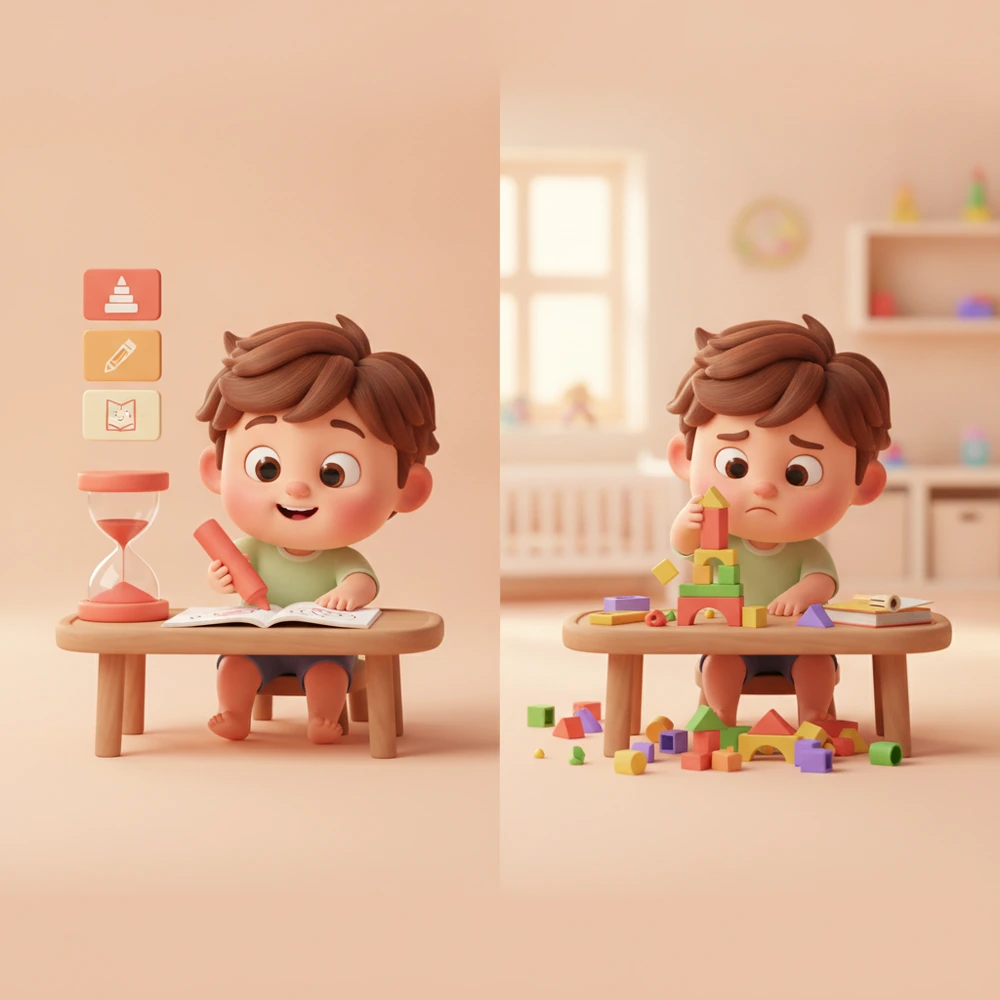
To enhance body doubling, combine it with timers and chunking. This strategy involves breaking tasks into smaller, manageable parts and timing each segment. It's an effective self-management tool.
Example: Using Timers and Chunking
"Let's set a timer for 20 minutes to focus on this section of your homework. After that, we can take a short break."
Incorporating these techniques can improve a child's ability to manage their time and tasks. Setting a timer creates a sense of urgency and structure, while chunking makes the workload appear less daunting. For more strategies, explore Breaking Tasks Down: A Parent's Version of Executive Coaching.
References
1 Dawson, P. & Guare, R. (2018). Smart but Scattered. Guilford. https://www.guilford.com/books/Smart-but-Scattered/Dawson-Guare/9781593854454
2 Barkley, R. (2012). Executive Functions: What They Are, How They Work, and Why They Evolved. Guilford. https://www.guilford.com/books/Executive-Functions/Russell-Barkley/9781462503949
3 Eisenberger, N. (2012). The pain of social disconnection. Nature Reviews Neuroscience. https://doi.org/10.1038/nrn3231
Try It This Week
Reading is the easy part. Skills build through small, repeated practice — here's a low-pressure plan you can try with your child.
- 1Create a Body Doubling RoutineDay 1Establish a consistent routine where you sit with your child during homework time to offer presence and reassurance.👉 What this looks likeChoose a quiet spot in your home and designate it as your homework zone. Sit with your child at the same time every day. Even if you're just reading or working on your laptop, your presence will help create a calming environment. Consistency is key, so aim to be there every day.
- 2Involve Siblings in Homework TimeDay 2-3Encourage siblings to work together during homework. Set boundaries for mutual respect and focus.👉 What this looks likeHave your children sit at the same table. Remind them that it's okay to be quiet and focus on their tasks. Say, 'Let's all work quietly together for 30 minutes and then take a break.' Encourage them to help each other stay on task by simply being present.
- 3Try Virtual Body DoublingThis weekendSet up a video call with a relative or friend during homework to simulate presence.👉 What this looks likeSchedule a call with a family member who can sit on the other end of the video chat while your child does their homework. Explain to your child, 'You'll have Aunt Sarah on the line while you work. She'll be doing her reading too, just like a study buddy.'
- 4Introduce Timers and ChunkingDaily, 5 minUse timers to break tasks into smaller segments, enhancing focus and productivity.👉 What this looks likeBefore starting homework, set a timer for 20 minutes. Tell your child, 'Let's work hard for 20 minutes and then take a 5-minute break.' This helps them see the task is manageable and builds their confidence in completing it.
- 5Gradually Fade Your PresenceOnce this weekStart reducing the time you spend body doubling to promote independence.in the SocialBlossom app →👉 What this looks likeBegin by sitting in the same room for 15 minutes, then move to another room while checking in every 10 minutes. Say, 'I'm just in the next room, call if you need me.' This gradual fading helps your child build confidence in working independently.
Frequently Asked Questions
What is body doubling?
How can siblings help with body doubling?
Can body doubling be done virtually?
When should I stop body doubling?
What are the benefits of using timers and chunking with body doubling?
References