Using First-Then Boards: A Simple Guide to Supporting Autistic Children
This article is part of our complete guide to Visual Supports for Autistic Kids: An SEL-First Guide.
What a First-Then Board Is
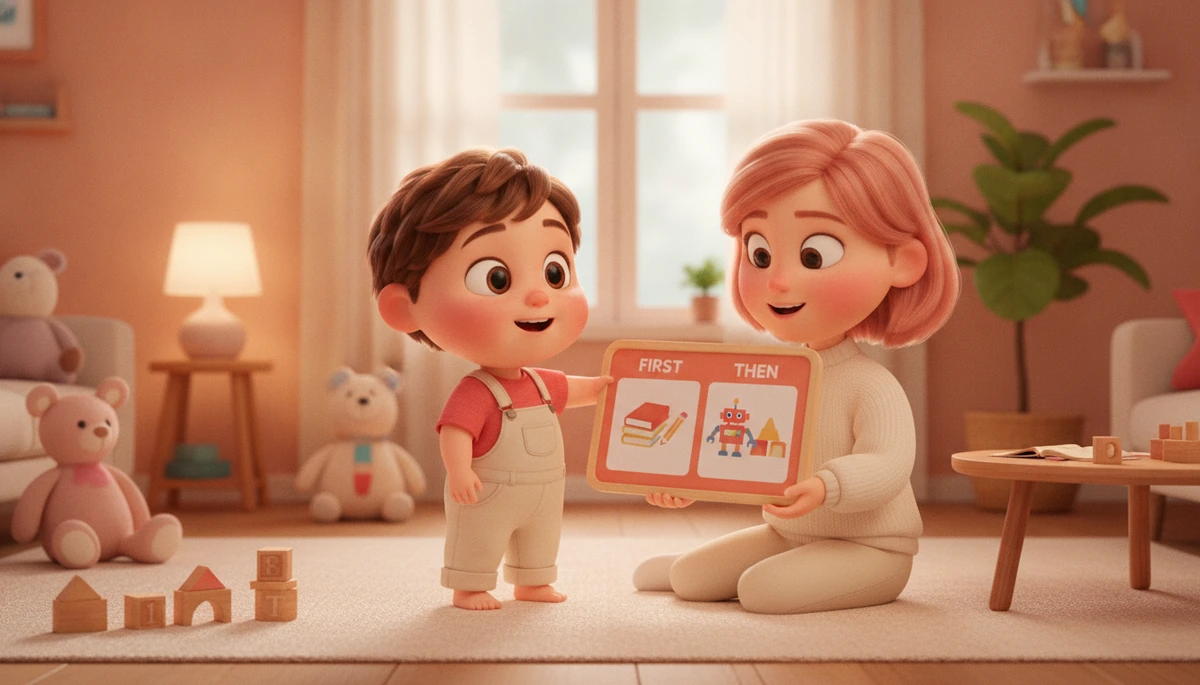
A First-Then board is a straightforward visual support tool. It comprises two sections: "First" and "Then." This board is a practical way to communicate what needs to happen now and what will follow, offering a clear and predictable sequence that many autistic children find comforting.
The Simplicity of First-Then Boards
First-Then boards excel in their simplicity. They strip away the complexities of full schedules, focusing on immediate steps. For many autistic children who thrive on predictability, this can significantly reduce anxiety and resistance.
In my practice, I've observed that children who struggle with multi-step instructions often respond positively to First-Then boards. The visual simplicity helps them focus on the present task without feeling overwhelmed by future demands.
Key Benefits of First-Then Boards
- Reduces anxiety by limiting the focus to two tasks.
- Enhances understanding for children who process information visually.
- Increases predictability in daily routines, supporting self-management skills.
Why Simplicity Wins for Many Autistic Kids
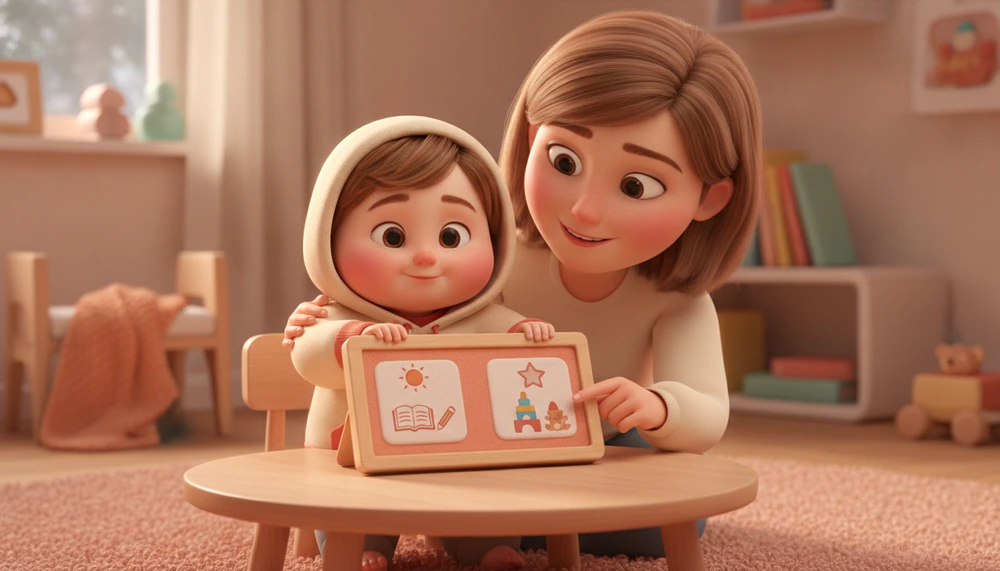
Autistic children often face unique challenges in processing information. They might find it difficult to understand lengthy verbal instructions or complex visual schedules. This is where the simplicity of a First-Then board shines. By providing just two clear steps, it helps in reducing cognitive load and enhancing focus.
Research supports the use of visual supports as effective tools for autistic children, helping them understand and navigate their environments more independently 1. Visual tools like First-Then boards offer a tangible way to practice self-management and responsible decision-making, key components of the CASEL competencies.
Use Case 1: Tough Transitions (Homework → Play)
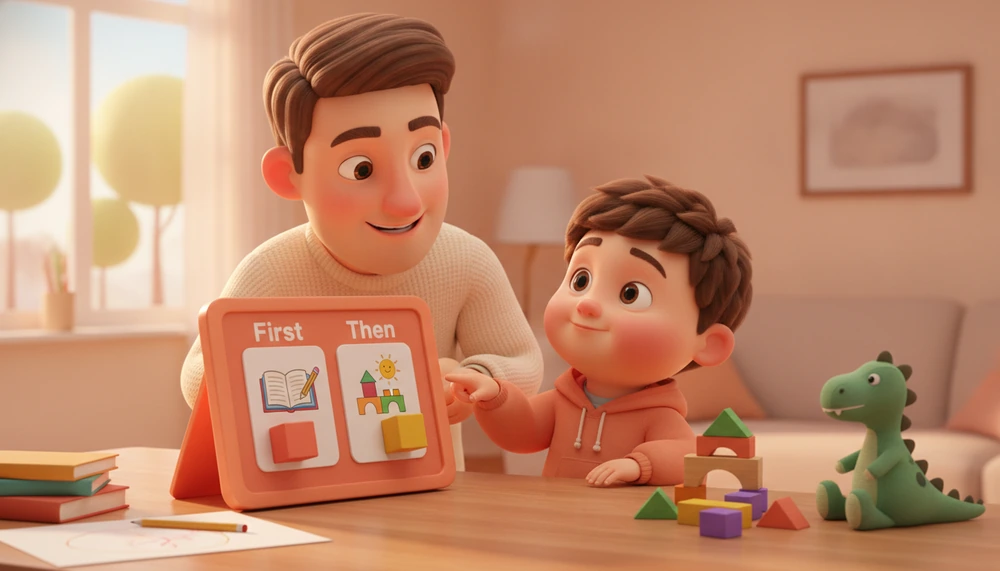
Transitions can be particularly challenging for autistic children. Imagine your child is engrossed in playtime, and it's time to start homework. A First-Then board can ease this transition by clearly delineating what comes next.
Example Scenario: Homework to Playtime
- First: Homework
- Then: Playtime
By visually presenting the sequence, your child knows that once homework is completed, playtime will follow. This can reduce anxiety and make transitions smoother. In this way, First-Then boards support relationship skills by positively framing transitions.
Concrete Example: Imagine a situation where your child is playing with blocks and you need to transition to homework time. Instead of abruptly ending play, you can say, “Let’s see what’s next on your board.” Your child sees the board and understands the sequence, reducing resistance.
Use Case 2: Medical/Dental Visits
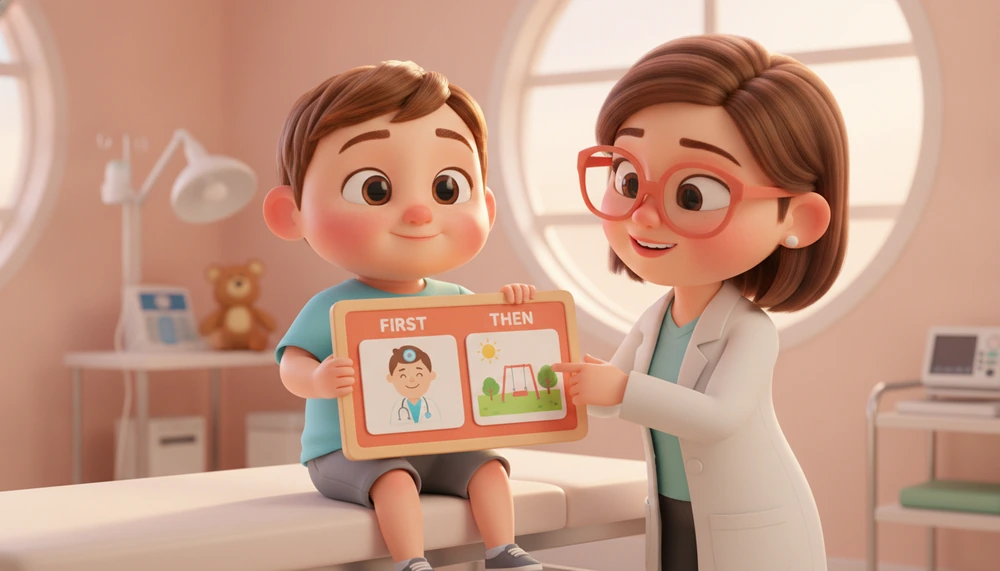
Medical and dental visits can be a source of anxiety. A First-Then board can prepare your child for these experiences by clearly outlining what will happen.
Example Scenario: Doctor's Visit
- First: Doctor's Check-up
- Then: Visit to the Park
This approach can reduce resistance and help your child feel more in control of the situation. By using a First-Then board, children can better practice self-awareness and self-management in potentially stressful settings.
In my practice, I recommend using social stories alongside First-Then boards. For instance, Mijn Eerste Griepprik Avontuur - Social Story PDF can be a supportive tool to explain medical procedures.
Example: During a visit to the dentist, children might use a First-Then board to see that after the appointment, they will get a sticker or a visit to the park. This clear visual cue helps them cooperate more willingly.
Use Case 3: Reducing 'When Can I' Questions
Children often ask repetitive questions when they feel uncertain. First-Then boards provide a visual answer to "When can I...?"
Example Scenario: Dinner to Screen Time
- First: Dinner
- Then: Screen Time
This visual can preemptively address common questions, reducing anxiety and repetitive questioning. As children become more familiar with the sequences, they gain social awareness by understanding the flow of activities.
Use Case 4: Bedtime
Bedtime routines can be challenging, but they become easier with a First-Then board.
Example Scenario: Evening Routine
- First: Brush Teeth
- Then: Storytime
Using a board can help your child understand the sequence, making bedtime a more predictable and less stressful experience. You might also find our Cozy Bedtime Routine Tonight - Printable Social Story helpful in creating a comforting nighttime ritual.
In My Practice: I've seen many parents find success when they introduce a First-Then board into bedtime routines. One family reported that their child was more willing to complete bedtime tasks because the visual sequence made the evening less daunting.
Use Case 5: Tantrum Prevention
Tantrums can often be avoided by setting clear expectations. First-Then boards can serve as a preventive tool.
Example Scenario: Cleaning Up to Play Outside
- First: Clean Up Toys
- Then: Play Outside
By clearly laying out what is expected, children are less likely to feel overwhelmed, thus reducing the likelihood of a meltdown. This practice encourages responsible decision-making by fostering an understanding of cause-and-effect relationships.
Concrete Example: Consider a child who frequently resists cleaning up. By showing a First-Then board with “First: Clean up toys, Then: Play outside,” the child can see the reward of outdoor play, making the cleanup task more acceptable.
Free Download: Blank First-Then Board
To help you get started, we've created a free printable First-Then board. This simple tool can be customized with images or text to suit your child's specific needs.
Download your free First-Then board here.
References
- Prizant, B. et al. (2006). The SCERTS Model — comprehensive AS framework. Available at: PubMed
- Gray, C. (2010). The New Social Story Book (15th Anniversary Edition). Future Horizons. Available at: Future Horizons
Try It This Week
Reading is the easy part. Skills build through small, repeated practice — here's a low-pressure plan you can try with your child.
- 1Introduce the First-Then ConceptDay 1Start by introducing the First-Then board to your child with a simple two-step sequence. Explain each part of the board and how it will be used.👉 What this looks likeBegin with a familiar routine, like mealtime. Explain the board by saying, 'First, we eat lunch, then we can play outside.' Show the board visually and verbally reinforce the sequence. Use this approach once or twice to help your child get familiar with the concept.
- 2Use First-Then for a New RoutineDay 2-3Apply the First-Then board to a new or challenging routine to ease transitions and clarify expectations.use this story →👉 What this looks likeChoose a routine that often causes stress, like getting ready for bed. Use the board to show 'First: Put on pajamas, Then: Read a story.' This visual guide helps reduce resistance and clarifies the sequence, making the routine smoother.
- 3Practice During PlaytimeDay 4Incorporate the First-Then board into playtime to teach decision-making skills and enhance predictability.👉 What this looks likeSet up playtime with 'First: Build with blocks, Then: Snack time.' Explain the board and let your child see the sequence. This establishes a clear expectation and helps in developing self-management skills.
- 4Plan a Fun OutingThis weekendUse the First-Then board to plan a fun outing, helping your child understand and anticipate the sequence of events.👉 What this looks likePlan a trip to the park. Use the board to show 'First: Visit the park, Then: Ice cream treat.' This not only makes the outing more enjoyable but also teaches your child about planning and rewards.
- 5Reflect and AdjustEnd of the weekReflect on the week’s use of the First-Then board. Discuss with your child what worked well and what can be improved.👉 What this looks likeSit with your child and review the week's activities. Ask questions like, 'Did you like using the board?' or 'Which part was your favorite?' Use their feedback to adjust future sequences and enhance their engagement.
Frequently Asked Questions
What is a First-Then board?
How does a First-Then board help with transitions?
Can First-Then boards be used for bedtime routines?
Are First-Then boards effective for reducing tantrums?
How do First-Then boards support SEL skills?
References