Understanding Natural vs Logical vs Punitive Consequences for Children
Understanding Natural vs Logical vs Punitive Consequences
Teaching children about consequences is a crucial part of their development. It helps them understand the results of their actions in a way that's meaningful and lasting. This article is part of our complete guide to Decision-Making Skills for Kids: A Parent's Guide (Ages 4-12). When discussing consequences, it's essential to differentiate between natural consequences, logical consequences, and punitive consequences.
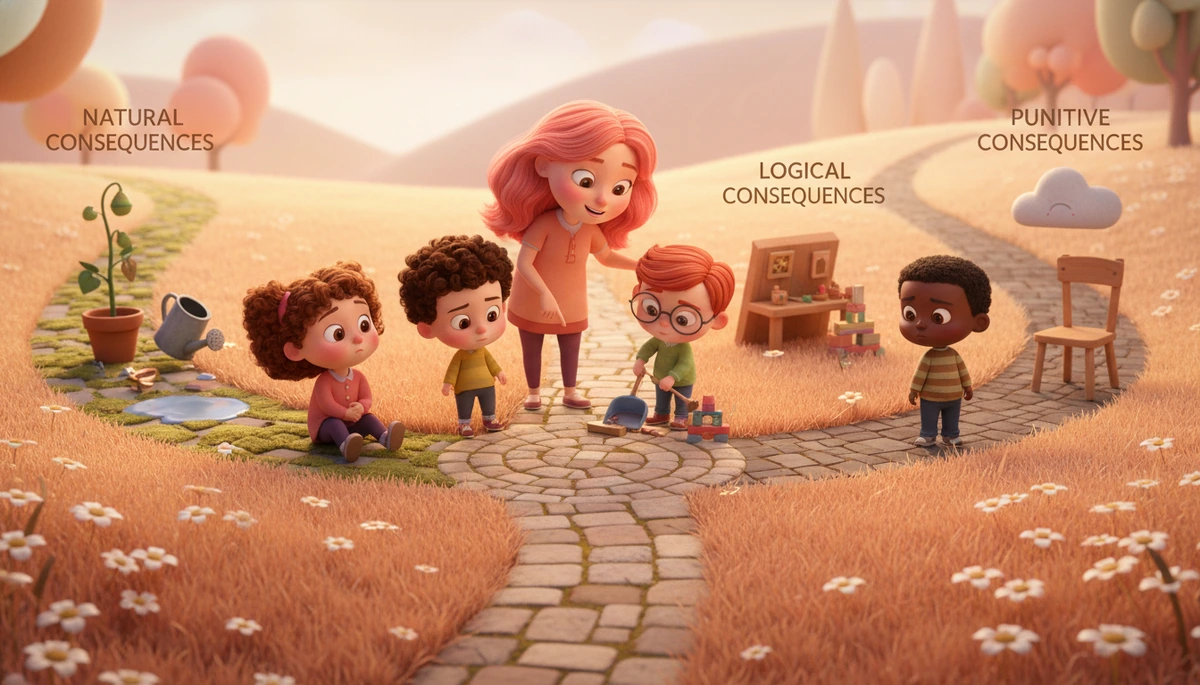
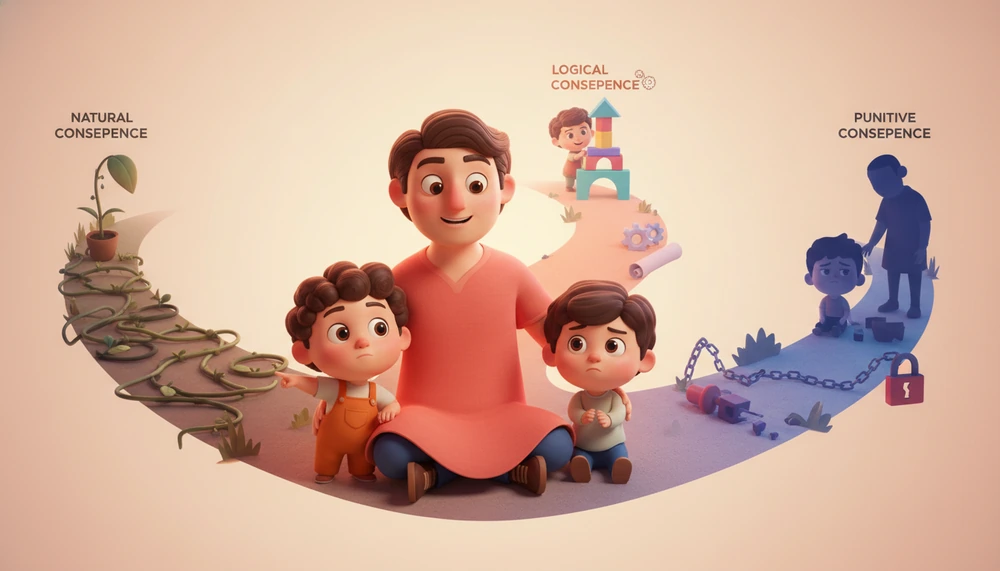
Natural consequences occur naturally without any intervention—like feeling cold after refusing to wear a jacket. Logical consequences are related to the action but require adult intervention, such as taking away a toy that was used to hit another child. Punitive consequences involve punishment and often do not relate to the behavior, like giving a time-out for spilling milk accidentally.
Natural consequences allow children to learn from the real-world impact of their choices, fostering self-awareness and responsible decision-making. Logical consequences should be used sparingly and thoughtfully to guide behavior without punishment. Punitive consequences, however, can undermine a child's trust and confidence, as they often fail to teach the desired lesson. Instead of understanding the impact of their actions, children may only learn to avoid punishment, missing the opportunity to develop empathy and accountability.
Why Punishment Teaches the Wrong Lesson
Many parents default to punishment, but research shows it teaches the wrong lessons. Punitive measures can lead to fear and resentment rather than understanding and growth. According to Bandura's Social Cognitive Theory, children learn behaviors through observation and imitation 2. When they observe punishment, they may mimic punitive behaviors themselves, potentially harming their social awareness and relationship skills.
In my practice, I've seen many parents struggle with this balance. One family opted for natural consequences over punishment and noticed their child became more empathetic and responsible. The child learned to associate their actions with outcomes, rather than fearing parental wrath. This shift not only improved their decision-making skills but also strengthened their relationship with their parents.
Worked Example of Punishment's Impact
Imagine a child, Sam, who often forgets to tidy up his toys. Previously, his parents would scold him and take away his favorite toys as punishment. Over time, Sam became more defiant and less cooperative. However, when his parents switched to logical consequences, like setting a timer for cleanup and offering praise for timely tidying, Sam began to understand the importance of responsibility and felt more motivated to cooperate.
When Natural Consequences are Safe to Allow
Allowing natural consequences can be an effective teaching tool when the child’s safety is not at risk. For example, not bringing a toy to the park means the child has nothing to play with, offering a lesson in planning and decision-making.
Safe natural consequences:
- Feeling hungry if they skip a snack
- Missing a favorite show due to procrastination
- Getting wet after refusing an umbrella
These scenarios teach children about planning and foresight, essential components of responsible decision-making. Consider using social stories to illustrate these concepts. Explore our collection here.
Additionally, natural consequences help children develop self-management skills by learning to regulate their behaviors to avoid undesirable outcomes. For instance, a child who gets wet after refusing an umbrella might choose to carry one next time, showing growth in foresight and planning.
When Natural Consequences are NOT Safe
There are times when natural consequences pose a risk to the child’s well-being or safety, and intervention is necessary. For example, a child refusing to wear a seatbelt should not be allowed to experience the natural consequence of a car accident.
Intervene when:
- Safety is compromised (e.g., refusing to wear a helmet)
- Emotional harm is possible (e.g., bullying)
- Long-term health is at risk (e.g., not taking medication)
In these cases, guide the child with logical consequences or alternative solutions, like explaining the importance of safety gear and modeling its use. Modeling is a powerful tool, as children learn from observing trusted adults. For instance, always wearing a seatbelt and explaining its importance can reinforce the habit for children.
Logical Consequences: A Careful Framework
Logical consequences bridge the gap when natural ones are unsafe or impractical. They should be directly related to the action and presented calmly, without anger or frustration. According to Jane Nelsen's Positive Discipline, logical consequences should be respectful, reasonable, and related 1.
Framework for logical consequences:
- Connect: Ensure the consequence is logically related to the behavior.
- Respect: Present it without shaming or blaming the child.
- Timing: Apply it immediately after the behavior.
For example, if a child refuses to share a toy, a logical consequence might be taking a short break from play to discuss feelings and solutions. This approach not only addresses the immediate situation but also fosters relationship skills by encouraging empathy and communication.

ADHD and Impulse Control
Children with ADHD may struggle more with impulse control, making natural consequences challenging. Strategies should focus on building self-management skills and adjusting expectations.
Adapting strategies:
- Visual reminders: Use charts or checklists for tasks.
- Structured choices: Offer limited options to prevent feeling overwhelmed.
- Role-playing: Practice scenarios in advance.
These strategies help children with ADHD by providing structure and clarity, reducing the likelihood of impulsive actions. For example, a visual schedule can remind a child to complete tasks, enhancing their ability to manage time and responsibilities effectively.
Examples by Age
Ages 3-5
At this stage, children are beginning to understand simple cause and effect. Natural consequences are powerful because they align with their developmental stage.
Example: If a 4-year-old refuses to wear gloves, they may feel cold during playtime. A gentle reminder with, “Your hands might get cold,” helps them connect feelings with actions. This encourages self-awareness and decision-making, as the child learns to anticipate and respond to their needs.
Ages 6-8
Children’s understanding of consequences deepens. Logical consequences can reinforce lessons in empathy and cooperation.
Example: If an 8-year-old disrupts class, a logical consequence might be spending a few minutes discussing how their actions affect others, guided by a teacher. This not only helps the child understand the impact of their actions but also fosters social awareness and responsibility.
Ages 9-12
Older children can grasp more complex consequences. They can benefit from discussions around social impact and personal responsibility.
Example: A 10-year-old who forgets a homework assignment can understand the consequence of explaining the situation to their teacher, fostering accountability and planning skills. This scenario encourages them to take ownership of their actions and explore strategies to improve their organization.
Explore more scenarios and support tools in our guide on Decision-Making Milestones: From Age 4 to 12.
References
1 Nelsen, J. (2006). Positive Discipline. 2 Bandura, A. (1991). Social cognitive theory of self-regulation. Organizational Behavior and Human Decision Processes, 50, 248-287.
Try It This Week
Reading is the easy part. Skills build through small, repeated practice — here's a low-pressure plan you can try with your child.
- 1Observe natural consequencesDaily, 5 minNotice everyday natural consequences your child experiences and discuss them. Reinforces decision-making and foresight.👉 What this looks likeDuring a rainy day, let your child decide whether to carry an umbrella. If they choose not to and get wet, discuss how it felt and what they might do next time. Say, "How did it feel getting wet? What could we do differently next time?" This helps them connect actions with outcomes naturally.
- 2Use logical consequences respectfullyOnce this weekIntroduce a logical consequence for a common issue, focusing on respect and relation to the behavior.👉 What this looks likeIf your child leaves their toys scattered, calmly explain they need to put them away before dinner. If they don't, the toys go in 'time-out' for the evening. Say, "We need a clear floor to safely move around. Let's try putting them away together next time." This teaches responsibility without punishment.
- 3Discuss feelings during conflictsThis weekendEncourage open conversations about emotions during conflicts to build empathy and relationship skills.use this story →👉 What this looks likeAfter a sibling quarrel, gather both kids and discuss how each felt. Ask, "How did it feel when your toy was taken? What can we do to make it right?" Guide them in finding a resolution, fostering empathy and communication.
- 4Role-play common scenariosDay 2-3Practice role-playing to prepare for future situations, improving social awareness and self-management.in the SocialBlossom app →👉 What this looks likeRole-play a scenario where your child has to wait their turn. Take turns being the waiting child and the one being waited for. Use phrases like, "Thank you for waiting," to show appreciation. This practice helps them manage impulses and respect others' needs.
- 5Create a visual reminder chartThis weekendDesign a chart with your child to track daily responsibilities, enhancing self-management skills.👉 What this looks likeTogether, create a chart listing daily tasks like brushing teeth and packing their school bag. Use stickers for completion. Say, "Let's check off what we've done today!" This visual aid supports routine-building and accountability.
Frequently Asked Questions
What are natural consequences?
Why are logical consequences important?
Can punishment be effective in teaching children?
How can parents help children with ADHD understand consequences?
When should natural consequences be avoided?
References