Supporting Kids with ADHD: Making Time Tangible

Understanding Time Blindness in Kids with ADHD
Time blindness is a common experience for kids with ADHD. It refers to the difficulty in perceiving and estimating time accurately. This can often lead to challenges in completing tasks on time, arriving on time, or even understanding how long an activity might take. Dr. Russell Barkley describes this as a core element of ADHD because it affects the executive functions that help manage time effectively 1. Recognizing time blindness as a part of ADHD helps shift our focus from blaming the child to supporting them with appropriate tools and strategies.
To truly grasp the concept of time blindness, think of it as similar to having no internal clock. Imagine trying to bake without a timer; you might end up with a burnt cake or a gooey mess. Kids with ADHD often feel this way about their daily schedules. In my practice, I have seen how parents feel frustrated, not understanding why their child can't "just hurry up." Understanding that this isn't a choice, but a challenge, can be a crucial step toward empathy and effective support.
This article is part of our complete guide to Executive Function Skills for Kids with ADHD, where you can explore more about how ADHD affects different aspects of a child's life and how you can assist them.
Why Digital Clocks Might Not Help
Digital clocks, while convenient, can be less effective for children with ADHD. Unlike analog clocks, digital clocks do not provide a visual representation of the passing time. This can make it hard for children to visualize how much time they have left to complete a task. Kids with ADHD often benefit from visual cues that help them conceptualize time, which digital clocks fail to provide.
In my practice, I have observed that children who struggle with time management often find digital clocks confusing. They require constant translation of numbers into a concept of time, which isn't intuitive for everyone. Analog clocks, with their moving hands, offer a clearer depiction of time passing and remaining.
Example: Imagine a child trying to finish homework before dinner. With a digital clock, they might see "5:47" but not grasp how much time remains until 6:00. An analog clock, however, shows the hand moving closer to the hour, visually representing the dwindling time. This visualization can be crucial for motivation and time management.
Making Time Visible: Tools and Strategies
Time Timers and Analog Clocks:
Time Timers are excellent tools for making time visible. These devices use a disappearing disk to visually represent the passage of time, which can help children understand how much time is left. Similarly, analog clocks with clear, large numbers and hands can help children see time as a moving entity rather than just numbers on a screen.
Visual Countdown Charts:
Visual countdowns can be created using charts or apps that display time passing in a colorful, engaging way. They can be as simple as a pie chart that gradually fills or empties as time progresses.
Scripted Dialogue Example:
- Parent: "Let's set the Time Timer for 10 minutes."
- Child: "Why do we need this?"
- Parent: "This way, you can see how much time is left for playtime. When the red part is gone, it's time to start homework."
In my practice, I recommend using these tools not just for tasks but also for transitions between activities, such as moving from playtime to bedtime. This helps children predict and prepare for changes, reducing anxiety and resistance.

Building Time Estimation Skills Through Games
Games can be an enjoyable way to help children with ADHD develop their time estimation skills. A simple game like "Guess the Minute" can be played by having your child close their eyes and raise their hand when they think a minute has passed. This helps them develop an internal sense of timing.
Another fun game is "Beat the Timer," where children race against a timer to complete simple tasks, like cleaning up toys or brushing their teeth. This not only makes routine tasks more engaging but also helps them learn to gauge time better.
In my practice, I often suggest parents incorporate such games into daily routines. For example, while waiting for cookies to bake, ask your child to guess how many minutes have passed. This practice helps reinforce their natural sense of time and can even become a bonding experience.

Morning Routine: Making Time Visible
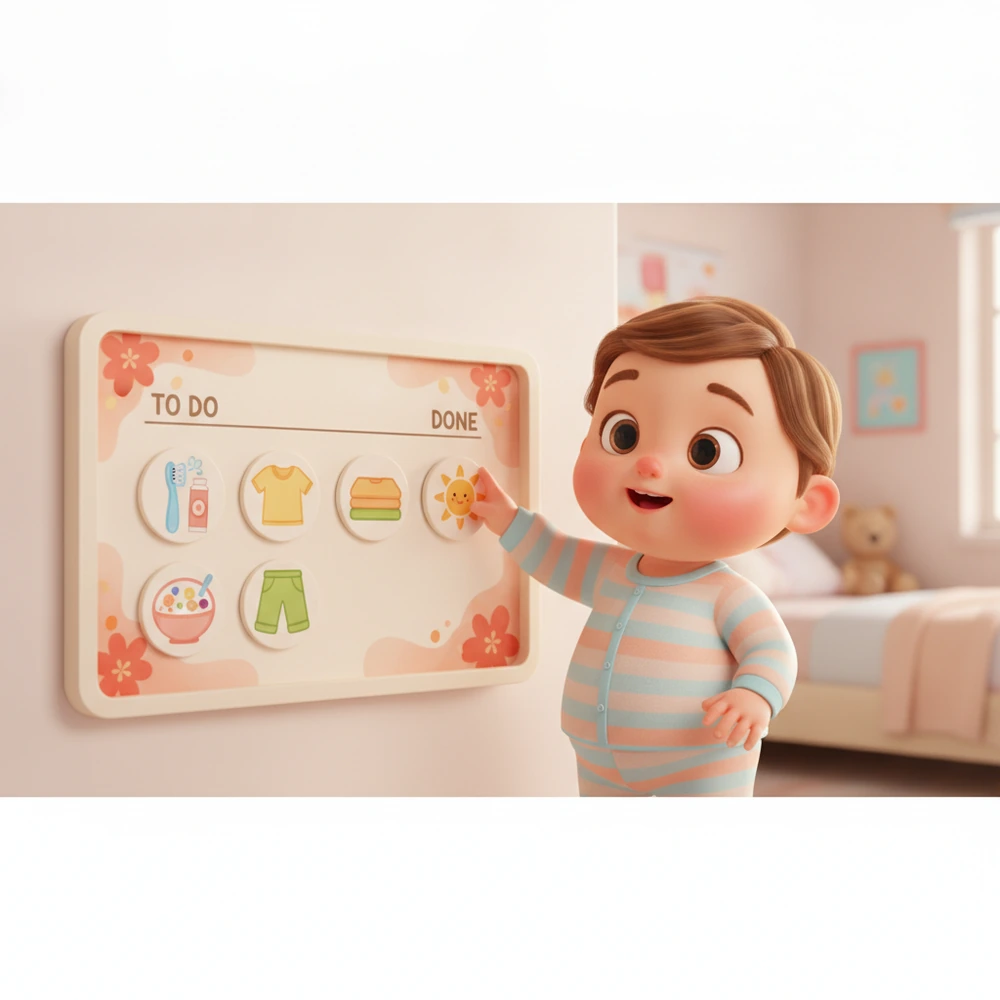
A consistent morning routine can set the tone for the day. By making time visible in the morning, children can better manage their activities and reduce stress. Consider using a visual schedule with images or icons representing each task, such as brushing teeth, getting dressed, and packing a backpack.
Real-Life Script for Morning Routine:
- Parent: "Let's check our morning chart together."
- Child: "Okay, first is getting dressed."
- Parent: "Great! We have 10 minutes for that. I’ll start the timer."
Example: Imagine a child who struggles with getting ready on time. Using a visual schedule, they see a sequence of pictures: toothbrush, shirt, backpack. As each task is completed, they can move the picture to a "done" column, giving a sense of accomplishment and progress.
Homework: Chunking with Timers
Chunking tasks can make homework less overwhelming for children with ADHD. Break assignments into smaller, manageable pieces and use timers to keep your child focused and aware of time.
Scripted Dialogue Example:
- Parent: "Let's do math for 15 minutes, then take a break."
- Child: "Can we use the timer?"
- Parent: "Absolutely, it will help us stay on track."
Example: During a math session, set a timer for 15 minutes. When it rings, pause for a break. This cycle not only helps maintain focus but also prevents fatigue, making homework sessions more productive and less stressful.
When to Combine with Medication Conversations
While non-medical strategies are crucial, discussing medication options with your pediatrician can be beneficial for some families. Medications can help manage symptoms that tools alone can't address, providing a balanced approach to helping your child succeed.
In my practice, I've seen many parents who find that a combination of both strategies and medication provides the best support for their child. It's essential to have open conversations with healthcare professionals to determine what works best for your family.
Taking a holistic approach often yields the best outcomes. This means considering all aspects of a child's life, including school, home, and social environments. It's about finding the right balance that supports their unique needs and strengths.
References
1 Barkley, R. (2012). Executive Functions: What They Are, How They Work, and Why They Evolved. Guilford.
2 Barkley, R. (1997). Behavioral inhibition, sustained attention, and executive functions. Psychological Bulletin, 121, 65.
3 CHADD. (n.d.). Understanding ADHD. Retrieved from CHADD.org
4 Journal of Attention Disorders. (n.d.). Retrieved from Journal of Attention Disorders
5 ADDitude. (n.d.). Time Management Tools for ADHD. Retrieved from ADDitudeMag.com
Try It This Week
Reading is the easy part. Skills build through small, repeated practice — here's a low-pressure plan you can try with your child.
- 1Start with a Time TimerDay 1Introduce a Time Timer during a routine activity. Visual tools help children understand the passage of time better than numbers.use this story →👉 What this looks likeDuring playtime, set the Time Timer for 10 minutes. Explain to your child, "When the red part is gone, it's time to tidy up." This makes the transition smoother.
- 2Play 'Guess the Minute'Day 2-3Engage your child in a game where they guess when a minute has passed. Enhances their internal time estimation skills.👉 What this looks likeAs a family, play "Guess the Minute" after dinner. Everyone closes their eyes and raises a hand when they think a minute is up. Celebrate the closest guess!
- 3Create a Morning ChartThis weekUse a visual schedule for the morning routine. Visual cues provide predictability and reduce stress for ADHD kids.in the SocialBlossom app →👉 What this looks likeCreate a chart with icons for each morning task. Move each icon to a 'done' side as tasks are completed. It turns mundane routines into a game.
- 4Chunk Homework TasksDaily, 15 minBreak down homework into smaller sections with timed breaks. Keeps tasks manageable and less overwhelming.👉 What this looks likeDivide math homework into 15-minute chunks. Use a timer to signal breaks. This maintains focus and makes the task feel achievable.
- 5Discuss Medication OptionsThis weekendConsider discussing medication with a pediatrician as part of a comprehensive strategy for ADHD management.👉 What this looks likeSchedule a conversation with your child's healthcare provider. Discuss how medication might work with current strategies to support your child's needs.
Frequently Asked Questions
What is time blindness in ADHD kids?
How can I help my child with ADHD manage time better?
Why do digital clocks often not work well for ADHD kids?
What are some activities to teach time estimation?
Should I consider medication for my child's time management issues?
Can social stories help with time management for ADHD children?
References
- Barkley, R. (2012). Executive Functions: What They Are, How They Work, and Why They Evolved. Guilford.
- Barkley, R. (1997). Behavioral inhibition, sustained attention, and executive functions. Psychological Bulletin, 121, 65.
- CHADD. (n.d.). Understanding ADHD. Retrieved from CHADD.org
- Journal of Attention Disorders. (n.d.). Retrieved from Journal of Attention Disorders
- ADDitude. (n.d.). Time Management Tools for ADHD. Retrieved from ADDitudeMag.com