The 3-Step Role-Play Method for Social-Emotional Learning
Why One-Time Role-Play Doesn't Transfer
Role-play is a powerful tool for developing social-emotional skills, yet many parents find that a single session often doesn't lead to lasting changes. This is because one-time role-play lacks the depth needed for children to truly internalize and apply what they've learned. Children need repetition and variety to transfer skills from the pretend world to real-life situations. This article is part of our complete guide to Role-Play and Pretend Play as SEL Tools.
Albert Bandura's Social Learning Theory emphasizes that learning occurs through observation and imitation, but also through practice and reinforcement 1. Without these elements, children may struggle to generalize skills beyond the specific context of the role-play. In my practice, I have observed that children who engage regularly in structured role-play sessions demonstrate improved social interactions. They become more adaptable and confident in navigating real-world social challenges.
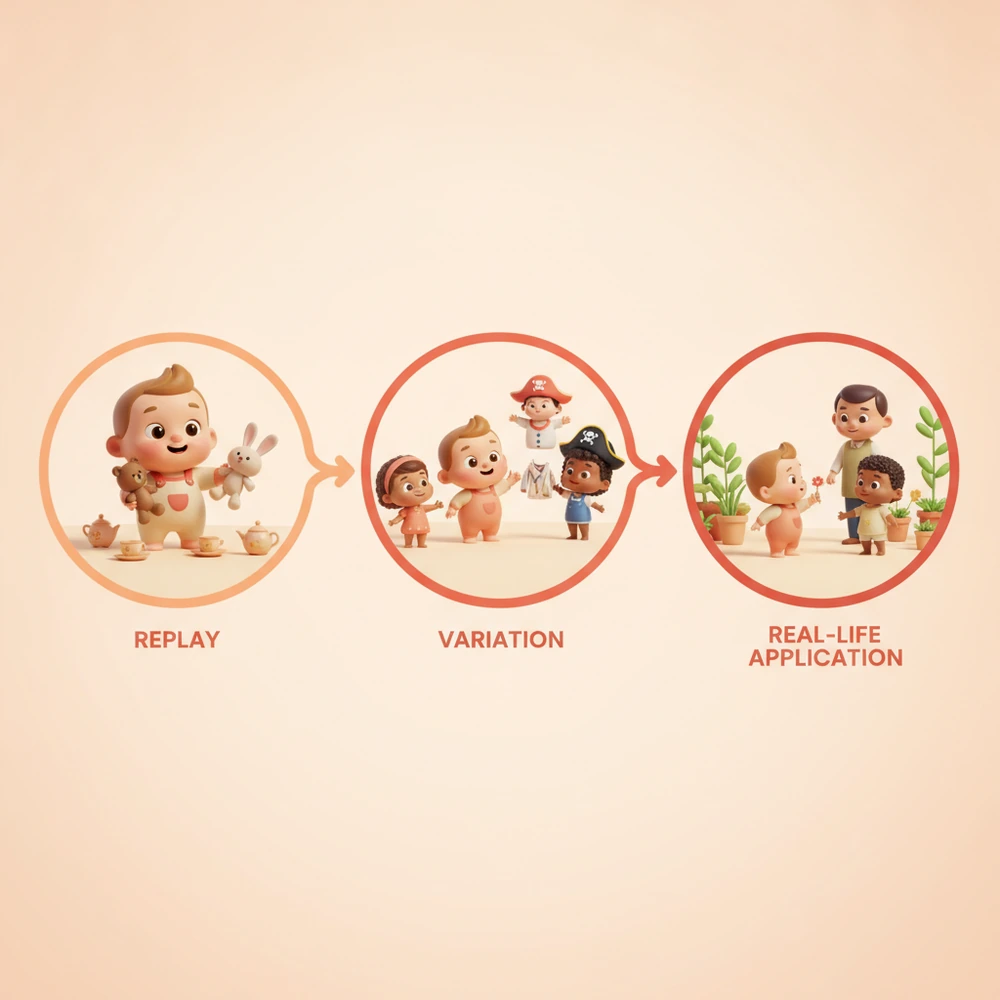
Step 1: Replay the Actual Situation (Literal)
The first step in the 3-step role-play method is to replay the actual situation your child experienced. This involves recreating a scenario as accurately as possible. For instance, if your child felt left out during a group activity at school, you would set up a similar scene at home. This approach helps the child recall and process the event, providing an opportunity to rehearse a positive resolution.
Example: Asking to Join a Group
Imagine your child wants to join a group of kids playing a game. You might say:
- Parent: "Let's pretend you're at school again. I'll be the other kids, and you can ask to join in."
- Child: "Can I play with you?"
- Parent as other kid: "Sure, you can be on my team."
This literal replay helps your child practice the exact words and actions they can use next time. Repetition in role-play allows children to build muscle memory for social interactions, making it easier for them to recall and use these skills spontaneously.
Step 2: Variation (What If X Happened Instead?)
Once your child is comfortable with replaying the real situation, introduce variations. This step involves changing certain elements of the scenario to help your child think on their feet and adapt to new challenges. It encourages flexible thinking and helps children prepare for unexpected responses in social settings.
Example: Different Responses
Change the response your child receives when they ask to join the group:
- Parent as other kid: "Sorry, the game is full."
- Child: "That's okay. Maybe I can join next time."
By exploring different outcomes, your child learns to navigate a range of social interactions, building resilience and flexibility. Variations in role-play scenarios provide a safe environment for children to experiment with different social strategies and understand the dynamics of cause and effect in social contexts.
Step 3: Real-Life Application (Next Time It Happens)
The final step is to apply the skills in real-life situations. Encourage your child to use what they've practiced during their daily interactions. This transition from practice to application solidifies the skills, making them part of the child's natural behavior.
Example: Real-World Scenario
The next time your child approaches a group at recess, remind them of their role-play practice:
- Parent: "Remember how we practiced asking to join in? You can do it just like we did at home."
This reinforcement helps bridge the gap between practice and real-world application, making the skills more likely to stick. In my practice, I have seen children who regularly apply role-play skills in real life develop a stronger sense of self-confidence and social competence.
Worked Example: 'Asking to Join a Group at Recess'
Let's walk through a detailed example of how the 3-step role-play method works in practice.
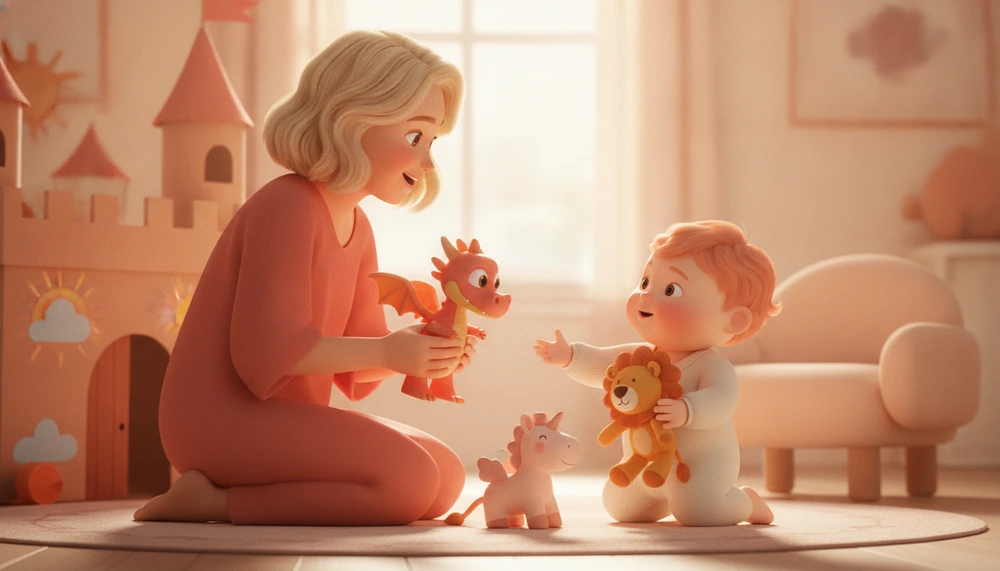
- Replay: Set up a scene where your child approaches a group of stuffed animals (representing kids).
- Variation: Change the scenario by having one "animal" say no, and another suggest a different activity.
- Real-Life Application: Encourage your child to try joining a group at the playground and reflect on their experience afterwards.
When to Add a Social Story
Social stories can be a powerful supplement to role-play. They provide a visual and narrative framework that helps children understand social norms and expectations. Consider adding a social story like Playing Nicely with Friends at Preschool when your child needs extra support in understanding social cues.
Social stories offer step-by-step scenarios that children can visualize and rehearse mentally. You can find a collection of them at our products page. These stories can be especially helpful for children who struggle with anxiety in social settings, offering a comforting preview of what to expect.
When Kids Resist Role-Play (and What to Do)
It's natural for some children to resist role-play, especially if they're feeling shy or self-conscious. In my practice, I've seen many parents successfully overcome this by making the activity more engaging. Start by involving your child's interests and using toys or characters they love. This approach not only makes role-play more appealing but also helps children connect emotionally to the scenarios.
Scripted Dialogue:
- Parent: "Let's pretend your favorite toy is in the game. How would they ask to join?"
- Child: "Can my dinosaur play with you?"
By incorporating elements that are fun and familiar, children are more likely to engage and benefit from the practice. Additionally, role-play can be integrated into everyday routines, such as bath time or bedtime, where children are more relaxed and open to imaginative play.
References
1 Bandura, A. (1977). Social Learning Theory. Retrieved from https://en.wikipedia.org/wiki/Social_learning_theory
2 Lillard, A. (2013). Pretend play and child development. Retrieved from https://pubmed.ncbi.nlm.nih.gov/
Try It This Week
Reading is the easy part. Skills build through small, repeated practice — here's a low-pressure plan you can try with your child.
- 1Replay a Recent ScenarioDay 1Select a recent social scenario your child encountered and replay it at home. Practice the dialogue and actions.Find resources →👉 What this looks likeAfter school, replay a scenario where your child was unsure how to join a game. Use toys to represent other kids. Reinforce positive social actions like asking, 'Can I join?' and responding, 'Sure, come on in!' This helps children practice real-life interaction skills in a safe setting.
- 2Introduce a VariationDay 2-3Change elements of the replayed scenario to introduce new challenges. This builds adaptability.Learn more about variations →👉 What this looks likeReplay the same scenario but change the outcome. If the toy group says 'no', have your child practice how to handle it by suggesting, 'Maybe next time, or can I watch?' This helps develop resilience and flexibility.
Frequently Asked Questions
What is the 3-step role-play method?
Why doesn't one-time role-play work?
How can I make role-play more engaging for my child?
When should I use social stories?
How can role-play help with social skills?
References