Creating a Holistic Bedtime Routine for Neurodivergent Children

Why Bedtime Schedules Need a Calm-Down Arc (Not a Checklist)
A bedtime routine should be more than just a checklist. Many parents turn to visual schedules to help structure their children’s nights, but often these schedules become overwhelming with too many steps. Instead of a checklist, a calm-down arc focuses on transitioning smoothly from activities of the day to a restful night’s sleep. This approach is especially beneficial for neurodivergent children, helping them regulate emotions and prepare for sleep.
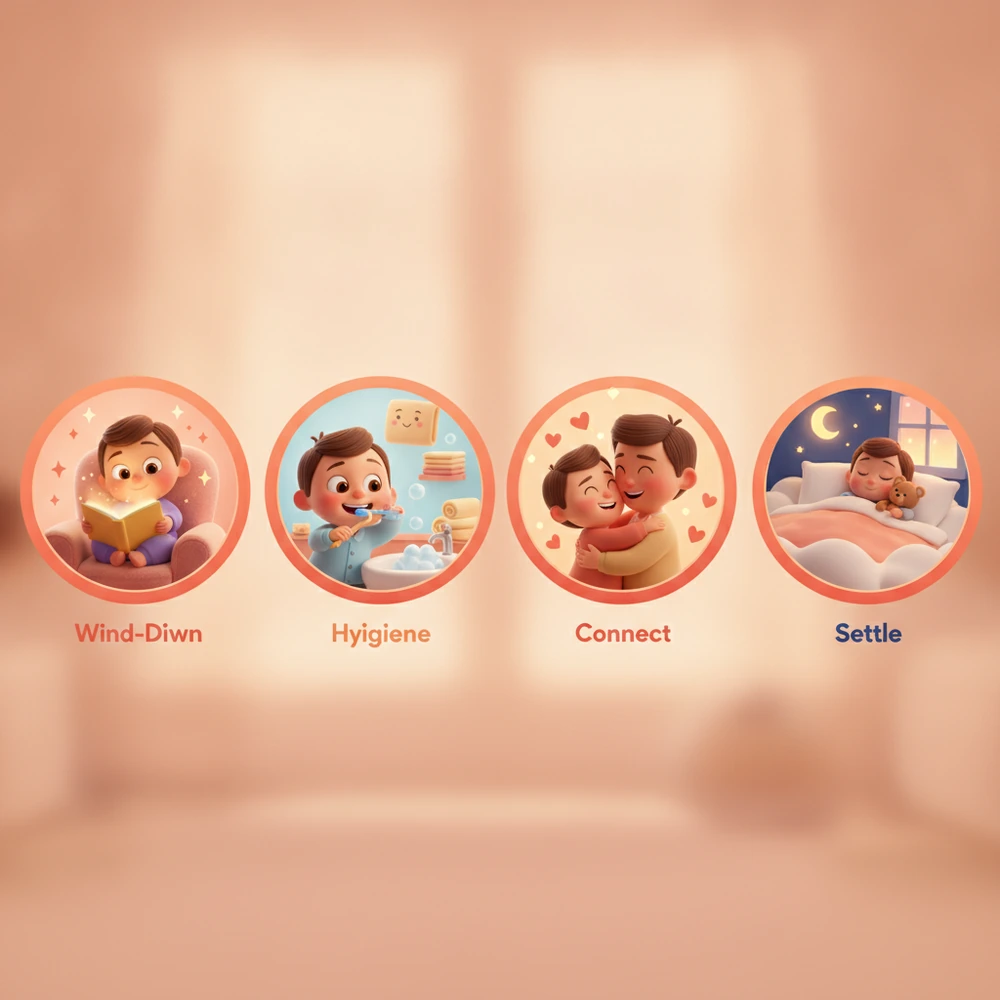
Incorporating a calm-down arc into bedtime routines aligns with SEL principles by promoting self-regulation and emotional awareness. The four stages—wind-down, hygiene, connect, and settle—help children gradually ease into sleep. This article is part of our complete guide to visual schedules, offering templates and tips for a more effective bedtime routine.
Furthermore, by focusing on the emotional tone of the bedtime process, parents can foster a sense of security and predictability. This not only aids in reducing anxiety but also enhances the child’s ability to manage emotions independently over time. This method supports the CASEL framework by building self-management skills and promoting responsible decision-making as children learn the importance of routines in their daily lives.
Stage 1: Wind-Down (60 Minutes Before Lights-Out)
The first stage of the bedtime routine should begin about an hour before sleep. This is the wind-down period, where activities slow down and the environment becomes more soothing.
- Dim the lights and reduce noise.
- Engage in quiet activities like reading or puzzles.
- Limit screen time to avoid overstimulation.
In my practice, I've seen many families struggle with overstimulating activities close to bedtime. Switching to a calm activity like reading a story or engaging in a simple puzzle significantly improves the transition to sleep.

Example: A Calming Story
Imagine your child, Alex, is having difficulty winding down. You decide to read a story together. Pick a comfortable spot, dim the lights, and read a book like Cozy Bedtime Routine Tonight - Printable Social Story. This helps Alex relax and signals it’s time to transition to bedtime.
Additionally, consider integrating mindfulness exercises such as deep breathing or guided imagery. These activities not only calm the nervous system but also teach children valuable skills for managing stress. For instance, guiding Alex through a simple breathing exercise can help him learn to focus and relax his body before sleep, reinforcing self-regulation skills.
Stage 2: Hygiene (15 Minutes)
Next is the hygiene stage, where children prepare physically for sleep. This stage is crucial as it sets a routine that fosters independence and responsibility.
- Brushing teeth
- Washing face or having a quick bath
- Changing into pajamas
Research indicates that consistent hygiene routines can enhance sleep quality for children 1.

Example: Independence in Hygiene
Picture Maya, who often resists brushing her teeth. You set a timer for 15 minutes and make it a game. Maya follows a visual schedule for her hygiene routine, which includes a fun sticker system for completing tasks.
To enhance this stage, consider using a visual checklist that Maya can cross off as she completes each task. This not only makes the routine more engaging but also empowers her by giving a sense of accomplishment and responsibility. Such strategies support SEL by promoting self-awareness and responsible decision-making.
Stage 3: Connect (Story, Talk)
This stage emphasizes emotional connections, vital for emotional security and well-being. Engaging in a calming story or simply talking about the day strengthens your bond with your child.
- Read a favorite bedtime story.
- Talk about the day’s highlights and challenges.
- Practice gratitude by naming things you’re thankful for.
Scripted Dialogue
Instead of saying, “Go to sleep now,” try this: “I loved hearing about your day. Let’s read one more story together before you sleep.” This dialogue fosters a sense of security and connection.
Another effective technique is to use this time for a gratitude practice. Ask your child to name three things they are thankful for from the day. This practice not only ends the day on a positive note but also encourages them to reflect on their daily experiences, fostering emotional awareness and gratitude.
Stage 4: Settle (Room Cues)
The final stage involves setting the environment to signal sleep time. This can include adjusting room lighting or using white noise to create a calming atmosphere.
- Use a nightlight with soft colors.
- Play gentle music or white noise.
- Ensure a comfortable room temperature.

Real-Life Script: Setting the Scene
Imagine it’s bedtime for Eli. You turn on a soft nightlight, play calming ocean sounds, and say, “I’ll leave the door slightly open. You’re safe and loved. Goodnight.” This consistent routine helps Eli feel secure and ready to sleep.
To further enhance this stage, consider involving your child in choosing their room cues. Allow them to pick their nightlight color or the type of white noise. This involvement not only gives them a sense of control but also teaches them about decision-making and self-management.
Common Pitfalls (Screens, Late Protein, Too Many Steps)
While establishing a bedtime routine, avoid common pitfalls that can disrupt sleep. Screens emit blue light, which can interfere with melatonin production. Protein-heavy snacks too close to bedtime can cause restlessness. Finally, overcomplicating the routine with too many steps can lead to confusion and resistance.
- Turn off screens at least an hour before bedtime.
- Offer a light snack like a banana if needed.
- Keep the routine simple and consistent.
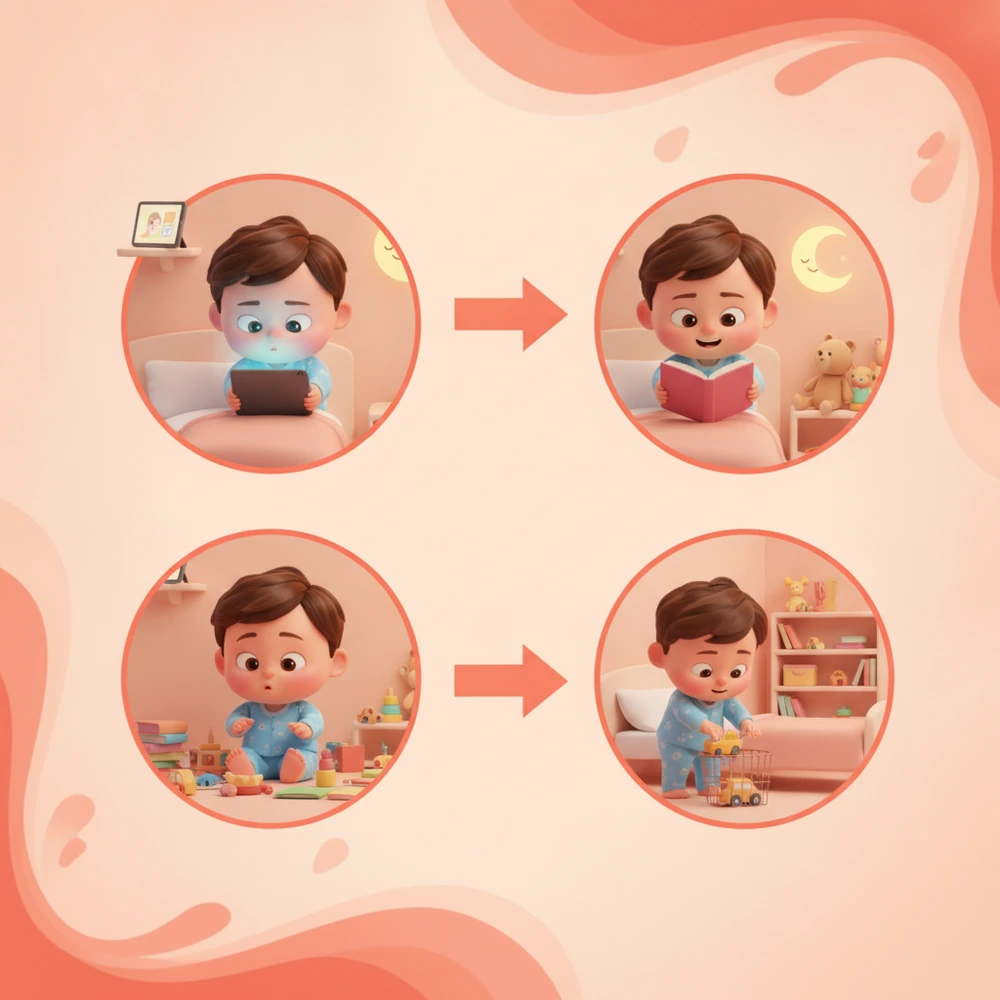
Instead of cutting screens abruptly, gradually reduce screen time leading up to bed. For example, replace screen time with family board games or interactive storytelling, which can be accessed in the SocialBlossom app.
Free Download: 4-Stage Visual
For an easy-to-follow bedtime routine, download our free 4-stage visual schedule. This template simplifies the process and helps children understand what comes next, reducing anxiety and fostering independence.
Download your free bedtime routine visual schedule here.
References
1 AAP Pediatric Sleep Recommendations. https://www.aap.org/
2 Prizant, B. et al. (2006). The SCERTS Model.
3 CDC Developmental Milestones. https://www.cdc.gov/ncbddd/actearly/milestones/index.html
4 CASEL Framework. https://casel.org/fundamentals-of-sel/what-is-the-casel-framework/
Try It This Week
Reading is the easy part. Skills build through small, repeated practice — here's a low-pressure plan you can try with your child.
- 1Create a Wind-Down EnvironmentDay 1Dim lights and engage in quiet activities an hour before bed. This sets the tone for relaxation and helps manage transitions.Cozy Bedtime Routine Tonight →👉 What this looks likeAfter dinner, dim the living room lights and suggest a quiet puzzle time. Say, 'Let's solve this puzzle quietly together before bed.' This cues your child into the wind-down period.
- 2Make Hygiene FunDay 2Turn hygiene routines into a game. Use timers or rewards to encourage participation and independence in this step.👉 What this looks likeDuring teeth brushing, set a 2-minute timer and say, 'Let's see if you can brush until the timer rings!' Reward them with a sticker for completing the task. This builds excitement and routine.
- 3Share a Gratitude MomentDaily, 5 minEnd the day with gratitude. Ask your child to name three things they're thankful for, reinforcing positive reflections.in the SocialBlossom app →👉 What this looks likeBefore bed, sit with your child and say, 'Let's think of three things we're thankful for today.' Listen as they share, reinforcing their emotional awareness and positivity.
- 4Settle the Room with CuesThis weekendInvolve your child in choosing room cues like nightlight colors or sounds. This inclusion fosters control and comfort.👉 What this looks likeAsk your child, 'Would you like the blue nightlight or the green one tonight?' Let them choose the nightlight color and sound. This involvement enhances their sense of security and independence.
- 5Review and Simplify the RoutineOnce this weekEvaluate the bedtime routine. Remove unnecessary steps to keep it simple and effective, fostering consistency.visual schedules complete guide →👉 What this looks likeObserve the bedtime process and identify any step that causes stress or delay. Simplify it by saying, 'Let's focus on the three most important steps tonight,' to streamline the routine.
Frequently Asked Questions
Why is a bedtime routine important for neurodivergent children?
How can I make bedtime easier for my child?
What should I avoid in a bedtime routine?
How can visual schedules help with bedtime?
What are some calming activities for bedtime?
How does SEL relate to bedtime routines?
References
- AAP Pediatric Sleep Recommendations.
- Prizant, B. et al. (2006). The SCERTS Model.
- CDC Developmental Milestones.
- CASEL Framework.