Mastering Visual Schedules: A Comprehensive SEL Guide for Parents

Introduction to Visual Schedules
In the hustle and bustle of daily life, routines can often become overwhelming for both parents and children. Visual schedules are powerful tools that offer a structured way to manage expectations and transitions throughout the day. By using images and symbols, these schedules provide clarity and predictability, which can be especially beneficial for children who thrive on routine, such as those with autism.
Visual schedules aren't just for children with specific needs. They can assist any child in understanding what comes next, reducing anxiety and building independence. However, it's important to know when a schedule might backfire, leading to rigidity and stress instead of comfort. In this guide, we'll explore the benefits, potential pitfalls, and provide free templates for you to try.

In This Guide
- Morning Routine Visual Schedule: Free template for ages 3-12.
- Bedtime Routine Visual Schedule: Helps calm down and connect before sleep.
- First-Then Boards: Simpler, Often Better: Discusses when simpler tools work best.
- Visual Schedules: Autistic vs Neurotypical Kids: Explores different needs.
Understanding Visual Schedules
What Are Visual Schedules?
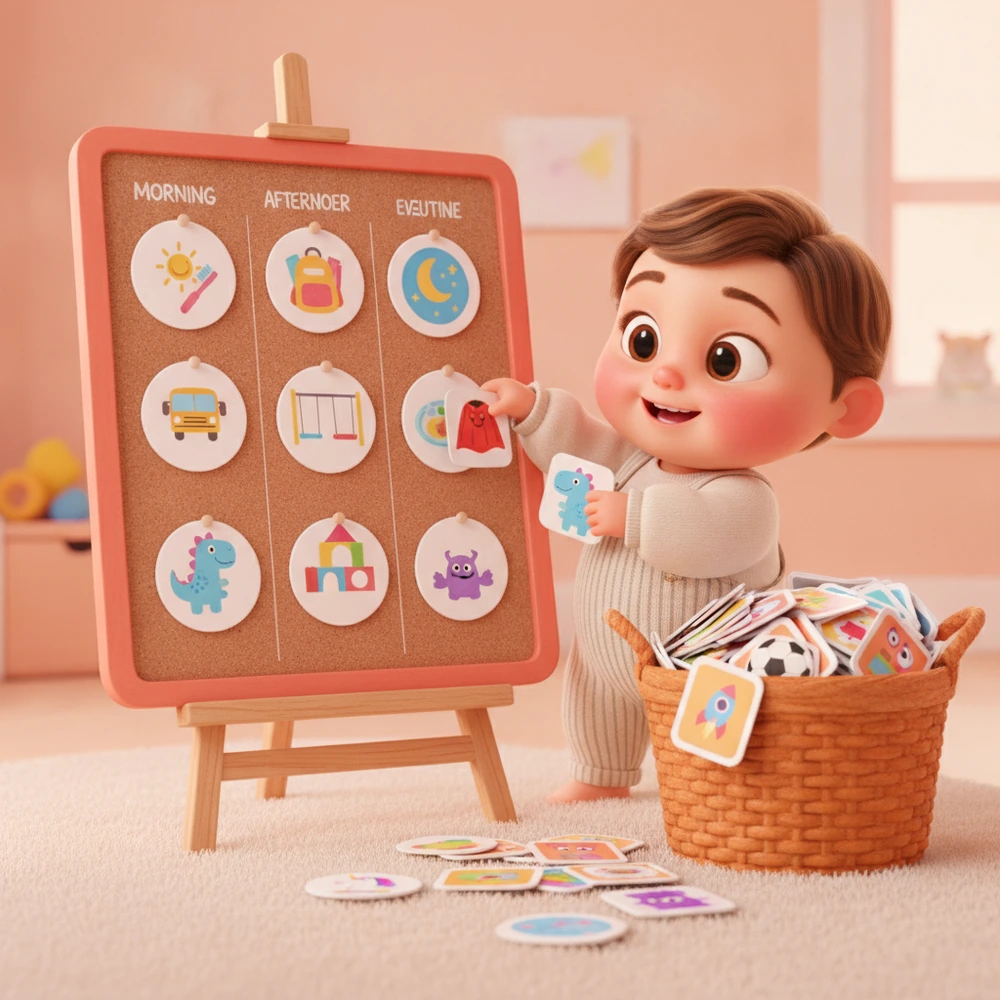
Visual schedules are tools that use pictures, symbols, or words to represent a sequence of activities or tasks. They can vary from simple one-step tasks to complex multi-step processes, depending on the needs of the child. The main goal of a visual schedule is to provide predictability and structure, helping children understand what to expect throughout their day.
Research has shown that visual supports can significantly enhance communication and comprehension in children with autism 2. While many assume all children benefit from these supports, it's crucial to discern when they are truly necessary or when they might cause stress by being too rigid.
Example: The Power of Simplicity
Consider a child who struggles with transitions. A simple visual schedule showing two pictures—one of the current activity and one of the next—can significantly reduce anxiety. For instance, a picture of a book followed by a picture of a playground can help a child smoothly transition from reading time to playtime, knowing what to expect next.
Who Benefits from Visual Schedules?
Visual schedules can be particularly beneficial for children who:
- Have difficulty with transitions: Knowing what to expect next can reduce anxiety.
- Thrive on routine: A consistent schedule can provide comfort and stability.
- Have communication challenges: Visuals can bridge gaps in understanding.
However, not all children need visual schedules. For some, especially those who are flexible and adaptable, a strict schedule might lead to unnecessary rigidity.
In my practice, I've seen many parents of neurodivergent children find relief in visual schedules. They often report that their child feels more secure and less anxious about changes in routine, allowing for smoother transitions throughout the day.
Creating Effective Visual Schedules
Components of a Good Visual Schedule
When designing a visual schedule, consider these components:
- Clarity: Use clear, simple images or symbols.
- Consistency: Keep the schedule consistent daily but allow for flexibility.
- Engagement: Involve your child in creating and updating the schedule.
In my practice, I've noticed that involving children in the process of creating their schedules not only increases their engagement but also enhances their understanding and ownership of the routine. For example, allowing them to choose pictures or drawings for each activity can make the schedule more personal and intuitive.
Example: Morning Routine Visual Schedule
Imagine your child, Sam, struggles with morning transitions. A visual schedule can help:
- Wake Up: Picture of a bed with an arrow pointing to a sun.
- Brush Teeth: Image of a toothbrush.
- Get Dressed: Picture of clothes laid out.
- Breakfast: Image of a breakfast table.
- Pack Bag: Backpack icon.
This sequence helps Sam know exactly what's expected each morning, reducing anxiety and improving time management.

Building Flexibility into Schedules
While visual schedules are structured, incorporating flexibility is crucial. For example, using a dry-erase board allows for easy adjustments. This way, if an unexpected event occurs, such as a doctor’s visit, it can be seamlessly integrated into the day's plan without causing distress.
When Visual Schedules Backfire
Recognizing Rigidity
While visual schedules can be beneficial, they may also lead to rigidity if not implemented thoughtfully. Children who rely too heavily on these schedules might struggle with unplanned changes or deviations.
Example Scenario: Imagine Eva, who follows her visual schedule to the letter. One day, due to an unexpected event, her routine is disrupted. Eva finds it challenging to adapt, leading to frustration and anxiety.
To mitigate this, incorporate flexibility within schedules:
- Use “if-then” scenarios: For example, “If it rains, then we’ll play inside.”
- Include surprise elements occasionally to help adjust to unpredictability.
In My Practice: Balancing Structure and Flexibility
In my practice, I've worked with families who initially struggled with the rigidity that visual schedules brought. By gradually introducing flexibility, such as swapping activities or leaving blank spaces for spontaneous choices, children learned to adapt to changes without distress. One family found success by introducing a "wild card" day each week, where the schedule was deliberately left open-ended to encourage adaptability.

Tools and Templates for Visual Schedules
Free Visual Schedule Templates
We offer a variety of free templates that you can download and customize according to your child's needs. These templates include morning and bedtime routines, as well as simple first-then boards for younger children or those who might benefit from a less detailed approach.
- Morning Routine for a Calm Start to Day Support
- Cozy Bedtime Routine Tonight - Printable Social Story
Creating a Personalized Schedule
To personalize a visual schedule:
- Identify key routines: Focus on areas where your child needs the most support.
- Select visuals: Use pictures or symbols your child recognizes.
- Test and adjust: Observe your child's interaction with the schedule and make necessary adjustments.
Example: Adjusting to Feedback
Consider a family who initially used a detailed schedule but noticed their child becoming overwhelmed. By simplifying the schedule to highlight only the core activities, they found that their child was more engaged and less anxious. This iterative process of testing and adjusting is key to finding what works best for each individual child.
Role of Visual Schedules in SEL
Visual schedules are an integral tool in Social-Emotional Learning (SEL), supporting competencies such as self-management, responsible decision-making, and relationship skills. They help children:
- Develop self-awareness by understanding daily routines and expectations.
- Enhance self-management by promoting independence through routine.
- Build relationship skills by reducing misunderstandings and promoting cooperation.
In the broader context of SEL, visual schedules work alongside tools like social stories and emotion charts to create a supportive learning environment.
Real Life Example: Co-Regulation at Bedtime
Scenario: During bedtime, when it's time to wind down, visual schedules can facilitate co-regulation. Picture this: your child is struggling to settle down. Use a bedtime visual schedule:
- Bath Time: Image of a bathtub.
- Story Time: Picture of a book.
- Lights Out: Moon and stars illustration.
As you go through each step, narrate the process, “Now it’s bath time, then we’ll read your favorite story.” This approach not only helps with the routine but also reinforces the parent-child bond through shared activities.
Additional SEL Activities
- Emotion Wheel: Use an emotion wheel to help your child identify and express feelings throughout the day.
- Mindfulness Moments: Incorporate short mindfulness exercises, like deep breathing, to aid transitions between activities.
Additional Resources
Explore more about visual schedules and related SEL tools:
References
- Prizant, B. et al. (2006). The SCERTS Model.
- ASHA — Visual supports in autism communication. Available at asha.org.
- Gray, C. (2010). The New Social Story Book. Future Horizons.
- Dawson, P. & Guare, R. (2018). Smart but Scattered.
Try It This Month
Reading is the easy part. Skills build through small, repeated practice — here's a low-pressure plan you can try with your child.
- 1Create a Morning ScheduleDay 1Develop a visual schedule for morning routines. Helps reduce morning chaos and builds independence.use this story →👉 What this looks likeBegin by sitting down with your child after breakfast. Draw a simple chart with boxes and let your child pick images or draw pictures representing each task—waking up, brushing teeth, getting dressed, and so on. Each morning, use this chart to guide the routine, pointing to each step as you complete it. Over time, your child will begin to anticipate and initiate the next task.
- 2Introduce FlexibilityDay 5Teach adaptability by incorporating changes in the schedule. Builds resilience and adaptability.👉 What this looks likeDuring the week, choose a day to change the order of two activities. For example, if your child usually has playtime followed by a snack, switch them around. Discuss the change in advance: 'Today, we'll have our snack first and then play. Let's see how that feels.' This helps your child learn to adapt to changes without distress.
- 3Engage in Co-CreationThis weekendInvolve your child in creating their schedule. Increases engagement and ownership.👉 What this looks likeTake some time on Saturday to sit with your child and discuss the upcoming week. Ask what activities they would like to include in their schedule. Let them draw or choose images for each activity. This involvement makes them feel valued and more likely to follow the schedule consistently.
- 4Use Emotion WheelsDaily, 5 minIncorporate emotion wheels to help children express feelings. Enhances emotional literacy.emotion charts →👉 What this looks likeAt the end of each day, sit with your child and look at an emotion wheel together. Ask them to point to how they felt during the day: 'Can you show me what your day felt like?' This helps them reflect on their emotions, building self-awareness and communication skills.
- 5Practice Mindfulness TransitionsTwice a weekUse mindfulness to aid transitions between activities. Reduces stress and increases focus.mindfulness for kids →👉 What this looks likeBefore transitioning from one activity to another, like from homework to dinner, take a pause. Lead your child through a simple breathing exercise: 'Let's take three deep breaths together before we move to the next thing.' This practice calms the mind and prepares them for the next task, reducing transition-related anxiety.
Frequently Asked Questions
What is a visual schedule?
Why are visual schedules important for children with autism?
How can I make a visual schedule more flexible?
Are visual schedules beneficial for neurotypical children?
How do visual schedules support SEL?
References