Resolving Children's Conflicts with Restorative Practices
Conflict among children is a common yet challenging aspect of parenting. Many parents find that typical advice like "use your words" often falls short in resolving disputes. This article is part of our complete guide to Social Skills for Kids: A Parent's Guide to Friendship, Sharing & Conflict, offering practical strategies to enhance your child's social skills.
Why Most 'Use Your Words' Advice Fails
Parents frequently encourage children to "use your words" during conflicts, hoping it leads to resolution. However, this advice can fall flat without proper guidance on how to use those words effectively. Children, especially ages 4 to 12, often need more structured support to articulate their feelings and needs.
Self-awareness and self-management are crucial competencies here. Children must recognize their emotions and learn to regulate them before they can communicate effectively. Without these skills, "use your words" becomes an empty prompt that might lead to frustration rather than understanding.
In my practice, I've seen many parents struggle with this approach. They report that their children either clam up or escalate the argument. Effective conflict resolution requires a framework to help kids articulate their feelings and work towards solutions collaboratively.
Enhancing Communication Skills
To truly support children, parents can model effective communication by using "I" statements themselves. This involves expressing one's own feelings and needs without blaming others, such as saying, "I feel upset when toys are taken without asking." This modeling helps children learn to express themselves more effectively. Additionally, role-playing scenarios at home can give children a safe space to practice these skills before they encounter real-life conflicts.
The 5-Step Framework (With Scripts)
The Restorative Practice approach offers a simplified, five-step framework that supports conflict resolution for kids. This model is drawn from restorative justice principles and adapted for children 1. Here’s how you can guide your child through these steps:
- Cool Down
- Each Kid Says What Happened
- Each Kid Says How They Felt
- Brainstorm Together
- Agree + Repair
These steps are designed to foster relationship skills and responsible decision-making by promoting empathy and cooperative problem-solving.
Step 1: Cool Down
Before addressing the conflict, ensure that all involved parties have had time to calm down. This might involve taking deep breaths, counting to ten, or having a few minutes of quiet time. Cooling down helps children access their self-management skills, a critical part of emotional regulation.
Real-Life Script
Imagine your child and their sibling are arguing over a toy. You might say, "Let's take a deep breath and sit quietly for a minute."
- Child 1: "But I want the toy!"
- Parent: "I understand. Let's sit quietly for a minute, and then we'll talk about it."
In My Practice
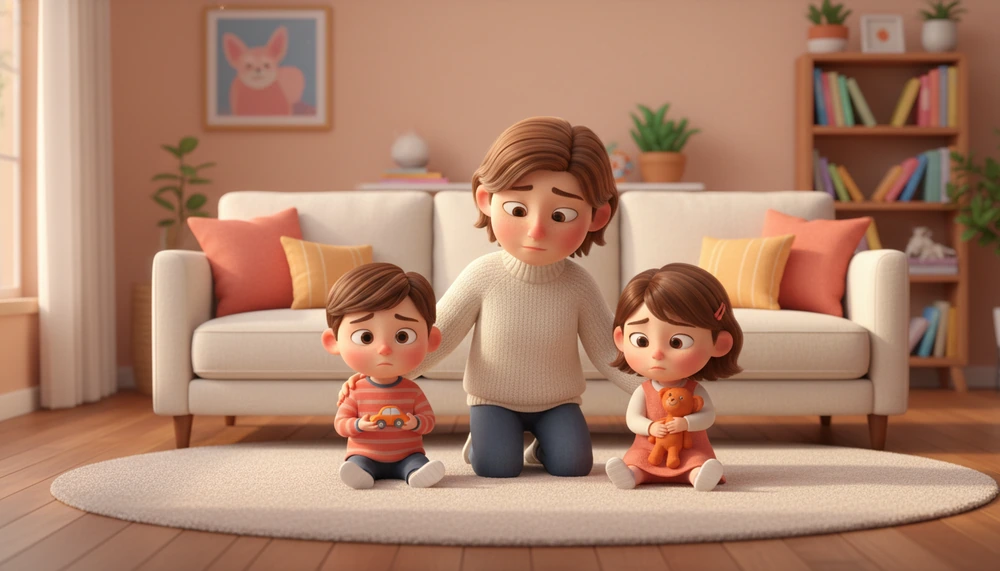
In my practice, I advise parents to establish a "cool-down corner" at home. This is a designated space where children can go to calm down. It's not a time-out area but a place filled with calming objects like plush toys, soft lighting, or headphones for listening to soothing music. This space allows children to self-regulate before re-engaging in problem-solving discussions.
Step 2: Each Kid Says What Happened (Without Interruption)
Once calm, each child should have the opportunity to explain their perspective without interruption. This step encourages social awareness and helps children understand differing viewpoints. It also prevents misunderstandings that can escalate conflicts further.
Example Dialogue
- Parent: "Can you each tell me what happened, one at a time?"
- Child 1: "I was playing with the toy, and then Alex took it."
- Child 2: "I thought it was my turn to play with it."
Expanding Perspectives
Encouraging children to articulate their version of events without interruption helps them practice active listening and perspective-taking, which are crucial elements of social awareness. This exercise can be particularly effective when parents model active listening by nodding and making affirming comments like, "I see," or "Tell me more about that."
Step 3: Each Kid Says How They Felt
After sharing their perspectives, it's essential for each child to express how they felt during the incident. This practice enhances self-awareness and empathy. Recognizing and verbalizing emotions can be challenging, so parents can scaffold this process by offering emotion words and asking questions about their feelings.
Scripted Dialogue
- Parent: "Now, let's talk about how that made each of you feel."
- Child 1: "I felt sad and angry because I wasn't done playing."
- Child 2: "I felt left out because I wanted to play too."
In My Practice
I've observed that children who regularly practice expressing their feelings in a safe environment become more empathetic and are better at resolving conflicts. One strategy is to use emotion cards that depict various feelings. Children can choose a card that best matches how they felt, making it easier to discuss emotions they might not yet have the words for.
Step 4: Brainstorm Together
Encourage the children to think of solutions together. This step empowers them to be active participants in resolving their conflict. When children brainstorm, they develop problem-solving skills that are essential for responsible decision-making.
Example Situation
Imagine the children come up with ideas like taking turns or playing together.
- Parent: "What are some ways we can solve this so everyone feels happy?"
- Children: "We can take turns or play a game together."
Cultivating Creativity
Brainstorming allows children to explore creative solutions without immediate judgment. In my experience, children often surprise adults with innovative ideas when given the freedom to think creatively. Encourage them by saying, "Let's think of as many ideas as we can," and remind them that all suggestions are welcome.
Step 5: Agree + Repair
Finally, help the children agree on a solution and, if necessary, make amends. This step is crucial for repairing relationships and reinforcing responsible decision-making. It’s not just about resolving the immediate conflict but also about teaching long-term relationship skills.
In My Practice
In my practice, I've observed the positive impact of this process. Children not only resolve the immediate issue but also learn valuable skills for future interactions. Parents can facilitate this by saying, "Let's agree on what we're going to do next time," and ensuring both children feel satisfied with the outcome.
Sibling-Specific Tips
Conflicts between siblings often have underlying dynamics. Here are some tailored strategies:
- Model Empathy: Show empathy in your interactions, as children learn by example.
- Create Safe Spaces: Ensure each child feels heard and valued.
- Use Social Stories: Stories like Sharing Toys with Friends can illustrate positive resolutions.
Example
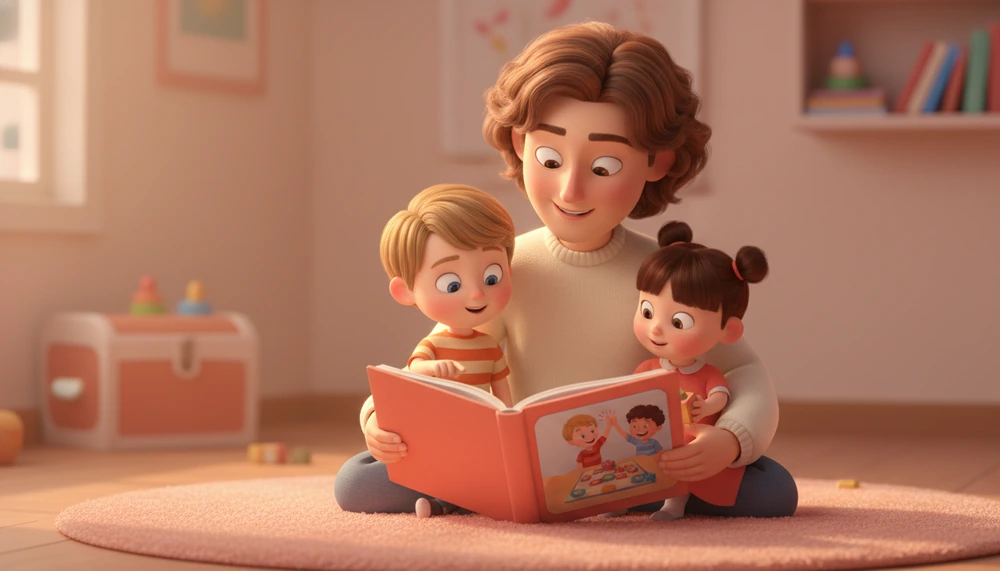
Picture a scenario where siblings are fighting over a game. A social story can provide a relatable context and guide them through conflict resolution.
- Parent: "Let's read this story together and see how the characters solve their problem."
Building a Conflict-Resolution Toolkit
Parents can create a toolkit with resources such as emotion wheels, conflict-resolution cards, and role-play scripts. This toolkit can be a go-to resource for children and parents alike, fostering an environment where conflict resolution is a shared goal.
In My Practice
In my practice, I often recommend families keep a "peace basket" filled with these resources. When a conflict arises, children can pull out a tool from the basket to help guide them through the resolution process. This practice not only aids in immediate conflict resolution but also helps children internalize these strategies over time.
References
1 Costello, B., Wachtel, J. & Wachtel, T. (2009). The Restorative Practices Handbook. Retrieved from https://www.iirp.edu/bookstore/the-restorative-practices-handbook
2 Brackett, M. (2019). Permission to Feel. Retrieved from https://www.marcbrackett.com/books/
Try It This Week
Reading is the easy part. Skills build through small, repeated practice — here's a low-pressure plan you can try with your child.
- 1Introduce a Cool-Down CornerDay 1Create a calming space with soothing items for your child to use during conflicts.👉 What this looks likeSet up a corner with a beanbag chair, a few plush toys, and a small shelf with calming books. When a conflict arises, guide your child to this area, saying, "Let's take a moment in our calm-down corner before we talk more." This physical space encourages emotional regulation.
- 2Role-Play with Emotion CardsDay 2-3Use emotion cards to help your child express feelings during conflicts.👉 What this looks likeDuring a calm moment, introduce emotion cards. Ask your child to pick a card that shows how they felt during a recent conflict. For instance, "Can you show me how you felt when your toy was taken?" This helps them articulate emotions without words.
- 3Model Conflict ResolutionOnce this weekDemonstrate solving a conflict with another adult while your child observes.in the SocialBlossom app →👉 What this looks likeNext time you and your partner have a minor disagreement, narrate the process: "I felt upset when the dishes weren't done. Let's figure out a way to share this task." Your child learns by watching you model resolution strategies.
- 4Read a Social Story TogetherThis weekendUse a social story to illustrate conflict resolution steps.use this story →👉 What this looks likeChoose a story like "Sharing Toys with Friends" and read it together. Pause to discuss the characters' feelings and solutions, saying, "What do you think they should do next?" This helps children visualize and practice conflict resolution strategies.
- 5Brainstorm Real SolutionsDaily, 5 minGuide your child to think of solutions during a minor conflict.👉 What this looks likeDuring playtime, if a conflict arises over sharing toys, ask, "What can we do so everyone has fun?" Encourage ideas like setting a timer for turns or creating a new game together. This practice reinforces problem-solving skills.
Frequently Asked Questions
How can I help my child use words in conflicts?
What if my kids refuse to talk about their feelings?
How do social stories help in conflict resolution?
Can this framework be used with non-sibling conflicts?
What are emotion wheels and conflict-resolution cards?
References