Using Emotion Charts to Support Your Child's Emotional Development
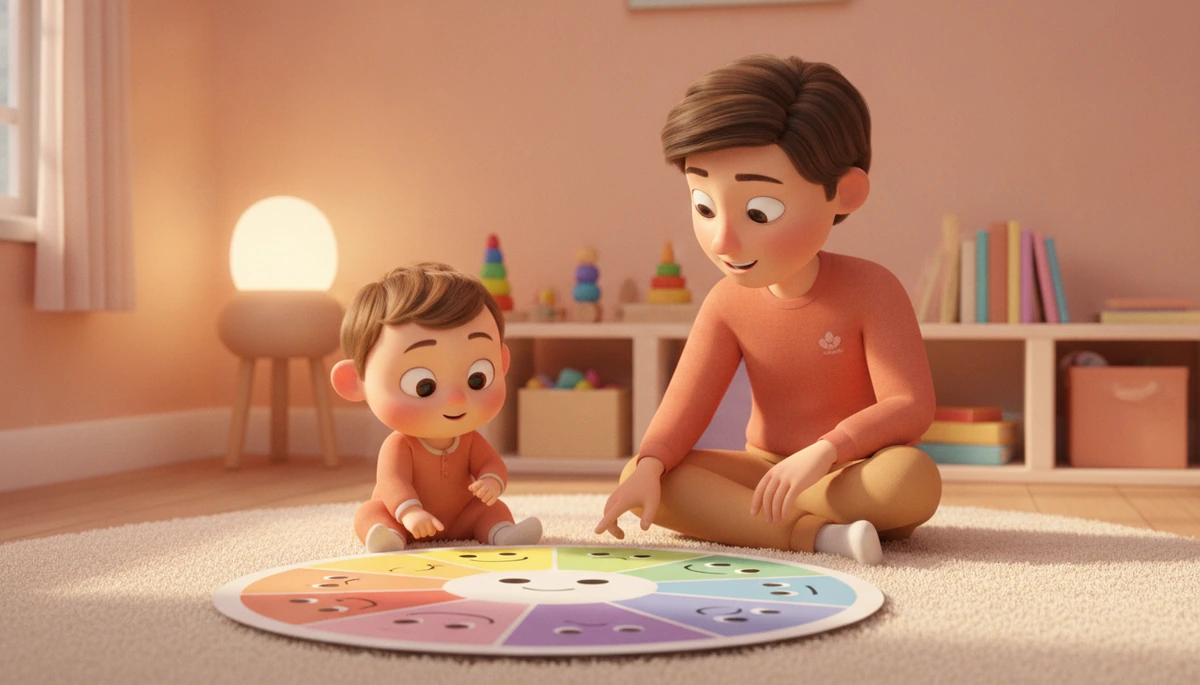
Exploring emotions can be a complex journey for children. Using tools like emotion charts can help simplify this process. In our guide to Emotion Charts and Wheels: A Parent's Complete Guide, we dive deep into how these tools can benefit your child's emotional development. This article provides free, age-appropriate emotion chart printables, each accompanied by a mini-guide on how to use them effectively.
What Makes a Good Emotion Chart
A good emotion chart is more than just a visual aid; it is a powerful tool that helps children to identify and express their emotions. Effective emotion charts are age-appropriate, visually engaging, and easy to understand. They should provide children with a range of emotions they are likely to experience and offer a simple way to communicate these feelings.
Key elements of a good emotion chart include:
- Clarity: The emotions should be clearly depicted and labeled.
- Relevance: The range of emotions should match the child's developmental stage.
- Engagement: Interactive elements can help sustain interest.
As children grow, their emotional vocabulary expands, and so should the complexity of their charts. This gradual increase in complexity helps children not only recognize emotions but also understand the nuances and intensity of their feelings. In my practice, I've seen children become more comfortable discussing their emotions once they have a visual tool to guide the conversation.
Ages 2-3: 4-Feelings Chart
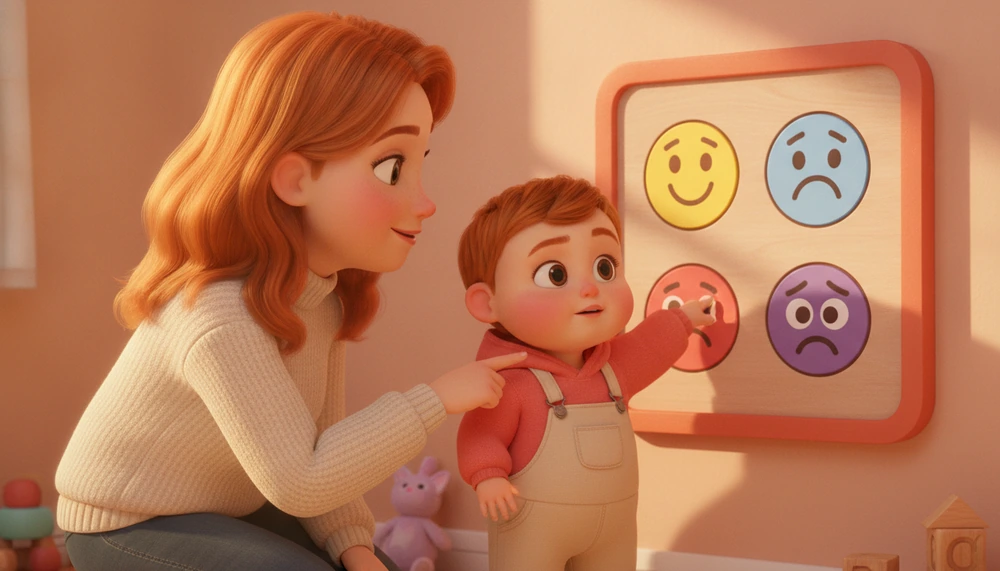
For toddlers aged 2-3, simplicity is key. A 4-feelings chart can introduce basic emotions like happy, sad, angry, and scared. These charts use simple images and colors to associate with each feeling, helping toddlers begin to recognize and articulate their emotions.
Example: Imagine you're helping your toddler articulate their feelings after a playdate. You can say, "I see you're upset. Let's look at our feelings chart. Do you feel more like this (point to sad face) or this (point to angry face)?"
Additionally, using stories from the SocialBlossom app can enhance this learning by providing scenarios where these emotions are felt and expressed.
Download the 4-feelings chart here.
Ages 4-5: 8-Feelings Chart
As children enter preschool, they start experiencing a broader range of emotions. An 8-feelings chart is ideal for this age group. It includes emotions such as surprised, excited, and frustrated, alongside the basics.
Scripted Dialogue Example:
- "I noticed you seemed upset when we left the park."
- "Let's look at our chart together. Can you show me how you felt? Was it frustrated or sad?"
- "That's great! Now we can talk about it and find a solution."

In my practice, I often recommend incorporating these charts in daily routines. For instance, during bedtime, parents can review the day by asking their child to point out emotions experienced during different activities. This not only supports emotional expression but also enhances parent-child bonding.
Download the 8-feelings chart here.
Ages 6-8: 12-Feelings + Intensity Chart
Children aged 6-8 benefit from understanding not just the type of emotion but also its intensity. This chart introduces nuanced feelings and a simple scale to express how strongly they feel each emotion.
In My Practice: I've seen many parents use intensity charts effectively with school-aged children. One parent shared how their child used it to explain a tough day at school by pointing to "worried" and adding "a lot," which opened up a deeper conversation about anxiety.
Additionally, consider integrating the Incredible 5-Point Scale as a complementary tool. This method helps children gauge the intensity of their emotions, providing a structured way to express how they feel.
Ages 9-12: Full Plutchik or RULER Mood Meter
Pre-teens can handle more complexity. A Plutchik wheel or Yale's RULER mood meter offers a comprehensive range of emotions and helps children connect feelings with experiences and actions 1.
Example: Encourage your child to use the chart after a group activity, like a sports game. "How did you feel after the game? Can you find a place on the mood meter that matches?"

These tools can be particularly useful in supporting self-awareness and responsible decision-making.
Body Sensation Map (Any Age)
A body sensation map helps children connect physical sensations with emotions. It’s a valuable tool for children of any age to understand how emotions manifest in their bodies, such as butterflies in the stomach when nervous.
Real-Life Script: "Let's check our body map. You said your tummy feels funny. Maybe it's because you're feeling nervous. That's okay, let's find a way to feel better."

Incorporating this map with activities like yoga or mindfulness exercises can enhance awareness of how emotions impact the body.
Bundle: Get All 5 in One Email
To streamline your access, you can get all these charts in one bundle. Enter your email and receive a comprehensive package, including guides on how to use each chart effectively. This ensures you have all the resources you need to support your child’s emotional growth.
References
1 Brackett, M. (2019). Permission to Feel — Yale RULER. Retrieved from https://www.amazon.com/Permission-Feel-Unlocking-Emotions-Ourselves/dp/1250212847 2 Buron, K. (2003). The Incredible 5-Point Scale. Retrieved from https://www.aapcautismbooks.com/collections/5-point-scale
Try It This Week
Reading is the easy part. Skills build through small, repeated practice — here's a low-pressure plan you can try with your child.
- 1Introduce the 4-feelings chartDay 1Begin by introducing your toddler to the 4-feelings chart during playtime. Explain each emotion simply.use this story →👉 What this looks likeDuring a quiet moment, sit with your toddler and introduce the 4-feelings chart. Point to each face and say, "This is happy. This is sad. This is angry. This is scared." Watch your child's reactions and ask them to point to how they feel now.
- 2Discuss feelings using the 8-feelings chartDay 2-3Use the 8-feelings chart to talk about emotions experienced during a recent activity.in the SocialBlossom app →👉 What this looks likeAfter coming home from the park, sit with your child and the 8-feelings chart. Ask, "How did you feel when we had to leave the park? Was it sad or frustrated?" Encourage them to point to their feelings and discuss why they felt that way.
- 3Practice intensity rating with 12-feelings chartMid-weekHelp your child rate the intensity of emotions using the 12-feelings chart.👉 What this looks likeDuring homework time, if your child seems stressed, use the 12-feelings chart. Ask, "How stressed do you feel on a scale from one to five?" Let them point to their level of stress and discuss ways to manage it.
- 4Explore physical sensations with body mapThis weekendIntroduce the body sensation map to connect physical feelings with emotions.read about mindfulness →👉 What this looks likeDuring a family yoga session, use the body sensation map. Say, "When you stretch, notice where you feel it in your body. Is anything tight? That can tell us something about how we're feeling today." Encourage them to match sensations with emotions on the map.
- 5Reflect on a week of emotionsEnd of weekAt week's end, review the charts to reflect on the emotional journey.learn about emotional reflection →👉 What this looks likeGather all the charts used during the week. Sit with your child and reflect, "This week, we felt so many things. What was your favorite feeling?" Encourage them to express what they learned about their emotions.
Frequently Asked Questions
What age is appropriate for using emotion charts?
How do emotion charts benefit children's development?
Can emotion charts be used for children with autism?
How can I integrate emotion charts into daily routines?
Are there digital versions of emotion charts available?
References