How to Use Emotion Charts and Wheels to Support Your Child's Emotional Growth
In This Guide
Explore how emotion charts and wheels can foster emotional awareness in children. Learn about age-appropriate selections, daily routine integrations, and adaptations for neurodivergent children. The Plutchik Wheel for Kids: Too Much or Just Right? discusses if this tool is suitable for young ones. Discover Daily Emotion Check-In Routines: 3 Minutes a Day for Big Change for effective daily practices. Find Free Emotion Chart Printables by Age to download the right chart for your child. For insights on Using Emotion Charts with Autistic Kids: What's Different, explore practical tips and adaptations.
Understanding Emotion Charts and Wheels
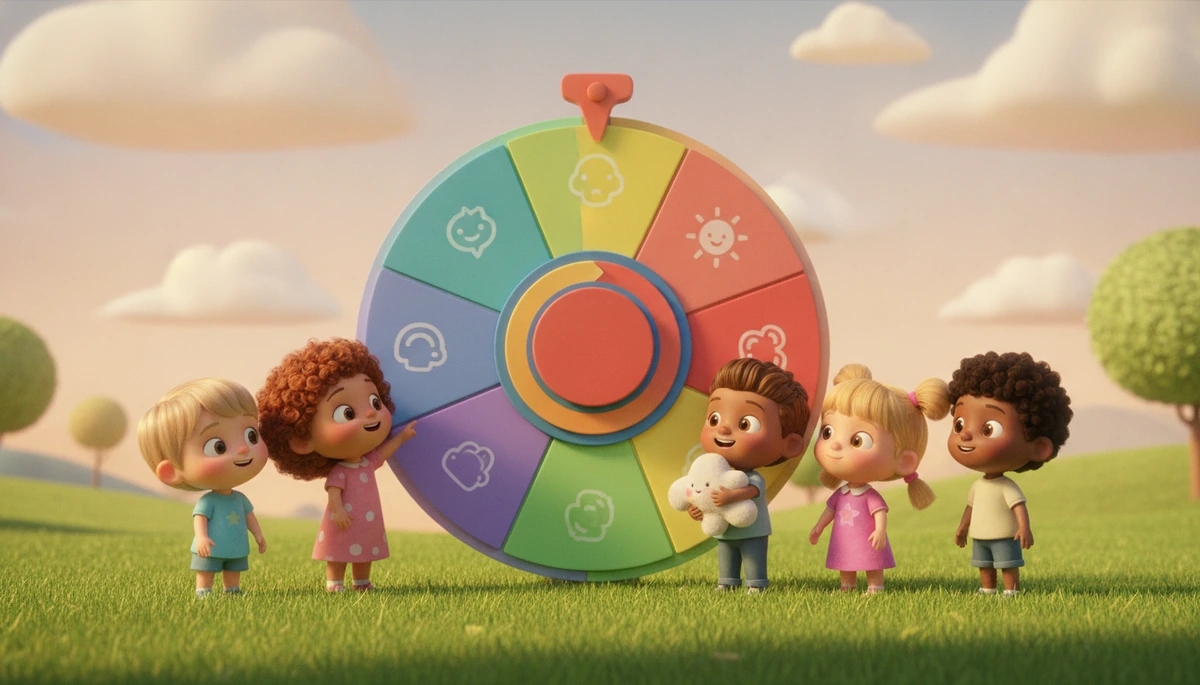
Emotion charts and wheels are visual tools that help children identify, express, and manage their emotions. These tools can be especially beneficial for children who find verbal expression challenging. An emotion chart typically features a range of emotions represented through words, faces, or colors, while an emotion wheel organizes emotions in a circular format to show relationships between them.
Emotion charts and wheels are not just about identifying emotions but also understanding the complexity of feelings and how they interact. For children, this can be a gateway to developing empathy and improving communication skills. By recognizing their emotions, children can better understand how they affect their behavior and interactions with others. This form of self-awareness is a foundational skill in social-emotional learning (SEL).
The Importance of Emotion Charts
Research has shown that emotion regulation is crucial for social-emotional learning (SEL) and development. According to Goleman, emotional intelligence involves recognizing and managing our emotions and those of others 4. Emotion charts can support this by offering a visual aid that helps children articulate their feelings more effectively.
In my practice, I've seen many parents struggle with helping their children express emotions. Emotion charts provide a concrete method for children to point to what they feel. This not only facilitates communication but also empowers the child by acknowledging their emotions. For instance, one parent shared how their child, previously unable to verbalize frustration, started pointing to the 'frustrated' face on the chart, opening a new line of communication.

Choosing the Right Emotion Chart for Your Child
Selecting the right type of emotion chart depends on your child's age and developmental stage. Younger children might benefit from simple charts with basic emotions and expressive faces. Older children and those with a broader vocabulary can handle more complex wheels with nuanced emotions.
Age-Appropriate Emotion Charts
For preschool-aged children, charts with basic emotions like happy, sad, angry, and scared are appropriate. As children grow, introducing more specific emotions like frustrated, surprised, or anxious can be beneficial. This gradual exposure helps expand their emotional vocabulary and understanding.
Example: Imagine your three-year-old, Ellie, is upset but can't articulate why. Using a simple emotion chart, she points to a sad face. You acknowledge, "I see you're feeling sad. Do you want to talk about it or just sit with me?" This interaction validates her feelings and offers her the choice to explore or simply share the feeling.
For older children, a more detailed emotion wheel can help them articulate complex feelings. As they navigate school and social settings, they encounter a wider range of emotions. A 10-year-old might use a wheel to identify feeling 'overwhelmed' rather than just 'sad', recognizing the nuances that come with growing responsibilities.

Integrating Emotion Charts Into Daily Routines
Incorporating emotion charts into daily routines can make them a natural part of your child's life. A morning check-in or an evening reflection can help children become more aware of their emotions throughout the day.
Daily Emotion Check-Ins
A simple daily routine involves asking your child to identify their emotions at specific times, such as before school or after dinner. This practice not only helps children articulate their feelings but also sets the tone for emotional openness in the household.
Example: During breakfast, ask your child to pick an emotion from their chart that represents how they feel about the upcoming day. "Are you feeling excited or nervous about school today? Let's look at our chart." This check-in encourages open communication and emotional awareness.
An additional strategy is to incorporate a bedtime routine where children reflect on their day by selecting emotions they felt during different events. This reflection can help them process their experiences and understand emotional changes over time, promoting emotional literacy and regulation.
Learn more about daily emotion check-ins.
Emotion Wheels: Understanding Complexity in Emotions
Emotion wheels, like the one developed by Plutchik, offer a more complex view of emotions by illustrating how different emotions relate to each other 1. This can help older children and teenagers understand the spectrum of emotions and how they can evolve.
Using the Plutchik Wheel for Kids
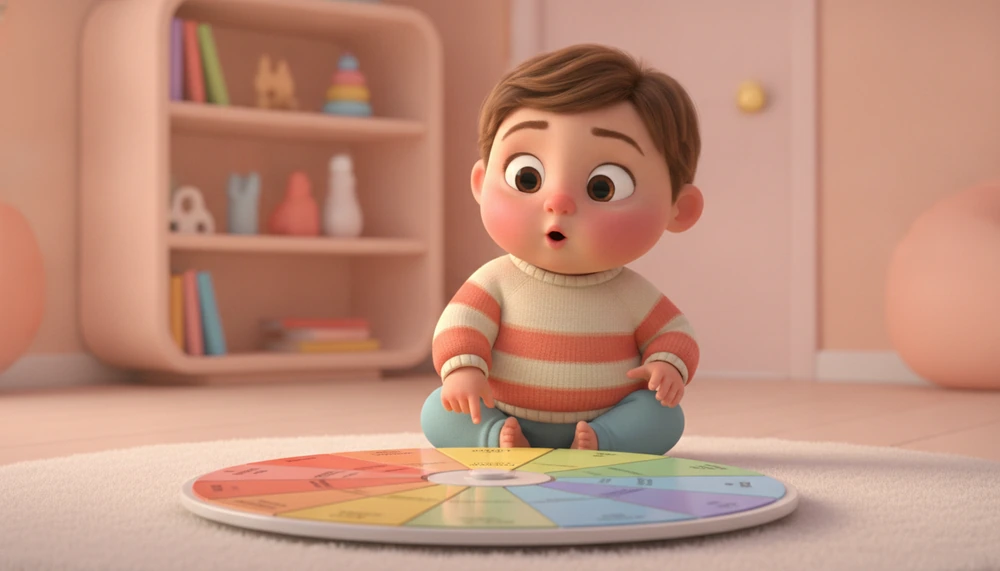
The Plutchik wheel represents emotions on a color-coded wheel, showing how basic emotions can combine to form complex feelings. This visual representation can be particularly helpful for children who benefit from seeing connections between emotions.
Example: Imagine your child, Alex, is having a difficult day. They point to "annoyed" on the wheel. You might say, "I see that you're feeling annoyed. Annoyance can sometimes turn into anger if we don't address it. Let's talk about what's bothering you." This helps Alex navigate their feelings and understand the progression of emotions.
To further engage children, you can use activities that involve mixing emotions, such as crafting stories or drawing scenarios where characters experience multiple emotions. This not only reinforces their understanding of complex emotions but also encourages creativity and empathy.
Is the Plutchik Wheel too much for kids?
Adapting Emotion Charts for Neurodivergent Children
Children with autism or other neurodivergent conditions may require adaptations to make emotion charts effective. It's essential to consider sensory preferences and communication styles when selecting or creating charts for these children.
Autism-Aware Adaptations
For children with autism, charts with less sensory overload (fewer colors, simple faces) may be preferable. Incorporating charts into structured activities can also help, as predictability is often comforting for neurodivergent children.
Example: In my practice, I worked with a child who found too many colors overwhelming. We created a chart with muted tones and clear, simple expressions. This adaptation helped the child engage with the tool without sensory discomfort.
Additionally, pairing emotion charts with physical activities like breathing exercises or sensory play can enhance their effectiveness. This dual approach caters to both the emotional and sensory needs of neurodivergent children, fostering a more holistic method of emotional regulation.
Discover more about using emotion charts with autistic kids.
Creating Your Own Emotion Chart
Creating a personalized emotion chart can be a meaningful activity that allows your child to take ownership of their emotional learning. This can be as simple as drawing faces on paper or using digital tools to design a chart that reflects your child's unique personality.
Steps to Create an Emotion Chart
- Select Emotions: Begin with basic emotions and gradually add more as your child becomes familiar with the chart.
- Design Layout: Decide if you want a chart or a wheel. Keep it simple for younger children.
- Include Your Child: Let your child choose colors and faces to enhance their engagement.
Example: Sit with your child and ask, "What colors make you think of happy? How about sad?" Use their input to create a chart together. This collaborative approach boosts their investment in using the chart.
Another engaging method is to use collage art to create an emotion wheel. By cutting out images and colors from magazines, children can build a tactile and personalized tool that is both educational and expressive.

Practical Tips for Using Emotion Charts
Emotion charts can be integrated into various aspects of a child's life. Here are some practical tips to maximize their effectiveness:
- Consistency: Regular use encourages familiarity and comfort.
- Incorporate Stories: Use social stories to help children understand scenarios where different emotions might arise. Try the Discovering Our Feelings: A Printable Social Story to start.
- Modeling: Demonstrate how you use the chart in your own emotional regulation process.
Co-Regulation Moments
Emotion charts can facilitate co-regulation, where a parent helps a child manage their emotions through shared experiences.
- *Parent:* "I see you're pointing to the 'frustrated' face. Would you like to draw together to help calm down?"
- *Child:* "Yes, drawing sounds good."
- *Parent:* "Great, let's find some paper and crayons."
This interaction shows empathy and supports the child's emotional regulation.
Involve siblings or peers in these exercises to promote social skills and empathy. Through shared activities, children learn to recognize and respond to the emotions of others, fostering a sense of community and support.
References
1 Plutchik, R. (1980). Emotion: A Psychoevolutionary Synthesis. Retrieved from https://en.wikipedia.org/wiki/Robert_Plutchik
2 Buron, K. (2003). The Incredible 5-Point Scale. Retrieved from https://www.aap.org/
3 Brackett, M. (2019). Permission to Feel. Retrieved from https://casel.org/fundamentals-of-sel/what-is-the-casel-framework/
4 Goleman, D. (1995). Emotional Intelligence. Retrieved from https://en.wikipedia.org/wiki/Emotional_Intelligence
Try It This Month
Reading is the easy part. Skills build through small, repeated practice — here's a low-pressure plan you can try with your child.
- 1Create a Personalized Emotion ChartDay 1-2Craft a customized emotion chart with your child to boost engagement and ownership.use this story →👉 What this looks likeGather materials like paper, markers, and magazines. Sit with your child and ask them to choose colors or images that represent various emotions. Let them cut and paste these onto a chart. Discuss why they chose each representation, helping them articulate their emotional associations.
- 2Conduct Morning Emotion Check-InsDaily, 5 minAsk your child to identify their morning feelings, fostering daily emotional awareness.in the SocialBlossom app →👉 What this looks likeAt breakfast, say, 'Let's check how we're feeling today!' Encourage your child to point to an emotion on the chart, and discuss how they might handle those feelings throughout the day. This sets a positive tone and encourages open communication.
- 3Reflect on Day's Emotions at BedtimeNightlyUse the emotion chart to review the day's emotional experiences, aiding emotional processing.👉 What this looks likeBefore bed, ask your child, 'What emotions did we feel today?' Help them point to these emotions on the chart, discussing highs and lows. This practice not only aids in processing but also strengthens your emotional bond.
- 4Pair Emotion Charts with Physical ActivitiesTwice a weekCombine emotion charts with activities like drawing or yoga for holistic emotional regulation.learn more here →👉 What this looks likeAfter identifying emotions, suggest an activity like drawing or stretching to process these feelings. Say, 'Let's draw our happy moment or stretch to release any tension.' This approach addresses both emotional and physical aspects of well-being.
- 5Involve Siblings in Emotion ActivitiesWeekendInclude siblings in emotion chart activities to promote empathy and social skills.learn more here →👉 What this looks likeOrganize a family session where each member shares an emotion using their chart. Encourage siblings to ask questions like, 'How did you feel when that happened?' This fosters empathy and understanding, turning emotional learning into a family bonding activity.
Frequently Asked Questions
What age should children start using emotion charts?
How do emotion wheels differ from emotion charts?
Can emotion charts be used for neurodivergent children?
How can I integrate emotion charts into daily routines?
What is the benefit of creating a personalized emotion chart?
How can co-regulation be facilitated using emotion charts?
References