Understanding Friendship Skills by Age: A Guide for Parents
Understanding Friendship Skills by Age
Friendship is a pivotal part of childhood development, and understanding how these relationships evolve can help parents support their children effectively. This article is part of our complete guide to Social Skills for Kids: A Parent's Guide to Friendship, Sharing & Conflict. We will explore Selman's stages of friendship, offering insights into how your child's social interactions progress from ages 3 to 12.
Selman's 5 Stages of Friendship
Robert Selman, a renowned developmental psychologist, identified five stages of friendship that reflect children's growing capacity for understanding relationships. Each stage highlights different social and emotional skills, such as empathy and cooperation 1.
- Momentary Playmates (Ages 3-5): Friendship is defined by proximity and shared activities.
- One-Way Assistance (Ages 5-7): Friends are those who fulfill immediate needs.
- Fair-Weather Cooperation (Ages 7-10): Reciprocity and shared interests become important.
- Mutual Sharing (Ages 9-12): Loyalty and emotional sharing are key.
- Autonomous Interdependence (Ages 12+): Friendships are based on mutual respect and understanding.
Understanding these stages helps parents recognize the natural evolution of their child's social world.
Ages 3-5: 'Momentary Playmates'
Children in this age group see friends as those who are physically present. Friendships are often formed with whoever is nearby, such as classmates or neighborhood kids. Play is the main activity that defines these early friendships, and sharing toys can be a common struggle.
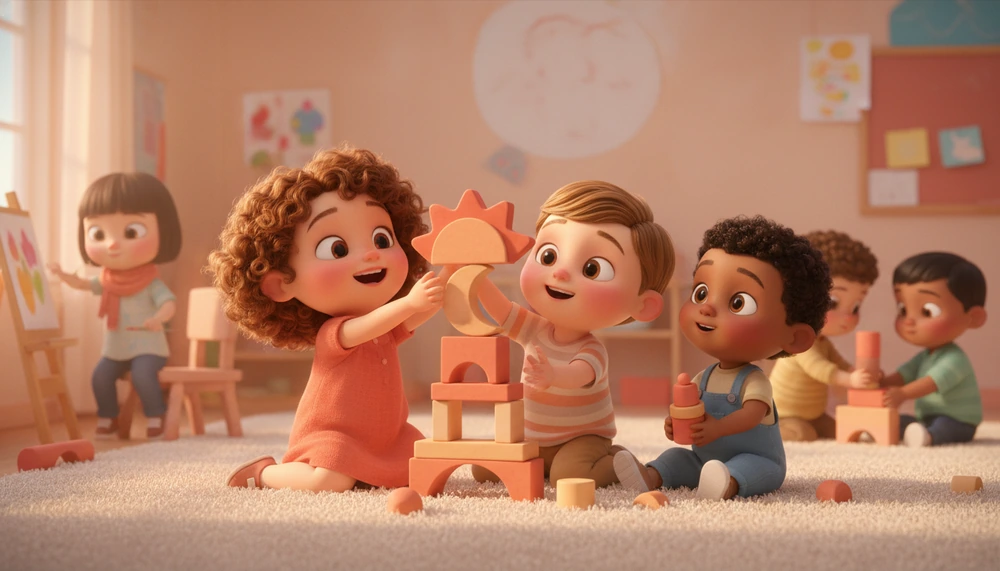
Imagine a scene at a preschool where children are playing with blocks. One child decides to join in simply because the others are there. This illustrates the "momentary playmates" stage where friendships are fluid and based on shared play.
In my practice, I've noticed that structured play sessions allow children to practice essential skills like turn-taking and communication. For instance, setting up a simple game where children must pass a ball to each other can teach patience and cooperation.
Supporting Friendship Skills
- Encourage Playdates: Regular playdates can help children practice social skills.
- Use Social Stories: Read Playing Nicely with Friends at Preschool - Social Story to reinforce positive interactions.
- Model Sharing: Demonstrate how to share and take turns with toys.
Example Scenario: During a playdate, encourage your child to offer a toy to a friend. You might say, "Let's ask if Sammy wants to play with the truck too. How about we take turns?" This models sharing and respect for others' needs.
Ages 5-7: 'One-Way Assistance'
During these years, children start expecting friends to meet their needs. Friendships are based on what the other person can provide, whether it's a toy, help, or comfort.
Example Scenario: Emma, age 6, befriends Lucy because Lucy always has the coolest toys. When Lucy brings a new puzzle to school, Emma is eager to play with her, showing the "one-way assistance" stage.
In my practice, I've observed children choosing friends who fulfill their immediate desires. This is a natural part of development and not a sign of selfishness.
Supporting Friendship Skills
- Encourage Empathy: Teach children to consider others' feelings.
- Scripted Dialogue: "When your friend is sad, you can say, 'I see you're upset. How can I help?'"
- Introduce Social Stories: Read Kind Words with Nina: A Printable Social Story to foster empathy and understanding.
I've seen many parents worry when their child seems to only "take" in friendships. It's crucial to guide them on recognizing others' feelings while understanding this stage's developmental appropriateness.
Ages 7-10: 'Fair-Weather Cooperation'
This stage is marked by the realization that friendships can be reciprocal. Children begin to understand the importance of give and take in relationships.
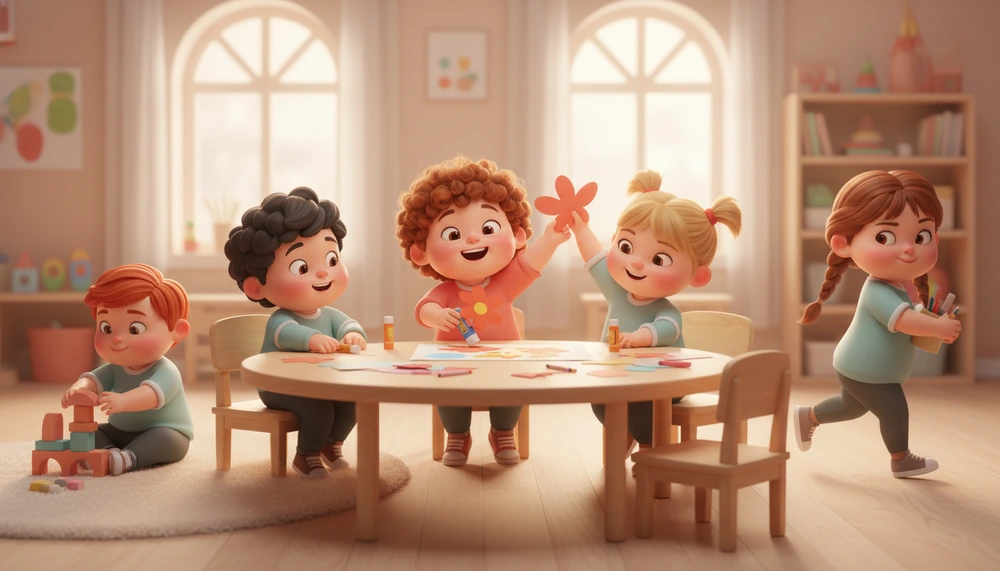
Example Scenario: Alex, 9, and Jamie, 8, team up for a school project because they enjoy working together and understand that cooperation will help them succeed.
In my practice, I've seen that involvement in group projects or team sports can enhance children's cooperation skills significantly. They learn that their contributions matter and that others rely on them.
Supporting Friendship Skills
- Promote Team Activities: Encourage participation in group sports or clubs.
- Facilitate Discussions: Ask questions like, "How did you work together today?"
- Use Social Stories: Explore options like Embracing New Friends at Preschool - Printable Social Story to enhance cooperation.
I've noticed that when children feel their efforts are appreciated by peers, they are more inclined to invest in mutual friendships.
Ages 9-12: 'Mutual Sharing'
Friendships deepen with emotional sharing and loyalty. Children value trust and may experience betrayal, which can be a learning opportunity.
Example Scenario: Sarah, 11, confides in her friend about a family issue. Her friend listens and offers support, demonstrating the "mutual sharing" stage.
In my practice, I often counsel children who experience their first significant friendship conflicts at this age. It's important to teach them how to manage these feelings constructively.
Supporting Friendship Skills
- Discuss Trust: Have conversations about what makes a good friend.
- Role-Play Scenarios: "If your friend tells you a secret, how can you show you're trustworthy?"
- Explore Social Stories: Use stories like Let's Be Friends and Play Together! Social Story to discuss loyalty and trust.
By guiding children through these experiences, you help them develop a deeper understanding of responsible decision-making and empathy.
Ages 12+: 'Autonomous Interdependence'
As children enter their teenage years, friendships become more about mutual respect and understanding. Adolescents learn to balance independence with connection.
In my practice, I have noticed how important it is for teens to have a safe space to explore and discuss their friendships. They thrive when given the freedom to navigate these relationships with supportive guidance.
Supporting Friendship Skills
- Encourage Autonomy: Allow teens to make decisions about their friendships.
- Facilitate Open Communication: Discuss the importance of boundaries and respect.
- Promote Personal Growth: Encourage activities that foster self-awareness and self-management.
Scripted Dialogue
- "Remember to listen to your friend's needs and express your own respectfully."
Example Scenario: Imagine a teenager, Alex, who navigates a disagreement with a friend over a shared project. Alex listens to the friend's perspective and calmly explains their own, finding a compromise that respects both views.

What's Typical at Each Stage
It's important to recognize that each child develops at their own pace. What is typical at each stage may vary. Some children may progress quickly through stages, while others take more time.
Variations in Development
- Early Developers: Some children may exhibit advanced friendship skills earlier than peers.
- Late Bloomers: Others might linger longer in earlier stages; this is normal.
- Cultural Influences: Different cultures may emphasize different aspects of friendship.
In my practice, I've observed that encouraging a child's unique social development path can lead to more authentic relationships. Always celebrate your child's progress, no matter how small.
References
1 Selman, R. (1980). The Growth of Interpersonal Understanding.
Try It This Week
Reading is the easy part. Skills build through small, repeated practice — here's a low-pressure plan you can try with your child.
- 1Set Up a PlaydateDay 1Organize a playdate for your child to practice sharing and cooperation.use this story →👉 What this looks likeInvite a friend over for a playdate. Begin with a shared activity, like building a tower with blocks. Encourage your child to ask, 'Can we build this together?' If conflict arises, guide them to suggest, 'Let's take turns placing the blocks.'
- 2Practice EmpathyDaily, 5 minHelp your child recognize and respond to others' emotions.👉 What this looks likeDuring a meal, discuss a scenario where someone is upset. Ask, 'How do you think they feel? What could you do if you see a friend like that?' Role-play responses like, 'I see you're sad. Can I sit with you?'
- 3Use Social StoriesDay 3Introduce social stories to teach friendship skills.Kind Words with Nina →👉 What this looks likeRead 'Kind Words with Nina' together. Discuss the story afterwards, asking, 'How did Nina show kindness? What can you do if a friend is upset?' Encourage your child to share a similar experience.
- 4Join a Team ActivityThis weekendEncourage participation in a group activity to foster cooperation.👉 What this looks likeSign your child up for a team sport or club. Observe how they interact with peers. Afterward, ask them to share what they enjoyed about working with others and what they learned about teamwork.
- 5Discuss TrustOnce this weekTalk about what makes a trustworthy friend.Let's Be Friends and Play Together! →👉 What this looks likeAt bedtime, initiate a conversation about trust. Ask, 'What makes you trust someone? How do you show you're trustworthy?' Share stories from your own life to illustrate these concepts.
Frequently Asked Questions
What are the stages of friendship development?
How can I support my 3-year-old's friendship skills?
Why does my 6-year-old only want something from friends?
How can I help my child with betrayal in friendships?
What should I expect from my teen's friendships?
Why do some children develop friendship skills earlier than others?
References