Imaginary Friends and Your Child's Social-Emotional Development
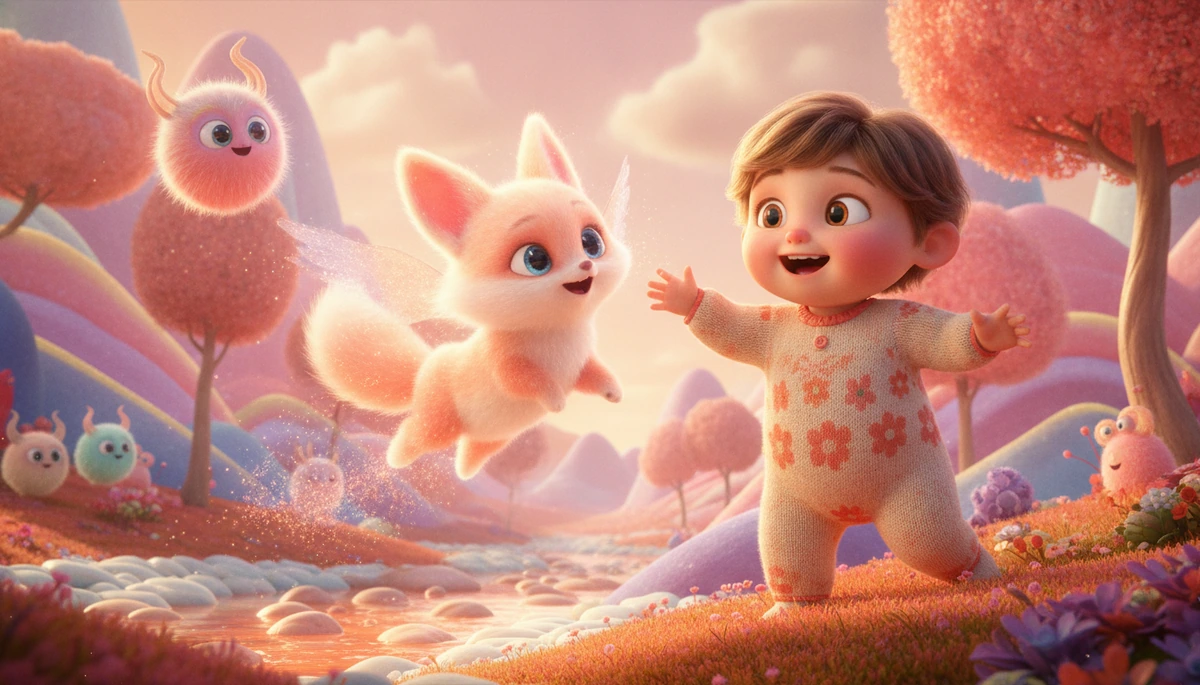
Imaginary friends are a common and fascinating part of many preschoolers' lives. This article is part of our complete guide to Preschooler SEL (Ages 3-5): A Parent's Complete Guide. They serve as companions and confidants, often appearing between the ages of 3 and 7. But why do they emerge during these years, and what do they signify for your child's development?
When Imaginary Friends Appear
Imaginary friends typically peak between ages 3 and 7. This is a period marked by rapid cognitive and social-emotional growth. Children explore their world more independently and develop complex language skills. Imaginary friends are not only playmates but also a means through which children make sense of their experiences and emotions.
In my practice, I've seen many preschoolers create imaginary friends during this phase. These companions often reflect the child's interests or fears, providing a safe space to navigate new emotions. For instance, a child afraid of the dark might have a brave imaginary dragon to accompany them at night, helping them to express and manage their fears in a constructive way.
Typical Characteristics
- Age Range: 3-7 years
- Gender Neutral: Can be of any gender or species
- Role: Often serve as a playmate or emotional support
Why They Correlate with Stronger Theory of Mind
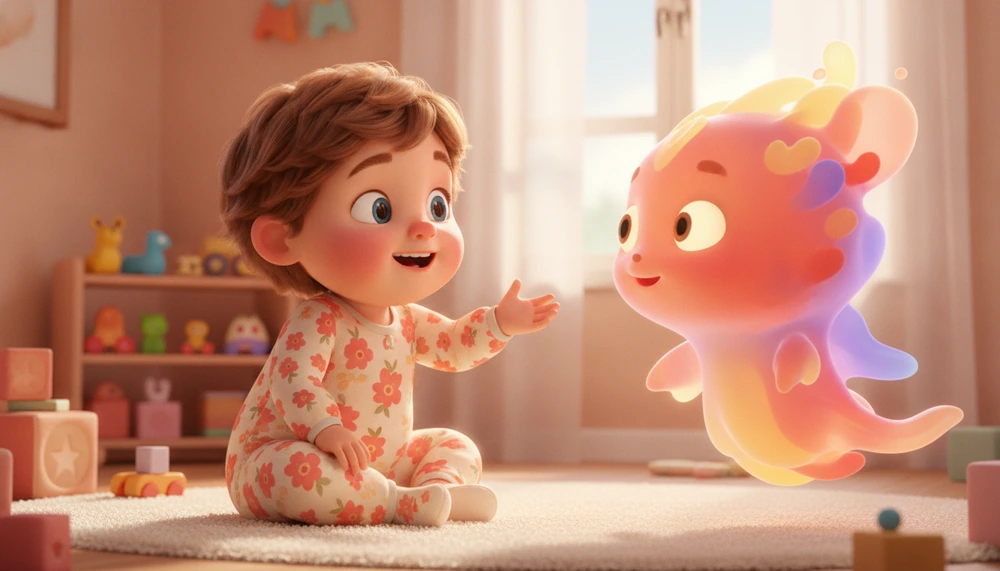
The emergence of imaginary friends is closely linked to the development of Theory of Mind (ToM) — the ability to attribute mental states to oneself and others. Wellman (2014) indicates that children with imaginary friends often display advanced ToM skills, understanding others' perspectives and emotions better 2.
Imaginary friends provide a unique platform for children to practice social scenarios. They help kids explore complex emotions and social roles in a way that feels safe and controlled. This imaginative play allows children to experiment with different outcomes and develop empathy as they consider how their imaginary friends might feel or react.
How Imaginary Friends Enhance ToM
- Perspective Taking: Imaginary friends allow children to practice seeing the world from different viewpoints.
- Emotional Understanding: Engaging with a fictional character can help children articulate feelings and solve conflicts.
Imagine your child pretending to argue with their imaginary friend about sharing a toy. Through this scenario, they learn negotiation and empathy, key components of ToM. In one example, a child named Alex would "discuss" with his imaginary friend Max about how to share a toy car. This practice improved Alex's ability to negotiate and empathize with his peers in real life.
What It Means for Your Child's Social-Emotional Growth
Having an imaginary friend can significantly boost a child's social-emotional learning (SEL). It encourages creativity, empathy, and communication — all essential for building relationships. Imaginary friends also provide a valuable outlet for children to process and express emotions they might not yet fully understand.
Benefits
- Boosts Creativity: Children invent stories and scenarios with their imaginary friends.
- Improves Communication Skills: They practice dialogue and conflict resolution.
- Enhances Emotional Regulation: Imaginary play allows children to express and manage emotions safely.
For example, if a child feels scared about starting preschool, they might use their imaginary friend to rehearse first-day scenarios. This can make the transition smoother and less intimidating. A child named Maya used her imaginary friend to act out saying goodbye to her mom at preschool. This play helped Maya feel more confident and prepared for her first day.
When to Engage with the Imaginary Friend (and When Not)
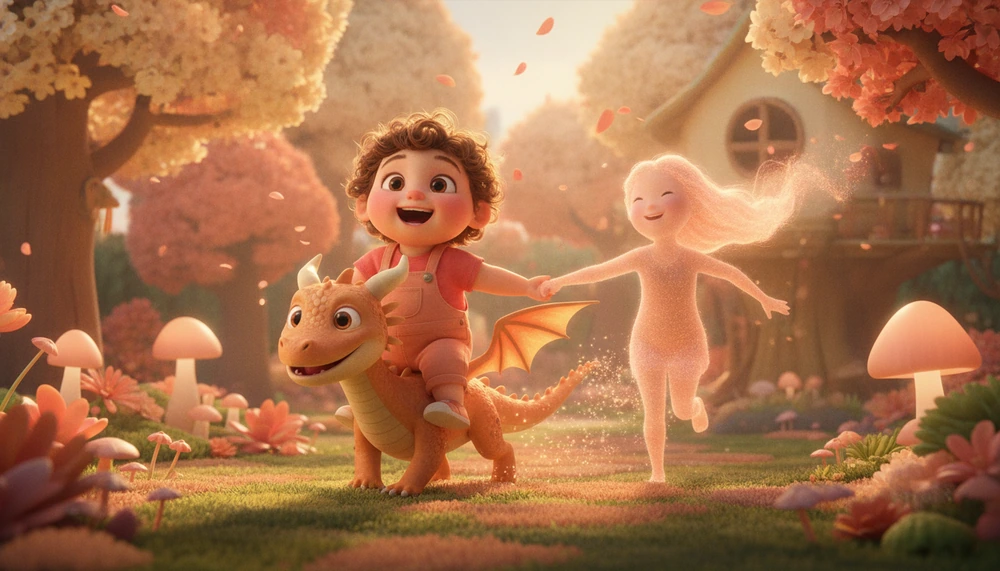
Parents often wonder whether to participate in their child's imaginary play. While it's beneficial to engage sometimes, knowing when to let your child lead is equally important. Engaging with your child's imaginary friend can be a wonderful way to bond and learn more about their inner world, but it's also important to respect their autonomy and creativity.
When to Engage
- Encourage Creativity: Ask open-ended questions like, "What did your friend do today?"
- Support Problem-Solving: Use the imaginary friend to discuss emotions or conflicts.
When to Step Back
- Promote Independence: Allow your child to navigate their imaginary world without adult intervention.
By observing your child's interactions with their imaginary friends, you can gain insights into their thoughts and feelings. In some cases, children might use these companions to express needs or emotions they find difficult to verbalize directly.
When Parents Worry
It's natural for parents to worry about their child's reliance on imaginary friends. However, they usually signify a healthy imagination rather than loneliness. Most children use imaginary friends as a tool for exploring their emotions and practicing social skills.
Potential Concerns
- Loneliness: Rarely, imaginary friends might indicate a lack of real-world social interactions.
- Overreliance: If a child prefers their imaginary friend to real friends, it might warrant attention.
If concerns arise, consider discussing them with your pediatrician. It's essential to ensure that your child is also engaging in real-life social interactions, as these are crucial for their development. In my practice, I've noticed that children who balance interactions with both imaginary and real friends tend to develop robust social skills.
What Happens When Imaginary Friends 'Leave'
Imaginary friends often disappear as quickly as they arrived, usually around age 7 or 8. This transition often coincides with increased real-world social interactions. As children mature and become more involved with real peers, the need for imaginary companionship often fades.
Possible Outcomes
- Natural Fade: Imaginary friends often fade away as children form real friendships.
- Emotional Growth: Their departure can signify a leap in social skills and maturity.

The end of an imaginary friendship can sometimes be bittersweet for a child, marking the end of a significant phase in their development. It's important to acknowledge these feelings and celebrate the growth that comes with it.
Cultural Variation
Cultural context can influence how imaginary friends are perceived and utilized in play. In some cultures, they are encouraged more than in others, impacting the child's social-emotional development.
Cultural Insights
- Western Cultures: Often see imaginary friends as beneficial for creativity.
- Non-Western Cultures: May view them with skepticism, focusing more on communal play.
Understanding these variations can help parents support their child's unique developmental path. For instance, in cultures where individual creativity is highly valued, like in many Western societies, imaginary friends are often celebrated as a sign of intelligence and imagination.
References
1 Taylor, M. (1999). Imaginary Companions and the Children Who Create Them. Oxford University Press. 2 Wellman, H. (2014). Theory of Mind. 3 Selman, R. (1980). The Growth of Interpersonal Understanding.
Try It This Week
Reading is the easy part. Skills build through small, repeated practice — here's a low-pressure plan you can try with your child.
- 1Observe imaginary playDay 1Spend 10 minutes watching your child play with their imaginary friend. Note what themes or emotions emerge.👉 What this looks likeSit quietly near your child as they engage with their imaginary friend. Observe without interrupting. Notice if they discuss fears, joys, or everyday occurrences. This insight into their play can reveal what they're processing emotionally. For example, if your child is pretending their imaginary friend is scared of the dark, it might be an opportunity to discuss fears about nighttime.
- 2Engage with questionsDay 2Ask your child about their imaginary friend to encourage dialogue and creativity.👉 What this looks likeDuring a calm moment, say, 'What did your friend do today?' or 'Tell me about your friend's favorite game.' Listen actively to their responses, showing interest in their imaginary world. This can help your child feel validated and understood, fostering open communication.
- 3Use stories for emotional discussionsDay 3Read a story that relates to your child's imaginary play, linking emotions and scenarios.use this story →👉 What this looks likeChoose a children's book where the character navigates emotions, like 'When Sophie Gets Angry—Really, Really Angry' by Molly Bang. Discuss the story with your child, asking how their imaginary friend might handle similar emotions. This can help your child connect their feelings with those of their imaginary friend.
- 4Role-play a scenarioDay 4Create a role-play scenario with your child and their imaginary friend to practice social skills.in the SocialBlossom app →👉 What this looks likeSet up a mini tea party with your child and their imaginary friend. Role-play a scenario where the imaginary friend forgot to bring a snack. Ask, 'How can we solve this problem?' Encourage your child to suggest solutions, promoting problem-solving skills and empathy.
- 5Reflect on the weekThis weekendDiscuss with your child how they felt playing with their imaginary friend this week.👉 What this looks likeOver the weekend, sit down with your child and talk about their experiences. Ask, 'What was the best thing you did with your friend this week?' and 'Is there anything you learned from them?' This reflection encourages self-awareness and reinforces the benefits of their imaginary play.
Frequently Asked Questions
Why do children have imaginary friends?
At what age do imaginary friends typically disappear?
Should I be concerned if my child prefers imaginary friends over real friends?
How can I support my child's imaginary play?
Are imaginary friends more common in certain cultures?
References