Why Your 4-Year-Old is Lying: A Developmental Milestone
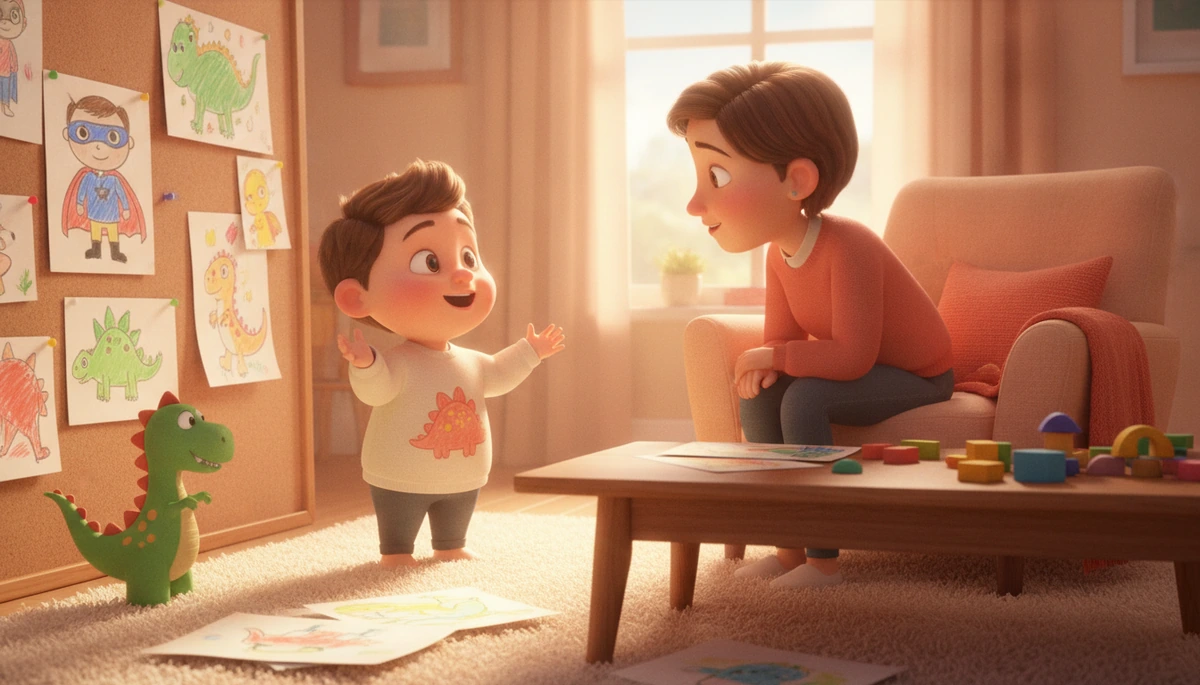
Understanding why your 4-year-old is lying can be both puzzling and enlightening. This article is part of our complete guide to Preschooler SEL (Ages 3-5): A Parent's Complete Guide. Let's explore how lying at this age is actually a sign of cognitive development and how you can guide your child toward honesty.
Why Lying = Theory of Mind Milestone
One of the most common concerns among parents is why their 4-year-old might start lying. While it can be unsettling, lying is actually a significant cognitive milestone linked to the development of Theory of Mind. This concept refers to the ability to attribute mental states such as beliefs, intents, desires, and knowledge to oneself and others, and to understand that others have beliefs and perspectives different from one's own 1.
When a child lies, they demonstrate an understanding that others can be misled and that their thoughts are separate from reality. Research by Talwar and Lee (2008) highlights that children who lie show advanced social cognition and a better understanding of social norms 1.
In my practice, I've observed that parents often worry when their child first lies, fearing it reflects poor moral development. However, it's important to reassure parents that this behavior is a normal part of brain development.
Understanding the Social Implications
Lying in preschoolers is not just about deception; it's about experimenting with social interactions. When children understand they can influence how others perceive them, they start experimenting with lying. This experimentation is crucial for developing self-awareness and social awareness—two key SEL competencies. By understanding the motivations behind lying, parents can better support their child's emotional and social growth.
Types of Preschool Lies
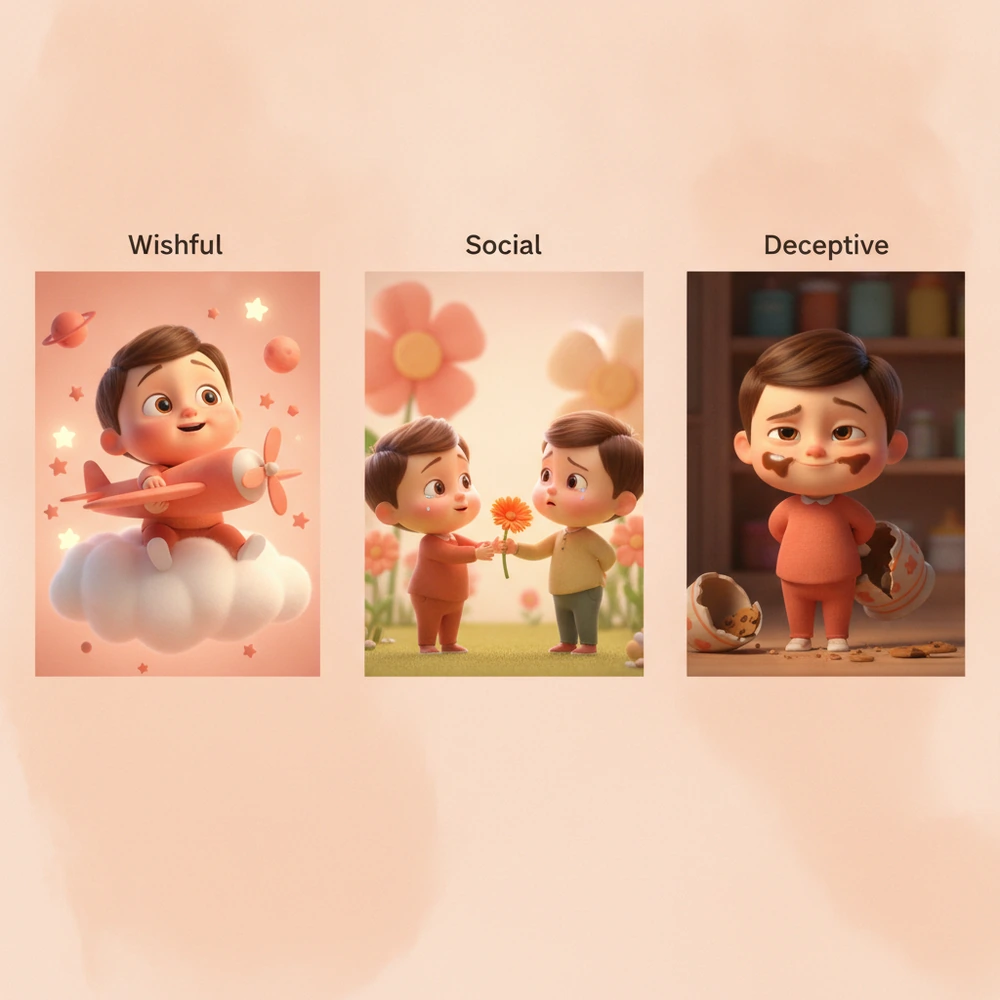
Preschoolers typically engage in three types of lies: wishful lies, social lies, and deceptive lies.
- Wishful Lies: These occur when children blur the line between reality and imagination. For example, if a child says, "I am a superhero and can fly," it's often more about wish fulfillment than deceit.
- Social Lies: These are often told to avoid hurting someone’s feelings or to fit in better with peers. A child might say, "I like your drawing," even if they don't, to be polite.
- Deceptive Lies: These are told to avoid punishment or gain some advantage. For instance, "I didn't eat the cookie," when crumbs are still on their face.
Understanding these types helps parents distinguish between normal developmental lies and potential behavioral issues.

Example: The Disappearing Cookie
Imagine your child has eaten a cookie before dinner, leaving crumbs on their face. When asked, they deny eating it. This deceptive lie is about avoiding consequences. Rather than viewing it negatively, consider it an opportunity to discuss honesty and the importance of truth in maintaining trust.
When to Ignore (Most of the Time)
Not every lie requires intervention. Many lies told by 4-year-olds are harmless and stem from natural curiosity and imagination.
Example: The Imaginary Adventure
Imagine your child says, "I went to the moon last night!" In this case, it's more about creativity than deceit. Encouraging such storytelling can actually boost their imagination and language skills. Instead of correcting them, you might say, "Wow, that sounds exciting! What did you see there?"
Ignoring these harmless tales can prevent unnecessary stress and foster a more open communication environment.
Encouraging Imaginative Play
Fostering creativity is a critical aspect of a child's development. By encouraging imaginative play, parents can help children develop self-management skills, such as problem-solving and emotional regulation. This type of play allows children to explore different scenarios and outcomes, enhancing their ability to make responsible decisions later in life.
When to Address (and How — Without Shame)
There are times when a lie should be addressed, especially if it involves deception for gain or avoiding responsibility. The key is to handle these situations without invoking shame.
Scripted Dialogue
Instead of saying, "You're lying!" try something like:
- Parent: "I noticed the cookie jar is empty, and I found crumbs on your shirt."
- Child: "I didn’t eat them."
- Parent: "It’s okay to tell the truth. I just want to understand what happened."
This approach emphasizes understanding and problem-solving rather than blame.

Building Trust Through Conversation
Open dialogues about honesty can reinforce a child's understanding of social norms and the value of honesty. By approaching these conversations with empathy and understanding, parents can help their children develop relationship skills. This involves teaching them how to communicate effectively and maintain trust in relationships.
Why Punishment for Lying Backfires
Punishing a child for lying can often lead to more deceitful behavior. When children fear punishment, they may become more skilled at lying to avoid it. Instead, focus on building trust and open communication.
Research suggests that children who are punished for lying may develop more sophisticated lying strategies to avoid future punishment 2. Instead, use these opportunities to teach the value of honesty and the importance of trust.
Promoting a Safe Environment
Creating a safe environment where children feel comfortable telling the truth is crucial. This involves making sure that honesty is always met with understanding rather than anger. By doing so, children learn that being truthful is rewarded with trust and openness.
Building Honest Culture at Home
Creating an environment where honesty is valued can significantly reduce the tendency to lie. Here are some strategies:
- Model Honesty: Children learn by example. When you make a mistake, admit it and show how to make amends.
- Praise Truth-Telling: Recognize and praise honesty, even when the truth is difficult.
- Use Social Stories: Stories like Shivani Learns to Listen with Care - Social Story PDF can reinforce the importance of honesty in everyday interactions.
In My Practice
In my practice, I've seen many families use social stories successfully to teach honesty. One parent shared how their child began to relate more to the character in the story, which made it easier for them to understand the impact of their actions on others.
What About 'Tall Tales'?
'Tall tales' are exaggerated stories that children tell, often for fun. These are different from lies intended to deceive. Such storytelling is a common part of childhood and should be cherished as a sign of creativity.
Example: The Giant Dinosaur
Let's say your child tells a story about a giant dinosaur visiting them at night. Rather than dismiss it, engage with them:
- "Wow, a dinosaur! What did it look like?"
This encourages imagination and can lead to further learning opportunities about dinosaurs, habitats, and the past.
Encouraging Storytelling
Encouraging children to tell stories can help develop their language skills and imagination. This also supports their self-awareness as they learn to express their thoughts and feelings more effectively. By nurturing this creativity, parents can help their children grow into confident communicators.
References
1 Talwar, V. & Lee, K. (2008). Social and cognitive correlates of children's lying. Child Development 79:866.
2 Wellman, H. (2014). Theory of Mind: Understanding Others in a Social World. Cambridge, MA: MIT Press.
Try It This Week
Reading is the easy part. Skills build through small, repeated practice — here's a low-pressure plan you can try with your child.
- 1Narrate honesty momentsDaily, 5 minFind moments to demonstrate honesty. Explain why telling the truth is important to you.👉 What this looks likeNext time you misplace something, say out loud, "I can't find my keys. I left them on the table." When you find them elsewhere, say, "Ah, I made a mistake. I left them in my bag." This shows your child it's okay to make mistakes and admit them.
- 2Explore imaginative storiesThis weekendEncourage your child to create stories, enhancing creativity and language skills.👉 What this looks likeAsk your child to create a story about a day in the life of their favorite toy. Listen and ask questions like, "What did your toy do today?" or "Who did they meet?" This fosters imagination and language development.
- 3Role-play honesty scenariosOnce this weekUse play to explore different situations where honesty is important.👉 What this looks likeCreate a simple puppet show where one puppet lies and the other tells the truth. Discuss the outcomes with your child. Ask, "What happened when the puppet lied?" This helps them understand the consequences of lying versus truth-telling.
- 4Praise small truthsDailyRecognize and praise small instances of truth-telling to encourage honesty.👉 What this looks likeWhen your child admits to spilling juice, respond with, "Thank you for telling me. Let's clean it up together." This reinforces positive behavior and shows them that honesty leads to supportive outcomes.
- 5Introduce a social storyThis weekRead a social story about honesty together to reinforce its importance.Read Shivani Learns to Listen →👉 What this looks likeRead "Shivani Learns to Listen with Care" with your child. Discuss how Shivani felt when she was honest and how it helped her friends trust her more. This helps your child relate to characters and understand the value of honesty.
Frequently Asked Questions
Why do 4-year-olds start lying?
How should I respond when my child lies?
Are lies a sign of bad behavior?
Should I be concerned about my child's "tall tales"?
How can I encourage honesty in my child?
References