Helping Toddlers Name Their Feelings: A Guide for Parents
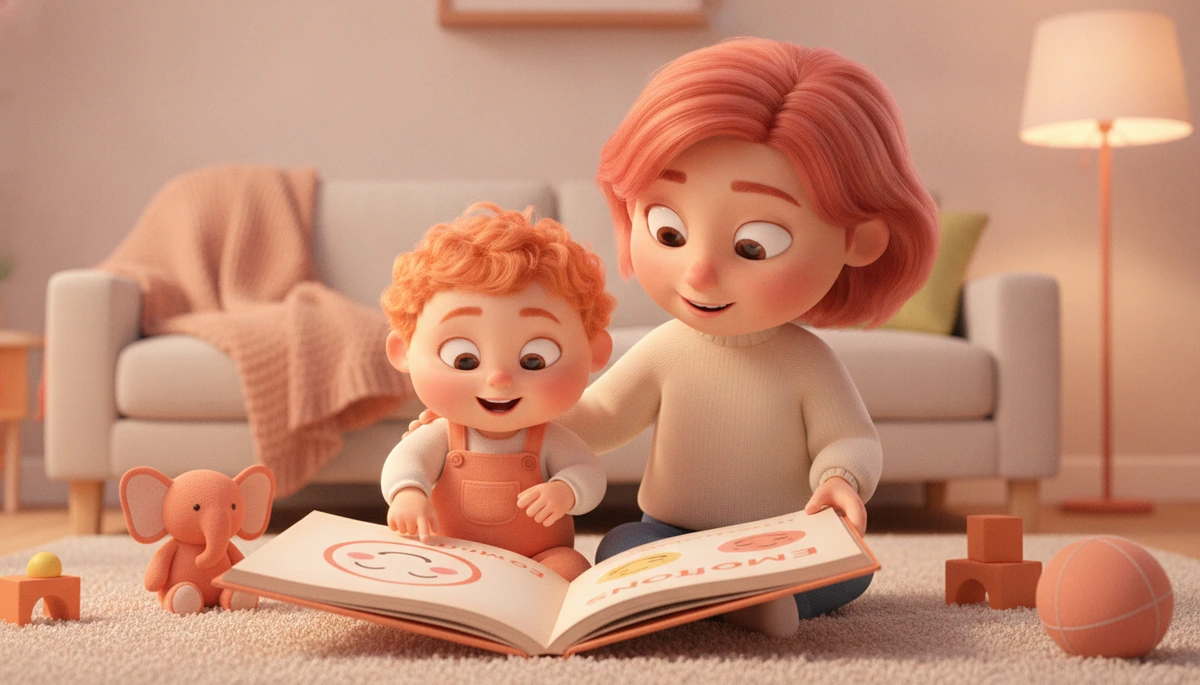
Teaching toddlers to name their feelings is a crucial step in their social-emotional development. By age 2, toddlers can learn up to 50 emotion words, which helps them express their feelings and understand others. This article is part of our complete guide to Toddler Social-Emotional Development (Ages 1-3) where we explore how emotional vocabulary builds a foundation for empathy and communication.
Why Emotion Vocabulary IS the Foundation of SEL
Developing an emotional vocabulary is more than just naming feelings; it's about fostering self-awareness and social awareness, two key competencies of Social-Emotional Learning (SEL). When toddlers can label their emotions, they gain better control over their reactions and can communicate their needs more effectively.
Imagine a toddler named Lucas who feels frustrated because his toy isn't working. Without the words to express his feelings, Lucas might cry or throw the toy. However, if he knows words like "frustrated" or "angry," he can communicate these feelings to his caregiver, who can then help him navigate this emotion. This process not only aids in emotional regulation but also strengthens the parent-child bond.
Building a Vocab for Emotions
Research, such as Marc Brackett’s work on the RULER program, emphasizes the importance of labeling emotions as a first step in emotional development 1. By naming their feelings, toddlers learn to recognize what they are experiencing, which is the first step towards managing those feelings effectively.
In my practice, I've encountered parents who initially felt overwhelmed by teaching emotions. However, by starting with simple words and gradually expanding, they observed significant improvements in their child's ability to express and manage emotions. This gradual approach not only makes the process manageable for parents but also enjoyable for children, who often delight in learning new words.
Brackett's RULER Label Step at Toddler Scale
Marc Brackett's RULER approach, particularly the "Label" step, is a powerful tool adapted for toddlers. The RULER method stands for Recognizing, Understanding, Labeling, Expressing, and Regulating emotions. For toddlers, the focus is on Labeling — teaching them the words they need to describe their emotions.
In my practice, I've seen many parents successfully use this approach by integrating simple, consistent language in daily routines. For instance, during playtime, a parent might say, "You look happy playing with your blocks!" or "It seems like you're feeling sad that the car won’t move."
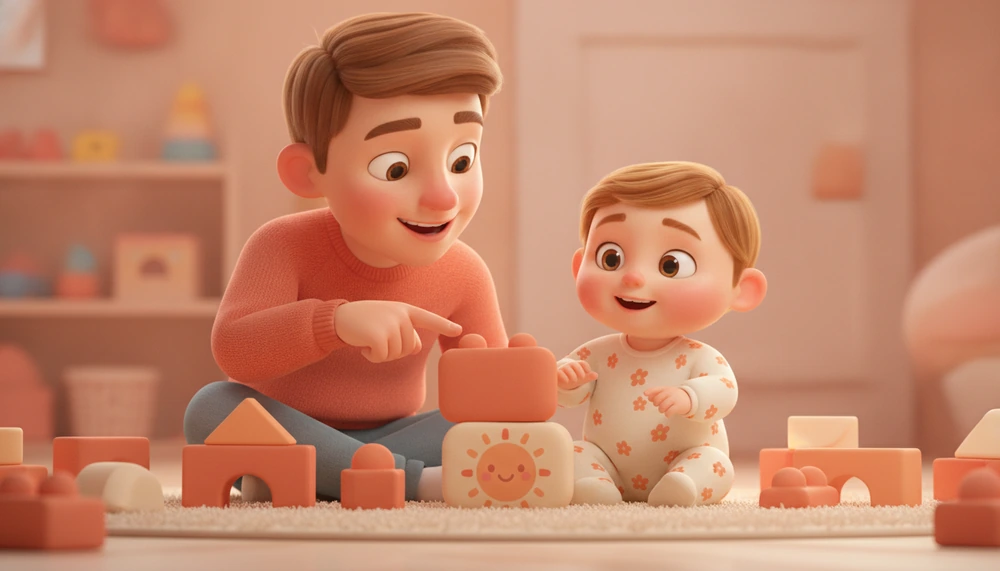
By consistently labeling emotions, toddlers begin to associate words with their feelings, which lays the groundwork for self-regulation. This method not only helps children articulate their emotions but also fosters empathy as they start to recognize similar feelings in others.
Words to Introduce by Age 1 (The First 8)
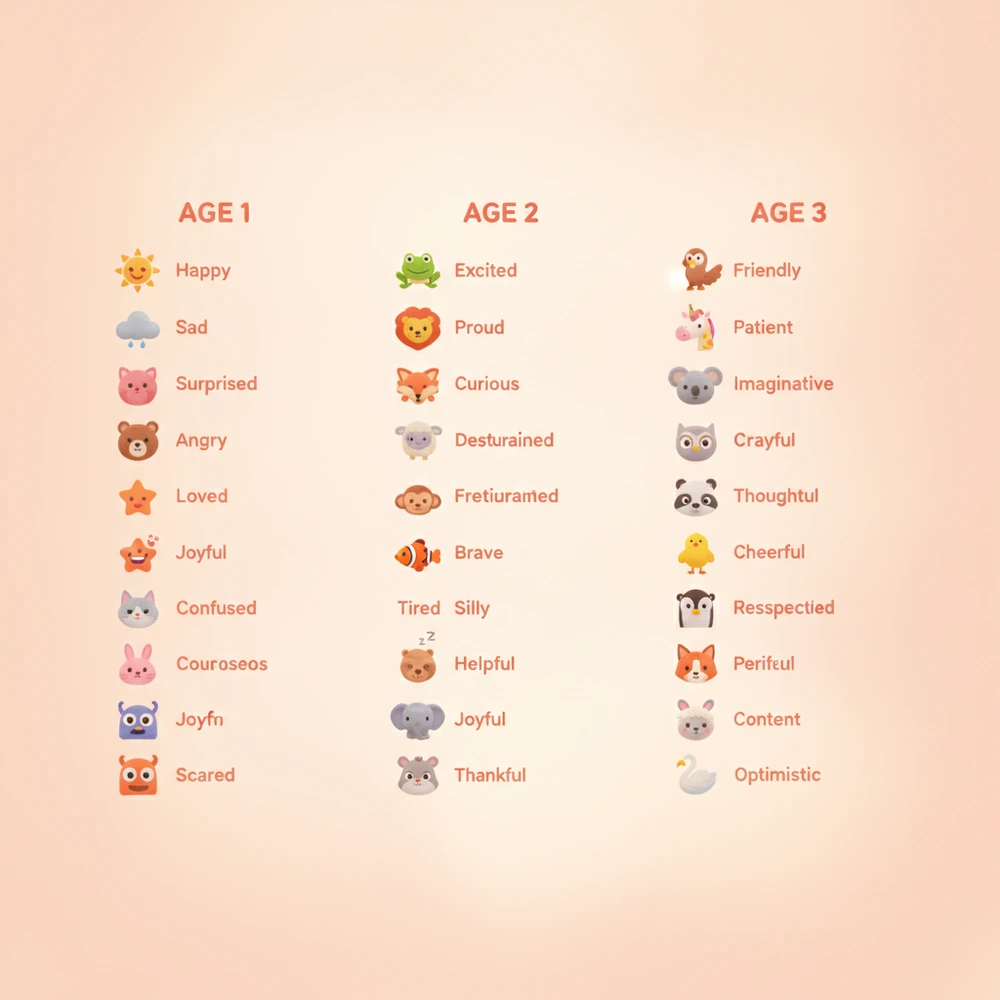
By age 1, toddlers can begin to grasp basic emotion words. Here are the first eight words to introduce:
- Happy
- Sad
- Mad
- Tired
- Hungry
- Scared
- Excited
- Calm
Practical Example
At dinner, when your toddler is smiling and laughing, you might say, "You look happy eating your pasta!" This labels the emotion in a relatable context, helping your child to connect the word "happy" with their current feeling.

Introducing these words during daily interactions helps toddlers to build a vocabulary that they can draw from as they encounter different situations. This foundation supports their growing ability to express needs and emotions, essential skills for fostering independence and self-management.
Words to Introduce by Age 2 (Next 25)
As toddlers approach age 2, their vocabulary expands significantly. Here are 25 additional words to teach:
- Frustrated
- Proud
- Curious
- Shy
- Brave
- Silly
- Embarrassed
- Worried
- Annoyed
- Confused
- Jealous
- Lonely
- Grateful
- Surprised
- Hopeful
- Bored
- Disappointed
- Confident
- Nervous
- Relieved
- Ashamed
- Guilty
- Peaceful
- Overwhelmed
- Content
Scripted Dialogue
Instead of saying, "Stop crying," consider: "I see you're frustrated because the puzzle piece doesn't fit. Let's try a different one together." This approach validates their feelings and offers a solution.
In my practice, I've noticed that when children have a wider vocabulary for their emotions, they tend to exhibit fewer tantrums. They become more adept at expressing what they feel, which reduces frustration.
Words to Introduce by Age 3 (Next 17)
By age 3, toddlers can understand and use a broader range of emotion words. The remaining 17 words include:
- Hurt
- Safe
- Overjoyed
- Nervous
- Relieved
- Anxious
- Calm
- Patient
- Unsure
- Energized
- Miserable
- Optimistic
- Sympathetic
- Melancholy
- Envious
- Jubilant
- Tranquil
Real-Life Scenario
Imagine your toddler is hesitant at a new playground. You might say, "Are you feeling nervous? It's okay to feel nervous when trying something new."
Providing reassurance and words for their feelings helps children navigate new experiences with confidence. This not only boosts their self-esteem but also encourages them to try new things, knowing they have the support of their caregivers.
How to Use the 'Sportscaster' Technique
The "sportscaster" technique involves narrating your toddler's actions and feelings like a sportscaster narrates a game. This technique helps toddlers to connect words with emotions in real-time.
Example
During a playdate, you might narrate: "I see you’re giving your doll a hug. You seem to love her very much. That’s so kind!"
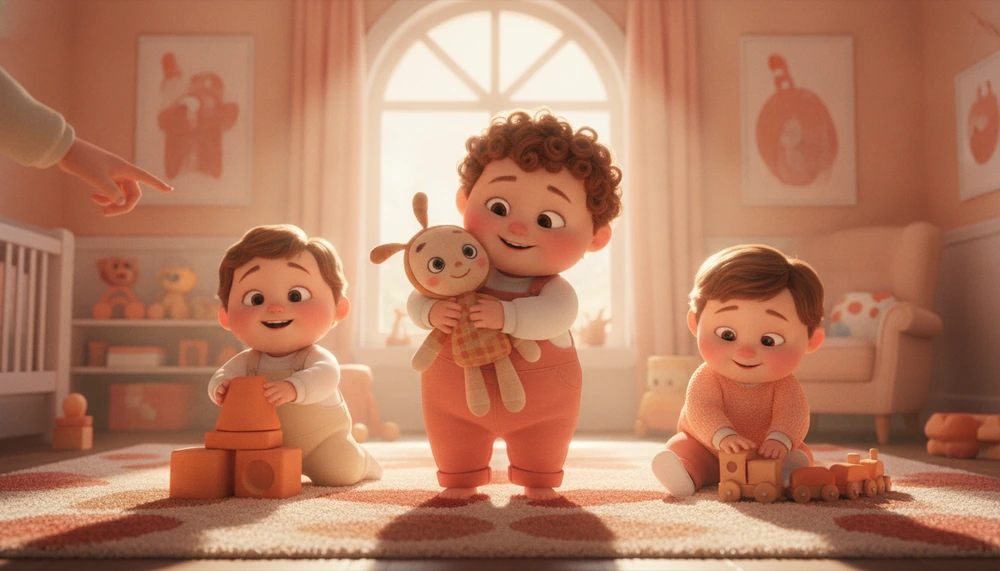
This approach not only labels emotions but also models empathy and social interaction skills. By verbalizing what they observe, parents provide a rich language environment that encourages toddlers to articulate their thoughts and emotions.
Free Download: 50-Word Feelings Vocabulary Checklist
To support your journey in teaching toddlers feelings, download our free 50-word checklist. This resource provides a comprehensive list of emotion words tailored to your toddler’s developmental stage, making it easy to track your child’s vocabulary growth.
Download the 50-word feelings vocabulary checklist now.
References
1 Brackett, M. (2019). Permission to Feel — Yale RULER. Retrieved from https://www.yalecenterforemotionalintelligence.org/ 2 Zero to Three. (n.d.). Social-Emotional Development. Retrieved from https://www.zerotothree.org/
Try It This Week
Reading is the easy part. Skills build through small, repeated practice — here's a low-pressure plan you can try with your child.
- 1Introduce two new emotion wordsDay 1Choose two new emotion words to discuss with your child this week. Use them in context during daily activities.use this story →👉 What this looks likeDuring breakfast, introduce the word 'excited.' Say, 'I see you're excited to eat your pancakes!' Later, if they show reluctance to nap, use 'tired': 'You're rubbing your eyes. Feeling tired?' This repetition helps build recognition and understanding.
- 2Narrate emotions during playtimeDay 2Use the sportscaster technique to narrate your child's playtime emotions. This builds their emotional vocabulary and understanding.👉 What this looks likeWhile your child plays with a toy, say, 'You’re smiling at the toy truck. You look happy!' If they become frustrated, acknowledge it: 'I see the puzzle is tricky. That’s okay to feel frustrated.' This helps them connect words to feelings.
- 3Create a feelings chartThis weekendMake a simple chart with emotion faces. Use it to discuss feelings at the end of the day.in the SocialBlossom app →👉 What this looks likeDraw faces representing 'happy,' 'sad,' and 'mad.' Each evening, ask your child, 'How did you feel today?' Let them point to a face. Encourage them to say the word, reinforcing their vocabulary through visual aids.
- 4Model emotion labelingDaily, 5 minDemonstrate how to label your own emotions in front of your child. This models self-awareness and emotional regulation.👉 What this looks likeWhen you feel impatient waiting in line, say, 'I'm feeling impatient because we're waiting. Let's count to stay calm.' This shows practical use of emotion vocabulary in everyday situations, modeling self-regulation for your child.
- 5Read a social story togetherOnce this weekChoose a social story that highlights emotions. Read it together and discuss the feelings of characters.in the SocialBlossom app →👉 What this looks likePick a book about sharing. As you read, pause to ask, 'How do you think the character feels?' Discuss words like 'proud' or 'jealous' in context. This encourages empathy and vocabulary expansion.
Frequently Asked Questions
Why is teaching emotion vocabulary important?
What emotion words should I introduce first?
How can I expand my toddler's emotion vocabulary?
At what age should I start teaching emotion words?
How can I use the RULER method with toddlers?
References