How to Use Plutchik's Emotion Wheel to Support Young Children's Emotional Development

Understanding the Plutchik Wheel
The Plutchik wheel is a visual tool designed to help people understand and articulate their emotions. Created by psychologist Robert Plutchik, it organizes emotions into eight primary categories: joy, trust, fear, surprise, sadness, disgust, anger, and anticipation 1. Each emotion on the wheel is interconnected, illustrating how complex emotional experiences can arise from these basic feelings.
In my practice, I've found that the visual nature of the wheel helps children identify and express emotions they might struggle to articulate verbally. This tool can be a bridge to more effective communication and deeper understanding between parents and children.
This article is part of our complete guide to Emotion Charts and Wheels: A Parent's Complete Guide, where you can explore various tools for nurturing emotional intelligence in children.
Why Eight Emotions Can Overwhelm Young Kids
While the Plutchik wheel is a powerful tool, its complexity can be overwhelming for younger children. Children aged four to six are still developing their emotional vocabulary and understanding. At this stage, introducing too many emotions at once can be confusing, leading to frustration rather than clarity.
In my practice, I've seen many young children struggle to differentiate between similar emotions like anger and frustration or sadness and disappointment. Simplifying these emotions helps them focus on identifying and naming what they feel without feeling overwhelmed.
Example: Navigating Emotional Overwhelm
Imagine a four-year-old at a birthday party who suddenly bursts into tears. They might not understand they're feeling a mix of excitement and exhaustion. Using a simplified emotion wheel, you can help them pinpoint "tired" or "overwhelmed," validating their feelings and easing their distress.
Simplifying for Ages 4-6: The 6-Emotion Wheel
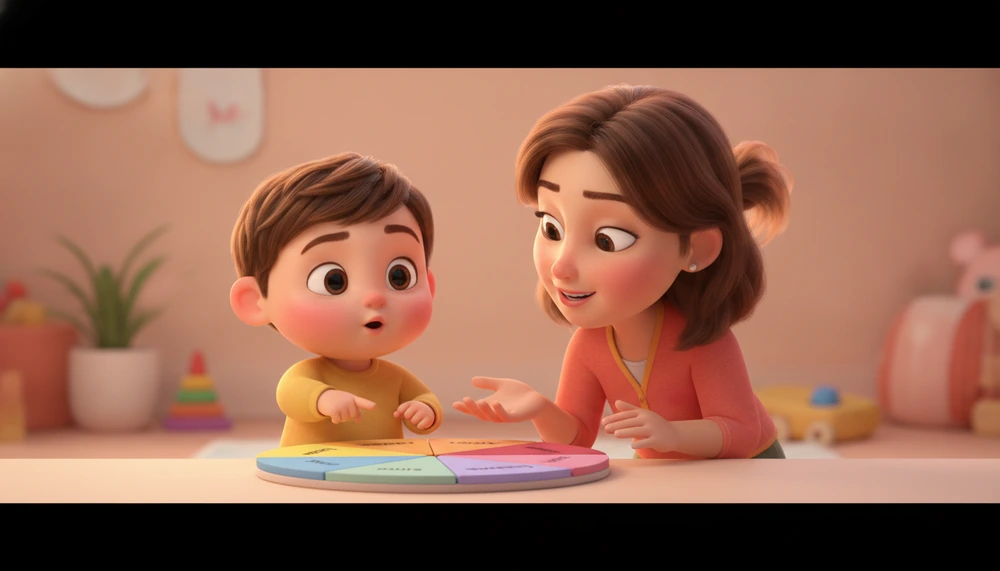
For children aged four to six, a simplified version of the Plutchik wheel can be more effective. This version includes six basic emotions: happy, sad, angry, scared, loving, and surprised. These emotions are easier for young children to identify and express, laying a foundation for more complex emotional understanding later on.
Example: Using the Simplified Wheel
Imagine your five-year-old is upset because their favorite toy is broken. You can use the 6-emotion wheel to help them identify their feelings. Ask them to point to the face that matches their emotion. They might point to the "sad" face, and you can say, "I see you're feeling sad because your toy is broken. It's okay to feel sad." This validation helps children understand and regulate their emotions more effectively.
In My Practice: Building Emotional Vocabulary
In my practice, I often encourage parents to use this simplified wheel during daily routines. For example, during bedtime, asking children to pick an emotion from the wheel helps them reflect on their day, fostering self-awareness and emotional management.
Ages 7-9: Introducing the Classic 8-Emotion Plutchik Wheel
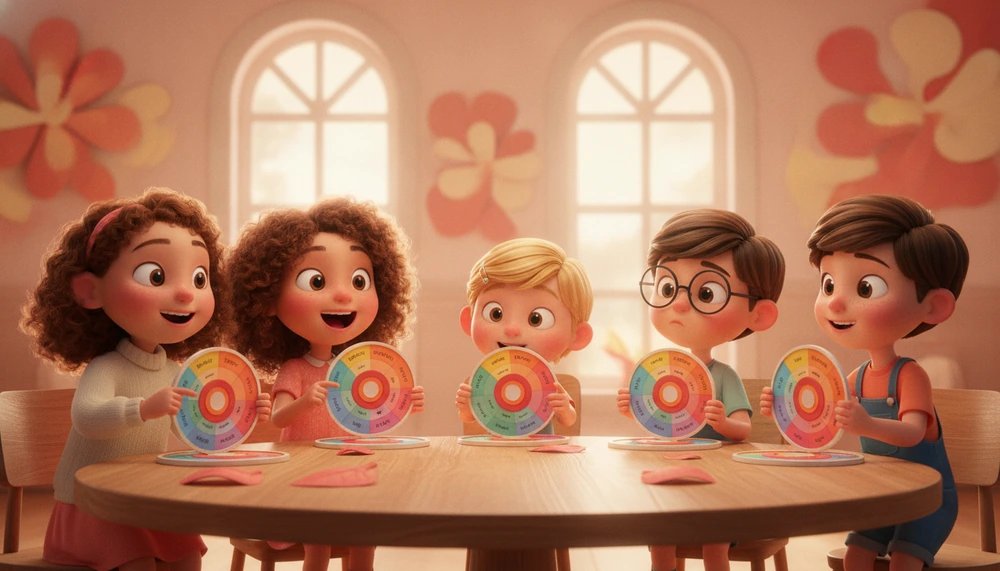
As children grow older, they develop a more sophisticated understanding of emotions. For ages seven to nine, it's appropriate to introduce the classic 8-emotion Plutchik wheel. This allows children to begin exploring more nuanced emotions and their relationships to one another.
Example: Applying the 8-Emotion Wheel
Consider an eight-year-old who is nervous about starting a new school. Using the 8-emotion wheel, they can identify "fear" as the primary emotion. You can guide them to recognize related feelings, such as "anticipation" about making new friends or "trust" in their ability to make a good impression.
Expanding Emotional Complexity
In this age group, children begin to understand that emotions can occur simultaneously or influence each other. Discussing how "fear" can coexist with "anticipation" helps children appreciate the complexity of their emotional landscape, enhancing their social awareness.
Ages 10 and Up: Full Plutchik Wheel with Intensity Gradients
For children aged ten and older, the full Plutchik wheel, which includes intensity gradients, can be introduced. This version helps children explore the depth and variety of their emotional experiences, providing a richer vocabulary to describe how they feel.
Example: Deep Dive into Emotions
Imagine a 12-year-old frustrated with a difficult math problem. With the full wheel, they can identify "anger" at its core but also recognize "annoyance" or "rage" as intensity variations. This helps them articulate their feelings more precisely and opens the door to discussing solutions.

In My Practice: Navigating Emotional Intensity
In my practice, older children benefit from discussing the intensity of emotions. For instance, by identifying "annoyance" rather than "rage," they can better manage their responses, leading to more responsible decision-making in social interactions.
Daily Use: 5-Minute Emotion Check-In
Using the Plutchik wheel or its variations daily can foster emotional literacy. A simple 5-minute check-in each day helps children articulate their feelings and reflect on their emotional state.
- Start by asking how they feel: Encourage your child to select an emotion from the wheel.
- Discuss the emotion: Ask why they feel this way and what happened to cause it.
- Validate their feelings: Acknowledge their emotions without judgment.
- Discuss coping strategies: Talk about ways to manage the emotion, like deep breathing or talking to someone.
Example: Morning Check-In
"Before school, let's check in. Can you tell me what color you're feeling today on the wheel?" If they say "yellow" for happiness, ask what made them feel that way. If "blue" for sadness, discuss how they can feel better.
Building a Routine
Establishing this routine encourages children to think about their emotions regularly, promoting self-management and responsible decision-making. These discussions can become a core part of family life, strengthening relationships and emotional understanding.
Free Downloads: Wheel Variants by Age
To support parents and educators, we offer free downloadable versions of the emotion wheels tailored for each age group:
- Ages 4-6: Simplified 6-emotion wheel
- Ages 7-9: Classic 8-emotion wheel
- Ages 10+: Full wheel with intensity gradients
These tools are designed to make emotional learning accessible and effective for children at every developmental stage.
References
1 Plutchik, R. (1980). Emotion: A Psychoevolutionary Synthesis — wheel of emotions. 2 Brackett, M. (2019). Permission to Feel — Yale RULER.
Try It This Week
Reading is the easy part. Skills build through small, repeated practice — here's a low-pressure plan you can try with your child.
- 1Introduce the Simplified WheelDay 1Help your child explore the simplified emotion wheel. This builds emotional awareness and vocabulary.👉 What this looks likeAfter dinner, gather your child and introduce the simplified wheel. Ask them, "How are you feeling? Can you find it on the wheel?" When they point to an emotion, such as 'angry', acknowledge it: "It's okay to feel angry. Let's talk about why." This fosters acceptance and understanding.
- 2Create a Morning Emotion Check-InDaily, morningStart each day with a quick emotion check-in using the wheel. This routine promotes self-awareness and emotional expression.👉 What this looks likeBefore heading out to school, ask your child, "What color are you feeling today?" If they choose 'green' for calm, discuss what makes them feel that way. If 'red' for anger, ask how you can help them feel better. This routine encourages regular emotional reflection.
- 3Discuss Emotions in StoriesThis weekendUse storybooks to explore emotions with your child, linking them to the wheel.use this story →👉 What this looks likeDuring storytime, pause to ask, "How do you think the character feels? Can you find it on our wheel?" For instance, if a character is scared, discuss what might help them feel safe. This builds empathy and emotional insight.
- 4Reflect on the Day at BedtimeEach nightHave a nightly reflection on emotions felt throughout the day, reinforcing emotional literacy.👉 What this looks likeAt bedtime, ask your child, "What emotions did you feel today?" Encourage them to pick from the wheel. If they say 'happy' and 'sad', explore why both were present. This reinforces the concept of multiple emotions and their causes.
- 5Practice Deep BreathingOnce this weekTeach deep breathing as a coping strategy for managing difficult emotions identified on the wheel.👉 What this looks likeFind a calm moment and guide, "Let's breathe deeply together. Inhale for four counts, hold, and exhale slowly. If you feel 'angry', this can help you feel 'calm'." Practicing this together helps them apply it independently when needed.
Frequently Asked Questions
What is Plutchik's Emotion Wheel?
How can the emotion wheel help young children?
At what age can children use the full Plutchik wheel?
Why might the full Plutchik wheel be overwhelming for young kids?
Are there downloadable versions of the emotion wheel?
References