Understanding Preschool Friendships: A Parent's Guide to SEL
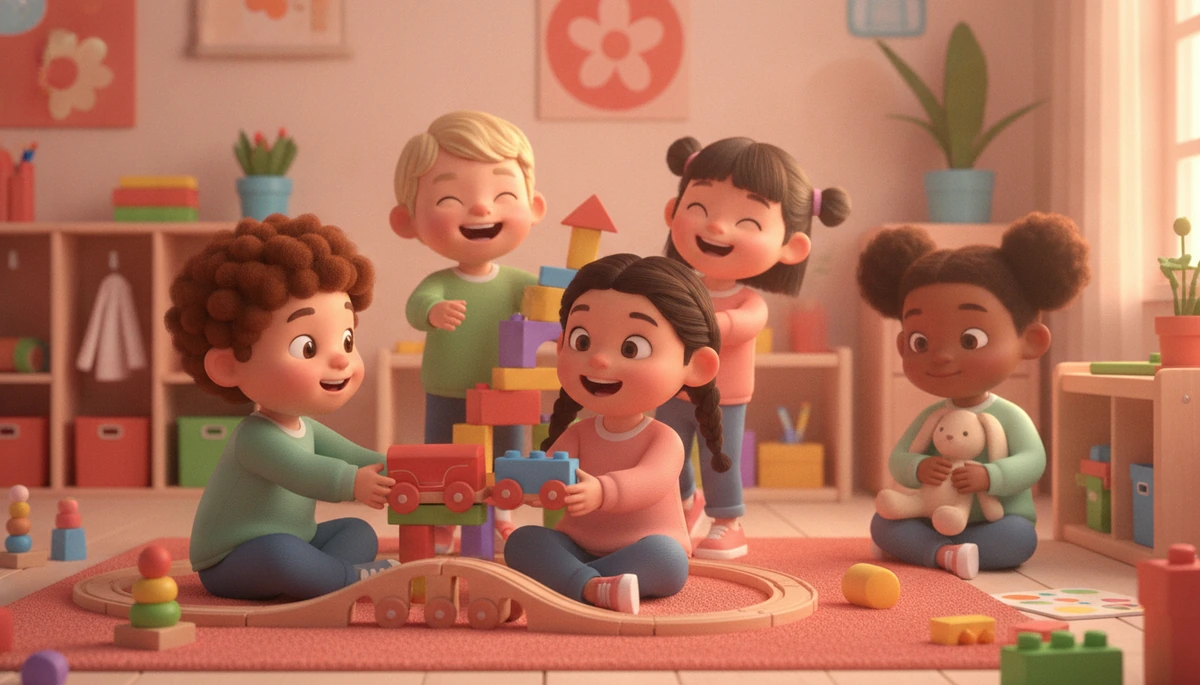
Preschool friendships are a fascinating world of discovery and growth. As children navigate these first connections, they lay the groundwork for future social skills. This article is part of our complete guide to Preschooler SEL (Ages 3-5): A Parent's Complete Guide. Let's explore the stages of preschool friendships and how you can support your child's social journey.
Selman's Stage 0: 'Momentary Playmates'
Young children often start their friendship journey as 'momentary playmates', where interactions are brief and based on shared activities rather than deep connections. At this stage, preschoolers enjoy parallel play — playing alongside but not directly with others. This is a normal part of development and lays the foundation for more complex interactions later on.
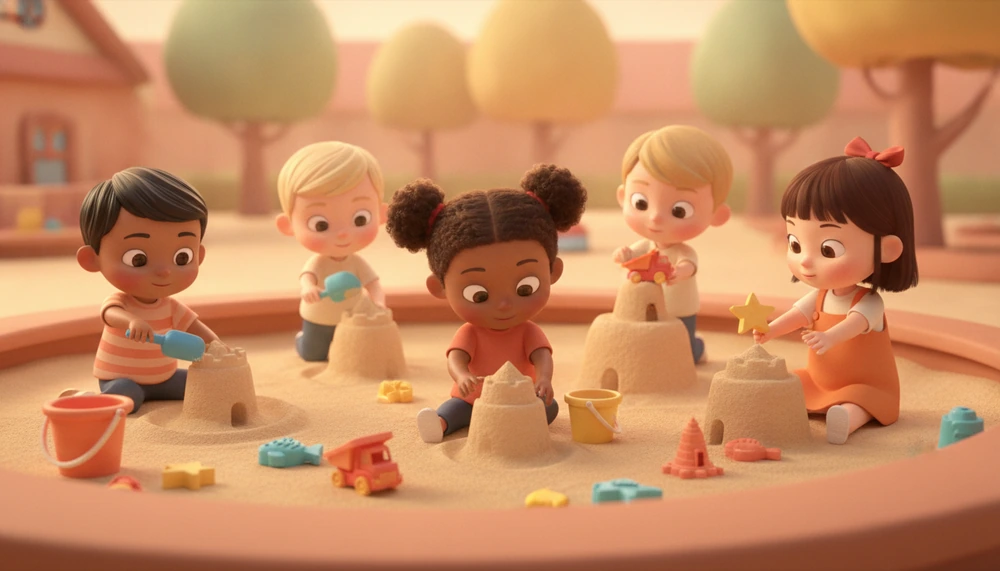
Example Scenario: Imagine Maya at the sandbox. She plays next to Liam, both absorbed in their own sandcastles. Occasionally, they exchange tools or comment on each other’s creations, but their play remains mostly independent. This stage is about exploring social presence rather than forming deep bonds.
In My Practice: Children at this stage often thrive in environments that encourage exploration without pressure. I've seen many children benefit from settings like playgrounds, where they can choose when to engage with others. By providing opportunities for parallel play, children naturally begin to observe and learn from peers.
Activities to Support Stage 0
- Encourage Parallel Play: Set up environments where children can play side-by-side, such as art tables or block areas.
- Provide Shared Resources: Offer toys that naturally promote turn-taking, like building blocks or play dough.
- Observe and Gently Guide: Be present but allow children to navigate their interactions. Intervene only if needed for safety or fairness.
Selman's Stage 1: 'One-Way Assistance'
As children grow, they enter the 'one-way assistance' stage, where friendships become more about what one child can gain from another. Preschoolers start to understand that friends can help them achieve goals, like building a taller block tower or catching a playground slide buddy.
In My Practice: I've seen many parents worry when their child seems bossy or demanding with friends. It's important to remember that this "one-way assistance" is a typical step. Children are learning how to ask for and offer help, even if it looks lopsided at first.
Encouraging Productive Interactions
- Role-Play Scenarios: Use social stories like Making Friends at Preschool - Printable Social Story to illustrate sharing and helping.
- Model Asking for Help: Demonstrate how to request assistance and express gratitude.
- Facilitate Group Activities: Set up simple tasks that require cooperation, such as a group art project.
What 'Best Friend' Means at Age 4
At four years old, the concept of a 'best friend' can change rapidly. This is a developmental milestone where children start to express preferences, but their criteria can be whimsical, such as "she had a pink dress" or "he likes dinosaurs too."
- Child: "Sarah is my best friend today!"
- Parent: "What do you like about playing with Sarah?"
- Child: "She shares her crayons with me!"
This conversation highlights how preschoolers view friendships as immediate and situational, often based on recent interactions.
In My Practice: It's crucial for parents to understand that a child's "best friend" today might change tomorrow. This fluidity is healthy and part of learning to interact with different personalities. Encouraging diverse interactions helps children develop empathy and adaptability.
Activities to Reinforce Friendships
- Plan Regular Playdates: Rotate among different friends to help your child experience diverse interactions.
- Create Friendship Rituals: Simple routines like a secret handshake or shared snack time can foster a sense of closeness.
- Use Social Stories: Stories like Playing Nicely with Friends at Preschool - Social Story can reinforce positive interactions and friendship skills.
Reciprocity Emerges (Peek of Stage 2)
As preschoolers approach the end of this age band, a glimpse of reciprocity starts to appear. Children begin to understand that friendships involve give-and-take, leading to more balanced interactions.
Example Scenario: Consider a group of children playing "shop." One child pretends to be the shopkeeper while others take turns being customers. They exchange roles and items, practicing the early stages of reciprocal play.
Encouraging Reciprocity
- Turn-Taking Games: Board games or simple card games teach patience and fairness.
- Discuss Feelings: After play, talk about what went well and what could be improved.
- Reinforce Empathy: Praise efforts to understand and respond to friends' feelings.
Helping a Shy Preschooler
Supporting a shy child in forming friendships requires patience and encouragement. Shyness is common, and with gentle support, children can learn to express themselves more freely.
In My Practice: I've noticed that shy children often benefit from observing peers before engaging. Parents can facilitate by gently encouraging their child to participate when they feel ready.
Strategies for Support
- Create Low-Pressure Playdates: Invite one friend to a familiar place where your child feels comfortable.
- Practice Social Scripts: Role-play greetings and simple conversations.
- Encourage Observation: Let your child watch interactions before joining in.
When to Set Up Playdates (and How)
Playdates are a wonderful way to nurture friendships, offering a controlled environment for children to practice social skills.
Tips for Successful Playdates
- Keep Them Short: Start with one-hour playdates to prevent overwhelming your child.
- Plan Simple Activities: Choose activities that encourage sharing and cooperation, like baking cookies or crafting.
- Monitor and Support: Be present to mediate if needed, but allow the children to lead their play.
When 'No Friends' Is OK
It's common for preschoolers to have fluctuating friendships. If your child seems uninterested in forming close bonds, it might simply be a phase of exploration or contentment with solitary play.
In My Practice: Some children naturally prefer solitary play, which is perfectly fine. I've observed that these children often have a rich internal world and engage deeply with tasks that interest them.
Understanding Solitary Play
- It's Developmentally Normal: Many children enjoy playing alone and develop rich imaginations.
- Focus on Interests: Encourage activities that align with your child's interests, whether solo or with others.
- Talk to Your Pediatrician: If you have concerns, a professional can provide reassurance and guidance.
Preschool friendships are dynamic and ever-changing. By understanding these stages, you can better support your child's social-emotional development, celebrating each small step in their friendship journey.
References
1 Selman, R. (1980). The Growth of Interpersonal Understanding — friendship stages. 2 Damon, W. (1977). The Social World of the Child — classic developmental.
Try It This Week
Reading is the easy part. Skills build through small, repeated practice — here's a low-pressure plan you can try with your child.
- 1Set Up Parallel PlayDay 1Create opportunities for your child to engage in parallel play, fostering independent exploration with peers.👉 What this looks likeTake your child to a park with a sandbox. Encourage them to build their own sandcastle next to another child. Stay nearby, offering praise for their creativity while allowing them to play independently.
- 2Role-Play Asking for HelpDay 2-3Teach your child how to ask for assistance in a friendly way, enhancing their ability to interact with peers.use this story →👉 What this looks likeDuring playtime, pretend to be a child at school. Have your child ask, 'Can you help me build this tower?' Respond with, 'Sure! Let's do it together.' Reinforce their polite request with a smile.
- 3Discuss a Friendship BookOnce this weekRead a book about friendships together and discuss the characters' interactions.👉 What this looks likeChoose a book like "The Rainbow Fish". Read it with your child, pausing to ask, 'How did Rainbow Fish make friends?' Discuss how sharing brought joy to the characters.
- 4Encourage Empathy in PlayDaily, 5 minPrompt your child to recognize and respond to peers' emotions during playtime.👉 What this looks likeObserve your child playing. If a friend seems upset, gently ask your child, 'How do you think they feel? What could you do to help?' Guide them in offering comfort or support.
- 5Plan a Short PlaydateThis weekendOrganize a brief playdate to practice social skills in a familiar setting.in the SocialBlossom app →👉 What this looks likeInvite a friend over for an hour. Set up activities like a simple craft project. Stay close to offer guidance but let the children lead their play. Conclude with a snack and a positive reflection on the visit.
Frequently Asked Questions
What are the stages of preschool friendships?
How can I help my shy child make friends?
Why does my child change best friends often?
Is it okay if my child prefers solitary play?
How long should playdates be for preschoolers?
References