Understanding Facial Expressions: A Guide for Parents of Neurodivergent Children
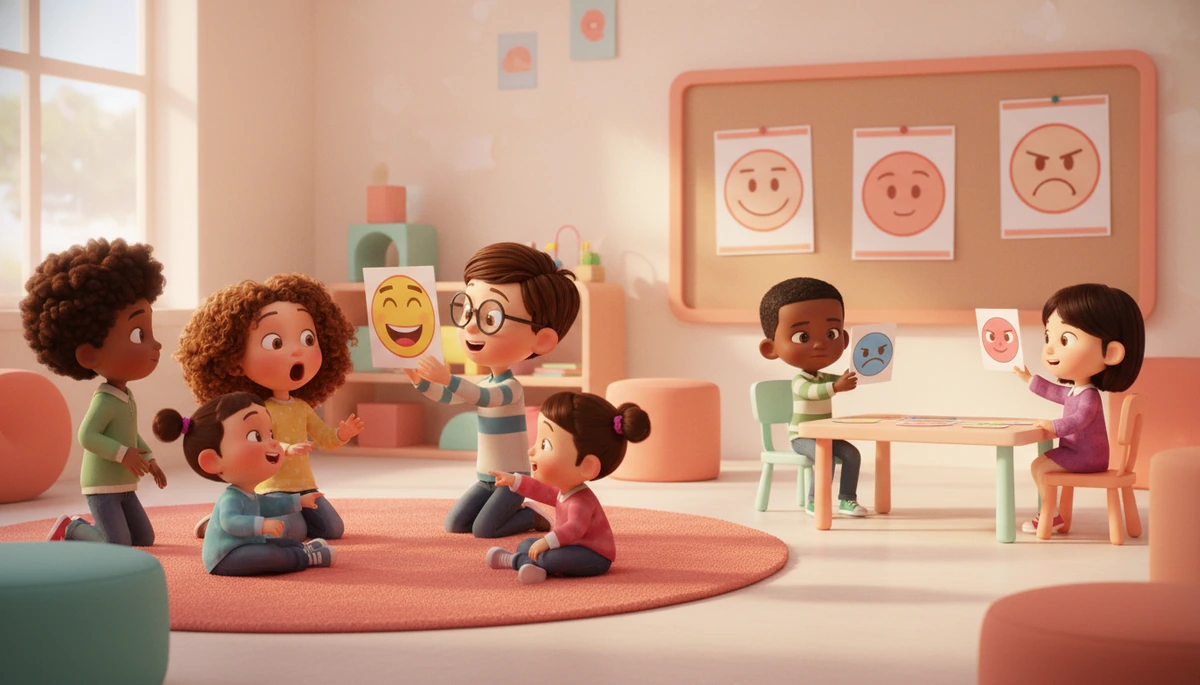
Understanding and interpreting facial expressions is a fundamental skill in developing a child's social awareness. Children who can recognize emotions in others are better equipped to navigate social interactions. This article is part of our complete guide to Social Awareness in Kids: Empathy, Perspective-Taking & Cultural Competence.
The 6 Universal Expressions
The study of emotions tells us there are six universal facial expressions: happiness, sadness, anger, fear, surprise, and disgust. These expressions, identified by Paul Ekman, are recognized across cultures and are key to understanding human emotion 1. However, not all emotional expressions are universal. Cultural nuances may influence how emotions are expressed and perceived. For instance, a smile in one culture might convey politeness, while in another, it could indicate happiness.
In my practice, I've observed how children respond differently to these expressions depending on their cultural background. For example, a nod of understanding may be perceived as agreement in one culture but simply acknowledgment in another. This diversity in interpretation underscores the importance of teaching children about emotional expressions in a culturally inclusive way.
Recognizing these expressions early in life is crucial. It lays a foundation for decoding more complex emotional signals as they grow. Parents can play a significant role by modeling these expressions and discussing them openly with their children.
Ages 3-5: Happy, Sad, Angry, Scared
Children aged 3 to 5 are just beginning to identify basic emotions. At this age, they can typically recognize happiness, sadness, anger, and fear. These emotions form the foundation of their emotional vocabulary. Early recognition of these emotions is linked to better peer relationships and social interactions.
Imagine a scenario where a child sees another child crying. They may approach them and say, "Are you sad because you lost your toy?" This simple recognition can help foster empathy and support among peers. Recognizing these emotions allows children to respond appropriately, which is a vital aspect of building relationship skills.
- Emotion Charades: Have children act out emotions like happiness and sadness without speaking. Their peers guess the emotion.
- Storybooks: Use stories like [Discovering Our Feelings: A Printable Social Story](/products/discovering-our-feelings) to explore emotions in a fun way.
- Emotion Puppets: Make simple puppets with different facial expressions and have children interact with them to tell a story.
Ages 5-7: Surprised and Disgusted
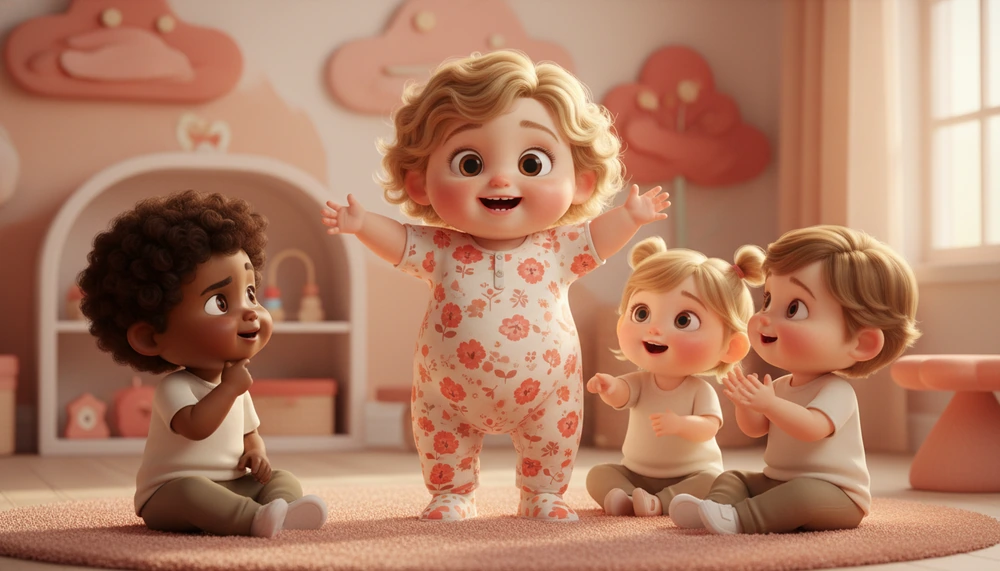
As children grow, their emotional lexicon expands to include more complex emotions such as surprise and disgust. These emotions add depth to their understanding of social situations. At this stage, children begin to understand that emotions can be triggered by unexpected events, and learning to express these emotions verbally is key to self-management.
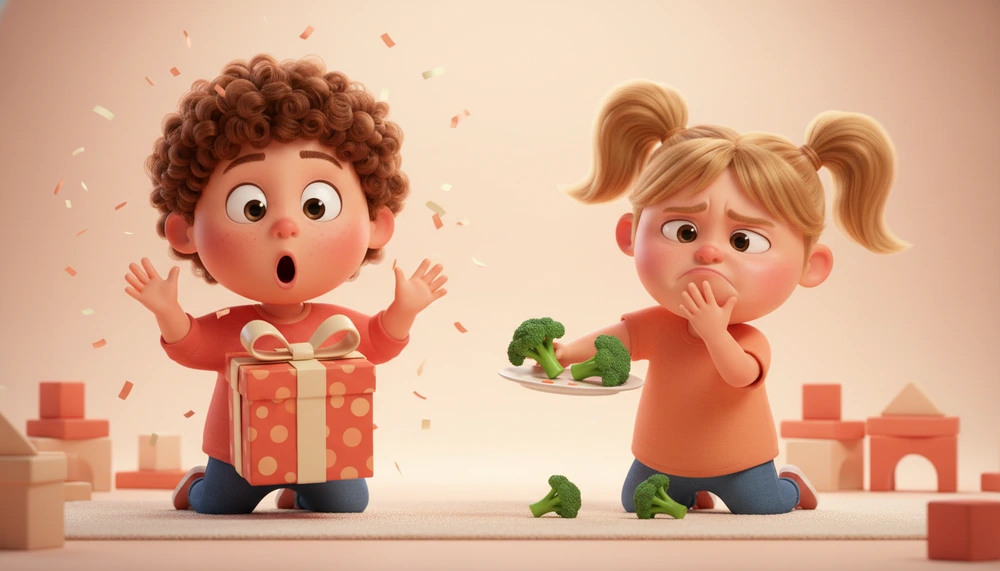
Consider a child opening a gift and expressing surprise. "Wow! I didn't expect this!" they might exclaim. This expression of surprise helps in understanding and reacting to unexpected events. Similarly, acknowledging disgust when tasting something unpleasant helps children voice their preferences and dislikes, which is crucial for developing self-awareness.
- Expression Matching: Use flashcards to match facial expressions to emotions.
- Role Play: Engage in scenarios where children can act out feeling surprised or disgusted, such as tasting a new food.
- Emotion Detective: Encourage children to guess the emotion based on scenarios you describe.
In my practice, I've seen children who initially struggled with identifying these complex emotions grow significantly more comfortable with practice. This comfort translates into better communication skills and enhanced social interactions.
Ages 7-10: Blended and Subtle Expressions
By ages 7 to 10, children start to recognize blended and subtle expressions like smugness, embarrassment, and anxiety. These nuanced emotions are crucial for developing empathy and perspective-taking. As children become more adept at reading these expressions, they learn to navigate social nuances more effectively, enhancing their responsible decision-making.
A real-life scenario: A child feels anxious about a school presentation. They might say, "I feel like everyone is watching me, and I'm scared I'll mess up." Supporting children in these moments helps them understand and articulate complex emotions. Offering them the vocabulary to express such feelings is a stepping stone to building self-confidence.
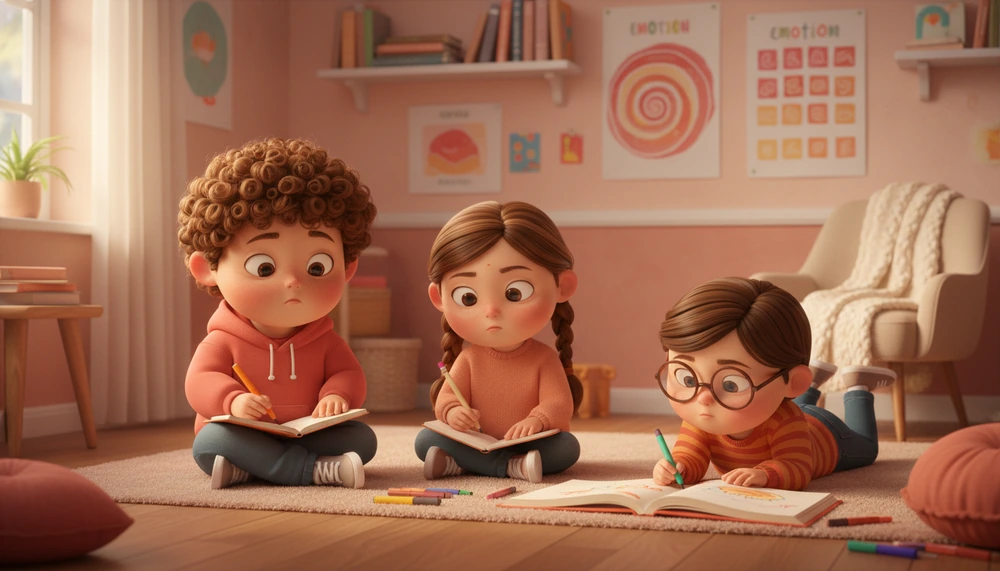
- Emotion Journals: Encourage children to keep a journal of their daily emotions and the situations that trigger them.
- Group Discussions: Facilitate conversations about how different situations make them feel.
- Emotion Sculptures: Use clay to sculpt different emotions, then discuss what each represents.
Why Diverse Faces Matter
Research by Elfenbein and Ambady highlights the importance of recognizing emotions across different cultural contexts. Diverse faces in learning materials help children understand and relate to a broader range of human emotions 2. Including a variety of cultural expressions in educational resources is essential for fostering a more inclusive understanding of emotions.
Incorporating diverse faces in facial expression activities ensures children learn to recognize emotions in people of all backgrounds. This practice fosters inclusivity and empathy, essential components of social awareness. Children who are exposed to diverse emotional expressions are more likely to develop a nuanced understanding of the world around them.
5 Activities You Can Do Today
- Emotion Bingo: Create bingo cards with different emotions and call out scenarios for children to match.
- Mirror Play: Have children look in a mirror and practice making different faces.
- Feeling Faces Collage: Create a collage using magazine cutouts that depict various emotions.
- Interactive Apps: Explore apps that feature diverse characters and expressions.
- Social Stories: Use social stories like Sharing Toys with Friends Social Story to illustrate emotional scenarios.
These activities are designed not just to teach recognition but to encourage children to express and manage their emotions responsibly. Engaging in these activities can significantly enhance their ability to recognize and interpret emotions.
Try the Matching Game
Engaging children in interactive activities can significantly enhance their ability to recognize and interpret emotions. Try our matching game to see how well your child can match expressions with emotions.
References
1 Ekman, P. (1992). An argument for basic emotions. Cognition & Emotion, 6(3), 169. PubMed
2 Elfenbein, H. & Ambady, N. (2002). On the universality and cultural specificity of emotion recognition. Psychological Bulletin, 128(2), 203. PubMed
Try It This Week
Reading is the easy part. Skills build through small, repeated practice — here's a low-pressure plan you can try with your child.
- 1Play Emotion CharadesDay 1Engage your child in a game of emotion charades to help them identify and express basic emotions like happy and sad.use this story →👉 What this looks likeInvite your child to start by acting out 'happy' without words. Exaggerate the smile and say, 'Let's see if I can guess your emotion!' Guess correctly and cheer. Then swap roles. Repeat with 'sad', 'angry', and 'scared'. This helps build their emotional vocabulary.
- 2Create an Emotion CollageDay 2-3Use magazines to cut out faces showing different emotions and create a collage. Discuss each emotion as you go.👉 What this looks likeSit with your child and flip through a magazine. Say, 'Let's find a smiling face.' Cut it out and paste it on the collage. As you add faces, ask your child, 'What do you think this person is feeling?' This encourages emotional recognition and discussion.
- 3Role Play with SurpriseThis weekendAct out scenarios that involve surprise and discuss the emotion. Use props like wrapped gifts or unusual items.👉 What this looks likeWrap a small gift and hand it to your child. Say, 'Pretend you didn't know about this. Open it and show surprise!' Watch as they unwrap and act surprised. Praise their expression and discuss when they felt surprised recently. This builds empathy and understanding.
- 4Keep an Emotion JournalDaily, 5 minEncourage your child to write or draw their emotions daily, noting what triggered them.👉 What this looks likeProvide a small notebook and say, 'Let's draw how we felt today!' If your child draws a happy face, ask, 'What made you feel happy?' Guide them to express and reflect on their emotions, fostering self-awareness.
- 5Explore Diverse FacesOnce this weekIntroduce your child to diverse facial expressions through books or apps featuring multicultural characters.in the SocialBlossom app →👉 What this looks likeChoose a storybook featuring characters from various backgrounds. Read together, pausing to discuss expressions: 'What do you think she's feeling here?' Use this to teach about cultural differences in expressions, enhancing social awareness.
Frequently Asked Questions
Why is it important for children to recognize facial expressions?
How can I teach my child about facial expressions?
Are some emotions harder for children to recognize?
What role do cultural differences play in recognizing emotions?
Can interactive apps help with learning facial expressions?
References