Empowering Neurodivergent Children: Crafting Authentic IEP Social Skills Goals
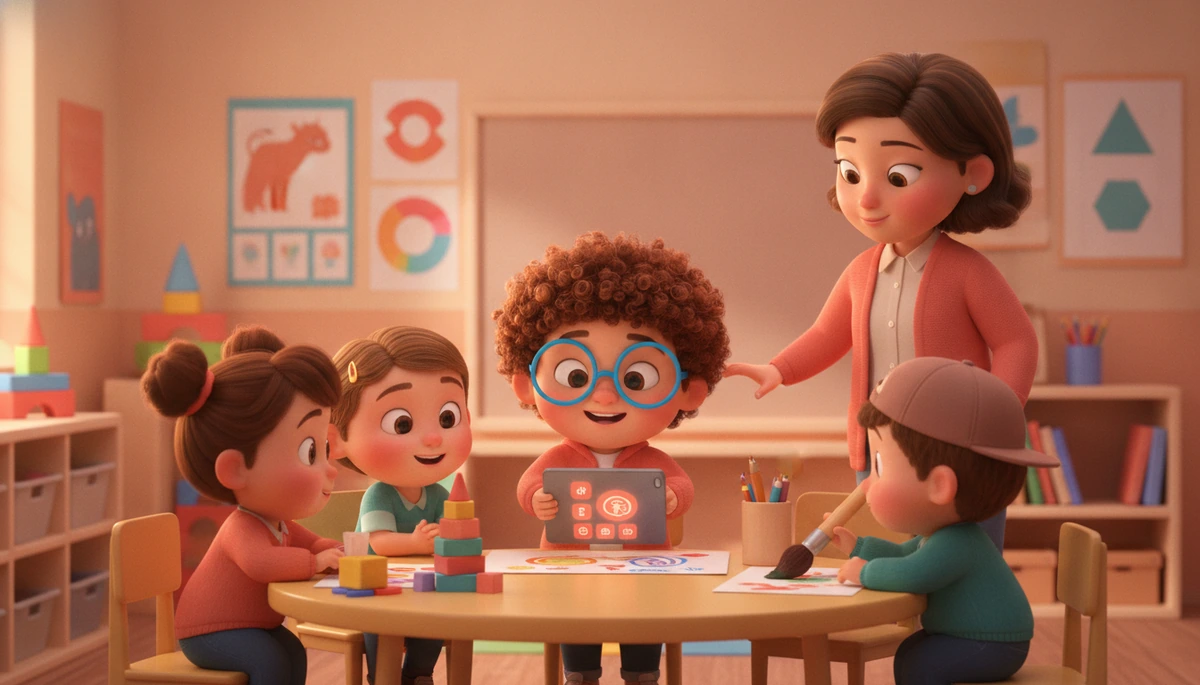
Providing support to neurodivergent children within the school environment involves crafting Individualized Education Program (IEP) goals that nurture authentic social skills without enforcing masking. This article is part of our complete guide to IEP Goals for SEL: A Parent's Practical Guide and aims to empower parents and educators with 10 specific social skills goals that respect and affirm autistic identities.
The Masking Problem in Social-Skills Goals
Traditional social skills goals often emphasize behaviors that align with neurotypical expectations, such as making eye contact or mimicking social gestures. This approach can lead to masking, where autistic children suppress their natural behaviors to fit in socially, often at the cost of their mental well-being 2. Masking can increase anxiety and reduce self-worth.
Instead, IEP goals should focus on authentic communication and interaction. By doing so, we honor the child's natural communication style, promoting genuine engagement rather than forced conformity.
Example: Consider a child who feels forced to make eye contact, which is uncomfortable for them. Instead of insisting on eye contact, an IEP goal could encourage them to acknowledge a speaker's presence by nodding or using a verbal cue, fostering a more comfortable and authentic interaction.
Goal 1-3: Communication Initiation (Autism-Aware)
Goal 1: Express Needs Using Words or Alternative Communication
Encouraging a child to express their needs is crucial. Whether using spoken words, sign language, or communication devices, the goal is to foster confidence in initiating communication.
Example: "When needing help, the child will use words or a communication device to request assistance in 4 out of 5 opportunities."
In my practice, I’ve seen many children thrive when given tools like picture cards or communication apps. They begin to initiate conversations naturally, finding their voice in a supportive environment.
Goal 2: Initiate Greetings with Peers
This goal focuses on encouraging children to start interactions in a way that feels comfortable for them.
Example: "The child will initiate greetings with peers using verbal or non-verbal methods (e.g., waving) in familiar settings."
To support this, consider using the Gautham's Friendly Hello: A Social Story to illustrate friendly interactions in relatable scenarios.
In my practice: I've observed that children who practice greetings with peers in a structured way often feel more included and confident in social settings. One child I worked with found success by starting with simple waves and gradually adding verbal greetings as comfort grew.
Goal 3: Request Help Appropriately
Teaching children to ask for help boosts their independence and confidence.
Example: "The child will request help using a polite phrase or gesture when needed in 3 out of 4 opportunities."
Worked Example: Imagine a child in a classroom struggling with a math problem. Instead of silently struggling, they learn to raise their hand and say, "Can I have some help, please?" With practice, this behavior becomes an empowering tool.
Goal 4-6: Collaborative Play
Goal 4: Participate in Group Activities
Engaging in group activities fosters teamwork and social awareness.
Example: "The child will participate in group activities by sharing materials and taking turns 70% of the time."
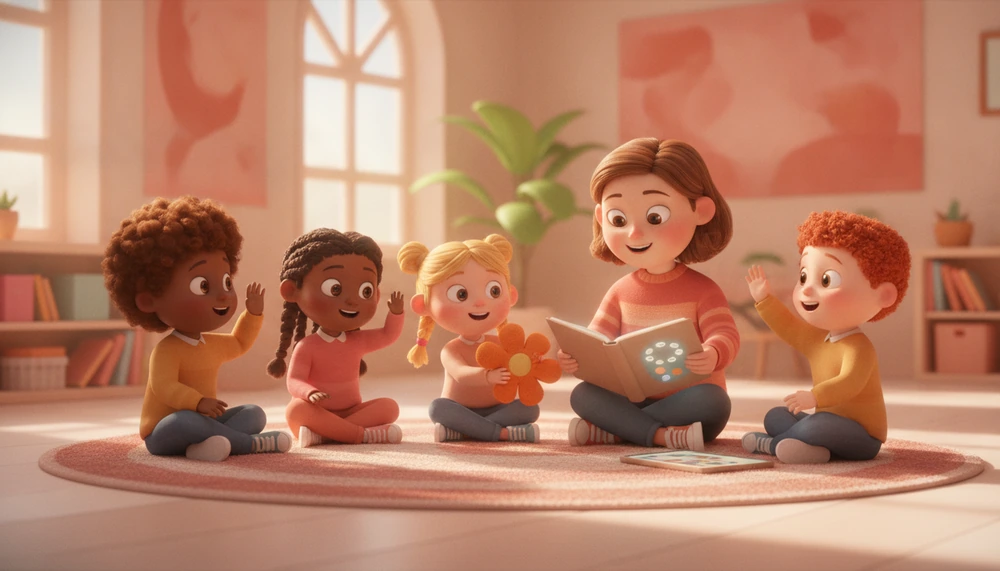
In my practice: Children who are encouraged to participate in group settings often develop a sense of belonging and teamwork. For instance, during art projects, sharing brushes and colors becomes a natural part of the activity, enhancing their collaborative skills.
Goal 5: Share and Take Turns
Children learn valuable social skills through sharing and taking turns.
Example: "The child will share and take turns with peers during play in 4 out of 5 opportunities."
Try using the Diego Learns to Share and Take Turns social story to explore these concepts further.
Scripted Dialogue: "Would you like a turn now? I just finished mine."
Goal 6: Engage in Cooperative Play
Playing cooperatively enhances relationship skills and mutual respect among peers.
Example: "The child will engage in cooperative play by collaborating with peers on a shared goal during free play sessions."
Example: Picture a group of children building a block tower. The child might say, "Let's make it taller together," encouraging peers to join in, thus strengthening their cooperative skills.
Goal 7-8: Conflict Navigation
Goal 7: Resolve Conflicts with Adult Support
Supporting children in conflict resolution helps them build problem-solving skills.
Example: "When disagreements arise, the child will use conflict resolution strategies with adult guidance in 3 out of 5 instances."
Scripted Dialogue: Instead of saying, "Stop arguing," you might try, "I see you both want to use the truck. Let's think of a way you can both play together."
In my practice: I've observed that children who learn to articulate their feelings during conflicts, with adult support, tend to develop stronger problem-solving skills. For example, a child might say, "I feel upset when you take my toy," which opens the door for guided resolution.
Goal 8: Use Words to Express Frustration
Helping children articulate frustration is key to emotional regulation.
Example: "The child will use words to express frustration instead of physical actions in 4 out of 5 opportunities."
Use Using Honest Words to Ask for What You Want to guide children in expressing needs calmly.
Example: A child might say, "I'm feeling really mad because I can't finish my puzzle," allowing them to express emotions without resorting to outbursts.
Goal 9-10: Peer Connection (NOT Eye Contact)
Goal 9: Build Friendships Through Shared Interests
Fostering friendships through common interests encourages natural connections.
Example: "The child will engage in conversations about shared interests with peers in 3 out of 5 interactions."
Worked Example: Imagine a child who loves dinosaurs. They start a conversation with a peer by saying, "I have a dinosaur book at home. Do you like dinosaurs too?" This simple exchange can lay the foundation for a friendship.
Goal 10: Demonstrate Active Listening
Active listening enhances understanding and empathy.
Example: "The child will demonstrate active listening by acknowledging peers with nods or verbal affirmations in 70% of interactions."
Explore Shivani Learns to Listen with Care - Social Story PDF for a more interactive approach.
Scripted Dialogue: "I hear you saying you like drawing. That's great! What do you like to draw?"
How to Push Back on Masking-Style Goals
Parents and educators can advocate for goals that respect a child's individuality by emphasizing strengths and preferences. When presented with goals that feel restrictive, consider these steps:
- Ask for rationale: Request the reasoning behind the proposed goal.
- Propose alternatives: Suggest goals that focus on authentic communication and emotional development.
- Collaborate with the team: Work with your child's educators and therapists to create goals that are achievable and affirming.
In my experience, parents who actively participate in goal-setting meetings often find more success in implementing meaningful IEP goals.
Worked Example: During a meeting, when a goal was suggested that focused on reducing stimming, a parent might propose an alternative goal like "increase tolerance of group activities" which focuses on participation rather than suppression.
Working with the School SLP
School Speech-Language Pathologists (SLPs) play a crucial role in developing and implementing effective IEP goals. Here’s how to enhance collaboration:
- Regular Communication: Schedule consistent meetings to discuss progress and adjust goals.
- Share Observations: Provide insights from home to help tailor strategies.
- Utilize Resources: Leverage tools like social stories and therapy apps to support learning.
By maintaining open lines of communication, you can ensure that your child's social skills goals are supportive and effective.
References
1 Prizant, B. et al. (2006). The SCERTS Model.
2 Pearson, A. & Rose, K. (2021). Conceptual analysis of autistic masking.
3 IDEA: Individuals with Disabilities Education Act, 20 U.S.C. § 1400 et seq.
Try It This Week
Reading is the easy part. Skills build through small, repeated practice — here's a low-pressure plan you can try with your child.
- 1Encourage Expression of NeedsDay 1Guide your child to express their needs using words or communication devices to build confidence.use this story →👉 What this looks likeDuring snack time, when your child wants more juice, prompt them to use their communication device to say, 'More juice, please.' Wait for them to press the button before refilling their cup. Over time, this will become a natural way for them to express needs.
- 2Practice Initiating GreetingsDay 2-3Help your child practice initiating greetings with peers using comfortable methods.in the SocialBlossom app →👉 What this looks likeAt the park, when spotting a familiar face, encourage your child to wave or say 'Hi.' If they're hesitant, model the greeting first. Gradually, they'll start initiating on their own.
- 3Facilitate Cooperative PlayThis weekendCreate opportunities for your child to play cooperatively, enhancing teamwork skills.use this story →👉 What this looks likeInvite a friend over to build a LEGO set together. Encourage your child to say, 'Let's build this tower together,' and take turns adding pieces. This encourages sharing and collaboration.
- 4Model Conflict ResolutionOnce this weekDemonstrate conflict resolution strategies in real-life scenarios to build problem-solving skills.👉 What this looks likeWhen siblings argue over a toy, guide them by saying, 'Let's find a way to share it,' and suggest alternatives like setting a timer for turns. This models peaceful conflict resolution.
- 5Use Words for FrustrationDaily, 5 minEncourage your child to verbalize frustrations, helping with emotional regulation.use this story →👉 What this looks likeWhen your child seems upset because a puzzle piece doesn't fit, prompt them to say, 'I'm frustrated with this puzzle,' and then assist them in finding a solution. This teaches them to articulate emotions.
Frequently Asked Questions
What are IEP goals for social skills?
How can I ensure my child's IEP goals respect their neurodiversity?
Why is masking problematic for autistic children?
How can social stories help with IEP goals?
What role does a school SLP play in IEP goal setting?
How can parents advocate for better IEP goals?
References