Understanding Social Stories vs. Visual Schedules for Autism Support

This article is part of our complete guide to Social Stories for Autistic Kids: A Parent's Complete Guide. Understanding the difference between social stories and visual schedules can transform how you support your child’s social-emotional learning.
What is a Social Story?
Social stories are short narratives used to teach children social norms and expectations 1. Created by Carol Gray, they focus on a single social concept, making it accessible and relatable for autistic children. Social stories often use first-person perspective and positive language to guide children through a social scenario. They are an essential tool for helping children understand and navigate social interactions, which can otherwise be complex and overwhelming.
In my practice, I have seen social stories become a powerful bridge between abstract social concepts and concrete understanding. One mother shared how a social story about visiting the doctor's office comforted her anxious child by explaining what to expect, thus reducing his anxiety significantly.
Social stories are versatile and can be personalized to address the unique needs and interests of each child. This customization makes them more engaging and effective in promoting social-emotional learning (SEL).

What is a Visual Schedule?
A visual schedule is a series of images or symbols that outline the steps of a task or day. These tools provide structure and predictability, essential for many autistic children. Visual schedules help children understand the sequence of activities, reducing anxiety by setting clear expectations. They can be displayed in various formats, such as laminated cards, apps, or posters, allowing flexibility in usage.
Visual schedules are particularly beneficial for children who struggle with transitions or unexpected changes in routine. By offering a clear representation of what comes next, they empower children to manage their time and activities more independently. This autonomy is a crucial aspect of developing self-management skills, a core SEL competency.
The Key Difference
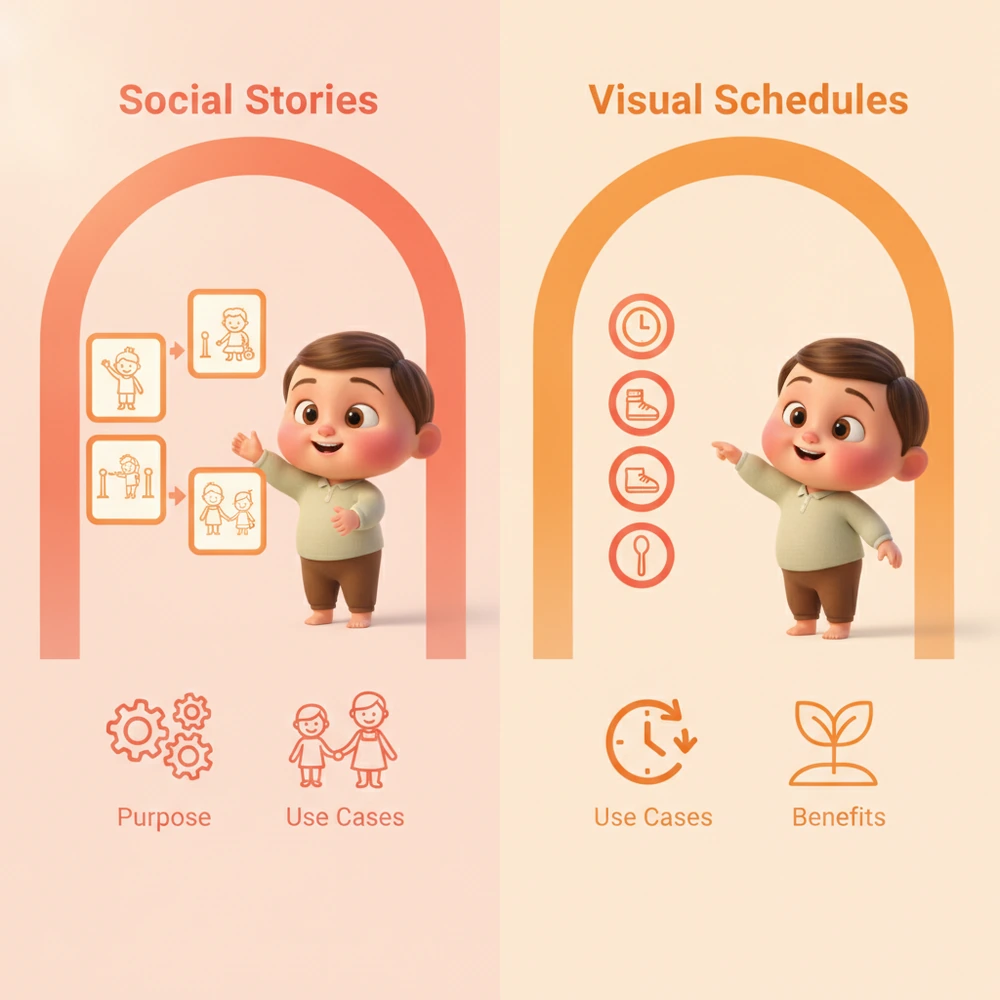
The primary distinction between these tools lies in their purpose: social stories teach social concepts, while visual schedules sequence steps in daily routines. Social stories focus on emotional and social understanding, whereas visual schedules emphasize task completion and order.
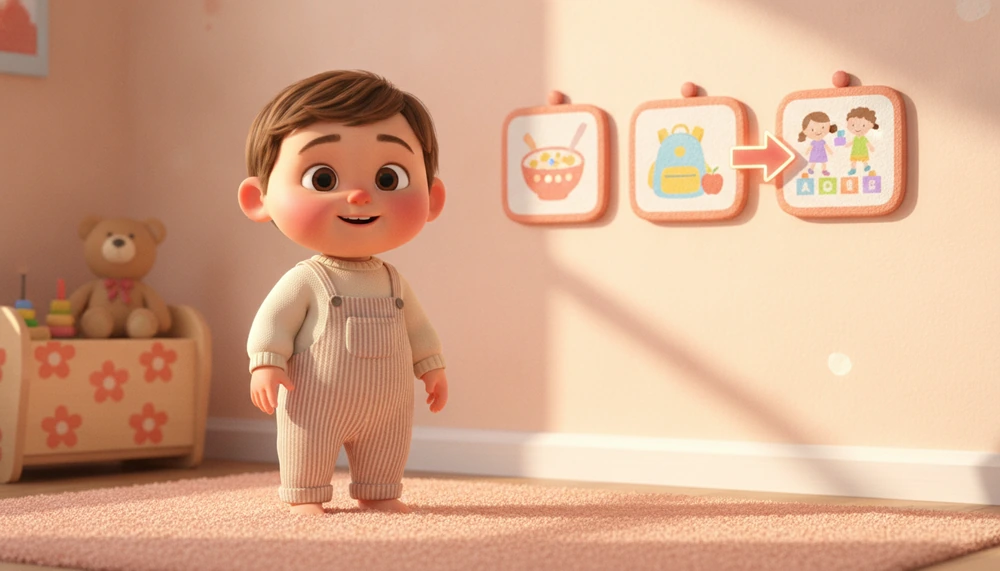
Consider how a child might use these tools during a school day. A social story could help them understand the importance of raising their hand before speaking, while a visual schedule might guide them through the steps of packing their backpack at the end of the day. Each tool addresses a different aspect of the child's learning and development.
When to Use a Social Story
Social stories are best employed in scenarios where understanding social norms and emotions is crucial. Here are four specific situations:
-
Preparing for a New Experience: When a child is about to encounter a new situation, like starting school, a social story can ease anxiety. For example, the TestKid's Happy School Start: Goodbye Worries story prepares children for school transitions.
-
Managing Big Emotions: Social stories can help children process feelings like anger or sadness. The Using Words to Share Our Feelings and Needs - Social Story is perfect for this purpose.
-
Understanding Social Interactions: Teaching children how to take turns in conversation can be supported with stories like Let's Share Words: Taking Turns in Talking.
-
Learning Safety Procedures: Stories like Ember Learns to Stay Safe on the Street teach safety in an engaging manner.
In My Practice
In my practice, I've seen many parents successfully use social stories to help their children understand the nuances of social interactions. One parent used a story about sharing toys to help her son navigate playdates more comfortably. The child learned to articulate his needs and manage frustration, significantly improving his social interactions.
Social stories are also invaluable in helping children develop empathy and perspective-taking skills. These skills are vital for building healthy relationships and understanding others' emotions, further supporting SEL.
When to Use a Visual Schedule
Visual schedules are most effective when a child needs to follow a specific sequence of actions. Here are four scenarios:
-
Daily Routines: Use visual schedules to outline morning routines, ensuring smoother transitions from home to school.
-
Task Completion: For tasks like brushing teeth or packing a backpack, visual schedules provide clear, step-by-step guidance.
-
Understanding Time Management: Visual schedules can help children manage their time effectively by showing how the day is structured.
-
Reducing Anxiety During Transitions: Visual schedules support children in moving from one activity to another with minimal stress.
Worked Example
Imagine your child struggles with the bedtime routine. A visual schedule might include images of putting on pajamas, brushing teeth, and reading a bedtime story. This visual representation helps your child anticipate what comes next, reducing bedtime resistance and anxiety.
In My Practice
I've worked with families who found visual schedules transformative in reducing daily stress. One family used a visual schedule to help their daughter manage her morning routine independently. Over time, she became more confident and less reliant on her parents for reminders, increasing her self-esteem and autonomy.
When to Use Both Together
Sometimes, using both a social story and a visual schedule is beneficial. They complement each other by addressing both social understanding and task sequencing.
For instance, if a child experiences anxiety about a doctor visit, a social story can explain what happens during the visit, while a visual schedule breaks down the steps leading up to and following the appointment. This dual approach can provide a comprehensive support system.
Practical Scenario
Consider a child who is nervous about attending a birthday party. A social story can outline the social aspects of the party, such as greeting the birthday child and taking turns playing games. Meanwhile, a visual schedule might detail the day's events, from getting dressed to arriving at the party. Together, these tools can help the child approach the event with confidence and clarity.
Decision Flowchart
To determine whether to use a social story, a visual schedule, or both, consider the following:
- Is the focus on understanding social cues or emotions? Opt for a social story.
- Is the focus on completing a sequence of tasks? Choose a visual schedule.
- Does the situation require both social understanding and task sequencing? Use both tools together.
This decision-making process ensures that you are using the most effective tool for your child’s needs. It empowers parents to make informed choices, enhancing the child's learning experience.

References
- Gray, C. (2010). The New Social Story Book (15th Anniversary Edition). Future Horizons.
- Prizant, B. et al. (2006). The SCERTS Model — comprehensive AS framework.
Try It This Week
Reading is the easy part. Skills build through small, repeated practice — here's a low-pressure plan you can try with your child.
- 1Create a Social Story TogetherDay 1Involve your child in crafting a social story about a new experience. This enhances understanding and engagement.use this story →👉 What this looks likeSit with your child and brainstorm a situation they find challenging, like visiting a new playground. Together, write a short story explaining what to expect, using simple language and positive reinforcement. For example, "At the new playground, we will see slides and swings. We will wait our turn and have fun." This collaborative approach helps your child feel more prepared and reduces anxiety.
- 2Set Up a Visual ScheduleDay 2-3Create a visual schedule for a daily routine to provide structure and predictability.👉 What this looks likeChoose a routine like bedtime. Print or draw pictures representing each step: putting on pajamas, brushing teeth, and reading a bedtime story. Arrange them in order and place them where your child can easily see. Explain the schedule: "First, we'll put on pajamas, then brush teeth, and finally, read a story." This visual aid helps your child understand the sequence and reduces resistance.
- 3Role-Play Social ScenariosThis weekendPractice social interactions through role-play, using a social story as a guide.in the SocialBlossom app →👉 What this looks likeSelect a social story about sharing or taking turns. Read it with your child and then role-play a scenario where they practice sharing a toy with you. Say, "Now it's your turn to hold the toy. Then, it's my turn. Let's see how we both feel when we share!" This activity reinforces the story's lessons and builds confidence in real-life situations.
- 4Use Both Tools for a Complex SituationOnce this weekCombine a social story and a visual schedule for a comprehensive approach.👉 What this looks likeFor an upcoming doctor's visit, read a social story explaining the visit. Then, create a visual schedule with steps like leaving home, arriving at the office, and seeing the doctor. Explain to your child: "First, we'll drive to the doctor's office. Then, we'll check in and wait our turn." This dual approach helps your child feel prepared and reduces anxiety from uncertainty.
- 5Review and ReflectEnd of the weekDiscuss what worked and what can be improved with your child.👉 What this looks likeAt week's end, sit down with your child and review the social stories and visual schedules used. Ask them, "What did you like about the stories? Did the schedule help you remember what to do?" Encourage them to express their thoughts and feelings, reinforcing self-awareness and responsible decision-making. This reflection helps refine the tools for future use.
Frequently Asked Questions
What are social stories used for?
When should I use a visual schedule?
Can social stories and visual schedules be used together?
How do social stories benefit autistic children?
What is the main difference between social stories and visual schedules?
References