Supporting ADHD Transitions with SEL: Strategies and Insights

Why Transitions Cost More for ADHD Brains
Transitions can be particularly challenging for children with ADHD. The brain's executive function skills—like task switching and cognitive flexibility—are often under stress in these moments 1. Task switching requires the brain to stop one activity and start another, which can be exhausting. This is especially true for children with ADHD, who may struggle with transitions more than their neurotypical peers.
Cognitive flexibility, a key component of executive function, allows individuals to adapt to new situations and rules 1. For children with ADHD, this flexibility can be more limited, making transitions seem overwhelming. The emotional intensity and anxiety often accompanying ADHD can further complicate these moments. This article is part of our complete guide to Executive Function Skills for Kids with ADHD.
In my practice, I've observed children who become visibly distressed during transitions. The shift from one task to another can feel abrupt, like a sudden jolt, disrupting their focus and emotional balance. For instance, moving from a quiet reading time to a bustling lunchroom can be particularly jarring. Parents often report that their children appear anxious, restless, or even refuse to transition, indicating the emotional toll these shifts can take.
Concrete Example: Imagine a child named Sam, who loves his morning playtime. When it's time to switch to schoolwork, Sam becomes anxious and reluctant, often needing additional support to adjust. By understanding Sam's emotional responses and using SEL strategies, parents can help him navigate these transitions smoothly.

The 5-Minute Warning + 1-Minute Warning Protocol
One effective strategy to ease transitions for ADHD kids is the 5-minute warning protocol. By giving a child a heads-up five minutes before a change, they have time to prepare mentally and emotionally. Following this with a 1-minute reminder reinforces the message and helps the child shift gears gradually.
Example: Imagine your child is playing a video game. You might say, "In five minutes, we'll need to stop for dinner." After four minutes, follow up with, "One more minute, and then it's time to save your game." This structured warning system allows for a smoother transition.
- Benefits:
- Reduces surprise and anxiety
- Provides a structured countdown
- Helps children mentally prepare for change
In my practice, I've seen the effectiveness of this method when used consistently. One family I worked with noticed their child's anxiety reduced significantly when they implemented this strategy regularly. The predictability of the routine helped their child feel more in control and less resistant to transitions.
Visual Transition Supports
Visual aids can be a powerful tool for supporting transitions. These can include timers, visual schedules, and reminder charts, which help children with ADHD visualize the transition process.
Case Study: Using a Visual Timer
Picture this: Maya is 7 years old and finds getting ready for school difficult. Her parents introduce a visual timer that shows time elapsing in color. When the red section disappears, it's time to head out. This visual cue helps Maya understand and anticipate the transition without feeling rushed.

Incorporating visual supports into your routine can provide consistency and predictability, two elements that are incredibly reassuring for children with ADHD. Visual aids can also empower children by giving them a sense of ownership over their time management, fostering self-awareness and self-management skills.
- Tips for Using Visual Supports:
- Choose colorful and engaging visuals
- Keep the schedule visible and accessible
- Involve your child in creating the schedule
Transition Rituals (Small, Repeatable)
Developing transition rituals can provide comfort and predictability. These rituals are small, repeatable actions that signal a change is coming.
Example: Before bedtime, you might have a ritual that includes a specific story or a special song. This consistent pattern helps your child wind down and prepares their mind for the transition to sleep.

In my practice, I've found that families who incorporate small rituals often see a decrease in resistance to transitions. For example, one family developed a "Goodnight Checklist," which became a comforting routine their child looked forward to each evening. This ritual included turning on a night light, listening to calming music, and sharing three things they enjoyed about their day.
- Steps to Create a Ritual:
- Identify a challenging transition.
- Develop a simple, enjoyable activity associated with this change.
- Repeat consistently to build familiarity and comfort.
Hardest Transitions: Screens Off, School → Home
Some of the hardest transitions involve turning off screens and moving from school to home. Screens can be particularly engrossing, making it hard for children to disengage.
- "It's almost time to turn off the TV. Let's find a good stopping point in 5 minutes."
- "Okay, now it's time to turn off the TV. What was your favorite part of the show?"
For the school-to-home transition, consider using a social story like Brave First Day at Preschool Social Story to help children process the change and look forward to the next activity.
Concrete Example: Consider a child who struggles every afternoon when leaving school. By creating a routine that includes a favorite snack and a story about their day on the drive home, parents can make this transition more engaging and less stressful.
When to Pick Your Battles
It's important to know when to enforce a transition and when to let things slide. Flexibility can help reduce tension and avoid power struggles.
In my practice, I've seen many parents struggle with every transition, leading to frustration for both parent and child. Picking battles wisely means understanding which transitions are critical and which can be more flexible. For instance, bedtime might be non-negotiable, while finishing a drawing could wait a few extra minutes.
- Considerations:
- What is the child's current emotional state?
- Is this transition crucial for their routine or safety?
- Can this transition be postponed or adjusted?
Example: During a busy morning, let your child finish their breakfast at their own pace rather than rushing them. This minor adjustment can set a positive tone for the day.
School vs Home Transitions
Transitions at school and home can differ significantly. At school, transitions are often more structured and frequent, which can be both helpful and overwhelming for children with ADHD.
Example of School Transition: Moving from math class to lunch can involve a clear stop-start process, which might be easier with a visual schedule or a peer buddy system.
Example of Home Transition: Shifting from playtime to homework might require a more personalized approach, like a Cozy Bedtime Routine Tonight - Printable Social Story to help signal the end of play.
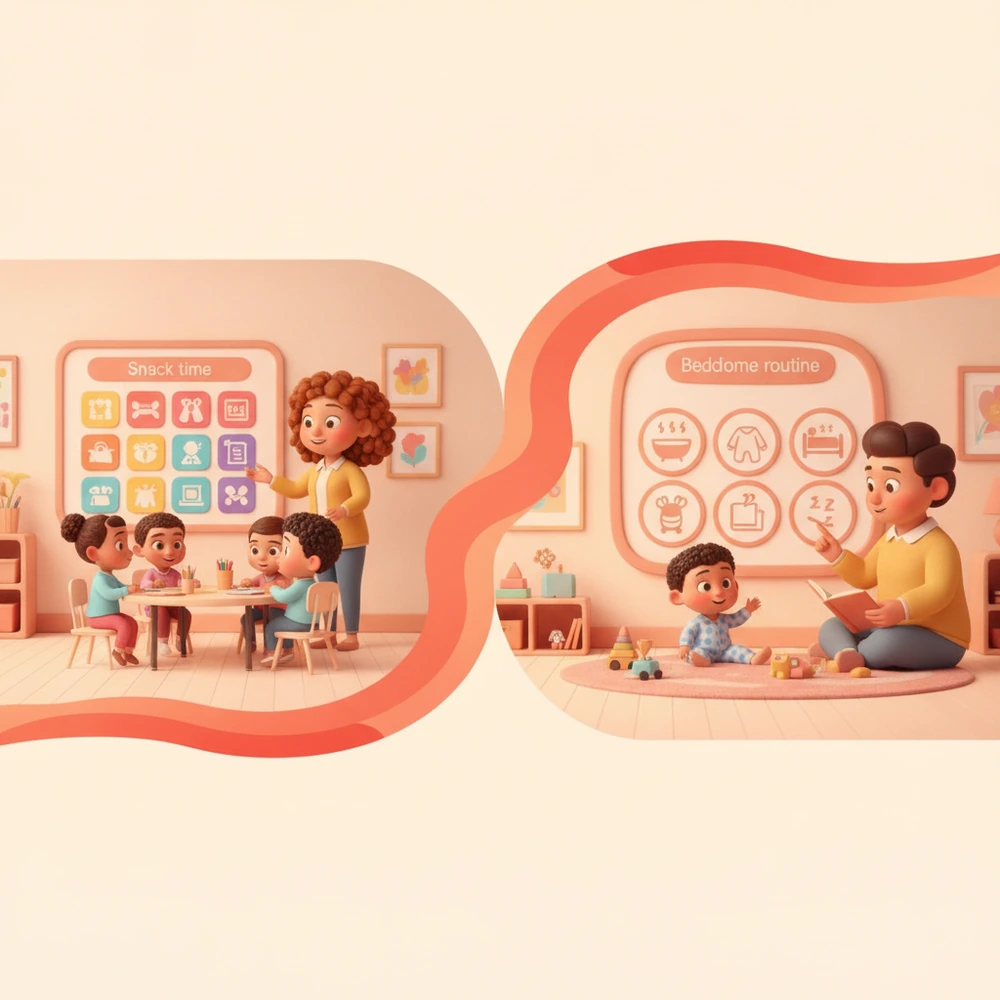
By understanding these differences, parents and educators can tailor their approaches to fit the environment and individual needs of the child. Recognizing and adapting to the unique aspects of each setting helps in building responsible decision-making skills and relationship skills.
References
1 Diamond, A. (2013). Executive functions. Annual Review of Psychology, 64, 135. doi:10.1146/annurev-psych-113011-143750
2 Dawson, P. & Guare, R. (2018). Smart but Scattered. Guilford Press.
Try It This Week
Reading is the easy part. Skills build through small, repeated practice — here's a low-pressure plan you can try with your child.
- 1Implement the 5-Minute WarningDay 1Use a 5-minute warning before transitions to help your child mentally prepare for change.👉 What this looks likeIn the evening, tell your child, 'In five minutes, we'll stop playing and start our bedtime routine.' Set a timer together. As time winds down, remind them again. This predictability helps reduce anxiety and resistance.
- 2Create a Visual ScheduleDay 2Develop a visual schedule for daily activities to provide structure and predictability.use this story →👉 What this looks likeWork with your child to create a colorful chart of their daily routine. Include pictures or icons for each activity, such as breakfast, school, playtime, and bedtime. Place it where they can easily see it, like on the fridge.
- 3Practice a Transition RitualDay 3Establish a small, comforting ritual for a challenging transition to ease anxiety.👉 What this looks likeBefore leaving for school, develop a ritual like singing a favorite song or saying 'See you later, alligator!' This familiar action signals the transition and creates a sense of routine.
- 4Use a Visual TimerDaily, 5 minIncorporate a visual timer to help your child visualize time passing during transitions.👉 What this looks likePlace a visual timer on the table during homework time. Explain, 'We’ll work until the green section is gone.' This helps your child understand the timeframe and reduces stress.
- 5Mindfully Pick Your BattlesThis weekIdentify which transitions are crucial and which can be flexible to reduce stress.👉 What this looks likeNotice a moment when your child is deeply engaged in play. Decide if it's okay to let them finish before transitioning. This flexibility can improve their cooperation in more critical transitions.
Frequently Asked Questions
How do ADHD children benefit from transition rituals?
What are effective visual aids for ADHD transitions?
Why is flexibility important in managing ADHD transitions?
How can schools support children with ADHD during transitions?
What role does SEL play in ADHD transitions?
References