Fostering Social Skills Through Parten's Stages of Play
Understanding Parten's Stages of Play
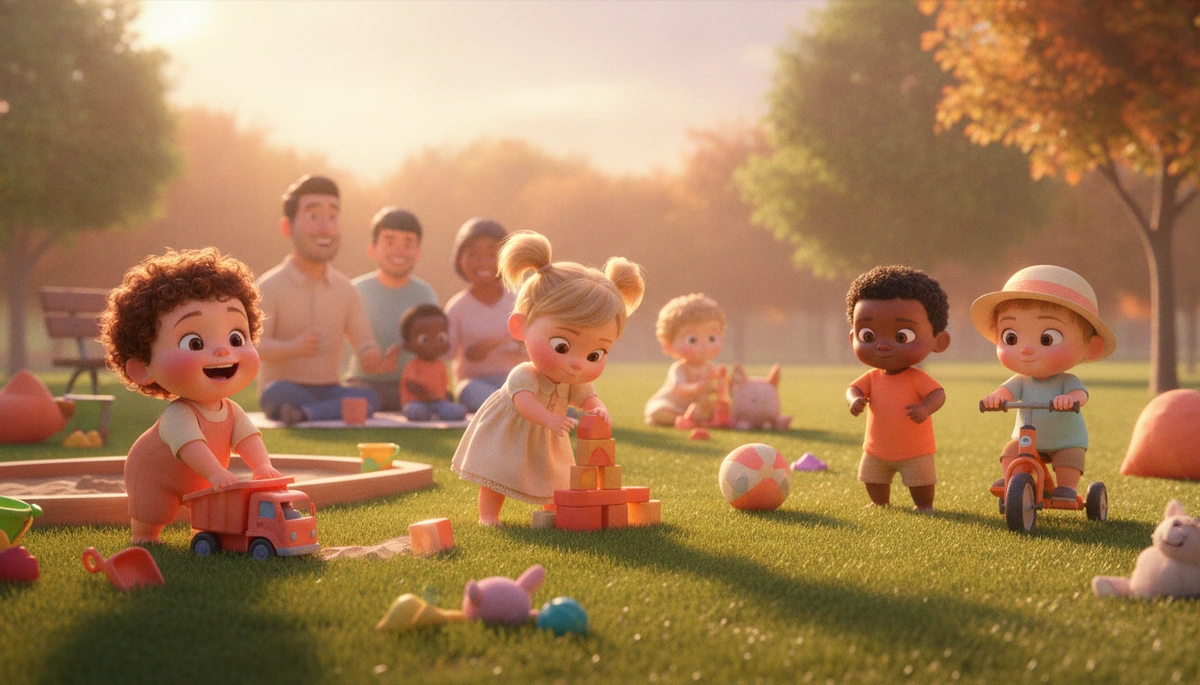
The journey of developing social skills in toddlers is both fascinating and essential. A fundamental framework to understand this progression is Parten's stages of play. Developed in 1932, Parten's model categorizes play into distinct phases, each representing a critical component of social development 1. These stages include unoccupied, solitary, onlooker, parallel, associative, and cooperative play. Recognizing the value of each stage helps parents and educators support a child's social-emotional learning journey.
Solitary Play: A Normal Beginning
Solitary play, typically observed between 12 to 18 months, is where toddlers play alone, focusing on their toys without noticing others. This stage is not only normal but crucial as it lays the foundation for independence and self-entertainment. During solitary play, toddlers explore their environment and learn to engage with toys, developing cognitive and fine motor skills.
In my practice, I've observed many parents worry that solitary play indicates a lack of social skills. However, it's vital to understand that this stage is a building block, promoting self-awareness and confidence. Solitary play is where children begin to understand their preferences and build concentration, which are essential skills for future learning and interaction.
Example Scenario: Picture a toddler absorbed in stacking colorful blocks, oblivious to a nearby sibling doing the same. This focused engagement is solitary play, where the child is learning the joy of discovery and the satisfaction of mastering a task independently.
Parallel Play: The Goal, Not a Deficit
As toddlers grow, they transition to parallel play, typically between 18 to 30 months. Here, children play side by side but do not directly interact. This stage often puzzles parents who expect more interaction. However, parallel play is a significant milestone indicating a child’s comfort in social settings without direct engagement pressures.
Example Scenario: Imagine your toddler at a playground. They are engrossed in stacking blocks next to another child doing the same. They may glance at each other or even mimic actions, but there's no verbal interaction yet. This is parallel play in action, a healthy indication of growing social awareness.
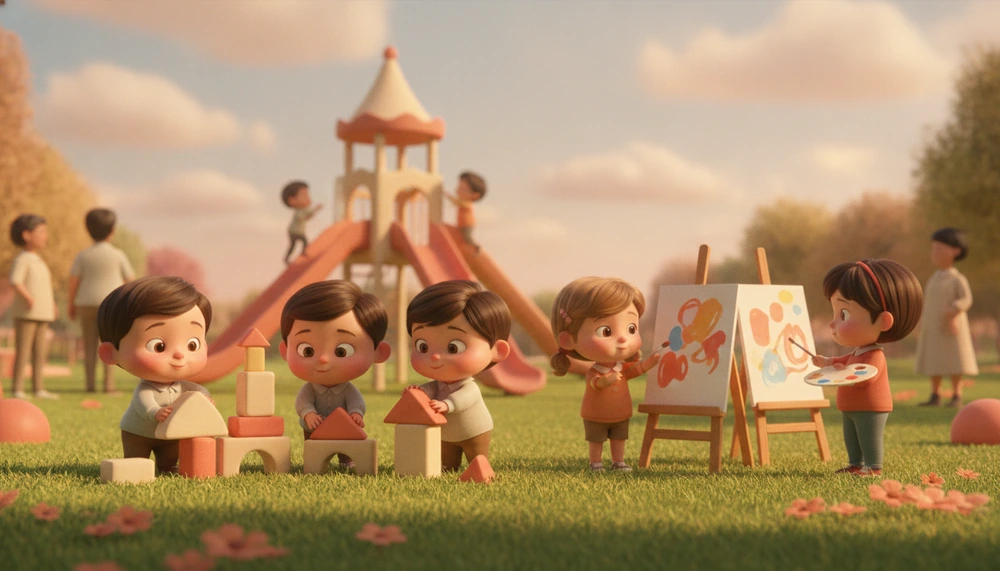
Parallel play provides opportunities for children to learn by observation, developing social cues and preparing them for more interactive play forms. During this stage, children begin to understand the concept of being in the same space as others, which is a precursor to more complex social interactions.
Associative Play: Emerging Interactions
Associative play begins around 2 to 3 years. Toddlers start to interact more, though not yet in fully cooperative play. They might share toys and talk about activities but still primarily focus on their play. This stage is a precursor to more complex social interactions.
- Toddler 1: "I build tower."
- Toddler 2: "I have blocks too."
- Toddler 1: "Let’s build big one!"
This dialogue shows how children begin to connect through shared interests, marking their transition into associative play.
In my practice, I've seen how associative play helps children develop language skills and emotional expression. It's a time when they start understanding empathy and cooperation, crucial for their social-emotional growth.
When Sharing Emerges: A Natural Progression
Sharing and cooperative play generally emerge between 3 to 4 years. At this stage, children start understanding the concept of turn-taking and the benefits of sharing, although it might not be consistent yet.
Real-life Script: During a playdate, you might see:
- Parent: "Let's take turns with the red car."
- Child 1: "My turn first."
- Child 2: "Okay, then me."
This exchange highlights early cooperation and patience, vital elements of social-emotional learning. Encouraging these interactions through guided play and modeling can enhance a child's understanding of teamwork and collaboration.
Why Not to Force Sharing at 18 Months
Forcing children to share before they are developmentally ready can lead to frustration and resentment. At 18 months, children are still learning about ownership and control. Encouraging them to share without understanding can be counterproductive.
Instead, model sharing behavior and provide opportunities for guided play. In my practice, I often advise parents to use social stories like Diego Learns to Share and Take Turns to gently introduce these concepts.
Example: Imagine a scenario where you are playing with your child and their favorite toy. Instead of telling them to hand it over to a sibling, you might say, "Wow, I see you really love playing with that. When you're done, maybe we can let your brother have a turn."
Setting Up Successful Playdates
Creating an environment that fosters social skills includes setting up playdates that encourage natural interactions.
- Choose the Right Environment: Ensure a safe, engaging space with a variety of toys.
- Limit Group Size: Small groups (2-3 children) reduce overwhelm and encourage interaction.
- Provide Structured Activities: Simple games can guide toddlers toward cooperative play.
Example: Host a playdate with activities like making a simple craft. Provide each child with materials and encourage them to share tools, fostering patience and collaboration.
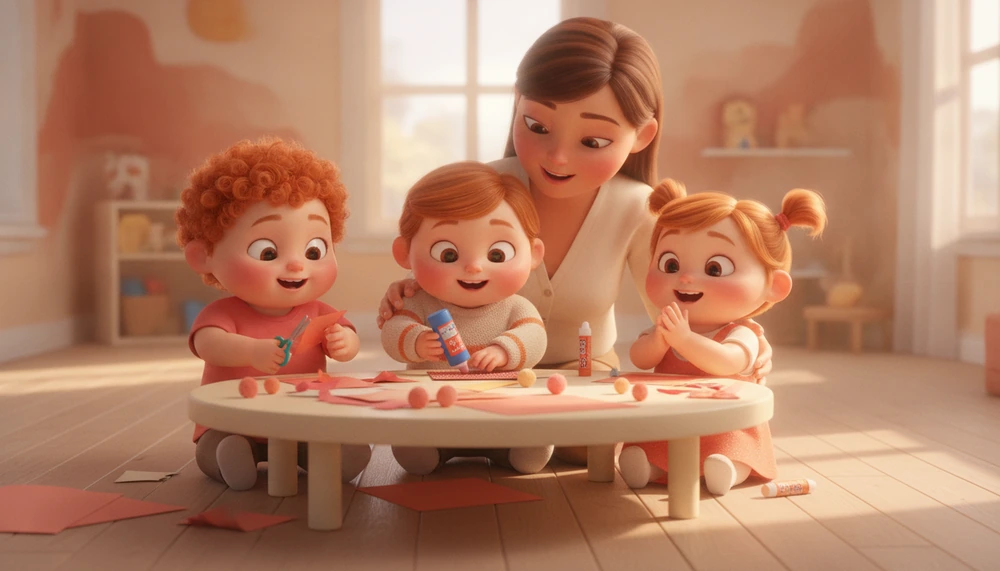
In my practice, I've seen how structured playdates can be a great way to nurture emerging social skills. By providing both unstructured and guided play opportunities, children can learn at their own pace and develop confidence in their interactions.
References
1 Parten, M. (1932). Social participation among preschool children. Journal of Abnormal and Social Psychology.
2 Damon, W. (1977). The Social World of the Child.
Try It This Week
Reading is the easy part. Skills build through small, repeated practice — here's a low-pressure plan you can try with your child.
- 1Observe Solitary PlayDay 1Notice your child's solitary play. See how they explore independently. This builds self-awareness and confidence.👉 What this looks likeDuring playtime, sit nearby as your child plays alone with blocks. Watch them stack and arrange without interrupting. Notice how they focus and express delight when a tower stands. This is your child building independence.
- 2Encourage Parallel PlayDay 2-3Set up activities where children play side by side without interacting. This fosters comfort in social settings.Explore playdate tips →👉 What this looks likeInvite a neighbor's child to play. Have both children engage in drawing at the same table. They may not talk, but side-by-side play helps them get used to each other's presence.
- 3Model SharingOnce this weekDemonstrate sharing through your actions. Children learn by watching adults.Diego Learns to Share and Take Turns →👉 What this looks likeNext time you're eating snacks with your child, say, "I have some crackers. Would you like to share with me?" Offer them a few pieces. This simple act models sharing behavior through everyday activities.
- 4Host a Guided PlaydateThis weekendArrange a playdate with structured activities. This encourages cooperative play.👉 What this looks likePlan a simple scavenger hunt with a small group of children. Guide them to find items together, like a red leaf or a small rock. Encourage teamwork and praise cooperation.
- 5Use Social StoriesDaily, 5 minIntroduce social stories to explain sharing and turn-taking. This aids understanding.in the SocialBlossom app →👉 What this looks likeRead a social story about sharing before bedtime. Discuss the characters’ actions and feelings, like how Diego shares his toys. Use this moment to talk about sharing in your child's life.
Frequently Asked Questions
What are Parten's stages of play?
How does solitary play benefit my child?
Why is parallel play important?
When should I introduce my child to playdates?
How can I encourage my child to share?
References