Emotion Charts for Autistic Kids: SEL-First Alternatives

Why Standard Emotion Charts Fail Many Autistic Kids
Emotion charts are often recommended as tools to help children identify and express their feelings. However, for many autistic children, these charts can be more confusing than helpful. Traditional emotion charts often use generic facial expressions which rely heavily on interpreting subtle emotional cues. For autistic children who may experience challenges with facial recognition or expression interpretation, these charts may fall short.
In my practice, I've seen many parents express frustration when their children struggle to connect with these standard charts. The reliance on facial expressions can be a barrier for those who find it difficult to decipher what each face represents. Instead of offering clarity, these charts can sometimes exacerbate misunderstandings and lead to frustration.
Moreover, emotion charts that focus on facial expressions may not account for the unique ways autistic children experience and express emotions. For instance, a child might feel a strong emotion in their body rather than showing it on their face, leading to discrepancies between what they feel and what is perceived.
This article is part of our complete guide to Visual Supports for Autistic Kids: An SEL-First Guide, where we explore more inclusive alternatives.

The 5-Point Scale: A Research-Backed Alternative
One effective method is the Incredible 5-Point Scale developed by Buron 1. This scale uses numbers to represent the intensity of emotions, such as feeling a "1" for calm and a "5" for very upset. Unlike face-based charts, the 5-point scale helps children gauge their emotional state without needing to interpret facial cues.
The 5-Point Scale offers a structured approach that can be easily integrated into daily routines. For example, using it during transitions, such as moving from playtime to mealtime, can help a child articulate their feelings about the change. This method aligns with the self-awareness competency of SEL by allowing children to identify their emotional states and understand their intensities.
Scripted Dialogue Example
- Parent: "Can you show me what number you're feeling right now?"
- Child: "I'm at a 2."
- Parent: "That's good to hear. What could we do to help you stay at a 2?"
This scale fosters self-awareness and helps children articulate their emotional state more clearly.
Body Sensation Maps: An Interoception Alternative
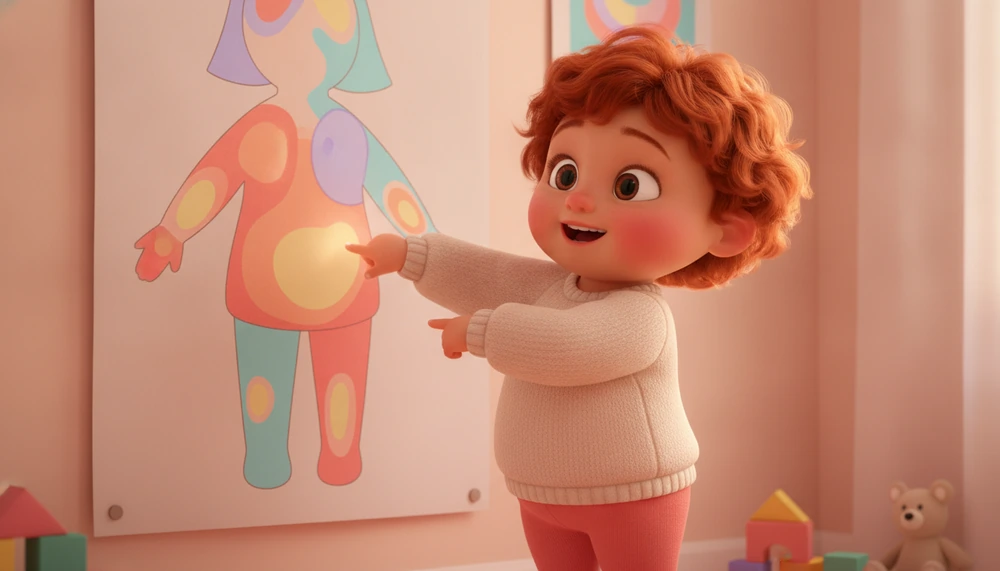
Another effective tool is the body sensation map, which focuses on the physical sensations associated with emotions. This approach, supported by research from Mahler 3, can be particularly helpful for autistic children who may have heightened interoceptive awareness.
Imagine a child who feels anxious and describes their "stomach feeling tight". A body sensation map allows them to visually indicate where they feel these sensations, thus promoting self-management and emotional regulation. This method also encourages children to connect physical sensations with emotions, aiding in developing a more nuanced understanding of their emotional experiences.
In-My-Practice Moment
In my practice, a child once used a body map to express that they felt "butterflies" in their stomach before school. With this understanding, we developed a morning routine that included deep breathing exercises to ease this sensation. This routine became a part of their daily self-management strategy, empowering the child to gain control over their emotional responses.
Color-Based Emotion Scales
Color-based scales assign colors to different emotions or emotional intensities. For example, green might signify calm, while red might indicate anger. This method can be more intuitive for children who respond well to visual stimuli.
Color-based scales can be introduced in various settings, from classrooms to home environments. They can be particularly useful during group activities where children need to express their emotions collectively. By associating colors with emotions, children learn to recognize their feelings and those of others, enhancing their social awareness.
Real-Life Script
- Scenario: At the grocery store, a child begins to feel overwhelmed.
- Parent: "Let's look at your color chart. Are you feeling like a yellow or a red right now?"
- Child: "Yellow."
- Parent: "Okay, let's take a deep breath together and see if we can get back to green."
Color-based scales encourage responsible decision-making by helping children recognize and regulate their emotions in real-time.
Special-Interest-Themed Charts
To make emotion charts more engaging, tailor them to your child's interests. For example, if your child loves trains, use a train-themed chart where each station represents a different emotion. This approach aligns with a strength-based perspective, using a child's interests to enhance learning.
Tailored emotion charts can significantly increase engagement and motivation. Children are more likely to use tools that incorporate their interests, making the learning process enjoyable. This method also fosters relationship skills as they can share their charts with peers who have similar interests, creating opportunities for social interaction.
Example
Consider a child fascinated by Pokémon. Each Pokémon could represent a different emotion, making the chart both fun and relatable. This encourages the child to interact with the chart regularly, fostering a deeper understanding of their emotions.
When to Introduce the Chart (and How)
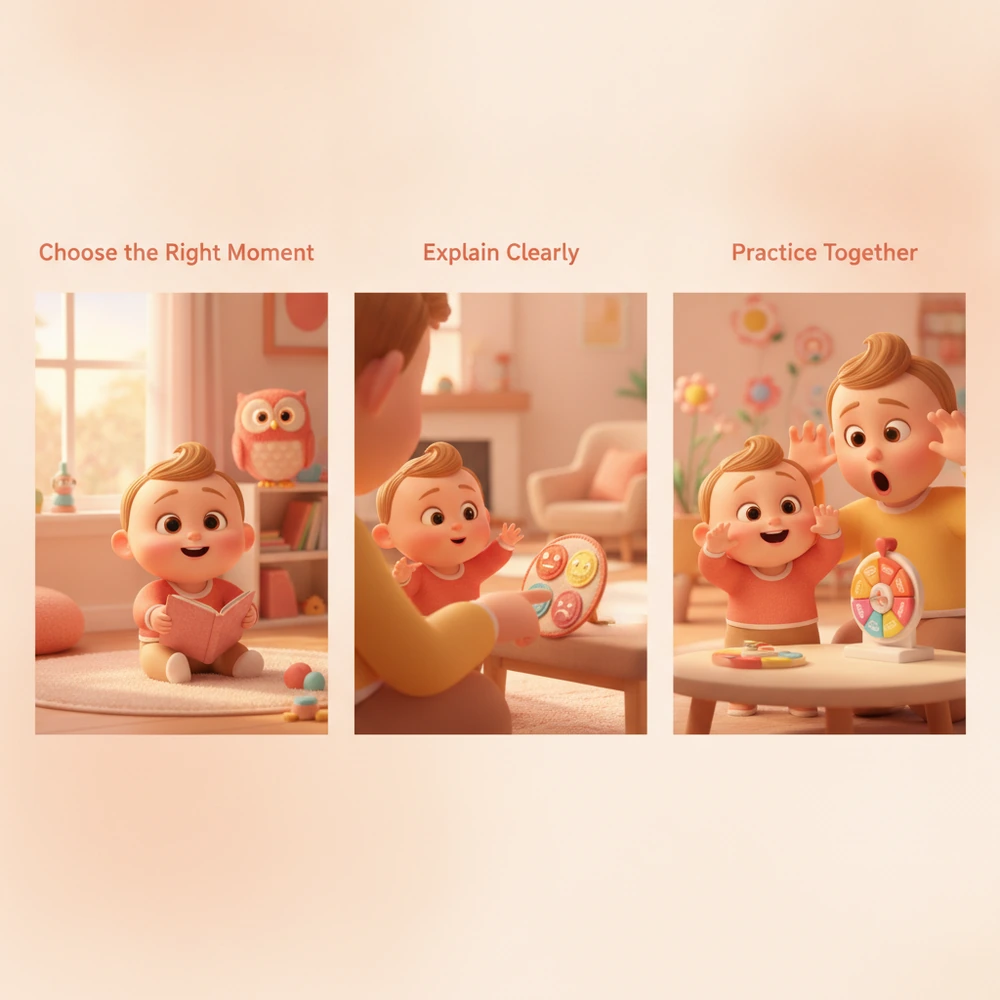
Introducing an emotion chart should be a gradual process. Start during a calm moment, not during a meltdown. Explain the chart and practice using it during routine activities.
Steps to Introduction
- Choose the Right Moment: Begin during a low-stress time.
- Explain Clearly: Use simple language to explain each part of the chart.
- Practice Together: Role-play scenarios where the chart can be useful.
By taking these steps, you can integrate the chart into daily life, supporting your child's self-management and relationship skills.
Free Downloads: 4 Emotion Chart Styles
To support you further, we've created free downloadable charts in various styles:
- 5-Point Scale Chart
- Body Sensation Map
- Color-Based Scale
- Special-Interest-Themed Chart
These resources are designed to cater to different preferences and needs, ensuring that you find the right fit for your child. These tools are perfect for integrating SEL competencies into everyday interactions.
For more tools, explore our visual schedules for morning, school, and bedtime or consider choice boards for building autonomy.
References
1 Buron, K. (2003). The Incredible 5-Point Scale.
2 Garfinkel, S. et al. (2016). Discrepancies between dimensions of interoception in autism. Biological Psychology, 114, 117.
3 Mahler, K. (2017). Interoception: The Eighth Sensory System.
Try It This Week
Reading is the easy part. Skills build through small, repeated practice — here's a low-pressure plan you can try with your child.
- 1Introduce the 5-Point ScaleDay 1Begin using the 5-Point Scale during a calm moment. Explain the numbers and what they represent.use this story →👉 What this looks likeAfter breakfast, sit with your child and introduce the 5-Point Scale. Say, 'This is our new emotion scale. When you're feeling calm, you might be a 1. If you're feeling really upset, you might be a 5. Let's practice. How do you feel right now?' Encourage them to pick a number and discuss how to stay at that number or move closer to 1.
- 2Create a Body Sensation MapDay 2Help your child make their own body sensation map. Use it to identify where they feel emotions.👉 What this looks likeUse a blank body outline and some colored markers. Sit with your child and say, 'Let's mark where you feel different emotions in your body. Where do you feel happy? Angry?' Allow them to color areas and label them with emotions, reinforcing the connection between physical sensations and emotions.
- 3Use Colors to Express EmotionsDay 3Introduce a color-based emotion chart. Associate colors with different emotional states.in the SocialBlossom app →👉 What this looks likeAt dinner, bring out your color-based chart. Say, 'Let's use colors to talk about our day. Green for calm, red for angry. What color was your day?' Encourage everyone to pick a color and share a story from their day that matches it.
- 4Tailor a Chart to InterestsThis weekendDevelop a special-interest-themed chart. Use your child's hobbies to engage them.👉 What this looks likeIf your child loves dinosaurs, create a chart where different dinosaurs represent different emotions. Sit together and say, 'Let's pick which dinosaur feels like happy, which one feels like sad.' This personalization can make emotion identification more relatable and fun.
- 5Role-Play with Emotion ChartsDaily 5 minPractice using the charts in routine scenarios. Enhance understanding through role-play.in the SocialBlossom app →👉 What this looks likeDuring playtime, pretend to be different characters. Say, 'I'm feeling like a 3 on the dinosaur chart. What should I do?' Your child can guide you using the chart, reinforcing their understanding and helping them apply these skills in real-life situations.
Frequently Asked Questions
What are emotion charts for autistic kids?
How do I introduce an emotion chart to my child?
Why might traditional emotion charts not work for autistic kids?
What are some alternatives to traditional emotion charts?
How can emotion charts support SEL?
References