Navigating Winter Break: Strategies for Neurodivergent Families

The winter holidays bring joy and celebration, but for families with neurodivergent (ND) children, this season can also bring challenges. The abrupt change in routine during the two-week winter break can be particularly disruptive. This article is part of our complete guide to Holidays + Sensory-Heavy Events: A Year-Round Survival Guide for ND Families. Here, we’ll delve into practical strategies to help maintain balance and ensure a smoother holiday experience.
Why Winter Break Wrecks ND Families More Than NT
Neurodivergent children often thrive on routine, and the winter break can throw these routines into disarray. For children with ADHD or autism, the structure of school days provides predictable patterns that help them manage their energy and emotions. When school ends for the holidays, these patterns disappear, leading to heightened anxiety and stress for both children and parents.
Self-awareness and self-management are crucial SEL competencies that can help children navigate these changes. However, without the regular school routine, children might struggle to apply these skills effectively. The break from routine can lead to sensory overload, emotional outbursts, and difficulty in regulating behavior, making it essential to establish a new, albeit temporary, routine.
Example: Navigating a Disrupted Day
Imagine a family where the child, Alex, has autism. During school, Alex knows exactly what to expect each day. But during the winter break, he wakes up anxious, asking repeatedly when school will start again. His parents notice an increase in meltdowns and bedtime difficulties. This scenario is common and highlights the need for a modified holiday routine.
In my practice, I've observed that when parents prepare their children for the upcoming changes, it significantly reduces anxiety. For instance, using visual schedules or countdown calendars can help children like Alex understand and anticipate the holiday break and its return to school. Such tools promote responsible decision-making as they allow children to visualize time and prepare mentally.
The SKELETON Routine (3 Anchors Per Day)
To help ND children during winter break, consider maintaining a skeleton routine with three key daily anchors: consistent wake/sleep times, movement activities, and sensory-friendly breaks. These anchors provide a sense of predictability without the rigidity of a full school schedule.
- Morning Routine: Wake up at the same time each day and start with a simple activity, like reading a book or enjoying breakfast together.
- Midday Movement: Incorporate a physical activity such as a walk, indoor dance session, or yoga.
- Evening Wind-Down: Establish a calming bedtime routine, including a bath or listening to a soothing story like Kristoffer's Evening Ritual: Banana and Milk Bedtime Story.
These anchors not only help in self-management but also foster responsible decision-making by providing children with a framework they can rely on. For more ideas on building a structured day, our article on Creating Predictable Routines for Neurodivergent Kids is a great resource.

Wake + Sleep Stays Consistent
Research underscores the importance of consistent sleep schedules, particularly for ND children. AAP guidelines recommend maintaining regular sleep and wake times to support overall well-being 2. Consistent sleep routines help regulate mood and behavior, which is especially beneficial during the unpredictability of holidays.
In My Practice: Sleep Consistency
In my practice, I've seen many parents struggle with keeping sleep schedules during the holidays. One family found success by implementing a bedtime routine that included dimming lights an hour before sleep and using a weighted blanket. Their child, Sam, reported feeling more relaxed and had fewer bedtime struggles.
To further assist parents, I often suggest the use of bedtime stories that can be found in our social stories collection. These stories can help children wind down and transition smoothly into sleep by providing familiar and calming narratives.
Movement + Sensory Diet During Indoor Weeks
Winter weather often means more time indoors, necessitating creative ways to incorporate movement and sensory activities. Engaging in regular physical and sensory activities can help ND children maintain balance and reduce anxiety.
- Indoor Obstacle Course: Set up a simple course using pillows and blankets.
- Sensory Play: Use items like playdough, kinetic sand, or water beads.
- Calming Activities: Listen to music or practice deep breathing.
For more ideas, consider using Listening to My Body: Taking a Break - Social Story to help children learn to manage their feelings.
Example: Sensory Play
One family set up a sensory play station in their living room. They included a variety of textures and tools, such as bubble wrap for popping and soft brushes for tactile exploration. Their child, Lily, found these activities soothing, helping her stay calm and engaged during indoor days.

Holiday Gift Overwhelm (One-at-a-Time Strategy)
The excitement of holiday gifts can quickly become overwhelming. A one-at-a-time strategy can help manage this. Allow your child to open one gift at a time, giving them space to explore and enjoy each item fully before moving on. This approach helps in developing self-awareness and self-management by allowing children to process their emotions and reactions gradually.
Scripted Dialogue: Gift Opening
Instead of encouraging rapid gift opening, try saying:
"Let's open this one and see what it's all about. Once you've had a chance to play with it, we can open another."
This encourages children to stay present and appreciate each gift.
In my practice, I've advised parents to use this method and have seen positive results. Children who open gifts slowly often experience less sensory overload and more enjoyment, turning what could be a chaotic time into a moment of connection and mindfulness.
New Year's Reentry to School Routine
As the holidays come to a close, preparing your child for the transition back to school is essential. Start reintroducing school routines a few days before the break ends. Use social stories like Thomas's Journey to School Success - Printable Social Story to familiarize your child with school routines.
- Begin Bedtime Adjustments: Gradually adjust sleep times closer to school norms.
- Morning Practice: Use Starting My Day: A Fun Morning Routine to rehearse school-day mornings.
Example: Preparing for School
Three days before school resumes, Maya's parents start waking her at school time and practicing her morning routine. They use a visual schedule to outline the steps, easing her back into the school mindset.
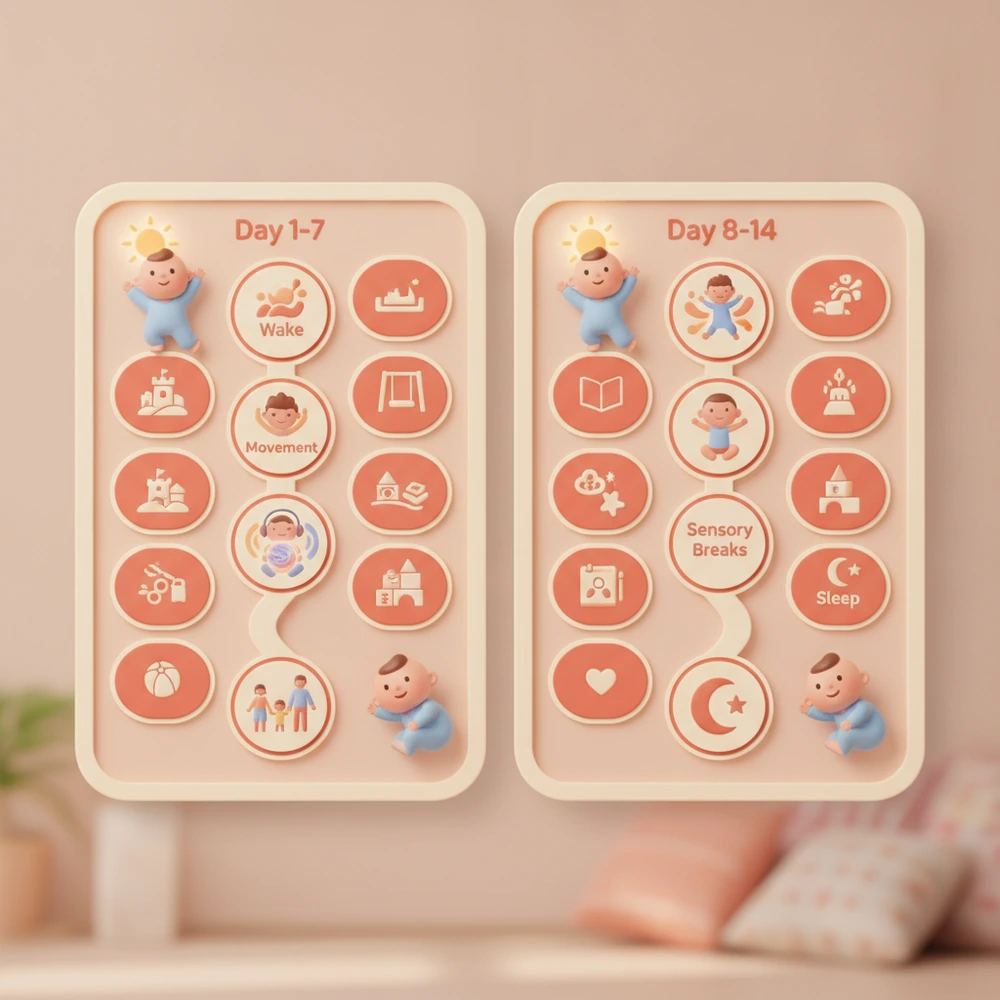
Free Download: 14-Day Holiday Skeleton Routine
To further support families, we've created a downloadable 14-day holiday skeleton routine template. This resource provides a structured yet flexible guide to maintaining a balanced holiday season.
References
1 Shanker, S. (2016). Self-Reg — applied to disrupted routines.
2 AAP Pediatric Sleep Recommendations. AAP
3 Prizant, B. et al. (2006). The SCERTS Model — sensory considerations for events.
Try It This Week
Reading is the easy part. Skills build through small, repeated practice — here's a low-pressure plan you can try with your child.
- 1Establish a Morning RoutineDay 1Create a consistent morning routine with simple activities like reading or breakfast to provide predictability and comfort.👉 What this looks likeOn the first day of the break, have your child wake up at their usual school time. Start the day with a calming routine, like reading a favorite book over breakfast. This helps maintain a sense of normalcy and prepares them for the day's activities.
- 2Incorporate Daily MovementDaily, 15 minIntegrate physical activities like walking or dancing to release energy and manage anxiety.use this story →👉 What this looks likeEach day after lunch, have a dance session with your child to their favorite songs. This not only serves as physical exercise but also as a fun bonding activity that can uplift their mood and energy levels.
- 3Use Visual SchedulesDay 2Implement visual schedules to help your child understand daily plans and reduce anxiety.👉 What this looks likeCreate a simple visual schedule with pictures for each day's activities. For instance, use an image of a book for reading time and a plate for meal times. Hang it in a place your child can easily see and refer to throughout the day.
- 4Practice Sensory PlayDay 3Engage in activities like sensory bins to help your child explore textures and calm their senses.in the SocialBlossom app →👉 What this looks likeSet up a sensory bin with rice and small toys. Allow your child to explore and play, encouraging them to describe what they feel. This activity can be calming and is a great way to engage their senses during indoor days.
- 5Prepare for School ReturnWeekend before schoolGradually adjust routines to ease back into school life, using social stories for support.Thomas's Journey to School Success →👉 What this looks likeStart waking your child at their school wake-up time. Use a social story to walk through the steps of getting ready for school, like brushing teeth and packing a backpack. This helps them mentally prepare for their return to school.
Frequently Asked Questions
How can I help my child transition back to school after winter break?
What is a skeleton routine?
How do I manage holiday gift overwhelm for my child?
What sensory activities can I do indoors during winter?
Why is maintaining a consistent sleep schedule important?
References