Supporting Neurodivergent Kids During Holiday Festivities: A Guide for Parents

In This Guide
Discover how to navigate key sensory-heavy events with strategies tailored for neurodivergent families. Explore each section:
- Halloween for Sensory-Sensitive Kids: A Survival Guide - Tips for costumes, trick-or-treating, and managing candy overload.
- Thanksgiving with Extended Family: ND Kid Considerations - Strategies for family gatherings and maintaining routines.
- Winter Holidays: Managing Schedule Disruption - Coping with routine changes and sensory overload.
- New Year's with Kids Who Don't Handle Change Well - Prepare your child for New Year's Eve celebrations.
Understanding Sensory Overload During Holidays
Holidays are a time of joy but can also bring sensory challenges, particularly for neurodivergent children. From the bright lights of Halloween to the bustling gatherings of Thanksgiving, these events can lead to sensory overload. Sensory overload occurs when one or more of the body's senses experiences overstimulation, often leading to anxiety or meltdowns.
What is Sensory Overload?
Sensory overload happens when the brain receives more input than it can process, causing distress. For children with autism or ADHD, this may be triggered by loud noises, strong smells, or crowded spaces. Self-awareness is the first step in managing these challenges, allowing children and parents to identify triggers.
In my practice, I've seen many parents successfully use social stories to prepare their children for these sensory-heavy events. Social stories, like Finding Calm with Special Smells, can help children visualize and rehearse scenarios, reducing anxiety. These stories create a narrative that children can understand and relate to, helping them to anticipate what might happen and how they can respond. By practicing the scenario, children build confidence and feel more in control during the actual event.

Halloween: A Sensory-Friendly Approach
Halloween can be particularly overwhelming with its array of costumes, unexpected scares, and sugar highs. Yet, with some planning, it can be a delightful experience for all.
Preparing for Costumes and Trick-or-Treating
Selecting a comfortable costume is key. Opt for soft fabrics and simple designs to minimize discomfort. Avoid masks or props that might obstruct vision or hearing. Self-management skills can be developed by involving your child in the costume selection process, helping them communicate their preferences. This involvement empowers children, giving them a sense of control over their experience and reducing anxiety.
Example: Costume Preparation
Imagine your child, Alex, who dislikes scratchy fabrics. Together, you explore costumes online, focusing on soft textures. Alex chooses a superhero outfit made of cotton. On the day of Halloween, Alex feels confident and comfortable, ready to participate in trick-or-treating. This simple act of choice can significantly enhance their comfort and engagement.

Navigating Trick-or-Treat
Responsible decision-making can be fostered by planning a clear route and setting expectations beforehand. Discuss the plan with your child, including which houses to visit and the importance of staying close. This preparation helps children understand what to expect and reduces surprises that might cause distress.
- Route Planning: Choose a familiar neighborhood and avoid overly crowded areas.
- Setting Expectations: Use a social story to explain the sequence of events, helping your child anticipate each step.
- Safety First: Practice saying "trick-or-treat" and instruct your child to wait for your signal before approaching a house.
Explore more tips in our Halloween for Sensory-Sensitive Kids: A Survival Guide.
Thanksgiving: Embracing Family with Care
Thanksgiving often involves large family gatherings, which can be both exciting and overwhelming. Social awareness and relationship skills are crucial in navigating these interactions. Understanding the social dynamics at play can help children feel more comfortable and engage positively with family members.
Preparing for Family Gatherings
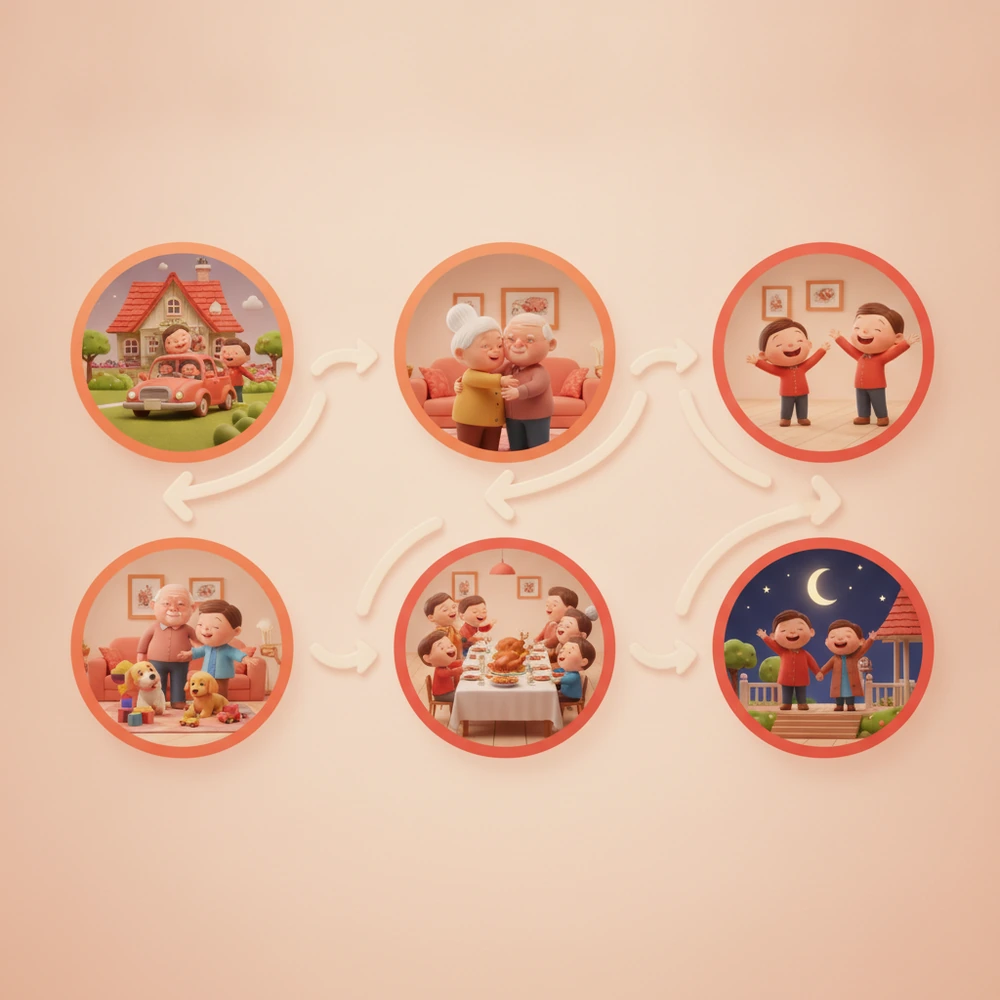
Before the event, discuss with your child who will be there and what to expect. Consider creating a visual schedule to outline the day's activities, offering a sense of predictability. Knowing what will happen next can help your child feel more secure and less anxious about the unknown.
Example: Visual Schedule
Picture this: Before heading to a family dinner, you sit down with your child, Lily, to create a visual schedule. Together, you draw pictures of each activity: "Arriving at Grandma's," "Dinner Time," and "Playtime with Cousins." Lily feels prepared and less anxious, knowing what comes next. This visual aid serves as a roadmap for the day, providing reassurance and structure.
Managing Sensory Inputs
Identify potential sensory triggers, such as loud conversations or unfamiliar foods. Provide sensory tools like noise-canceling headphones or fidget toys to help your child manage sensory inputs. Encourage them to express their needs using tools like Using Honest Words to Ask for What You Want. These tools not only help manage sensory overload but also empower children to advocate for themselves.
For more strategies, visit our Thanksgiving with Extended Family: ND Kid Considerations.
Winter Holidays: Keeping Calm Amidst Festivities
The winter holidays bring their own set of challenges with disrupted routines and heightened sensory experiences. Self-management and emotional regulation are vital here.
Coping with Routine Changes
Winter holidays often mean changes in daily schedules. To ease transitions, maintain some routine elements like bedtime rituals. Encourage your child to participate in these rituals to foster self-management. Consistency in routines provides a sense of stability that is comforting to children.
Example: Maintaining Bedtime Rituals
Consider Kristoffer, who enjoys a banana and milk every night. During the holidays, you ensure this ritual remains unchanged, providing a comforting anchor amidst the chaos. Kristoffer feels grounded and secure, despite the holiday bustle. This small act of consistency can make a big difference in how a child experiences the holidays.

Handling Sensory Overload
For sensory relief, create a "calm corner" at home with soft lighting and familiar objects. Teach your child to retreat there when overwhelmed. A calm corner can be a powerful tool for self-regulation, offering a safe space to decompress. Explore our Winter Holidays: Managing Schedule Disruption for more tips.
New Year's Eve: Welcoming Change with Confidence
New Year's Eve can be daunting with late nights and noisy celebrations. Responsible decision-making and relationship skills can transform this event into a positive experience.
Preparing for the Countdown
Discuss what New Year's Eve will entail, focusing on activities your child enjoys. Create a countdown plan that includes breaks and quiet time. A structured plan helps manage expectations and reduces anxiety related to the unknown.
Example: Countdown Plan
Imagine you're preparing for New Year's Eve with your child, Max. You decide to celebrate with a quiet family game night. Max knows that after a few games, you'll head outside to watch fireworks from a distance, avoiding the noise. This plan respects Max's sensory needs while still participating in the celebration.

Navigating Social Interactions
Use social stories like Gautham's Friendly Hello to practice greetings and interactions. Encourage your child to express their feelings about the changes and activities. Practicing these skills in advance can help your child feel more comfortable and confident during social interactions.
For more insights, check out New Year's with Kids Who Don't Handle Change Well.
References
- Prizant, B. et al. (2006). The SCERTS Model — sensory considerations for events.
- Shanker, S. (2016). Self-Reg — applied to disrupted routines.
- Kidpower — child personal safety on Halloween/strangers (kidpower.org).
- Gottman, J. (1997). Raising an Emotionally Intelligent Child.
Try It This Month
Reading is the easy part. Skills build through small, repeated practice — here's a low-pressure plan you can try with your child.
- 1Create a Visual ScheduleDay 1Outline a holiday event with your child using drawings or pictures. Helps reduce anxiety by making the day predictable.Learn more →👉 What this looks likeBefore Thanksgiving, sit with your child to draw a visual schedule. Include 'Arriving at Grandma's', 'Dinner', and 'Playtime'. This schedule serves as a roadmap, helping your child anticipate the day and feel more secure.
- 2Choose a Sensory-Friendly CostumeDay 2Involve your child in selecting a comfortable costume. Ensures they feel confident and engaged.Explore costume tips →👉 What this looks likeTake your child online shopping for Halloween costumes. Focus on soft materials. If they choose a cotton superhero outfit, they’ll be more comfortable and willing to participate in festivities.
- 3Set Up a Calm CornerThis weekendDesignate a space at home with soft lighting and familiar objects. It's a safe retreat when overwhelmed.See setup ideas →👉 What this looks likeCreate a calm corner with your child. Add fairy lights, a favorite blanket, and some plush toys. Teach them to go there when feeling stressed. This corner becomes a sanctuary for self-regulation during busy holidays.
- 4Practice Social StoriesDaily, 5 minUse stories to rehearse interactions and scenarios. Builds confidence and reduces anxiety.Try social stories →👉 What this looks likeRead 'Finding Calm with Special Smells' together before a sensory-heavy event. Discuss the story and relate it to upcoming holidays. This practice helps your child visualize and prepare for real-life situations.
- 5Plan a Quiet Family NightOnce this weekSchedule a game night to balance busy holiday events. Provides a familiar and calming activity.Find game night tips →👉 What this looks likePlan a board game night with your child. Use it as a calming ritual before New Year's Eve. This provides a break from sensory overload and reinforces family bonds.
Frequently Asked Questions
How can I help my child handle sensory overload during holidays?
What are some sensory-friendly Halloween costume ideas?
How can I maintain my child's routine during the holidays?
What strategies can help during family gatherings?
How do I prepare my child for New Year's Eve celebrations?
References
- Prizant, B. et al. (2006). The SCERTS Model — sensory considerations for events.
- Shanker, S. (2016). Self-Reg — applied to disrupted routines.
- Kidpower — child personal safety on Halloween/strangers (kidpower.org).
- Gottman, J. (1997). Raising an Emotionally Intelligent Child.
- CASEL. (2021). The CASEL 5 competencies framework.