Crafting Effective Social Stories: A Guide for Parents
What Makes a 'Good' Social Story
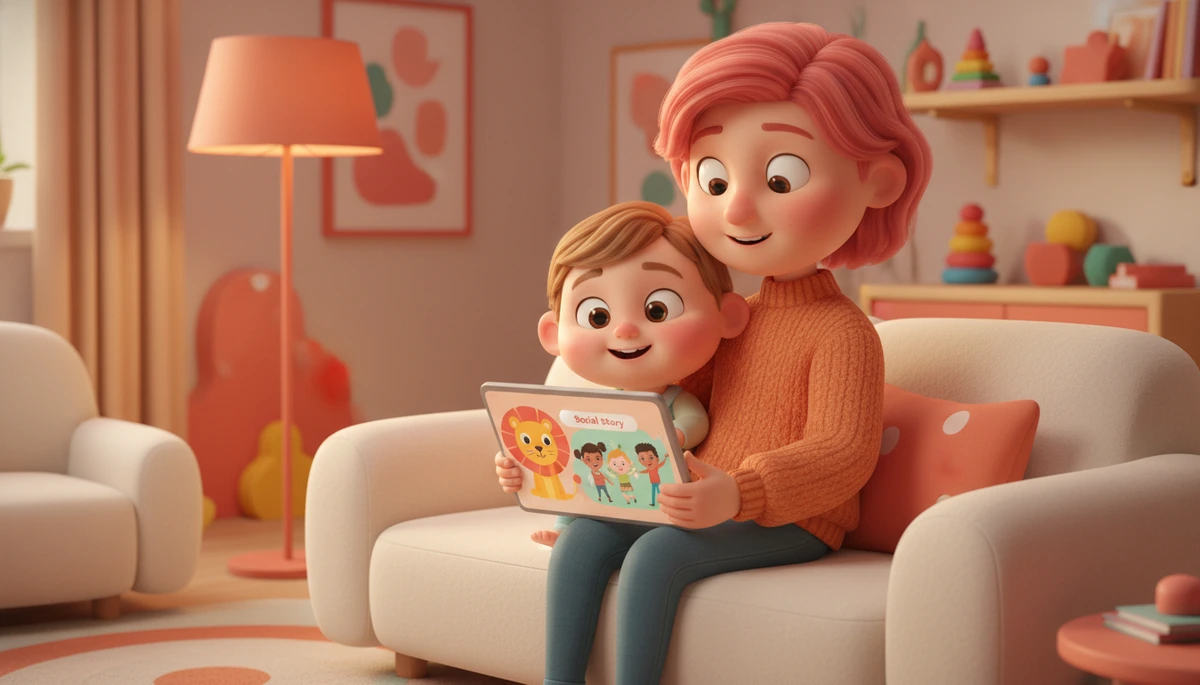
Social stories are powerful tools for supporting autistic children in understanding and navigating social situations. Developed by Carol Gray, a well-crafted social story should adhere to Gray's 10.2 criteria, which emphasize clarity, respect, and accuracy 1. A good social story is not about changing a child's behavior but about empowering them with information to make decisions and understand social norms.
In my practice, I've observed that when parents incorporate Gray's principles, their children often feel more understood and supported. Social stories become a bridge, not a barrier, to social engagement. They offer a structured way to demystify social interactions, helping children feel more secure in their environment.
This article is part of our complete guide to Social Stories for Autistic Kids: A Parent's Complete Guide, where you can explore more about their benefits and uses.

The 4 Sentence Types
A foundational aspect of writing a social story involves using four specific sentence types in a balanced manner: descriptive, perspective, directive, and affirmative sentences. Each plays a distinct role:
- Descriptive sentences objectively outline the setting or activity. E.g., "The dentist's office has chairs and magazines."
- Perspective sentences provide insight into how others might feel or react. E.g., "Many people feel a little nervous about going to the dentist."
- Directive sentences gently guide behavior. E.g., "I will try to sit still in the dentist's chair."
- Affirmative sentences express shared values or beliefs, reinforcing the message. E.g., "It is okay to feel nervous."
The recommended ratio is about 2-5 descriptive and perspective sentences for every directive sentence, ensuring the story is engaging and not overly instructive 2. This balance helps prevent the story from feeling like a list of instructions, making it more relatable and effective.
Example of Sentence Use
Imagine writing a social story for a child who is anxious about playing with new classmates:
- Descriptive: "The playground has swings and slides."
- Perspective: "Some children are excited to meet new friends."
- Directive: "I can say hello and ask if I can join in."
- Affirmative: "It's okay if I feel shy at first."
Step 1: Identify the Goal
Before diving into writing, clearly define the goal of the social story. Is it to prepare your child for a new experience, like a dental visit, or to help them understand a social concept, such as sharing?
Example: Imagine your child, Alex, is going to the dentist for the first time. The goal might be to familiarize Alex with the process to reduce anxiety. Setting a clear goal will guide you in selecting the appropriate content and tone for the story.
Setting Specific Goals
When setting goals, consider the specific challenges your child faces. For example, if your child struggles with waiting in line, the goal might be to help them understand and practice patience. This targeted approach ensures the story is both relevant and practical.
Step 2: Gather Information from Your Child
Understanding your child's perspective is crucial. Engage them in conversation to uncover their feelings or questions about the upcoming situation.
In My Practice: I once worked with a child who was anxious about school assemblies. By asking open-ended questions, we discovered her main worry was about the loud noises, which we then addressed in her social story. Tailoring the story to address specific concerns can significantly enhance its effectiveness.
Techniques for Gathering Information
- Ask Open-Ended Questions: "What do you think about going to the dentist?"
- Observe Non-Verbal Cues: Notice if your child seems anxious or excited when discussing the topic.
- Use Visual Aids: Draw or use pictures to help your child express their thoughts.
Step 3: Write at Your Child's Reading Level
Craft your social story using language that matches your child's reading level. This ensures they can independently engage with the story and absorb its messages.
- Parent: "Alex, what do you think happens at the dentist?"
- Alex: "I don't know. Will it hurt?"
- Parent: "Well, the dentist helps keep our teeth healthy and sometimes it feels a bit funny, but it shouldn't hurt."
Writing at your child's level helps them feel empowered and capable, fostering self-awareness and self-confidence.
Adjusting Language for Comprehension
Consider using simple sentences and familiar vocabulary. For younger children, use more illustrations to support the text. For older children, incorporate more complex ideas and encourage them to ask questions.
Step 4: Pictures + Format
Visuals are essential components of a social story. They aid comprehension and make the story more engaging. Choose clear, relevant images or drawings that complement the text.
Example Scenario: Create a storyboard with simple illustrations showing each step of the dental visit, from arriving at the clinic to leaving with a healthy smile.

Selecting Effective Visuals
- Use Real Photos: If possible, use actual photos of the environment or activity.
- Include Diverse Characters: Reflect diversity to help your child relate to the story.
- Keep It Simple: Avoid cluttered images that might distract from the story's message.
Worked Example: 'Going to the Dentist'
Let's create a social story step-by-step.
Goal
To reduce anxiety about visiting the dentist.
Sentences
- Descriptive: "The dentist's office is a place where teeth are checked."
- Perspective: "Some people feel nervous, and that's okay."
- Directive: "I will sit in the chair and open my mouth so the dentist can see my teeth."
- Affirmative: "The dentist helps keep my teeth healthy."
Visuals
Include images of a friendly dentist, a dental chair, and happy patients.
Step-by-Step Creation
- Identify the Goal: Help Alex feel comfortable about the dentist.
- Gather Info: Alex is worried about the sounds.
- Write Story: Use simple, reassuring language.
- Add Pictures: Include photos of a dental office.
Common Mistakes
Too Directive
Avoid making the story a list of commands. Instead, blend directive sentences with descriptive and perspective ones to maintain balance.
Too Long
Keep the story concise. Aim for 5-10 sentences per page to maintain your child's interest.
Too Generic
Tailor the story to your child's specific experiences and concerns to ensure relevance and engagement.
Lack of Visuals
Ensure the story includes engaging images to aid understanding and maintain interest.
Free Template Download
Download our editable social story template to get started on creating your personalized social story today. This resource provides a structured yet flexible framework to suit various scenarios, from going to the movies to brushing teeth.
References
- Gray, C. (2010). The New Social Story Book (15th Anniversary Edition). Future Horizons.
- Gray, C. — Social Stories 10.2 criteria. Retrieved from Carol Gray Social Stories
Try It This Week
Reading is the easy part. Skills build through small, repeated practice — here's a low-pressure plan you can try with your child.
- 1Identify a Social GoalDay 1Choose a specific social situation to address in your story. This helps focus your narrative and make it relevant.👉 What this looks likeSet aside time to observe your child during daily activities. Identify moments of difficulty, such as transitioning between tasks or waiting patiently. Use these observations to define a clear goal, like helping them understand waiting in line at a grocery store.
- 2Engage in Open DialogueDay 2Talk with your child about their feelings or questions. Understanding their perspective is key.👉 What this looks likeDuring dinner, ask your child, "What do you think about going to the dentist?" Listen to their concerns. If they express fear of pain, reassure them with simple explanations about what to expect, addressing their specific worries.
- 3Create a Visual StoryboardWeekendUse drawings or photos to outline the story visually. This aids comprehension and retention.use this story →👉 What this looks likeCollect images of a dental clinic from magazines or printouts. Arrange them in sequence with captions like, "First, we sit in the waiting room." This visual sequence will help your child visualize the process and reduce anxiety.
- 4Write Simple SentencesDay 4-5Craft sentences using descriptive and perspective types. Keep language clear and relatable.👉 What this looks likeWrite sentences such as, "The dentist office has chairs and magazines." Pair these with perspective sentences like, "Some people feel nervous about the dentist, and that's okay." Ensure the language is at your child's reading level.
- 5Review and AdjustDay 6Read the story with your child. Adjust based on their feedback to ensure understanding.👉 What this looks likeAfter reading the story together, ask, "Does this help you feel better about the dentist?" If your child still has concerns, adjust the story to include more reassuring elements or clarify confusing parts.
Frequently Asked Questions
What are social stories used for?
How many sentence types are there in social stories?
Why is it important to set a goal for a social story?
How do visuals help in social stories?
Can social stories be used for non-autistic children?
References