Supporting Preschoolers' Big Feelings through SEL
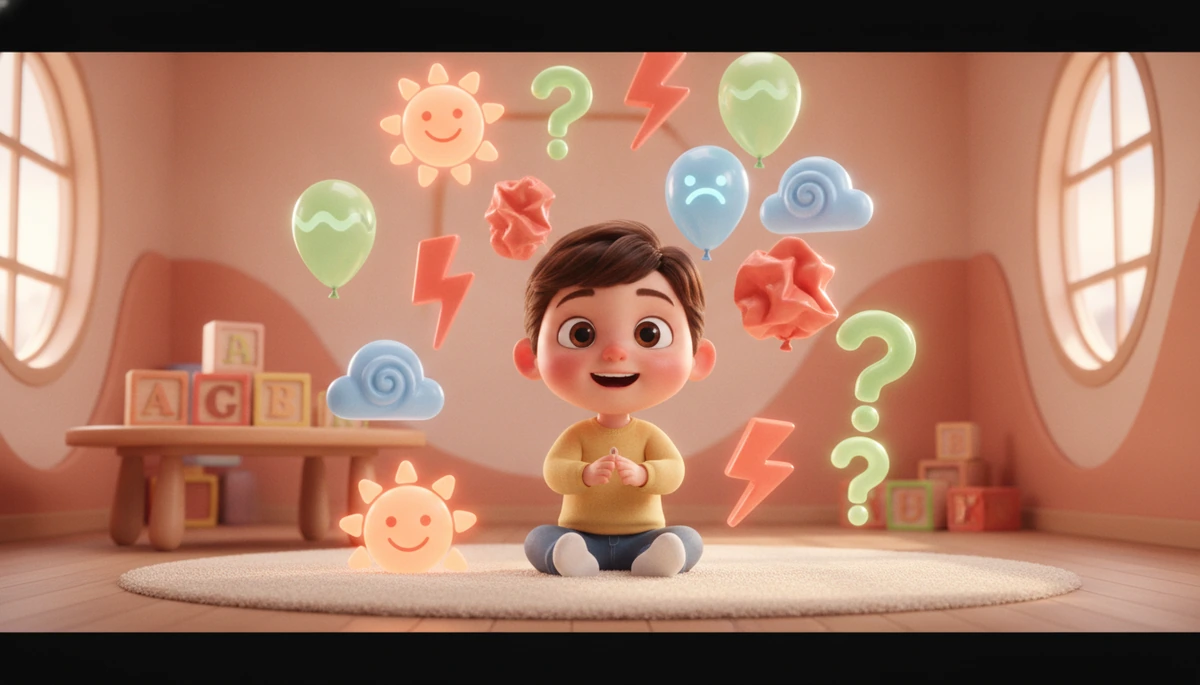
Preschoolers are known for their big feelings. As they navigate the world, their emotions can seem oversized for their small bodies. This article is part of our complete guide to Preschooler SEL (Ages 3-5): A Parent's Complete Guide, which dives into the social-emotional learning milestones for this age group. Let's explore why these feelings are so intense and how you can support your child in understanding and managing them.
Why Preschoolers Feel Emotions BIG
Preschoolers experience emotions intensely due to the developmental stage of their brains. Their prefrontal cortex, the part responsible for regulating emotions, is still maturing. According to Siegel and Bryson in "The Whole-Brain Child," this underdevelopment can result in emotions that feel overwhelming to young children 2. Imagine a balloon being filled with air—preschoolers are learning how much air is too much before the balloon pops.
In my practice, I've seen many parents concerned about the intensity of their child's emotions. They worry if it's normal or a sign of something more. Rest assured, these big feelings are a typical part of development at this age. Parents can facilitate emotional growth by helping children label and express their feelings appropriately. This process not only aids in emotional regulation but also enhances self-awareness, one of the core competencies of social-emotional learning.
Concrete Example: Imagine your child is at a birthday party. The excitement of cake and games can lead to a meltdown if they don't win a game. This isn't misbehavior—it's a big feeling that they're still learning to manage. In such moments, recognizing the emotion and guiding your child to express it verbally can prevent escalation.
Buron's 5-Point Scale at Preschool Level
One effective tool for helping preschoolers understand their emotions is Buron's 5-Point Scale 1. This scale simplifies emotions into five levels, helping children visualize and categorize their feelings. At the preschool level, the scale is adapted to be more visual and body-based.
How to Use the 5-Point Scale
- Introduce the Scale: Start by explaining the scale, using simple terms like "1 is calm, and 5 is very upset."
- Connect Emotions with Numbers: Relate everyday feelings to numbers, like "When you are happy, that's a 2."
- Practice Together: Use role-play or social stories like Using Words to Share Our Feelings and Needs to practice identifying emotions.
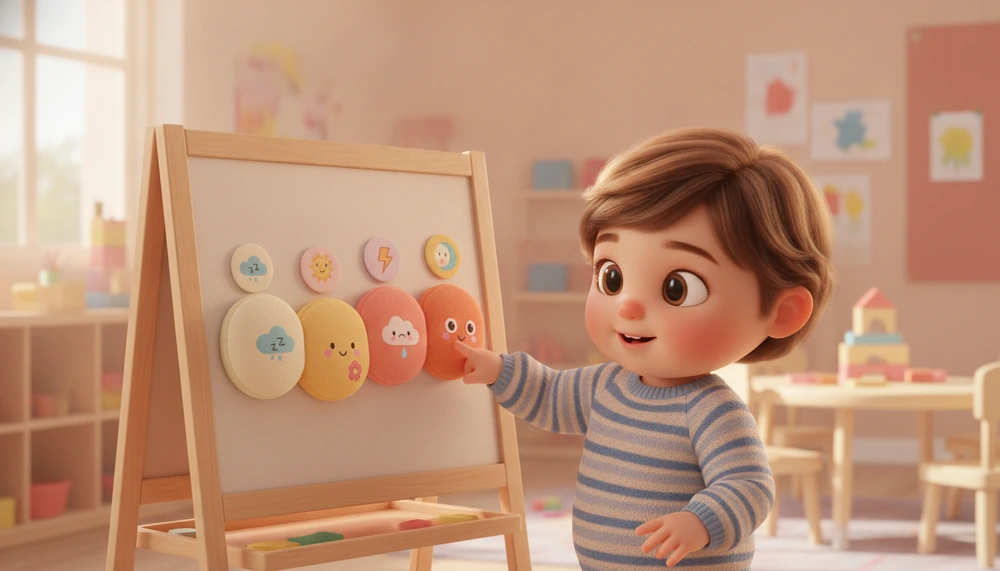
In my practice, I've found that children respond well to visual aids. These tools can bridge the gap between abstract emotions and tangible understanding. By regularly using the scale, parents can help children articulate their feelings, fostering responsible decision-making in social scenarios.
Body-Based Size Cues
Preschoolers can learn to associate body cues with the size of their feelings. Encourage them to notice where they feel emotions in their body and how big these feelings are.
Recognizing Body Cues
- Tummy Butterflies: Excited or nervous feelings.
- Tight Fists: Feeling angry or frustrated.
- Fast Heartbeat: Feeling scared or overjoyed.
Concrete Example: During a family outing, notice if your child clutches their stomach or balls their fists. Say, "I see your fists are tight. Is that a size 4 feeling?" Encouraging them to express these observations aloud can enhance self-management skills.
Preschoolers are still developing their ability to self-regulate. By identifying physical cues, they can better understand and communicate their emotional state, allowing for more effective co-regulation.
Visual Emotion Thermometer
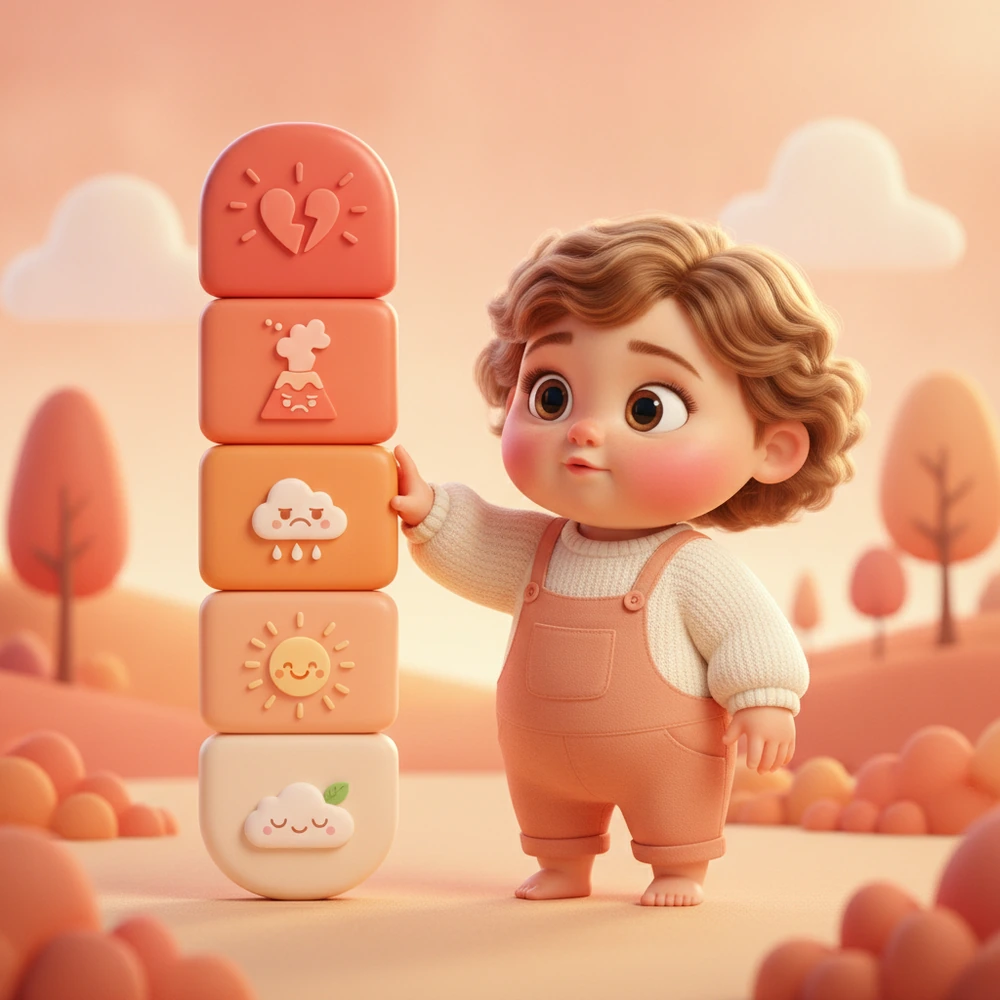
To assist in identifying and managing emotions, a visual emotion thermometer can be a valuable tool. This thermometer provides a clear, visual representation of emotions from calm to very upset.
Using the Emotion Thermometer
- Download the Thermometer: Use our free download to print the thermometer.
- Practice Daily: Incorporate the thermometer into daily routines, checking in with feelings.
- Discuss and Compare: Use it to compare feelings throughout the day, helping children see changes over time.
Concrete Example: After a playdate, sit with your child and review the day using the thermometer. Ask, "What number were you when you were playing with your friends?" This encourages reflection and aids in developing social awareness as they consider how their emotions affected interactions.
Co-Regulation Scripts for 'Size 4 and 5'
When emotions escalate to a size 4 or 5, co-regulation becomes essential. This involves guiding your child through their big feelings with supportive language and actions.
Co-Regulation Steps
- Stay Calm: Model calmness to help your child mirror your state.
- Acknowledge Feelings: "I see you're feeling very big right now. That's okay."
- Offer Support: "Let's take deep breaths together."
Real-Life Script: In a grocery store, your child starts crying loudly because they can't have a toy. You might say, "I see you're upset. Let's breathe together and talk about it."
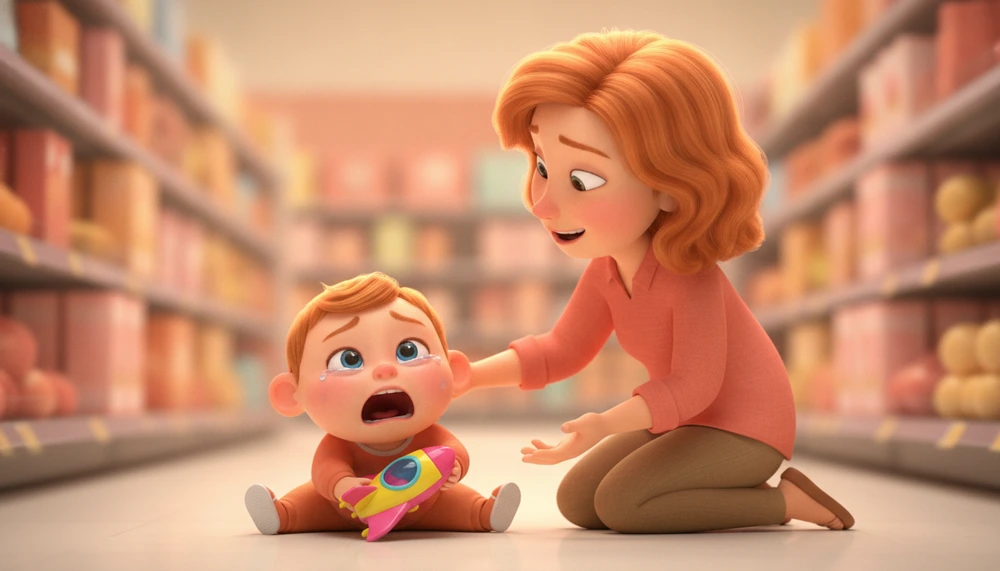
In my practice, I've observed that consistent use of co-regulation scripts not only helps in the moment but also teaches children to recognize and articulate their feelings, laying the groundwork for independent emotional regulation in the future.
What to Celebrate (Catching Size 1 and 2)
Celebrating moments when your child expresses size 1 or 2 feelings can reinforce positive emotional regulation.
Celebrating Small Emotions
- Praise Calmness: "I love how calm you are while we read."
- Acknowledge Joy: "That smile tells me this is a size 1 happy moment!"
- Encourage Sharing: Use stories like Sharing Our Feelings: A Printable Social Story to discuss how sharing feelings can make us feel good.
Concrete Example: Your child quietly enjoys building blocks. You comment, "You're really enjoying this. That's a calm size 1 feeling."
Why This Matters
Celebrating these smaller emotions helps children recognize and value their calm states, promoting a sense of security and trust in their ability to handle emotions. Integrating these practices into daily life builds a foundation for lifelong emotional health and strong relationship skills.
Free Download: Emotion Thermometer
To further assist in teaching your child about emotions, download our free emotion thermometer. This tool can be used alongside Buron's 5-Point Scale to help your child recognize and manage their big feelings.
References
1 Buron, K. (2003). The Incredible 5-Point Scale. 2 Siegel, D. & Bryson, T. (2011). The Whole-Brain Child. 3 Brackett, M. (2019). Permission to Feel — Yale RULER.
Try It This Week
Reading is the easy part. Skills build through small, repeated practice — here's a low-pressure plan you can try with your child.
- 1Introduce the 5-Point ScaleDay 1Start using the 5-Point Scale to help your child label their emotions. This visual tool aids in emotional understanding.👉 What this looks likeExplain the scale to your child: "1 is like a calm pond, and 5 is a stormy sea." Use a drawing to illustrate and relate it to their feelings throughout the day. When they feel upset, ask, "What number is this?" to foster connection and awareness.
- 2Identify Body CuesDay 2-3Teach your child to recognize physical signs of emotions to better understand their feelings.Using Words to Share Our Feelings →👉 What this looks likeDuring playtime, observe your child. If they start clenching fists, gently ask, "Do your hands feel tight? What size feeling do you think that is?" Encouraging this awareness helps them connect physical sensations to emotions.
- 3Use the Emotion ThermometerDaily, 5 minIncorporate the emotion thermometer into daily routines to track changing emotions.in the SocialBlossom app →👉 What this looks likeStart each morning with the emotion thermometer. Ask, "How do you feel today?" and have them point to a level. Revisit it before bedtime to discuss any changes, reinforcing emotional reflection and growth.
- 4Practice Co-Regulation in PublicThis weekendGuide your child through intense emotions in public settings using calm and supportive language.👉 What this looks likeIf your child becomes upset at the park, kneel to their level and say, "I see you're feeling big. Let's take deep breaths together." Modeling calmness helps them learn to self-regulate in different environments.
- 5Celebrate Calm MomentsOnce this weekAcknowledge and praise your child's calm and joyful moments to encourage positive emotional regulation.Sharing Our Feelings →👉 What this looks likeDuring a quiet afternoon, notice your child playing contently. Say, "You're building so nicely. This looks like a size 1 feeling!" This recognition helps build their confidence in managing emotions.
Frequently Asked Questions
How can I help my preschooler manage big feelings?
What is Buron's 5-Point Scale?
Why do preschoolers have such intense emotions?
How can I celebrate my child's small emotions?
What are body-based size cues?
References