Mastering Difficult Conversations: Role-Play Scripts Every Child Should Know
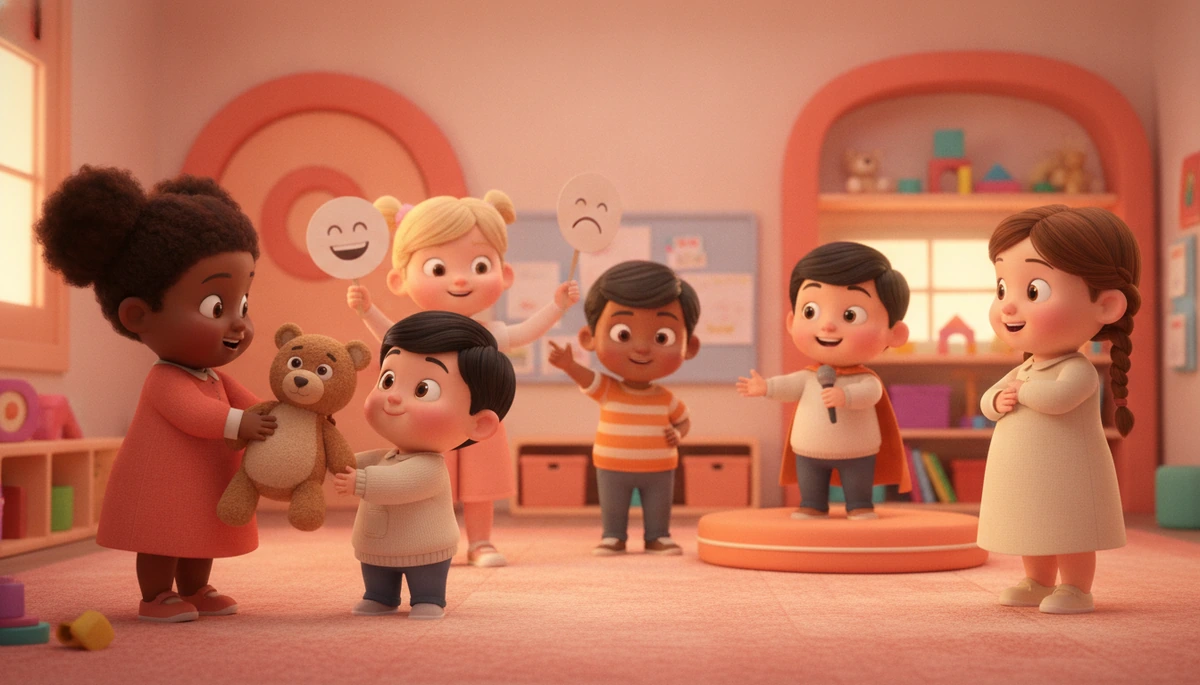
This article is part of our complete guide to Role-Play and Pretend Play as SEL Tools. Role-playing tough conversations is a powerful tool to help children develop essential social-emotional skills. These skills include self-awareness, social awareness, and relationship skills. By using role-play scripts, children can practice handling real-life situations with confidence and empathy. In this article, we'll explore five crucial conversation scripts that every child should master.
Why These 5 Conversations Are SEL Milestones
Mastering difficult conversations is a milestone in social-emotional learning (SEL). They require children to develop empathy, understand social cues, and communicate effectively. These conversations are not just about the words used but also about understanding the emotions behind them. According to Albert Bandura's Social Learning Theory, children learn behaviors by observing and imitating others 1. Role-playing provides a safe space for children to practice and internalize these skills.
In my practice, I've seen many parents express concerns about their child's ability to handle awkward social situations. Role-playing these scenarios can help children navigate them more comfortably. By practicing these scripts, children gain confidence and develop the ability to engage in meaningful social interactions.
Enhancing Empathy and Communication
Role-playing not only helps children learn words but also to understand the feelings behind those words. When children engage in role-play, they are not just memorizing scripts; they are learning to empathize with others. This understanding is crucial because empathy builds the foundation for healthy relationships. Additionally, effective communication helps children express their needs and understand others better, which is essential for social success.
Script 1: A Real Apology (Not 'Sorry' Fake)
A genuine apology goes beyond a simple "sorry." It involves acknowledging the mistake, understanding its impact, and making amends. Here's a script to guide your child:
Imagine your child accidentally knocks over a friend's toy. Instead of a quick "sorry," teach them to say:
- "I didn't mean to knock over your toy. I see it upset you. How can I help fix it?"
This approach not only acknowledges the mistake but also shows empathy and a willingness to make things right.
Example: The Case of the Spilled Juice
Picture this: Maya, a 6-year-old, spills juice on her friend's drawing during a playdate. Instead of a dismissive "oops," she follows the script:
- "Oh no, I spilled juice on your drawing. I'm sorry it happened. Can I help make another one with you?"

In My Practice: Building Trust
I've worked with children who initially find it challenging to apologize sincerely. By practicing these scripts in a safe environment, they've learned to build trust with their peers. When children see that apologies lead to reconciliation and continued friendships, they become more willing to take responsibility for their actions.
Script 2: Asking for Help When Stuck
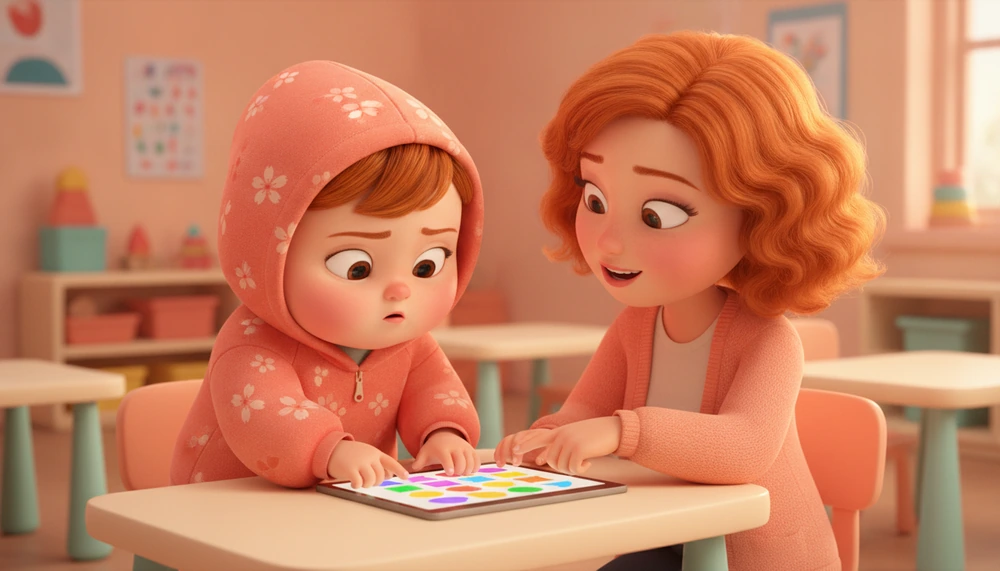
Asking for help is a crucial skill that fosters self-awareness and self-management. Children often hesitate to ask for help due to fear of judgment or feeling inadequate. Role-playing this scenario can empower them.
When a child feels they can't solve a math problem, they might say:
- "I'm having trouble with this problem. Could you help me understand it better?"
This script encourages children to seek help proactively, enhancing their learning experience.
Example: The Math Puzzle
Imagine Jake, age 8, struggling with a math puzzle. Instead of getting frustrated, he approaches his teacher:
- "I don't quite get this part. Can you show me how to do it?"
Encouraging Help-Seeking Behavior
Role-playing asking for help can alleviate the fear of judgment. When children are prepared with a script, they are more likely to reach out when needed. This proactive approach to learning not only boosts their confidence but also improves their academic performance. It teaches them that seeking help is a strength, not a weakness.
Script 3: Saying No to a Peer
Teaching children how to say no respectfully is essential for developing healthy boundaries. It involves self-management and responsible decision-making.
When a peer pressures your child to play a game they're uncomfortable with, they might say:
- "No, thank you. I don't feel like playing that game right now."
This response is polite but firm, enabling children to assert their preferences without feeling guilty.
Example: The Unwanted Game
Consider Sarah, who is asked by a friend to play a game that makes her uneasy. She replies:
- "Thank you for asking, but I don't want to play that game. Let's do something else."
Building Confidence in Boundaries
In my practice, I've seen children struggle with saying no because they fear losing friends. Role-playing helps them understand that true friends respect boundaries. By practicing these scripts, children learn that standing up for themselves doesn't mean being rude; it's about being honest and maintaining personal comfort.
Script 4: Telling a Teacher Something Important
Communicating essential information to authority figures like teachers can be daunting for children. Role-playing can ease this anxiety by providing a clear script.
If a child needs to tell a teacher about a bullying incident, they might say:
- "I need to talk to you about something that happened during recess. Can we find a time to discuss it?"
This script helps children prepare for important conversations, ensuring they feel heard and understood.

Encouraging Open Communication
Role-playing scenarios where children need to convey important information builds their confidence. It teaches them that their voice matters and that adults are there to help. This practice nurtures a supportive environment where children feel safe and empowered to express concerns.
Script 5: Handling 'You Can't Play With Us'
Facing exclusion is challenging, but preparing children with the right words can make a difference. This script focuses on self-awareness and social awareness.
When a child hears, "You can't play with us," they can respond:
- "That's okay. I'll find something else to do. If you change your mind, let me know."
This response shows resilience and maintains the child's self-esteem.
Example: The Recess Dilemma
During recess, Alex is told he can't join a game. Rather than feeling rejected, he says:
- "No worries. I'll play on the swings for now. Let me know if you want to play later."

Strengthening Resilience
In my practice, parents often worry about their children feeling isolated at school. Teaching children to handle exclusion positively shows them that they have options and can enjoy their time even when faced with rejection. Role-playing these situations prepares them to handle real-life challenges with poise.
How to Practice (3-Step Method)
To effectively use these scripts, follow a three-step practice method: replay, variation, and real-life application.
- Replay: Begin by role-playing the script exactly as written.
- Variation: Encourage your child to modify the script to suit different situations.
- Real-Life Application: Prompt your child to use their skills in real-world scenarios.
For more on this method, see our article on The 3-Step Role-Play Method: Replay → Variation → Real-Life Application.
Free Download: 5 Scripts
Download our free PDF containing these five conversation scripts. Practice them with your child to enhance their social-emotional learning. Let's Be Friends: Asking to Play Together and other social stories can also provide helpful context.
References
1 Bandura, A. (1977). Social Learning Theory. Retrieved from https://en.wikipedia.org/wiki/Social_learning_theory
2 Brackett, M. (2019). Permission to Feel. Retrieved from https://en.wikipedia.org/wiki/Marc_Brackett
Try It This Week
Reading is the easy part. Skills build through small, repeated practice — here's a low-pressure plan you can try with your child.
- 1Practice a Real ApologyDay 1Guide your child through making a sincere apology after a mistake. Discuss why acknowledging feelings is important.use this story →👉 What this looks likeImagine your child accidentally breaks a sibling's toy. Guide them to say, 'I'm sorry I broke your toy. I didn't mean to. Can we fix it together?' This helps children learn to express regret and offer to make amends, strengthening their empathy and responsibility.
- 2Ask for Help Role-PlayDay 3Rehearse asking for help in a safe setting. Emphasize that seeking help is a strength.👉 What this looks likeRole-play a homework scenario where your child is stuck. Pretend to be the teacher, and have your child ask, 'Can you help me understand this part?' This reinforces that asking for help is positive and builds confidence in seeking assistance.
- 3Role-Play Saying NoDay 5Help your child practice saying no to uncomfortable situations, maintaining respect and boundaries.👉 What this looks likeCreate a scenario where a friend asks them to do something they're not comfortable with. Guide them to say, 'No, thank you. I'm not comfortable with that.' This reinforces the importance of boundaries and self-respect.
- 4Discuss Important TopicsThis weekendRole-play talking to a teacher or adult about a significant issue. Build confidence in your child's communication skills.👉 What this looks likeAct out a situation where your child needs to tell a teacher about a lost item. Practice saying, 'I lost my item during recess. Can we look for it together?' This encourages open communication with adults and problem-solving.
- 5Handle Exclusion PositivelyOnce this weekPractice how to handle exclusion with resilience. Encourage self-worth and alternative activities.in the SocialBlossom app →👉 What this looks likeSimulate a situation where peers exclude your child from a game. Coach them to respond with, 'That's okay, I'll play something else.' This builds resilience and self-esteem, showing they can enjoy their time regardless of others' actions.
Frequently Asked Questions
How can role-playing help my child with social skills?
What if my child is shy about role-playing?
How often should we practice these scripts?
Can role-playing help with bullying?
Are there tools to help with role-playing?
References