Self-Awareness Milestones in Children: A Guide for Parents
Introduction: Understanding Self-Awareness Milestones
Self-awareness is a critical component of social-emotional learning (SEL) and is essential for a child's overall development. It involves recognizing one's emotions, thoughts, and values, and how they influence behavior. This article is part of our complete guide to Self-Awareness in Kids: A Parent's Guide (Ages 2-12). Here, we explore typical self-awareness milestones from age 2 to 12, linking them to the CASEL framework.
Age 2: 'Mine!' and the Birth of Self-Concept
At age two, children begin to develop a basic sense of self, often characterized by the declaration of "mine!" This stage marks the beginning of self-concept development, where children start to differentiate themselves from others. This milestone aligns with the CASEL competency of self-awareness, as children recognize their own emotions and begin to understand the concept of personal ownership.
Example: The "Mine" Phenomenon
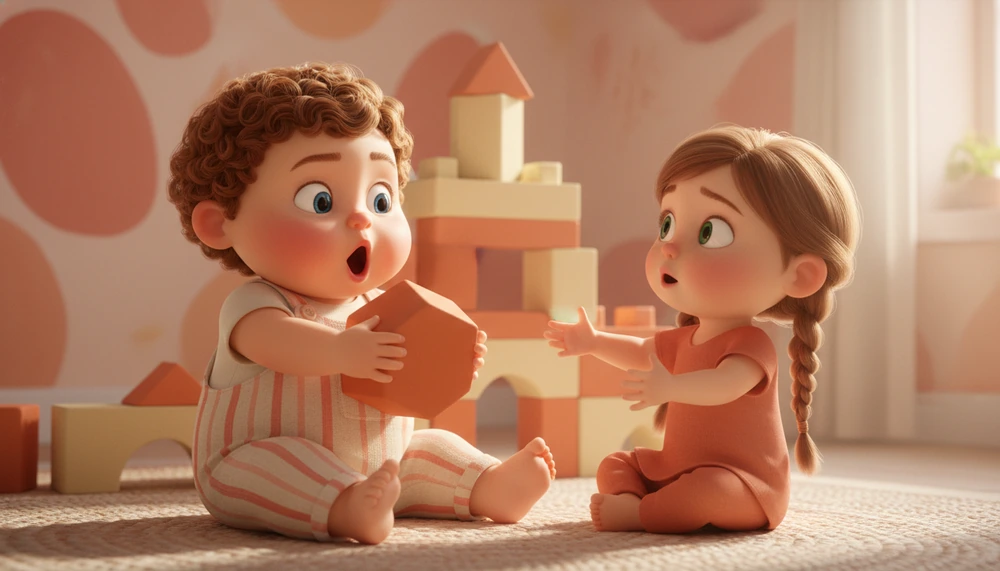
Imagine a toddler, Emily, playing with blocks. Her friend reaches for a block, and Emily quickly grabs it, exclaiming, "Mine!" This reaction is typical at this age and signifies the development of personal boundaries and self-recognition.
- Encourage sharing by modeling it yourself.
- Use [social stories](/products) like [Jugamos con Rotuladores en la Habitación de Sele](/products/jugamos-con-rotuladores-en-la-habitacion-de-sele) to teach about sharing and cooperation.
- Play games that involve taking turns to help them understand and respect boundaries.
Age 4: I'm a 'Good Kid' or a 'Bad Kid'
By age four, children begin forming global self-evaluations, often categorizing themselves as a "good kid" or a "bad kid" based on feedback from adults and peers. This stage involves self-awareness and self-management as they learn to regulate their emotions and behaviors in response to social cues.
Scripted Dialogue
Parent: "I see you're feeling upset because your drawing didn't turn out how you wanted. That's okay! What part do you like?"
Child: "I like the colors."
Parent: "That's great! Let's try again and focus on what you enjoy."
In My Practice: I've seen many parents use positive reinforcement to help children navigate this stage. Praising effort rather than outcome can build a healthier self-concept.
- Create a "proud of" journal where your child can draw or write about things that make them proud.
- Use affirmation cards to reinforce positive self-image.
Age 6: Comparison to Peers Begins
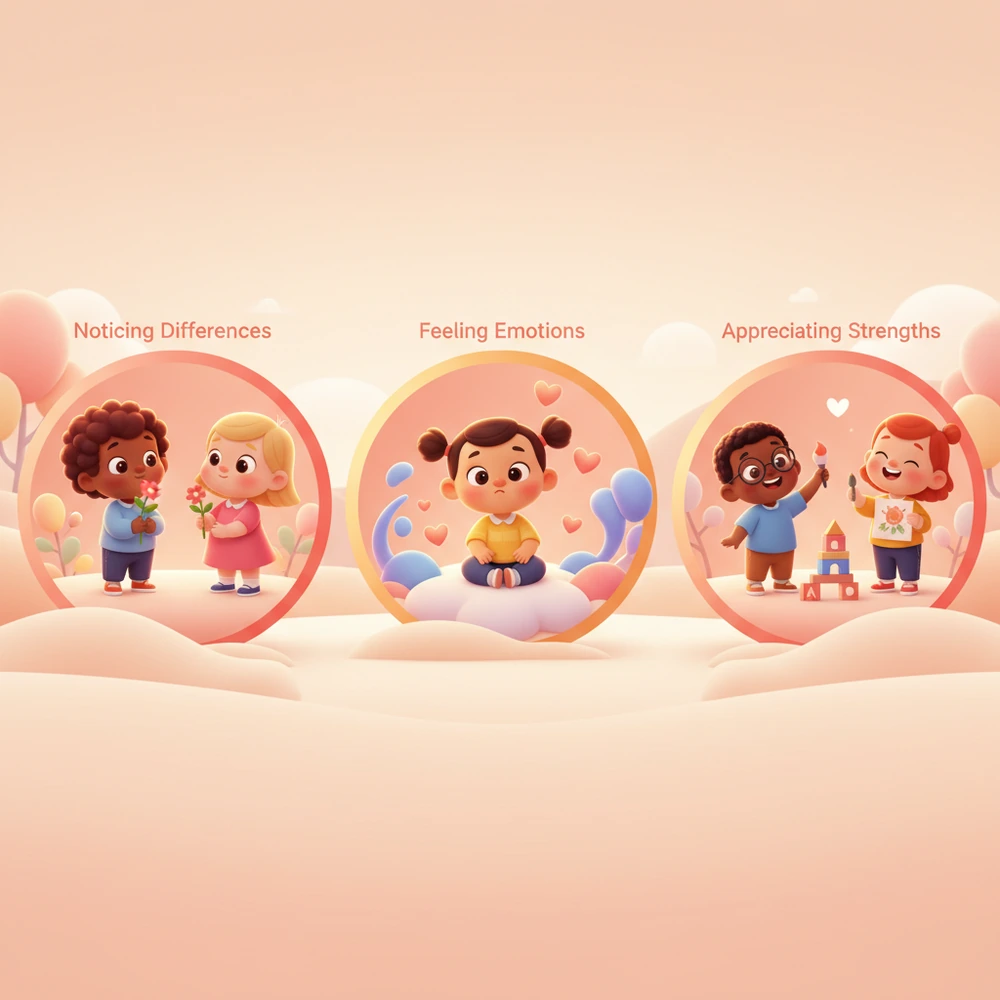
At age six, children start comparing themselves to their peers. This comparison can influence their self-esteem and self-awareness. They begin to notice differences in skills and abilities, which impacts their self-concept.
Infographic: Stages of Self-Comparison in Children
Case Study: The Peer Comparison
Liam, a six-year-old, notices his friend runs faster. Initially, he feels discouraged but learns to appreciate his own strengths in drawing. This realization helps him develop a balanced self-view.
- Encourage your child to recognize and celebrate their unique strengths.
- Use stories like [Using Words to Share Our Feelings and Needs - Social Story](/products/using-words-to-share-our-feelings-and-needs) to foster communication and self-expression.
- Organize playdates with diverse groups to expose them to various talents and interests.
Age 8: Stable Self-Concept ('I'm Someone Who...')
By age eight, children begin to develop a more stable self-concept. They start identifying themselves with specific characteristics, such as "I'm someone who loves animals." This stage is crucial for relationship skills and responsible decision-making.
Example: Building a Stable Self-Concept
Picture Sarah, an eight-year-old, who proudly tells her class, "I'm someone who loves reading!" This statement reflects her growing self-awareness and confidence in her identity.
- Encourage activities that align with your child's interests to strengthen their self-concept.
- Discuss feelings and interests using tools like [Listening to My Body: Taking a Break - Social Story](/products/listening-to-my-body-taking-a-break).
- Create a vision board with your child to explore their interests and dreams.
Age 10: Noticing Private vs. Public Self
By ten, children become aware of the distinction between their private thoughts and public personas. They start understanding that their thoughts may not always align with their outward expressions, a key aspect of developing social awareness.
In My Practice: Navigating Public vs. Private Self
In my practice, I have observed children at this age navigating complex social dynamics. One child, Alex, learned to balance his love for singing privately with his shy public persona, eventually joining the school choir.
- Discuss scenarios where your child might feel different in private than in public.
- Encourage open dialogues about feelings and social dynamics.
- Role-play scenarios to practice how their private self can safely express in public settings.
Age 12: Identity Exploration Begins
By twelve, children enter the initial stages of identity exploration. They begin questioning who they are and where they fit in. This stage is crucial for developing self-awareness and furthering responsible decision-making.
Example: Identity Exploration
Jenna, a twelve-year-old, explores different hobbies, from coding to painting, trying to discover her passions and identity. This process is a normal part of developing self-awareness.
- Support your child's exploration by providing a range of experiences.
- Discuss identity and self-discovery using resources like [Expressing Our Feelings Positively - Social Story PDF](/products/expressing-our-feelings-positively).
- Encourage journaling to help them articulate their thoughts and feelings.
When to Talk to Your Pediatrician
While variations in self-awareness development are normal, some situations might benefit from professional advice. If your child seems significantly out of sync with peers in terms of self-awareness milestones or shows distress, it's worth a chat with your pediatrician. They can provide guidance tailored to your child's needs.
References
1 CDC 'Learn the Signs. Act Early.' developmental milestones. https://www.cdc.gov/ncbddd/actearly
2 AAP Bright Futures: Guidelines for Health Supervision (4th ed.). https://www.aap.org
3 Goleman, D. (1995). Emotional Intelligence. Bantam.
Try It This Week
Reading is the easy part. Skills build through small, repeated practice — here's a low-pressure plan you can try with your child.
- 1Model self-awareness dailyDaily, 5 minDemonstrate your own self-awareness by verbalizing emotions and decisions. This models behavior for your child.👉 What this looks likeWhen feeling frustrated during traffic, say aloud, 'I feel frustrated because of the traffic. I'll take deep breaths to stay calm.' This helps your child see self-awareness in action.
- 2Create a family affirmation boardThis weekendEncourage each family member to add positive affirmations daily. This fosters a supportive environment.👉 What this looks likeSet up a board in the kitchen. Each day, have your child add an affirmation like, 'I am a kind friend.' Discuss each affirmation's meaning during dinner.
- 3Play 'emotion charades'Day 2-3Act out different emotions and have your child guess. It helps them recognize and name emotions.👉 What this looks likePretend to feel 'excited' by jumping up and down. Ask your child, 'What emotion am I showing?' Let them try as well, guessing each other's emotions.
- 4Encourage a self-reflection journalOnce this weekHave your child write or draw about their day's feelings. This builds their self-awareness.👉 What this looks likeAt bedtime, ask your child to draw one event from the day and how it made them feel. Discuss these drawings to understand their emotions better.
- 5Use social stories for scenariosOnce a weekRead social stories related to common situations to boost understanding and empathy.Expressing Our Feelings Positively - Social Story PDF →👉 What this looks likeChoose a story like [Expressing Our Feelings Positively - Social Story PDF](/products/expressing-our-feelings-positively) and read together. Discuss how the characters feel and why.
Frequently Asked Questions
What is self-awareness in children?
How can I support my child's self-awareness development?
What are the signs that my child is developing self-awareness?
When should I consult a pediatrician about my child's self-awareness?
How does self-awareness affect a child's social skills?
Are self-awareness milestones the same for every child?
References
- CDC 'Learn the Signs. Act Early.' developmental milestones.
- AAP Bright Futures: Guidelines for Health Supervision (4th ed.).
- Goleman, D. (1995). Emotional Intelligence. Bantam.