Cultivating Self-Awareness in Children: A Comprehensive Guide

Understanding Self-Awareness in Children
Self-awareness is a cornerstone of a child's social and emotional development. It is the ability to recognize one's own emotions, thoughts, and values and how they influence behavior. According to the CASEL framework, self-awareness is one of the five core competencies essential for social-emotional learning (SEL) 1. This guide explores self-awareness in children, how it develops from ages 2 to 12, and practical ways to nurture it in both neurotypical and neurodivergent kids.
In This Guide
- Helping Kids Name Their Feelings: Emotion Vocabulary by Age (2-12): Understand how vocabulary evolves to express emotions.
- Body Awareness in Kids: 7 Research-Backed Activities (Sensory + SEL): Explore activities that enhance body awareness as part of self-awareness.
- Why Autistic Kids Develop Self-Awareness Differently (and What Helps): Learn about the unique self-awareness journey for autistic children.
- Self-Awareness Milestones from Age 2 to 12 (What's Typical, What's Not): Discover typical self-awareness milestones and when to seek guidance.
What is Self-Awareness for Kids?
Self-awareness in children involves recognizing and understanding their emotions, strengths, weaknesses, and values. It is about knowing what they feel and why they feel it. Emotional self-awareness is a key component, enabling children to identify emotions and understand the impact on their behavior. This foundational skill helps in developing other competencies like self-management and social awareness.
The Importance of Self-Awareness
A child's ability to be self-aware is linked to better academic performance, healthier relationships, and effective decision-making 2. It allows children to assess their strengths and weaknesses, which fosters a growth mindset. In my practice, I've noticed that children who are more self-aware are more resilient and adaptable. They tend to have better emotional regulation and coping strategies.
Example Scenario: Imagine a child named Alex who feels frustrated because they can't solve a math problem. Recognizing this frustration, they tell their teacher, "I'm upset because I can't get this right," instead of simply acting out. This level of self-awareness helps Alex manage emotions and seek help effectively.
Moreover, self-awareness enables children to understand the link between their feelings and actions, which is crucial for developing empathy and responsibility. Empathy begins with self-awareness, as recognizing one’s own emotions is the first step in understanding those of others. Children who are self-aware tend to develop a deeper sense of empathy, which translates into better peer interactions and social relationships.
How Self-Awareness Develops by Age
Ages 2-4: Early Emotional Recognition
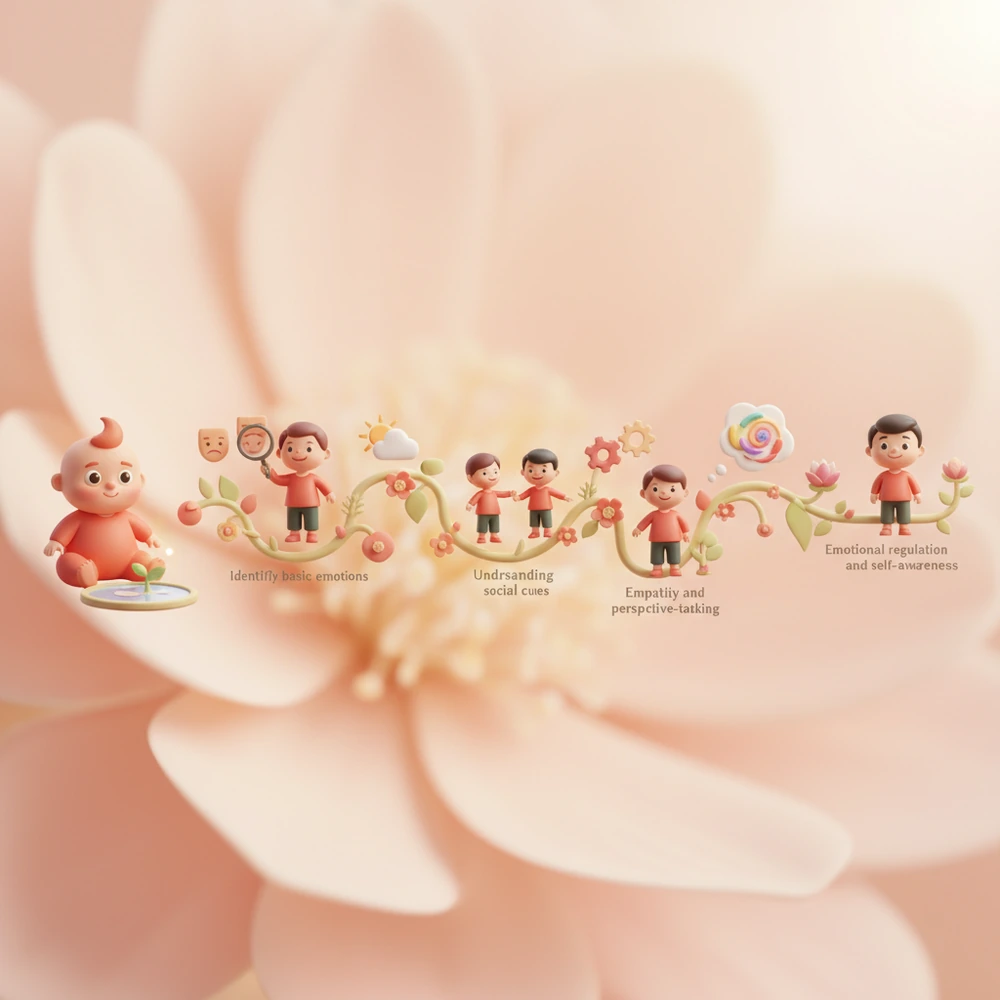
At ages two to four, children begin to identify basic emotions. They start to use simple words to describe how they feel, such as "happy," "sad," or "angry." This stage is about emotional recognition and often involves mimicking adult expressions and labeling their own simple feelings.
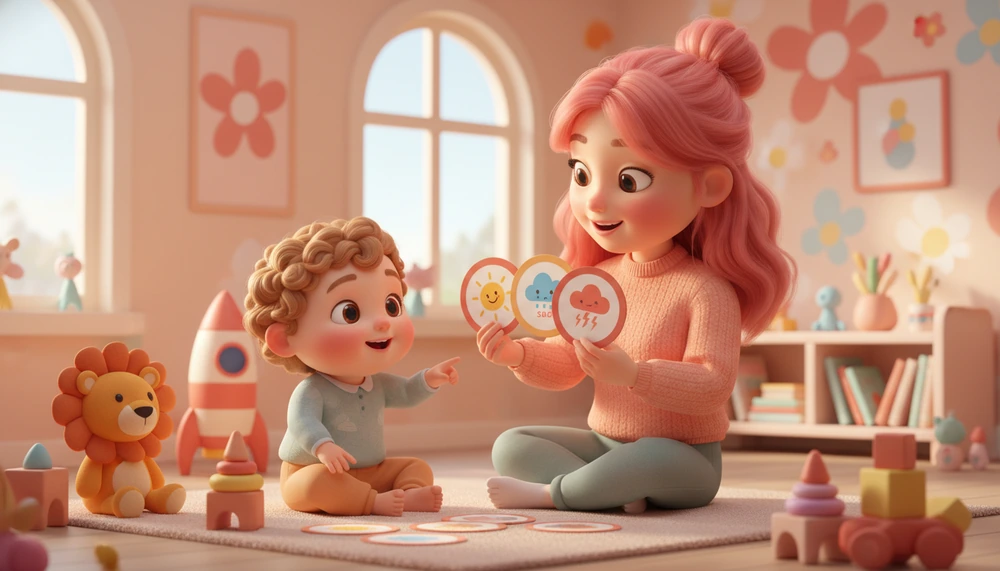
During this period, children are highly observant of their surroundings and the reactions of adults. They begin to mirror these reactions, forming the initial building blocks of self-awareness. Interactive play is vital at this stage, as it encourages children to express their emotions in a safe and guided environment.
Activities for Ages 2-4
- Emotion Cards: Use cards with faces showing different emotions to teach recognition. Encourage children to mimic expressions and name the emotions.
- Mirror Play: Let children explore their own expressions in a mirror, asking them to identify happy, sad, or surprised looks.
- Interactive Storytime: Use storytelling to highlight different emotions and discuss characters' feelings.
In My Practice: I've seen many parents successfully use social stories like Using Words to Share Our Feelings and Needs - Social Story to help young children articulate their emotions.
Ages 4-6: Expanding Emotion Vocabulary
Children's vocabulary expands significantly during this stage. They begin to understand more complex emotions like "frustration" or "jealousy" and can express preferences and dislikes more clearly. This age is pivotal for developing a nuanced understanding of emotions, beyond just happy or sad.
- Emotion Journals: Encourage children to draw or write about their day, highlighting different emotions they felt.
- Story Time Discussions: Use storybooks to discuss how characters might feel and why.
Example Scenario: Consider a child like Mia who uses an emotion journal. After a playground squabble, she draws a picture of herself looking sad and writes, "I was sad when I couldn't play on the swings." This helps her process the event and understand her feelings.
In addition to journaling, role-playing exercises can be instrumental at this age. By acting out scenarios, children practice recognizing emotions and predicting outcomes based on their actions. This not only boosts vocabulary but also enhances their ability to empathize with others.
Ages 6-8: Developing Self-Reflection
Children aged six to eight start to engage in self-reflection. They can consider their own behaviors and how they affect others. This stage involves understanding personal strengths and areas for growth.
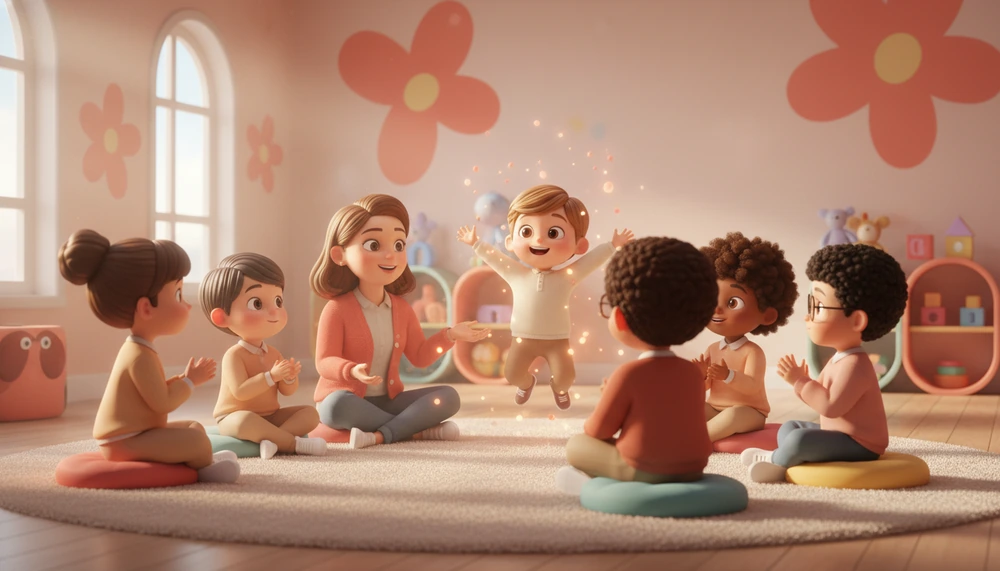
During this phase, children become more aware of their impact on their environment. They start recognizing how their actions can influence others, which is a significant step towards developing empathy. Reflective activities, such as discussing daily achievements and challenges, help kids internalize their experiences and learn from them.
Activities for Ages 6-8
- Role-Playing Games: Act out scenarios where children have to decide how to respond to different emotional situations.
- Strengths Chart: Create a chart where children can list their strengths and achievements.
- Daily Reflection Time: Allocate a few minutes each day for children to reflect on their actions and feelings.
In My Practice: Kids at this age benefit greatly from activities like the Expressing Our Feelings Positively - Social Story PDF, which encourages them to reflect on their emotions and interactions.
Ages 8-10: Heightened Emotional Awareness
At this stage, children become more aware of complex emotions and their triggers. They begin to understand the concept of emotional regulation and can apply strategies to manage their feelings.
- Mindfulness Exercises: Introduce simple mindfulness activities like deep breathing or guided visualization.
- Group Discussions: Encourage open conversations about emotions and coping strategies.
Example Scenario: Imagine Liam, an 8-year-old, practicing mindfulness. Before a test, he takes deep breaths to calm his nerves, understanding that nervousness is natural but manageable.
This age also marks a period where children start to explore their identity. They begin to question who they are, what they like, and what they want to achieve. Encouraging self-exploration through hobbies and interests can significantly aid in their identity formation.
Ages 10-12: Understanding Emotional Impact
As preteens, children start understanding how their emotions can affect others. They can anticipate the emotional outcomes of their actions, which is key for responsible decision-making. This stage is crucial for developing a sense of responsibility and empathy.
- Peer Mediation: Encourage children to mediate peer conflicts, helping them understand different perspectives.
- Personal Reflection Time: Set aside time for children to reflect on their day and emotional experiences.
In My Practice: I've found that preteens benefit from peer mediation exercises that build empathy and perspective-taking skills.
Supporting Neurodivergent Children
Self-awareness development can look different in autistic or ADHD children. It's crucial to use a strengths-based approach and to avoid framing differences as deficits.
Autistic Children
Autistic children may develop self-awareness at a different pace or in unique ways. They might excel in understanding specific areas while facing challenges in others. Encouraging self-awareness through explicit teaching and structured environments can be beneficial.
- Structured Routines: Use consistent routines to help autistic children understand and predict their emotional responses.
Example Scenario: Consider Jamie, an autistic child who benefits from routine. Knowing that after school is snack time helps Jamie transition smoothly and recognize hunger cues as emotional signals.
In addition to routines, visual supports like charts or timetables can enhance predictability and understanding of emotional cues. These tools can be particularly helpful in environments where expectations change frequently.
ADHD Children
Children with ADHD may face challenges with impulsivity, affecting their emotional self-awareness. Strategies that promote self-regulation and focus can enhance their self-awareness.
- Visual Schedules: Use visual aids to help children plan their day and understand emotional triggers.
- Positive Reinforcement: Celebrate small achievements to boost confidence and self-awareness.
For more on supporting autistic kids, check out Why Autistic Kids Develop Self-Awareness Differently (and What Helps).
In my practice, I've seen how positive reinforcement can transform a child's approach to learning about themselves. By celebrating small victories, children with ADHD can gain confidence and better understand their emotions and behaviors.
Practical Tips for Parents
- Model Self-Awareness: Demonstrate self-awareness by verbalizing your emotions and thought processes. This modeling helps children learn by example.
- Use Social Stories: These are powerful tools for teaching self-awareness. Explore our social stories designed to help children express and manage their emotions effectively.
Creating a Supportive Environment
Creating an environment that supports self-awareness involves being patient and observant. Children need to feel safe to express their emotions without fear of judgment. Encourage open dialogue about emotions and validate their feelings, showing that all emotions are valid and worth discussing.
Encouraging Journaling
Journaling can be a powerful tool for children to explore their emotions and thoughts. Encourage them to keep a journal where they can freely express what they feel without fears of criticism. This practice helps them recognize patterns in their emotions and enhances self-reflection skills.
References
1 CASEL.org. (n.d.). What is the CASEL Framework? Retrieved from https://casel.org/fundamentals-of-sel/what-is-the-casel-framework/
2 Durlak, J. A., Weissberg, R. P., Dymnicki, A. B., Taylor, R. D., & Schellinger, K. B. (2011). The impact of enhancing students’ social and emotional learning: A meta-analysis of school-based universal interventions. Child Development, 82(1), 405-432. https://doi.org/10.1111/j.1467-8624.2010.01564.x
3 Goleman, D. (1995). Emotional Intelligence. Bantam Books.
4 Brackett, M. (2019). Permission to Feel. Celadon Books.
5 Bandura, A. (1991). Social cognitive theory of self-regulation. Organizational Behavior and Human Decision Processes, 50, 248-287. https://doi.org/10.1016/0749-5978(91)90022-L
6 AAP Bright Futures: Guidelines for Health Supervision (4th ed.). American Academy of Pediatrics.
Try It This Month
Reading is the easy part. Skills build through small, repeated practice — here's a low-pressure plan you can try with your child.
- 1Create an Emotion JournalDay 1Help your child start an emotion journal to express feelings daily. Improves emotional vocabulary and self-reflection.use this story →👉 What this looks likeBuy a simple notebook for your child. Each day, ask them to draw a picture of their mood or write a sentence. Discuss the drawing or sentence together, helping them label the emotion. For instance, if they draw a stormy cloud, ask, 'Does this mean you felt stormy today?' to guide them in identifying their feelings.
- 2Practice Mindfulness TogetherDaily, 5 minIntroduce a daily 5-minute mindfulness session. Helps in calming and recognizing emotions.👉 What this looks likeSet a timer for 5 minutes. Sit together with your child in a quiet spot. Guide them through deep breathing exercises. Say, 'Let's breathe in like we're smelling a flower, and breathe out like we're blowing out a candle.' This practice helps them focus on the present and understand their emotional state.
- 3Use Emotion CardsThis weekendPlay a game using emotion cards to help your child identify and express feelings.👉 What this looks likeGather cards with different facial expressions. Shuffle them and spread them out. Take turns picking a card and acting out the emotion. Ask, 'Can you show me what surprised looks like?' This helps children connect facial expressions with emotions, enhancing their self-awareness.
- 4Role-Play Emotional ScenariosDay 3Engage in role-playing games to explore emotions and responses.in the SocialBlossom app →👉 What this looks likeChoose a common scenario, like a playground disagreement. Act it out with your child, taking turns being different characters. Ask, 'How do you think the other person felt?' This encourages empathy and understanding of diverse emotional perspectives.
- 5Model Self-ReflectionWeeklyDemonstrate self-reflection by discussing your day and emotions openly.👉 What this looks likeAt dinner, share something that made you happy, sad, or frustrated that day. Say, 'I was really happy when the sun came out today after all the rain.' This models emotional expression and invites your child to share their experiences too.
- 6Organize Peer Mediation SessionsOnce this monthEncourage your child to mediate conflicts, fostering empathy and perspective-taking.👉 What this looks likeSet up a role-play with your child and a sibling or friend about resolving a disagreement over a toy. Guide them to ask questions like, 'Why are you upset?' and 'What can we do to make it better?' This practice helps them see multiple sides of an argument and develop problem-solving skills.
- 7Celebrate Small AchievementsDaily, 2 minUse positive reinforcement to boost your child's confidence and self-awareness.👉 What this looks likeAt bedtime, ask your child to share one thing they did well during the day. Respond with enthusiasm, 'You did great sharing your toy today!' This reinforces positive behaviors and helps them recognize their strengths.
Frequently Asked Questions
What is self-awareness in children?
How does self-awareness develop in children?
Why is self-awareness important for children?
How can parents nurture self-awareness in neurodivergent children?
What activities can help improve self-awareness in kids?
How can social stories help in developing self-awareness?
Can self-awareness impact a child's academic performance?
References
- CASEL.org. (n.d.). What is the CASEL Framework?
- Durlak, J. A., Weissberg, R. P., Dymnicki, A. B., Taylor, R. D., & Schellinger, K. B. (2011). The impact of enhancing students’ social and emotional learning: A meta-analysis of school-based universal interventions. Child Development, 82(1), 405-432.
- Goleman, D. (1995). Emotional Intelligence. Bantam Books.
- Brackett, M. (2019). Permission to Feel. Celadon Books.
- Bandura, A. (1991). Social cognitive theory of self-regulation. Organizational Behavior and Human Decision Processes, 50, 248-287.
- AAP Bright Futures: Guidelines for Health Supervision (4th ed.). American Academy of Pediatrics.