Expressing Our Feelings Positively - Social Story PDF

Help your child learn to express their feelings positively with this engaging social story. Perfect for preschoolers, it encourages emotional awareness and healthy communication.
Story Preview
Expressing Our Feelings Positively

Sometimes, I feel big feelings inside.

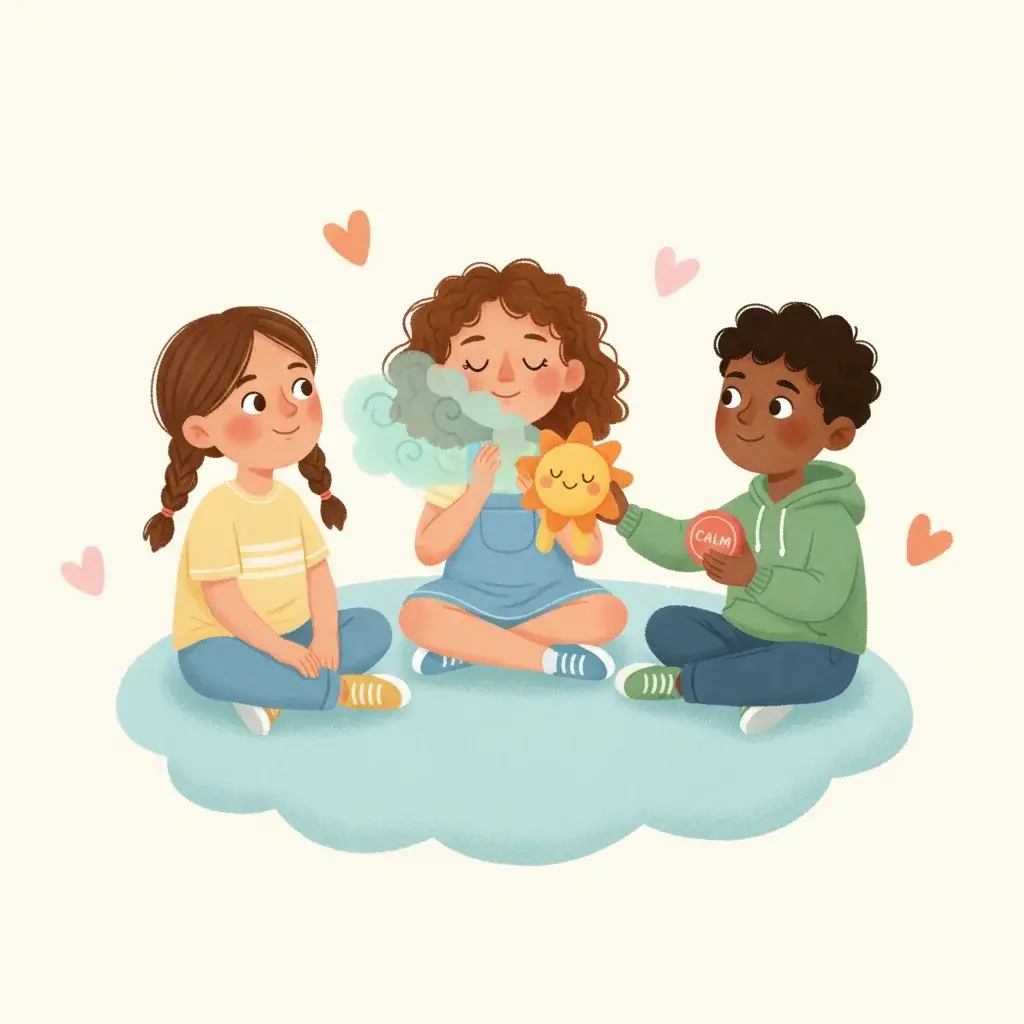
When I feel mad, I can take a deep breath.
Purchase to access all pages
Who Is This For?
What's Inside
This social story includes scenarios to help children express their feelings positively and learn coping strategies.
About This Story
This printable social story helps children understand and express their feelings in a positive way. It includes relatable scenarios and supportive language to guide them through big emotions.
- Learn to identify feelings
- Practice deep breathing techniques
- Encourage asking for help
- Build confidence in sharing emotions
Disclaimer: This resource supports learning. It does not replace professional advice.
How to Use This Story
When to use this story
\n"Expressing Our Feelings Positively" is ideal for early elementary-aged children, particularly those between 6-8 years old. This story can be utilized in various settings such as home, classrooms, and therapy sessions, especially during times when children may be experiencing strong emotions. It provides a gentle introduction to recognizing and expressing feelings in a positive manner, making it a useful tool for parents, teachers, and therapists working with young learners. \n\n### What's inside \nThis engaging social story begins with relatable scenarios where children may experience big feelings. It opens with the statement, "Sometimes, I feel big feelings inside," which sets the stage for exploring a range of emotions. Each page addresses different feelings, such as anger, sadness, excitement, fear, and happiness, and offers simple, practical strategies for expressing them: \n- Mad: Take a deep breath. \n- Sad: Tell a teacher or friend. \n- Excited: Jump up and down. \n- Scared: Hold a favorite toy. \n- Happy: Smile and share joy. \n\nThe story is designed to be easy to understand and encourages children to engage in vocabulary-building activities, spelling exercises, comprehension checks, and even open-ended discussions. Role-play scenarios are included to help kids practice expressing their feelings in a supportive environment. \n\n### What kids learn \nThrough "Expressing Our Feelings Positively," children learn to identify their emotions and understand that it's okay to feel a range of feelings. They will gain practical tools for expressing these emotions in constructive ways. By practicing these strategies, children develop a sense of emotional awareness and improve their communication skills, fostering better relationships with peers and adults alike. \n\n### Research context \nThe tradition of using social stories, initiated by Carol Gray, has shown effectiveness in promoting emotional and social understanding among children. These narratives help children navigate their feelings by providing relatable contexts and practical strategies. Moreover, research in narrative-based social-emotional learning (SEL) has indicated that storytelling can enhance emotional literacy and communication skills, making this approach a valuable resource in educational and therapeutic settings. \n\n### Tips for parents and educators \n- Read the story together and encourage children to share their own experiences related to each feeling. \n- Create a feelings chart where kids can express their emotions daily. \n- Use role-playing to practice how to express feelings in different situations. \n- Reinforce positive emotional expression by celebrating when kids communicate their feelings well. \n- Discuss the feelings and strategies in the story regularly to help reinforce learning. \n- Encourage open conversations about emotions to create a safe space for sharing.
How This Story Lands — Clinical Review & Perspectives
One named clinical review from our co-founder Rajini, plus three composite perspectives summarising how this story tends to land in a classroom, at home, and in therapy. How we write these.

A Wonderful Tool for Emotional Expression
As a pediatric speech-language pathologist, I find "Expressing Our Feelings Positively" to be an invaluable resource for children on my caseload. This engaging story introduces emotional vocabulary in a simple, age-appropriate manner. I often use it with preschoolers to help them articulate their feelings. After reading, I encourage children to share their own feelings and practice breathing techniques. It's rewarding to listen for their insights and see them connect with the characters, fostering both communication skills and emotional awareness.
Great for Sensory Regulation Activities
OTs often pair "Expressing Our Feelings Positively" with sensory regulation activities. This story can be used to teach children strategies for managing big feelings through physical actions, like jumping or deep breathing. It's particularly effective in helping kids understand their emotions and express them constructively. Incorporating movement while reading can enhance engagement and provide a holistic approach to emotional regulation, making it an excellent addition to therapy sessions.
Composite perspective synthesised from common feedback patterns — read how.
Sparking Meaningful Conversations at Home
Parents reading "Expressing Our Feelings Positively" with their child often notice how it sparks meaningful conversations about emotions. This story helps children express their feelings in a positive way, which is especially valuable for those with ADHD or autism. At home, it tends to encourage kids to share their own experiences related to happiness, sadness, or fear. Many parents appreciate the story's simplicity and the way it opens up dialogues about emotional awareness.
Composite perspective synthesised from common feedback patterns — read how.
Effective for Inclusive Learning Environments
In an inclusive classroom, "Expressing Our Feelings Positively" works well because it offers relatable scenarios that many children can identify with. Educators using small-group settings will find that the repetitive structure helps reinforce emotional vocabulary and expression. This story can be paired with visual supports, such as emotion charts, to enhance understanding. It's a practical tool for guiding discussions about feelings, encouraging students to communicate their emotions in a supportive environment.
Composite perspective synthesised from common feedback patterns — read how.
Frequently Asked Questions
What types of activities are included in the PDF?
The 'Expressing Our Feelings Positively' social story includes a variety of engaging activities such as vocabulary building, spelling exercises, comprehension questions, and creative prompts. It also features role-play scenarios to help children practice expressing their emotions in a supportive and fun way.
What age group is this social story designed for?
This social story is specifically designed for early elementary children, ages 6 to 8 years old. It’s tailored to help young children understand and express their feelings in a positive way, making it perfect for preschoolers and early learners.
What age is this social story suitable for?
This social story is designed for preschool-aged children.
You May Also Like


Read More
Creating an Inclusive SEL Classroom for Neurodivergent Students
To create an inclusive SEL classroom for neurodivergent students, incorporate anti-masking practices, adapt curricula, and engage culturally responsive methods. Parents can advocate for these changes
Read article →Push-In vs Pull-Out Services: Navigating the Best Approach for Your Child
Push-in and pull-out services are two key approaches in special education. Push-in involves therapists working within the classroom, promoting social skills and reducing stigma. Pull-out offers focuse
Read article →Understanding SEL in Schools: A Parent's Guide to Social Emotional Learning
Social Emotional Learning (SEL) enhances children's emotional and social skills. Programs like Second Step and Sanford Harmony integrate SEL into classrooms. Parents can support SEL by engaging with e
Read article →
This resource supports learning. It does not replace professional advice.