Mastering Sharing: Strategies for Parents of Neurodivergent Kids
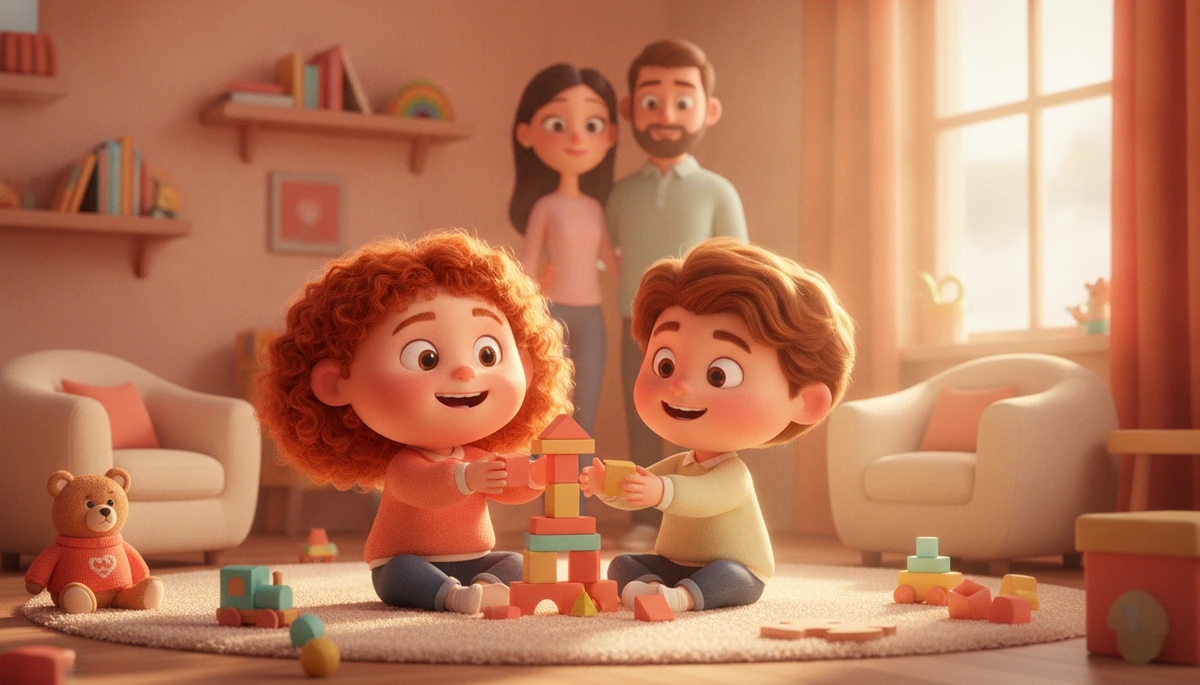
Why 'Share!' Fails Developmentally
When you tell your children to "just share," it might seem like a fair directive. However, developmental psychology suggests that this approach can backfire. Young children are naturally egocentric, a normal stage of their cognitive development, meaning they see the world primarily from their own perspective. Forcing them to share doesn't align with their developmental abilities and can lead to negative feelings such as resentment or confusion.
In my practice, I've seen many parents express frustration when their children refuse to share toys. Often, these parents are surprised to learn that sharing is a skill that develops over time and with guidance, not through force. The key is to support children in understanding the concept of sharing rather than demanding it.
Research from experts like Janet Lansbury emphasizes that forcing sharing can actually discourage genuine generosity and cooperation 2. Instead, we should focus on strategies that align with children's natural development stages.
Encouraging Natural Sharing
One way to encourage natural sharing is by modeling behavior. Children learn a great deal from observing adults. If they see parents sharing and expressing joy in doing so, they are more likely to mimic such behaviors. Besides, providing opportunities for cooperative play, such as team games, can help children understand the benefits of sharing and teamwork.
The 'When You're Done' Approach
The "when you're done" approach is a powerful, research-backed strategy that encourages natural sharing. This method involves allowing a child to finish using a toy before another child gets a turn. It respects the child's autonomy and teaches patience to the waiting sibling.
Imagine a scenario where two siblings, Alex and Jamie, both want to play with the same truck. Instead of saying, "Alex, you must share," you might say, "Jamie, when Alex is done with the truck, you can have a turn." This approach teaches both siblings respect and patience, fostering a sense of understanding and cooperation.
- Respects autonomy: Allows the child to feel in control of their playtime.
- Promotes patience: Encourages the waiting child to practice patience and respect.
- Reduces conflict: Minimizes the likelihood of disputes over toys.
Teaching Through Storytelling
Incorporating stories or scenarios where characters successfully navigate sharing can also reinforce this approach. Use books or social stories tailored to your child's interests to illustrate the benefits of waiting and taking turns. This method helps children visualize positive interactions and outcomes.
Turn-Taking with Timer (Alternative)
Another effective strategy for encouraging sharing is using a timer. This method involves setting a timer for a specific duration during which one child plays with a toy, then switching to the next child when the timer goes off.
Picture this: Emma and Noah both want to play with the same puzzle. You might say, "Emma, you'll have the puzzle for 5 minutes, then it's Noah's turn." Set a timer, and when it rings, encourage Emma to pass the puzzle to Noah.
Steps for Using a Timer:
- Set an agreed time limit (e.g., 5 minutes).
- Remind the children of the rules: "When the timer rings, it's time to switch."
- Encourage the transition with positive reinforcement, such as "Great job waiting, Noah!"
This practice not only teaches children about time management but also helps them to engage in cooperative play.
Real-Life Application
In my practice, I've found that using timers works exceptionally well in group settings, such as playdates or classroom activities. It provides a structured yet flexible framework for children to understand the concept of time while engaging in shared activities.
Body Autonomy Applies to Toys Too
Children are learning to understand their bodies and possessions. Teaching them about body autonomy can extend to their toys. By respecting their right to decide when to share, you instill a sense of ownership and control.
Consider a conversation like this:
Parent: "I see you want to keep playing with your doll. It's okay to finish your play. When you're ready to share, let your sibling know."
This approach reinforces the idea that sharing is a choice, not an obligation, fostering a healthier sibling dynamic.
Encouraging Ownership
To reinforce this, create a system where each child has a few items that are exclusively theirs. They can choose when and if they want to share these. This practice helps reinforce boundaries and respect for personal and shared property.
When YOUR Adult Intervention Helps vs Hurts
Knowing when to intervene is crucial. Too much intervention can stifle sibling relationships, while too little can leave conflicts unresolved.
- Physical conflict: If play turns aggressive, step in to separate and calm the children.
- Emotional distress: If one child is visibly upset, offer support and help them articulate their feelings.
- Minor disputes: Allow children to negotiate and resolve minor disagreements on their own.
- Natural consequences: Let children experience the natural outcomes of their actions, such as a sibling not wanting to play after a toy is snatched.
By observing and understanding when to intervene, you can support your children in developing their problem-solving skills.
Fostering Independence
In situations where intervention is necessary, try to facilitate rather than dictate solutions. Encourage children to express their feelings and brainstorm solutions together. This helps them develop critical thinking and negotiation skills.
Siblings of Different Ages: Different Rules
Age differences between siblings can present unique challenges. Younger children might not grasp sharing concepts as quickly as older siblings. Tailoring your approach based on age can be beneficial.
For instance, a 3-year-old may need more guidance and reinforcement than a 7-year-old, who might understand the concept of taking turns more readily. Using age-appropriate methods ensures each child is supported according to their developmental stage.
For more on managing age gaps between siblings, explore our article on Different Ages, Different Needs: Managing the Sibling Gap.
Customizing Approaches
For older children, introduce more complex sharing concepts like empathy and fairness, perhaps through role-playing games. For younger ones, focus on simple turn-taking and praise for sharing efforts. Adjusting strategies to fit developmental stages helps ensure understanding and cooperation.
Rajini's Clinical Voice on Shared Toys
In my practice, I've worked with families where shared toys often became a battleground. One effective strategy is creating a "shared toy basket" where certain toys are designated for communal play. This helps set clear expectations and reduces conflicts over ownership.
Additionally, using social stories like Let's Share and Play Together - Printable Social Story can be a great tool. These stories offer scenarios that help children visualize and practice sharing in a fun, engaging way.
By implementing these strategies, parents can foster an environment where sharing becomes a natural, enjoyable part of play rather than a point of contention.
Setting Up a Sharing Environment
Create a play area with clear boundaries and designated spaces for shared and personal toys. Visual cues, like labels or color-coded bins, can help children identify which toys are communal and which are personal. This setup promotes autonomy and understanding in shared spaces.
References
1 Markham, L. (2012). Peaceful Parent, Happy Kids: How to Stop Yelling and Start Connecting.
2 Lansbury, J. (n.d.). Sharing: The Never-Ending Battle. Retrieved from janetlansbury.com.
Faber, A., & Mazlish, E. (1980). How to Talk So Kids Will Listen & Listen So Kids Will Talk.
Try It This Week
Reading is the easy part. Skills build through small, repeated practice — here's a low-pressure plan you can try with your child.
- 1Model Sharing DailyDaily, 5 minDemonstrate sharing in daily activities like cooking or playing games. Children learn by observing adult behavior.👉 What this looks likeWhile cooking dinner, invite your child to help with a simple task. Say, 'Let's share the job of making salad. I'll cut the veggies, and you can mix them.' This shows how sharing works in practical situations, linking collaboration with positive outcomes.
- 2Introduce a Timer for PlayDay 2-3Use a timer to manage turn-taking during playtime, teaching time management and patience.👉 What this looks likeDuring playtime, say, 'Let's set this timer for 5 minutes. When it rings, we'll switch toys.' This visual and auditory cue helps children understand the concept of time and fairness, reinforcing patience.
- 3Create a Shared Toy BasketThis weekendDesignate certain toys as communal, reducing ownership disputes and fostering sharing.👉 What this looks likeSelect a few toys that both children enjoy. Label a basket 'Shared Toys' and explain, 'These are toys we all play with together.' Encourage children to choose toys they feel comfortable sharing, promoting mutual decision-making and respect.
- 4Read a Social Story TogetherOnce this weekUse social stories to illustrate sharing scenarios, making the concept relatable.use this story →👉 What this looks likeChoose a social story like 'Let's Share and Play Together.' Read it with your child, discussing the characters' actions and feelings. Ask, 'What did you think when the characters took turns?' This encourages empathy and understanding.
- 5Facilitate a Sharing GameDay 5Organize a game that requires sharing and turn-taking, reinforcing these concepts through play.👉 What this looks likePlay a board game that requires taking turns. Before starting, say, 'We'll each take a turn rolling the dice and moving our pieces.' Praise each turn taken, saying, 'Great job waiting your turn!' This reinforces the joy of shared activities and patience.
Frequently Asked Questions
How can I teach my child to share without forcing them?
What is the 'when you're done' approach?
How do timers help with sharing?
When should I intervene in toy disputes?
How can I manage sharing between siblings of different ages?
What are social stories?
References