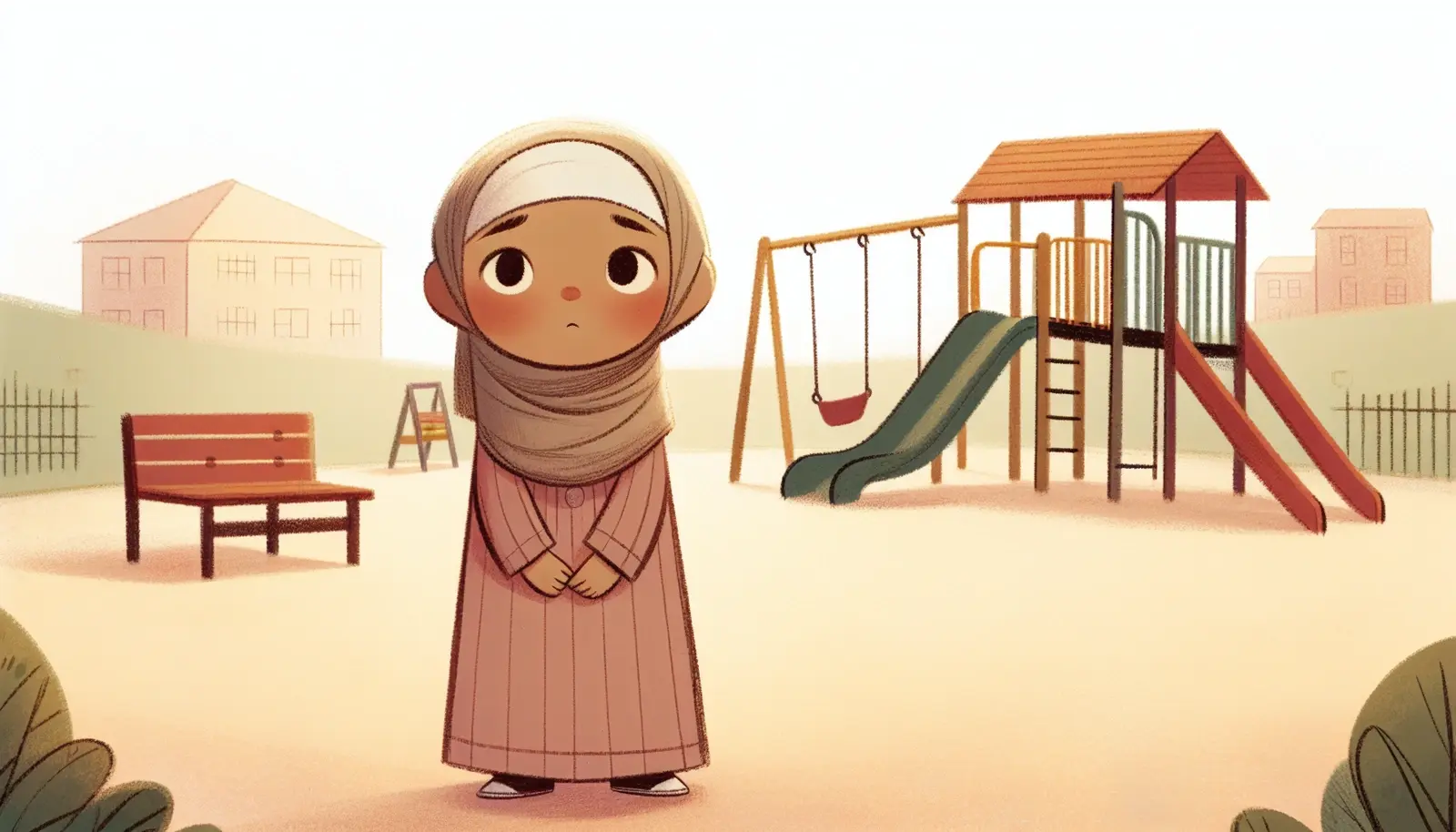
Aprendiendo a Jugar en el Patio de los Mayores

This printable social story helps children navigate playing in the older kids' playground. It encourages emotional understanding and social skills.
Story Preview
Aprendiendo a Jugar en el Patio de los Mayores
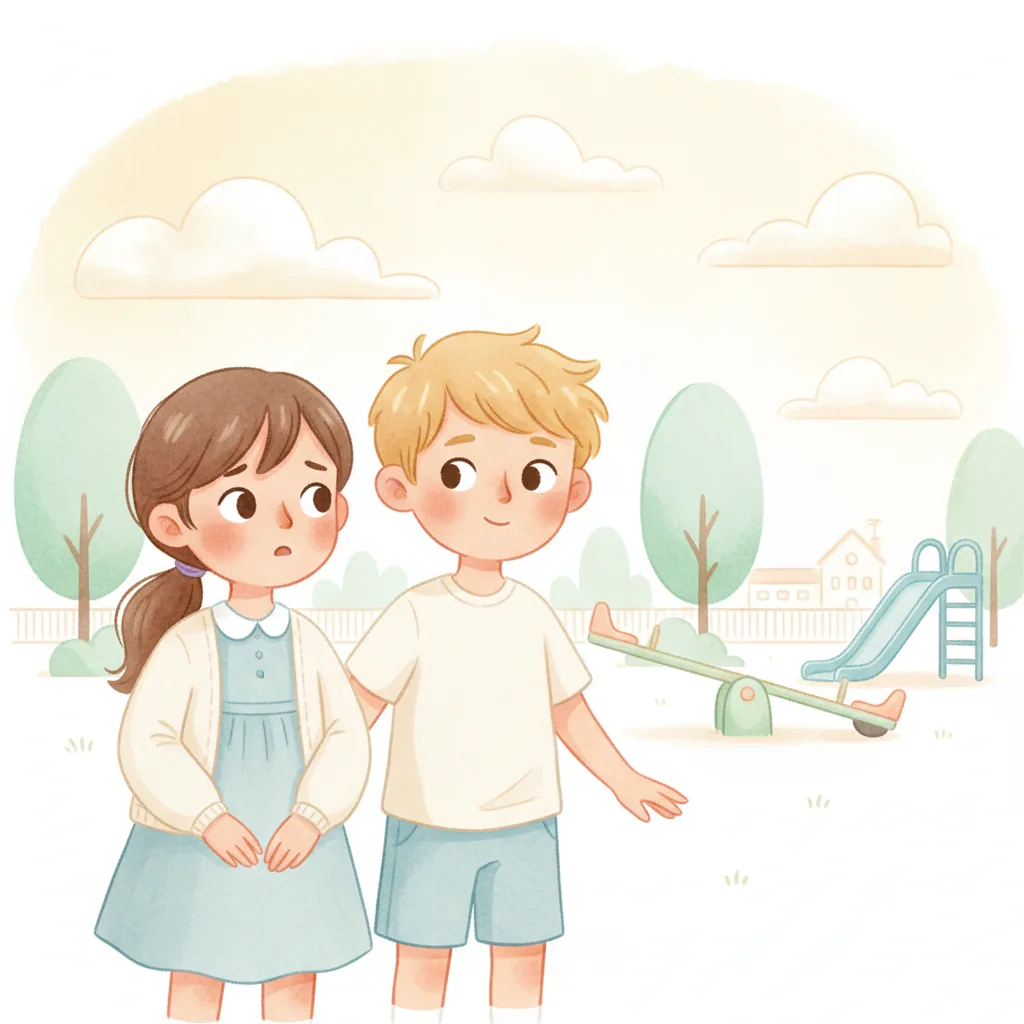
Hoy fui al patio de los mayores. Me sentí un poco nerviosa. Vi el balancín y el tobogán de los pequeños desde lejos.

Quería ir allí, pero recordé que ahora juego en el patio de los mayores. Me sentí un poco triste al principio.
Purchase to access all pages
Who Is This For?
What's Inside
This social story includes scenarios that teach emotional awareness and social skills for playing in the older kids' playground.
About This Story
Aprendiendo a Jugar en el Patio de los Mayores is a supportive social story designed to help children transition to playing in the older kids' playground. Through relatable scenarios, children learn about feelings, social interactions, and the importance of gratitude.
Key features include:
- Relatable scenarios
- Emotional understanding
- Encouragement of social skills
Disclaimer: This resource supports learning. It does not replace professional advice.
How to Use This Story
When to use this story
\nUse "Aprendiendo a Jugar en el Patio de los Mayores" when your child is transitioning to a new play environment, especially when moving from a playground designed for younger children to one that accommodates older kids. This story can help ease feelings of nervousness or sadness about new social situations and encourage positive interactions with peers. It’s particularly useful in moments when children may feel unsure about making new friends or trying new activities on the playground. \n\n### What's inside \nThis printable social story follows a young child as they navigate the experience of playing in the older kids' playground. The narrative begins with feelings of nervousness and sadness when facing this new environment. As the story unfolds, children will see the protagonist greet a friend and engage in cooperative play, which fosters a sense of belonging and connection. \n\nKey moments include:
- The protagonist's initial feelings of being nervous and sad about leaving the familiar playground behind.
- A supportive interaction with a friend, Ana, which highlights the importance of friendship and encouragement.
- The joy of discovering new games and the excitement of making new friends. \nThis story uses relatable scenarios to guide children in understanding their emotions and developing social skills, making it an excellent resource for enhancing communication and emotional regulation. \n\n### What kids learn
\nThrough "Aprendiendo a Jugar en el Patio de los Mayores," children learn to:
- Identify and express their emotions in new situations.
- Approach friends and peers with confidence.
- Participate in cooperative play and share new experiences.
- Communicate gratitude and appreciation for others, fostering positive social interactions.
By engaging with this story, children can develop a deeper understanding of their feelings and enhance their social skills in a new playground setting. \n\n### Research context \nThe narrative tradition of social stories, initiated by Carol Gray, emphasizes the importance of storytelling in teaching social skills and emotional understanding. This approach has been supported by research indicating that narrative-based methods can enhance social-emotional learning (SEL) outcomes for children. By using relatable characters and situations, stories like "Aprendiendo a Jugar en el Patio de los Mayores" can effectively teach children how to navigate social interactions and understand their emotions within various contexts. \n\n### Tips for parents and educators \n- Read the story together with your child before visiting a new playground to set expectations and ease anxieties.
- Discuss each character’s feelings and actions to help your child relate to the experiences shared in the story.
- Encourage your child to practice greeting friends or peers, just like the protagonist did.
- Role-play different scenarios that might occur in the playground to build confidence.
- Use open-ended questions to prompt discussions about feelings and social interactions.
- Reinforce the importance of gratitude by discussing moments when your child can express thanks to friends.
How This Story Lands — Clinical Review & Perspectives
One named clinical review from our co-founder Rajini, plus three composite perspectives summarising how this story tends to land in a classroom, at home, and in therapy. How we write these.

A Valuable Tool for Emotional Learning
As a speech-language pathologist, I often use 'Aprendiendo a Jugar en el Patio de los Mayores' with kids on my caseload. This story beautifully illustrates emotional understanding and social interactions, which are crucial for early elementary-aged children. I encourage kids to express their feelings when the character feels nervous or sad. Listening for their responses after reading helps me gauge their understanding of friendship and sharing. The age-appropriate language is engaging, making it easy for them to connect and discuss their own playground experiences.
Supports Social Skills and Play Strategies
OTs often pair 'Aprendiendo a Jugar en el Patio de los Mayores' with activities that enhance social skills and cooperative play. In sensory-regulation work, this story can be used to help children understand the importance of taking turns and engaging with peers. The narrative encourages children to express their feelings, which is essential for developing emotional regulation. Using this story alongside play scenarios reinforces the real-life application of skills learned, making it an effective resource for occupational therapy sessions.
Composite perspective synthesised from common feedback patterns — read how.
Sparking Meaningful Conversations at Home
Parents reading 'Aprendiendo a Jugar en el Patio de los Mayores' with their child often notice that it sparks meaningful conversations about feelings and making friends. The relatable scenario of navigating a new playground resonates with many kids, prompting them to share their own experiences. This story's approachable language allows for easy discussions about emotions, helping children articulate what they feel when faced with new social situations. It becomes a valuable tool for parents to support their child's social development.
Composite perspective synthesised from common feedback patterns — read how.
Effective for Inclusive Classroom Settings
In an inclusive classroom, 'Aprendiendo a Jugar en el Patio de los Mayores' works well because it addresses social dynamics that many children encounter. Educators using small-group settings will find that the story prompts discussions about emotions and friendships, which are vital for social development. Visual supports can enhance understanding, and the repetition of key phrases helps reinforce learning. This story not only fosters engagement but also provides opportunities for children to practice communication skills in a safe environment.
Composite perspective synthesised from common feedback patterns — read how.
Frequently Asked Questions
How does 'Aprendiendo a Jugar en el Patio de los Mayores' help my child with social skills?
This social story guides children through the dynamics of playing in a playground with older kids, promoting emotional understanding and social interactions. Through engaging activities like role-play and vocabulary exercises, it encourages your child to express feelings, understand others, and navigate group play confidently. It's a wonderful resource for building essential social skills in a fun and relatable way!
How can this story help my child?
It helps children understand emotions and social interactions in a playground setting.
What age group is this story for?
This story is designed for preschool children.
You May Also Like

Read More
Creating an Inclusive SEL Classroom for Neurodivergent Students
To create an inclusive SEL classroom for neurodivergent students, incorporate anti-masking practices, adapt curricula, and engage culturally responsive methods. Parents can advocate for these changes
Read article →Push-In vs Pull-Out Services: Navigating the Best Approach for Your Child
Push-in and pull-out services are two key approaches in special education. Push-in involves therapists working within the classroom, promoting social skills and reducing stigma. Pull-out offers focuse
Read article →Understanding SEL in Schools: A Parent's Guide to Social Emotional Learning
Social Emotional Learning (SEL) enhances children's emotional and social skills. Programs like Second Step and Sanford Harmony integrate SEL into classrooms. Parents can support SEL by engaging with e
Read article →
This resource supports learning. It does not replace professional advice.