Harnessing Social Stories for Neurodivergent Children's SEL
How to Use This Library (The Right Way)
Social stories are a powerful tool for supporting social-emotional learning (SEL) in neurodivergent children. This library offers a collection of over 30 free downloadable PDFs, each crafted to address specific scenarios, from daily routines to special events. By using these stories, you can help your child develop self-awareness, self-management, and social awareness — key competencies of SEL as outlined by the CASEL framework. This article is part of our complete guide to Social Stories: A Complete Guide (Carol Gray Method).
Why Social Stories? Social stories, developed by Carol Gray, are short narratives that describe social situations in a structured and clear manner. They provide children with insight into others' perspectives, helping them navigate different social contexts confidently and empathetically. For more on Carol Gray's methodology, check out our article on Carol Gray's 10.2 Criteria for Social Stories — Explained for Parents.
Effective Use of Social Stories
- Select Relevant Scenarios: Choose stories that align with your child's current experiences or upcoming transitions.
- Read Consistently: Integrate storytime into daily routines to reinforce learning.
- Engage and Discuss: Encourage your child to ask questions and express feelings about the characters and situations.
- Revisit and Reflect: Revisit stories as needed to reinforce concepts and reflect on progress.
In my practice, I've observed that children who regularly engage with social stories often show improved social cues recognition and empathy. Parents have shared stories of their children initiating conversations about story themes, indicating deeper understanding and application. By embedding these stories into routine, children start to internalize the lessons, leading to more natural social interactions.
Daily Routines (5 Stories)
Daily routines can be challenging for children, especially those who thrive on predictability. Our stories cover scenarios like getting ready for school, bedtime rituals, and meal times.
Example Story: "Getting Ready for School" Imagine your child struggles each morning with the transition from home to school. A social story can help illustrate the steps involved, such as packing a backpack, waiting for the bus, and saying goodbye. This structured narrative reduces anxiety and increases readiness for the day.
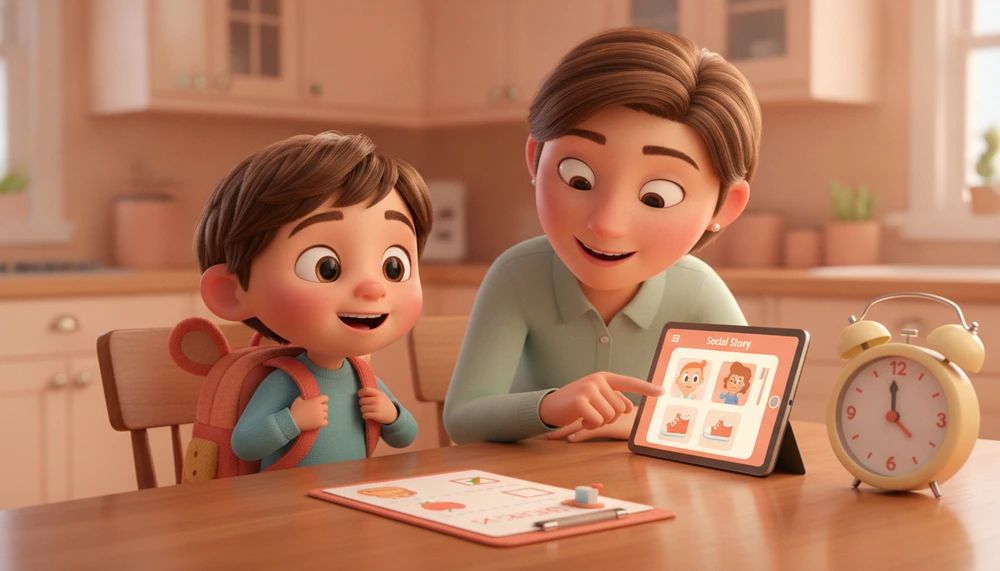
In my practice, I've seen many parents use the "Getting Ready for School" story as a visual checklist. By reading the story the night before, children can mentally prepare for the next day. One parent shared how their child began to take pride in independently packing their backpack, demonstrating increased self-management and confidence.
Transitions (8 Stories)
Transitions, whether they are from one activity to another or from one environment to another, can be difficult for children. These stories address common transitional moments.
Example Story: "Moving from Play to Homework" To ease this transition, a story might depict a child finishing playtime, organizing toys, and then sitting down for homework. The story emphasizes the importance of shifting focus and how to do so calmly.

Consider adding a transition timer or using a "two-minute warning" strategy discussed within the story. This can help children prepare mentally for the change and feel more in control of their actions. For example, one story features a character who uses a timer to signal the end of playtime, which helps in reducing resistance and easing into homework time.
- Teamwork Makes Tasks Easier - Printable Social Story
- Smiles and Names: Making New Friends - Social Story
Big Feelings (7 Stories)
Helping children manage big feelings like anger, sadness, or frustration is crucial. Our stories provide strategies for emotional regulation through relatable scenarios.
Example Story: "Feeling Angry and Calming Down" Consider a story where a child learns how to recognize signs of anger and utilize techniques like deep breathing or counting to ten to calm down.
Incorporate strategies such as deep breathing exercises or safe spaces into the routine. In my practice, children who regularly use social stories for emotional regulation often develop a 'toolbox' of calming strategies. One child learned to "take a breath break" during heated moments, significantly reducing outbursts over time.
Social Situations (6 Stories)
Navigating social situations can be daunting. These stories cover scenarios like making friends, sharing toys, and playing together.
Example Story: "Making New Friends" A story might depict a child approaching peers, introducing themselves, and joining a group activity. This narrative helps demystify interpersonal interactions.
In my practice, I've seen how role-playing the scenarios from social stories can bolster a child's confidence. For instance, one child practiced "introducing themselves" with family members at home before trying it at school. The child reported feeling "less scared" and more excited about meeting new friends.
Medical/Dental (4 Stories)
Visits to the doctor or dentist can be intimidating. These stories help children understand what to expect and how to cope with these experiences.
Example Story: "Visiting the Dentist" A story might show a child entering a dental office, meeting the dentist, and learning about the tools used during a check-up. It prepares the child for each step of the visit, reducing fear and anxiety.

Parents often find these stories helpful before and after medical visits. By reading the story multiple times, children can familiarize themselves with the sequence of events, which can make the actual visit feel less threatening. A parent once mentioned that their child, after reading the dentist story, was able to articulate their fears and ask questions, which they previously couldn't do.
- Can I Have a Drink, Please? - Social Story PDF
- Finding Calm with Special Smells - Printable Social Story
Special Events (5 Stories)
Special events like birthdays, holidays, or family gatherings can be overwhelming. Our stories provide a roadmap to navigate these occasions with confidence.
Example Story: "Attending a Birthday Party" A story might guide a child through what to expect at a birthday party, from greeting the host to playing games and enjoying cake. This helps set expectations and builds excitement rather than anxiety.
Consider following up with a discussion on what they look forward to or what might make them nervous. In one instance, a child used the story "Attending a Birthday Party" to express excitement about games but also voiced concerns about loud noises. The parents used this information to prepare noise-canceling headphones for the event.
Get All 30 in One Bundle (Email)
To download the entire collection of 30+ social stories, simply sign up with your email. You'll receive access to all the scenarios, helping you support your child's social-emotional growth comprehensively.
References
1 Gray, C. (2010). The New Social Story Book. Future Horizons.
Try It This Week
Reading is the easy part. Skills build through small, repeated practice — here's a low-pressure plan you can try with your child.
- 1Read a story together dailyDaily, 5 minChoose a social story and read it with your child each day to reinforce learning and familiarity.use this story →👉 What this looks likePick a story from the library that fits your child's current experience, like 'Getting Ready for School'. Read it together before bedtime. Discuss any questions they have about the characters and scenarios. Consistent repetition builds comfort and familiarity, making the lessons more natural.
- 2Role-play a scenarioThis weekendAct out a social story scenario to build confidence in real-life situations.in the SocialBlossom app →👉 What this looks likeChoose a story about making new friends. Act it out with your child using toys or family members. Practice introducing themselves and joining in activities. This role-play can make real interactions less intimidating and more exciting.
- 3Create a feelings chartDay 1-2Help your child express emotions by creating a chart they can use to label feelings.👉 What this looks likeUse a blank sheet and draw faces depicting various emotions. Label them with feelings like 'happy', 'sad', 'angry'. When your child uses the chart, say, 'Show me how you're feeling today.' It's a simple yet powerful tool for emotional expression and recognition.
- 4Use a timer for transitionsDay 2-3Introduce a timer to signal transitions between activities, easing anxiety and resistance.👉 What this looks likeBefore starting homework, set a 2-minute timer at the end of playtime. Tell your child, 'When the timer goes off, we'll start homework.' This lets them mentally prepare and reduces resistance, turning transitions into predictable routines.
- 5Practice deep breathingDaily, 5 minTeach your child deep breathing to manage big feelings like anger or anxiety.👉 What this looks likeSit with your child in a quiet space. Say, 'Let's breathe together. In through the nose, out through the mouth.' Do this for a few minutes. This practice becomes a go-to strategy for managing stress and calming down in challenging situations.
Frequently Asked Questions
What are social stories?
How do social stories help with transitions?
Can social stories help manage big feelings?
Are social stories effective for special events?
Where can I find social stories for medical visits?
References