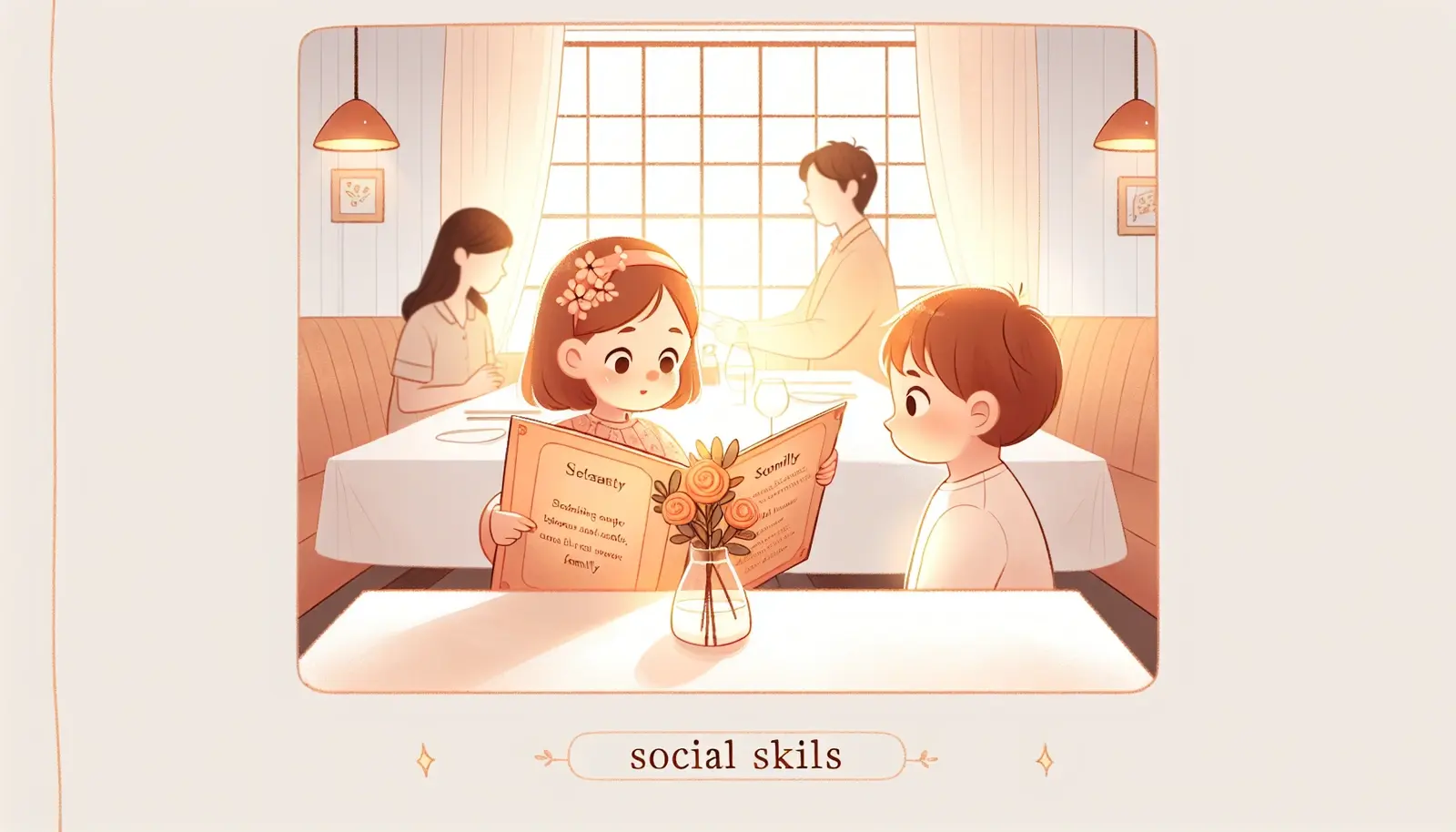
Dining Out with Family - Printable Social Story

Help your child navigate dining out with family using this printable social story. It includes relatable scenarios and positive reinforcement to make the experience enjoyable.
Story Preview
Dining Out with Family
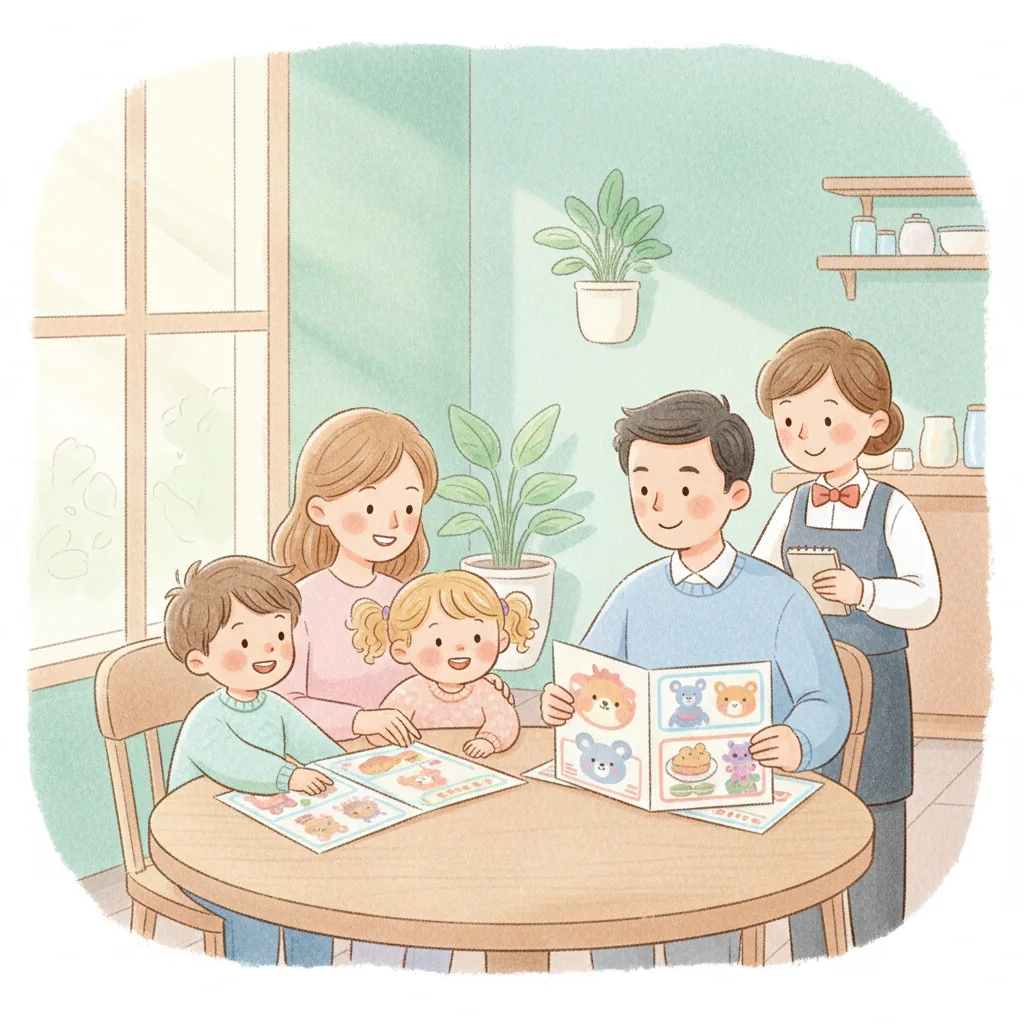
Today, we went to a restaurant.

I saw a menu.
Purchase to access all pages
Who Is This For?
What's Inside
This social story includes scenarios about dining out, focusing on positive experiences and family interactions.
About This Story
This printable social story helps children understand what to expect when dining out with family. It covers key moments such as looking at the menu and receiving praise for good behavior.
Key Features:
- Relatable scenarios
- Positive reinforcement
- Encourages family bonding
This resource supports learning. It does not replace professional advice.
How to Use This Story
When to use this story
Dining Out with Family is a valuable resource to introduce your child to the experience of dining at a restaurant. This story is especially helpful for children who may find new environments or social situations a bit overwhelming. It's an excellent opportunity to rehearse the steps involved in dining out, making it easier for your child to engage positively with family meals. Utilize this story before planned outings to help your child feel more comfortable and confident in a restaurant setting.
What's inside
This printable social story vividly illustrates a family dining experience through relatable scenarios that resonate with young children. The story begins with the exciting moment of arriving at a restaurant and encountering a menu. Children will follow along as the narrator expresses their eagerness to eat, interacts with a waiter, and makes a choice from the menu, such as ordering pizza. Through simple, engaging sentences, the story captures key moments like waiting for food, which can build anticipation and understanding of the dining experience. Additionally, the activity components include vocabulary exercises, spelling practice, comprehension questions, open-ended prompts, and creative role-play scenarios, allowing for interactive learning.
What kids learn
By engaging with Dining Out with Family, children will:
- Understand the sequence of events involved in dining out, helping them navigate similar situations in real life.
- Practice communication skills by learning how to order food and interact with restaurant staff.
- Gain confidence in making choices and expressing preferences in a public setting.
- Develop social skills through role-playing and discussing various scenarios that may arise during a family meal.
Research context
The tradition of social stories has been well established in supporting children’s social understanding and interactions. Drawing upon the foundational work of Carol Gray, social stories provide a narrative framework that aids in the comprehension of social situations. Research in narrative-based social-emotional learning (SEL) emphasizes the importance of storytelling in connecting with children and helping them understand their feelings and the feelings of others. Such approaches have shown promise in enhancing social engagement and communication skills in various contexts while celebrating the unique perspectives of each child.
Tips for parents and educators
- Read the story together with your child before visiting a restaurant to familiarize them with the experience.
- Encourage your child to express their food preferences and practice ordering out loud.
- Role-play different restaurant scenarios at home to build confidence and comfort.
- Discuss any questions or feelings your child may have about dining out to support their emotional readiness.
- Use the vocabulary and comprehension activities to reinforce learning and understanding.
- Celebrate small victories, such as ordering their meal, to foster a positive association with dining out.
How This Story Lands — Clinical Review & Perspectives
One named clinical review from our co-founder Rajini, plus three composite perspectives summarising how this story tends to land in a classroom, at home, and in therapy. How we write these.

A Valuable Tool for Dining Experiences
As a pediatric speech-language pathologist, I find "Dining Out with Family" to be an excellent resource for helping young children engage in social situations like eating out. The story describes relatable scenarios that can spark language interaction, such as ordering food and waiting. While reading, I encourage kids to express their own feelings about dining out and practice their communication skills. It's important to listen for their responses and encourage them to share what they would like to eat or their experiences in restaurants. This story promotes positive language use in a fun context.
Supports Social and Sensory Skills
OTs often pair this kind of story with activities that focus on social skills and sensory regulation. In sensory-regulation work, this story can be used to prepare children for the sights, sounds, and smells of a restaurant environment, helping them manage their expectations. It’s an effective way to incorporate discussion about waiting and patience while waiting for food. This story also encourages fine motor skills as kids can engage in related activities, like creating their own menus or practicing ordering food.
Composite perspective synthesised from common feedback patterns — read how.
Sparking Conversations About Dining Out
Parents reading this story with their child often notice that it opens up discussions about dining experiences. The relatable scenarios help kids understand what to expect when going to a restaurant. Many parents find that it encourages their children to express their preferences for food and share their feelings about the experience. It’s a great way to prepare kids for family outings, making them feel more comfortable and involved in the dining process.
Composite perspective synthesised from common feedback patterns — read how.
Effective for Inclusive Classroom Settings
In an inclusive classroom, this story works well because it addresses a common experience for children: dining out. Educators can use it to help children understand social norms in restaurants, such as ordering food and waiting for their meal. Visual supports, like pictures of a menu or a restaurant, can enhance understanding. Repetition of key phrases helps reinforce language comprehension. This story also encourages peer interactions, making it a valuable tool in small-group settings for social skills development.
Composite perspective synthesised from common feedback patterns — read how.
Frequently Asked Questions
How can this social story help my child during family outings?
The social story includes relatable scenarios that your child may encounter while dining out, along with positive reinforcement to reduce anxiety and build confidence. By using this resource, your child will learn vocabulary, engage in role play, and practice comprehension skills, making outings enjoyable and stress-free.
What age group is this social story designed for?
This printable social story is tailored specifically for preschoolers aged 3 to 5 years. It's designed to engage young children with relatable scenarios that make dining out a fun and positive experience for the whole family.
What age is this social story suitable for?
This social story is designed for preschool-aged children.
You May Also Like



Read More
Push-In vs Pull-Out Services: Navigating the Best Approach for Your Child
Push-in and pull-out services are two key approaches in special education. Push-in involves therapists working within the classroom, promoting social skills and reducing stigma. Pull-out offers focuse
Read article →Empowering Neurodivergent Children: Crafting Authentic IEP Social Skills Goals
Crafting IEP goals for neurodivergent children requires a focus on authentic social skills that respect and affirm autistic identities. Avoid masking by emphasizing natural communication and interacti
Read article →Celebrating Special Days with Neurodivergent Families: A Social-Emotional Learning Approach
Special days offer unique opportunities for neurodivergent families to foster self-awareness, social skills, and empathy. Through SEL-based activities, families can celebrate World Autism Day, Mother'
Read article →
This resource supports learning. It does not replace professional advice.