Mastering Social Stories for Social-Emotional Learning: A Comprehensive Guide

Introduction
Social stories are a powerful tool for fostering social-emotional learning (SEL) in children. Developed by Carol Gray, these stories use personalized, simple narratives to teach social skills and appropriate behaviors in a positive and supportive way. They are particularly beneficial for neurodivergent children, helping them navigate social complexities with ease.
In this guide, we delve into the heart of social stories, exploring Carol Gray's 10.2 criteria that underpin their success. We provide detailed examples, templates, and resources to empower parents and educators to create and utilize social stories effectively.

In This Guide
- Carol Gray's 10.2 Criteria for Social Stories — Explained for Parents: Understand the foundational principles that make social stories effective.
- Writing Your First Social Story (Worked Example, Step by Step): A step-by-step guide to crafting a social story tailored to your child's needs.
- Free Social Story Library: 30+ Downloadable PDFs by Scenario: Access a comprehensive library of social stories for various situations.
- When to Use a Social Story vs Other SEL Tools (Decision Guide): Learn when social stories are the best tool for your child's SEL journey.
What is a Social Story?
A social story is a short narrative designed to teach children how to handle specific social situations. These stories are written from the perspective of the child, using positive language and clear visuals. Carol Gray pioneered this approach, aiming to increase social understanding and adaptability 1.
Social stories cover a wide range of topics, from daily routines to complex social interactions. They can be about going to the dentist, making new friends, or sharing toys. By presenting these scenarios in a structured and predictable format, social stories help children anticipate what might happen and how they should respond.
Example: Sharing Toys
Imagine a social story about sharing toys. It begins with a simple introduction: "My name is Alex, and sometimes I play with toys with my friends." The story might describe a situation where Alex wants to play with a toy that another child is using. It could illustrate how Alex waits for his turn or asks politely if he can join in.
- Start with a positive statement: "Playing with friends is fun."
- Describe the situation: "Sometimes, I need to wait for my turn."
- Provide a solution: "I can ask, 'Can I play with you?'"
- End with a positive outcome: "When I share, we have even more fun!"
This method not only teaches the specific behavior but also reinforces positive social interactions.
Anecdote: In My Practice
In my practice, I've seen how tailored social stories can significantly enhance a child's ability to share and engage positively with peers. One example involved a child who struggled with sharing during playdates. After introducing a social story that outlined the benefits of taking turns and showing empathy, the child began to exhibit more patience and understanding during interactions with friends.
The Importance of Carol Gray's 10.2 Criteria
Carol Gray's 10.2 criteria provide a structured framework for creating effective social stories. These criteria ensure that the stories are meaningful and beneficial for children, emphasizing clarity, positivity, and accuracy 2.
Key Criteria
- Descriptive Sentences: Clearly outline the setting and actions.
- Perspective Sentences: Describe others' feelings or reactions.
- Directive Sentences: Gently guide behavior.
- Affirmative Sentences: Reinforce the appropriateness of actions.
For more detailed insights into each criterion and their application, check out our detailed guide.

Anecdote: In My Practice
In my practice, I've seen many parents transform their child's social experiences using well-crafted social stories. One family used a story about transitioning from school to home. By describing each step and incorporating feelings, their child began to transition more smoothly and with less anxiety.
Another example involved a child who was anxious about visiting the doctor. The parents created a social story that included descriptive and affirmative sentences about the visit. This approach helped the child understand what to expect, reducing fear and promoting a sense of security.
Crafting a Social Story: Templates and Examples
Creating a social story involves understanding your child's specific needs and crafting a narrative that resonates with them. Here, we explore how to write an effective social story, with templates and examples to guide you.
Step-by-Step Process
- Identify the Situation: Choose a social scenario your child finds challenging.
- Gather Information: Understand the context and emotions involved.
- Draft the Story: Use the 10.2 criteria to structure your story.
- Visualize with Images: Incorporate pictures or symbols that your child can relate to.
- Review and Revise: Ensure the story is clear and engaging.
For a complete, worked example, visit our step-by-step guide.
Example: Potty Time Adventure
Title: "My Potty Time Adventure"
- Descriptive Sentence: "My name is Jamie, and I am learning to use the potty."
- Directive Sentence: "When I feel I need to go, I can tell an adult."
- Perspective Sentence: "Mommy and Daddy feel proud when I try."
- Affirmative Sentence: "It's okay to ask for help if I need it."
This story can be supported with our Potty Time Fun with PVP - Printable Social Story.
In My Practice: Crafting Success
In my practice, I've guided parents in crafting stories tailored to their child's unique challenges. One memorable case was a child who struggled with bedtime routines. By creating a social story that included a visual schedule and calming affirmations, the family noticed a significant improvement in bedtime cooperation and reduced resistance.
Using Social Stories Effectively
To maximize the impact of social stories, consider these strategies:
- Consistency: Regularly read the story with your child.
- Engagement: Encourage your child to participate in the storytelling.
- Feedback: Discuss the story's lessons and relevance to real situations.
Example: Library Visit
A social story about visiting the library can prepare a child for the experience. Title: "A Day at the Library"
- Introduction: "I love books and the library is a place to find them."
- Behavioral Cue: "I use my quiet voice in the library."
- Reinforcement: "When I find a book, I can read it or borrow it to take home."
Explore our Вечер сказок в библиотеке - Printable Social Story for a similar narrative.
Anecdote: Parent Feedback
One parent shared with me how a library-themed social story transformed their child's visits. Initially, the child was overwhelmed by the quiet environment and the vast collection of books. However, with the social story, the child learned to appreciate the quiet and even looked forward to library visits, excited to find new books to explore.
When to Use Social Stories
Social stories can be used in a variety of situations, from teaching daily routines to handling emotional challenges. However, knowing when to use them is crucial.
Decision Points
- Routine Changes: Use stories to prepare for new routines or environments.
- Social Interactions: Address social cues and expectations.
- Emotional Regulation: Help manage and understand emotions.
Explore our decision guide to determine the best times to employ social stories.
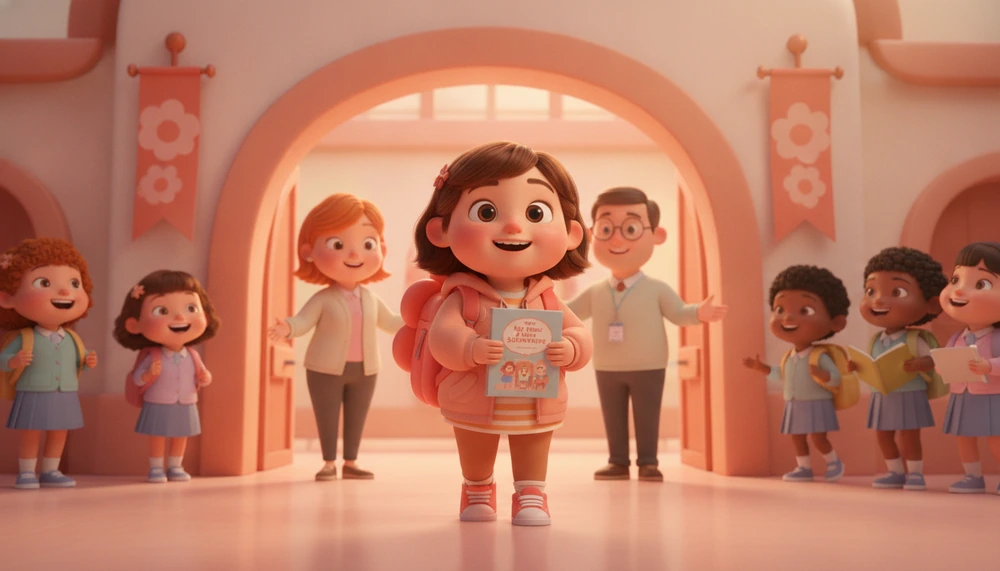
Example: Transition to School
Consider a child transitioning to a new school. A social story can outline what the child will see, whom they will meet, and how they can interact with peers. This preparation can ease anxiety and build confidence for the new experience.
Integrating Social Stories and SEL Tools
Social stories work best when integrated with other SEL tools, such as emotion wheels and visual schedules. This holistic approach supports comprehensive social-emotional development.
Example: Morning Routine
Combine a social story with a visual schedule to streamline morning routines:
- Story: "My Morning Routine"
- Visual Aid: Picture chart showing each morning step.
- Outcome: Predictability and reduced anxiety.
For more on visual schedules, check out our Visual Schedules: A Parent's Complete Guide.
Anecdote: In My Practice
In practice, I often recommend integrating stories with visual aids for greater impact. One family used a morning routine story alongside a picture chart. This not only helped their child prepare for the day but also encouraged independence and responsibility by allowing the child to check off each step as it was completed.
Building Emotional Literacy Through Social Stories
Social stories not only teach behaviors but also enhance emotional literacy. By articulating feelings and responses, children learn to navigate their emotions effectively.
Example: Feeling Overwhelmed
- Story Setup: "Sometimes I feel overwhelmed."
- Emotion Clarification: "When I feel this way, my tummy feels tight."
- Coping Strategy: "Taking deep breaths helps me feel better."
This can be explored further in our guide on Emotion Charts and Wheels.
Anecdote: Emotional Growth
In one case, a social story focusing on recognizing and managing feelings helped a child express emotions more constructively. By reading about how to handle feelings of anger or sadness, the child learned to identify these emotions early and apply coping strategies like taking deep breaths or seeking comfort from a trusted adult.
Conclusion
Social stories are a cornerstone of social-emotional learning, offering a unique way to enhance understanding and support children in navigating social worlds. By adhering to Carol Gray's 10.2 criteria and integrating these tools with other SEL strategies, you can create a nurturing environment that fosters growth and resilience.
Explore our wide range of social stories and find the perfect fit for your child's needs.
References
1 Gray, C. (2010). The New Social Story Book. Future Horizons. 2 Gray, C. — Social Stories 10.2 criteria. Retrieved from carolgraysocialstories.com 3 Prizant, B. et al. (2006). The SCERTS Model. 4 Bandura, A. (1977). Social Learning Theory. Retrieved from en.wikipedia.org/wiki/Social_learning_theory
Try It This Month
Reading is the easy part. Skills build through small, repeated practice — here's a low-pressure plan you can try with your child.
- 1Create a Custom Social StoryDay 1-2Identify a social situation your child struggles with and develop a personalized social story using the 10.2 criteria.in the SocialBlossom app →👉 What this looks likePicture this: Your child struggles with joining group activities at school. Together, you craft a social story: 'My name is Sam. At school, I see my friends playing. I can ask, "Can I join you?" and they will be happy to play with me.' You include pictures of Sam smiling with friends, making the story relatable and engaging.
- 2Practice with a Morning Routine StoryThis weekUse a social story and visual schedule to streamline morning routines, enhancing predictability and reducing stress.Visual Schedules Guide →👉 What this looks likeEvery morning, read 'My Morning Routine' with your child. The story outlines steps like brushing teeth and dressing up, paired with a visual schedule. As you read, your child follows along, checking off tasks on the schedule. This not only clarifies expectations but also fosters independence.
- 3Explore Emotional LiteracyDay 3-4Introduce a story that articulates feelings and responses, teaching your child how to express and manage emotions.Emotion Charts and Wheels →👉 What this looks likeImagine your child often feels frustrated but doesn’t know how to express it. You create a story: 'Sometimes, I feel like a volcano ready to explode. When this happens, I can take deep breaths or talk to a grown-up.' This narrative helps your child recognize their emotions and practice coping strategies.
- 4Engage in Storytelling TogetherThis weekendEncourage your child to participate by co-creating a story, allowing them to express creativity and understand social cues.Free Social Story Library →👉 What this looks likeGather with your child to write a story together. Your child suggests a scenario where they felt happy or confused. You both brainstorm solutions and outcomes, creating a narrative that reflects their experiences and emotions. This collaborative process deepens their understanding and reinforces learning.
- 5Reinforce Learning Through Consistent PracticeDaily, 5 minRead social stories regularly to reinforce understanding and prepare your child for specific situations.Writing Your First Social Story →👉 What this looks likeChoose a consistent time, like after dinner, to read social stories with your child. If they are facing an upcoming visit to the doctor, read a related story to ease anxiety and build familiarity with the process. This routine helps them feel prepared and confident as the day approaches.
Frequently Asked Questions
What is the purpose of a social story?
How do I write a social story for my child?
Can social stories be used for all children?
How often should I read a social story with my child?
What are the 10.2 criteria?
References