Can I Have a Drink, Please? - Social Story PDF

Help your child learn to ask for a drink with this engaging social story. Perfect for teaching healthy habits and communication skills.
Story Preview
Can I Have a Drink, Please?

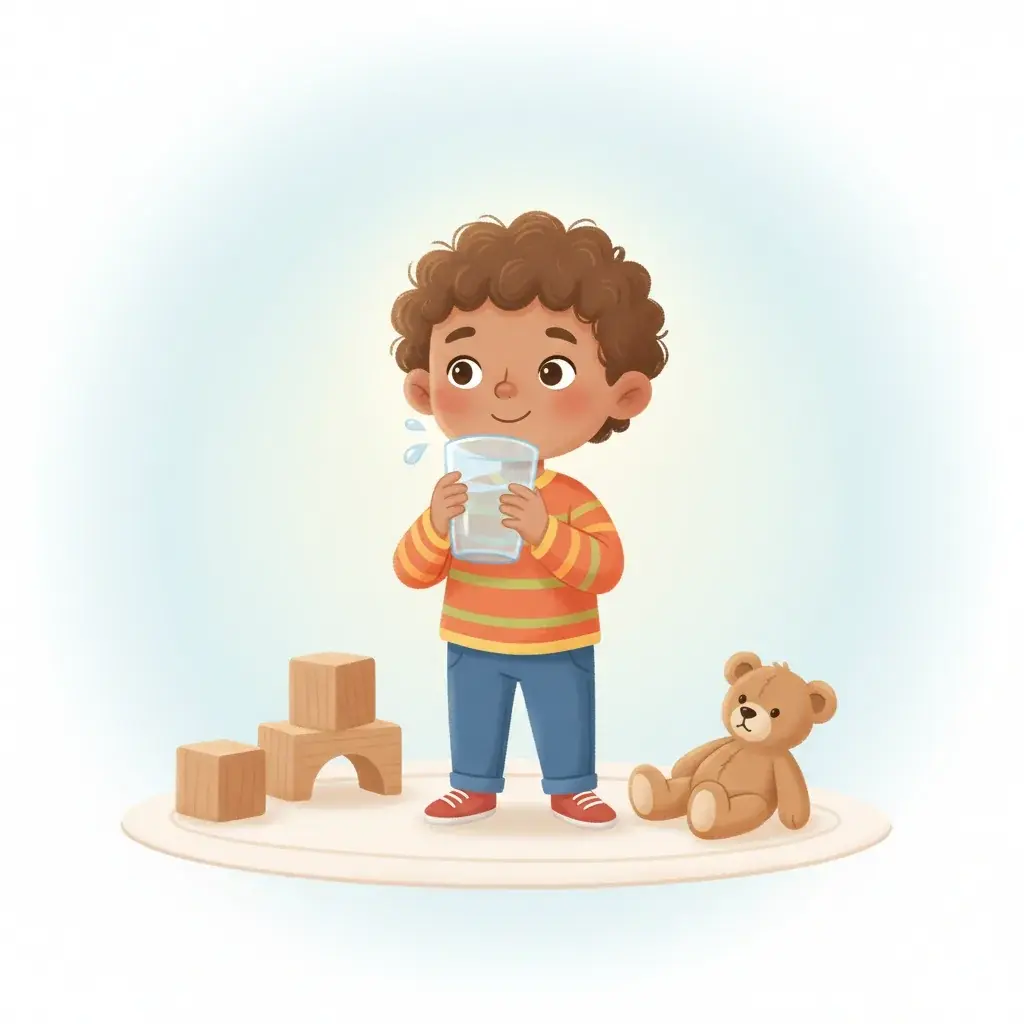
One day, I was playing with my toys and felt thirsty.

I wanted a drink of water to feel better.
Purchase to access all pages
Who Is This For?
What's Inside
This social story includes relatable scenarios to help children learn to ask for a drink when thirsty.
About This Story
This printable social story, 'Can I Have a Drink, Please?', helps children understand the importance of asking for a drink when they're thirsty. Through relatable scenarios, kids learn to communicate their needs effectively.
Key Features:
- Engaging illustrations
- Simple, relatable sentences
- Supports healthy habits
Perfect for home or classroom use!
This resource supports learning. It does not replace professional advice.
How to Use This Story
When to use this story
This story, "Can I Have a Drink, Please?" is ideal for early elementary children aged 6-8 who are learning to express their needs and desires in social situations. It is particularly useful in various contexts, such as at home, in school, or during playdates. Use this story when your child is beginning to develop their communication skills and when you want to encourage healthy habits around hydration. It provides a gentle introduction to asking for help and making requests in a polite manner.
What's inside
"Can I Have a Drink, Please?" invites children into a relatable narrative that starts with a common scenario—feeling thirsty while playing. The story unfolds as a child remembers to ask politely for a drink, showcasing the steps involved in making a request. Key moments include the child’s interaction with their mom as she assists in pouring water into a cup. The narrative is engaging and encourages children to think about moments when they might want to ask for help. In addition to the story, there are activities that promote vocabulary building, spelling, comprehension, and creative expression, as well as opportunities for role play. These activities are designed to reinforce the skills learned in the story while making the learning process enjoyable.
What kids learn
Through this social story, children will learn to:
- Recognize the importance of expressing their needs in a clear and polite way.
- Understand the sequence of asking for something they want—like a drink—by recalling polite phrasing.
- Appreciate the role of caregivers in responding to their requests and how to engage in cooperative interactions.
- Develop a sense of agency by practicing how to ask for what they need, fostering independence.
Research context
The tradition of using social stories, such as those developed by Carol Gray, has shown to be an effective method for enhancing communication and social understanding in children. These stories provide relatable scenarios that help children navigate everyday situations. Additionally, research in narrative-based social-emotional learning indicates that stories can significantly aid in teaching important life skills, such as making requests and understanding social cues. This foundation supports the approach taken in "Can I Have a Drink, Please?" as it aligns with the principles of promoting healthy communication skills.
Tips for parents and educators
- Read the story together, encouraging your child to engage with the characters and situations.
- Pause during the story to ask your child how they would feel in similar situations.
- Role-play asking for a drink, using different scenarios to practice polite requests.
- Reinforce the concept of asking for help in real-life situations, such as during snack or meal times.
- Celebrate your child's efforts to ask for what they need, reinforcing positive communication.
- Use the accompanying activities to expand on the themes in the story, making learning a fun experience.
How This Story Lands — Clinical Review & Perspectives
One named clinical review from our co-founder Rajini, plus three composite perspectives summarising how this story tends to land in a classroom, at home, and in therapy. How we write these.

Engaging Way to Teach Communication
As a speech-language pathologist, I often use "Can I Have a Drink, Please?" with my young clients. The story effectively models how to ask for a drink, combining relatable scenarios with age-appropriate language. During the reading, I encourage children to repeat the phrase, "Can I have a drink, please?" to practice their request skills. After the story, I listen for them to use similar language in real situations. This story not only helps with communication but also reinforces healthy habits in a fun way.
Great for Daily Routine Integration
OTs often pair this kind of story with daily routines to help reinforce communication skills. In sensory-regulation work, this story can be used to emphasize the importance of hydration, linking it to physical well-being. The narrative allows therapists to discuss feelings of thirst and the actions needed to address it. This approach encourages children to recognize their needs and express them effectively, making it a practical addition to occupational therapy sessions.
Composite perspective synthesised from common feedback patterns — read how.
Sparking Conversations at Home
Parents reading this with their child often notice increased interest in asking for things politely. The story's simple structure makes it relatable, and it tends to spark conversations about hydration and healthy habits. Many parents find that their children are more willing to ask for drinks after engaging with the story, reinforcing positive communication patterns. It becomes a tool for not only learning but also building confidence in expressing needs.
Composite perspective synthesised from common feedback patterns — read how.
Useful in Inclusive Classroom Settings
In an inclusive classroom, this story works well because it provides a simple, relatable context for asking for a drink. Educators using small-group settings will find that the repetition of the phrase helps reinforce language skills. Visual supports can be paired with the story to enhance understanding and engagement. Additionally, this narrative encourages students to practice their communication in a safe environment, making it easier for them to generalize these skills outside the classroom.
Composite perspective synthesised from common feedback patterns — read how.
Frequently Asked Questions
What age range is this social story suitable for?
This social story is designed for early elementary children, specifically those aged 6 to 8 years old. It helps young learners develop their communication skills and encourages healthy habits in a fun and engaging way.
Can this story be used in classrooms?
Yes, it's perfect for classroom settings to promote communication.
What age is this story suitable for?
This story is suitable for preschool-aged children.
You May Also Like
Read More
Creating an Inclusive SEL Classroom for Neurodivergent Students
To create an inclusive SEL classroom for neurodivergent students, incorporate anti-masking practices, adapt curricula, and engage culturally responsive methods. Parents can advocate for these changes
Read article →Push-In vs Pull-Out Services: Navigating the Best Approach for Your Child
Push-in and pull-out services are two key approaches in special education. Push-in involves therapists working within the classroom, promoting social skills and reducing stigma. Pull-out offers focuse
Read article →Understanding SEL in Schools: A Parent's Guide to Social Emotional Learning
Social Emotional Learning (SEL) enhances children's emotional and social skills. Programs like Second Step and Sanford Harmony integrate SEL into classrooms. Parents can support SEL by engaging with e
Read article →
This resource supports learning. It does not replace professional advice.