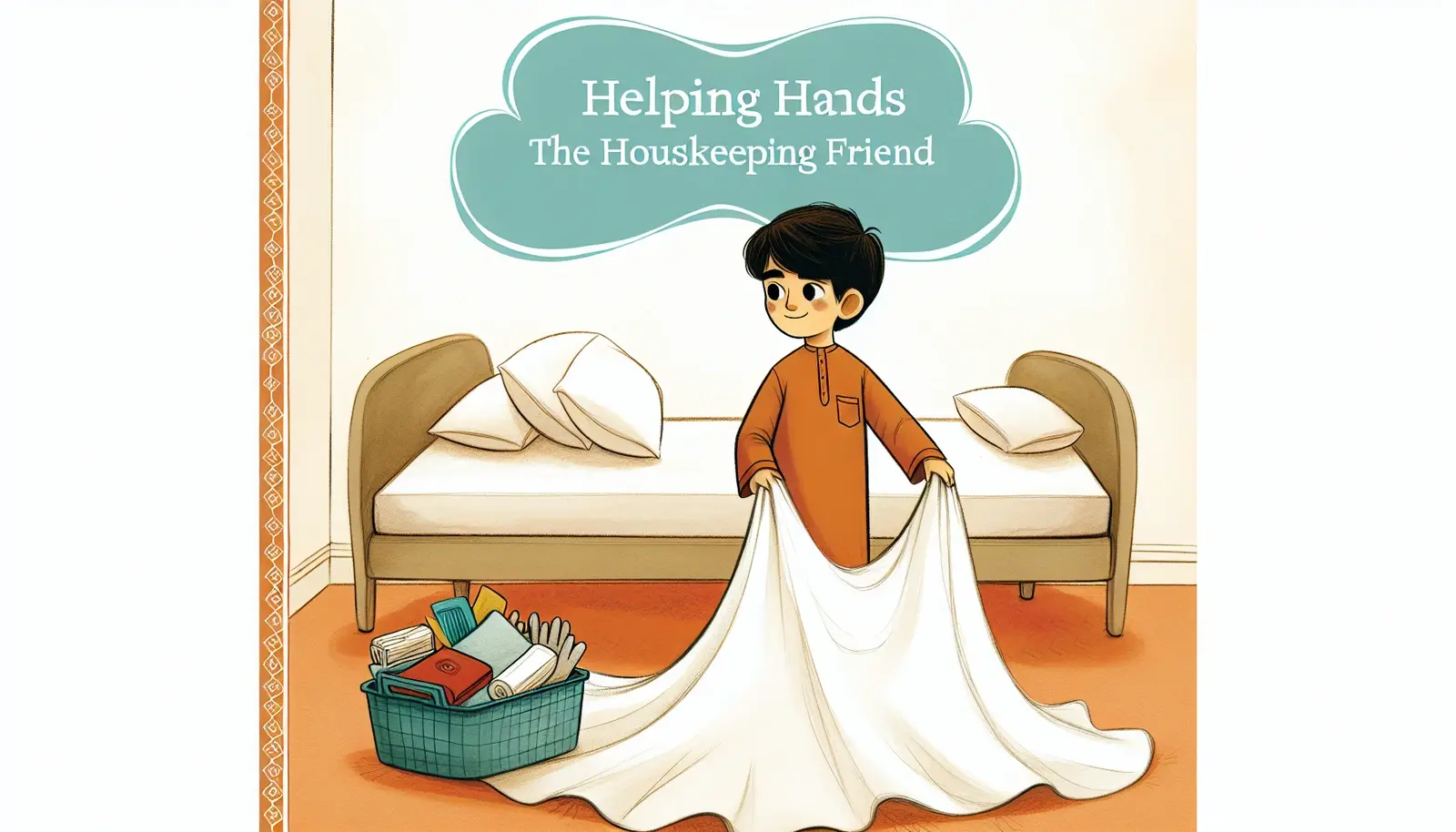
Helping Hands: The Housekeeping Friend - Social Story

Encourage your child to take part in housekeeping with this engaging social story. It promotes responsibility and teamwork while making chores fun!
Story Preview
Helping Hands: The Housekeeping Friend

I see a big bedsheet on my bed. It looks messy. I want to help make it neat.
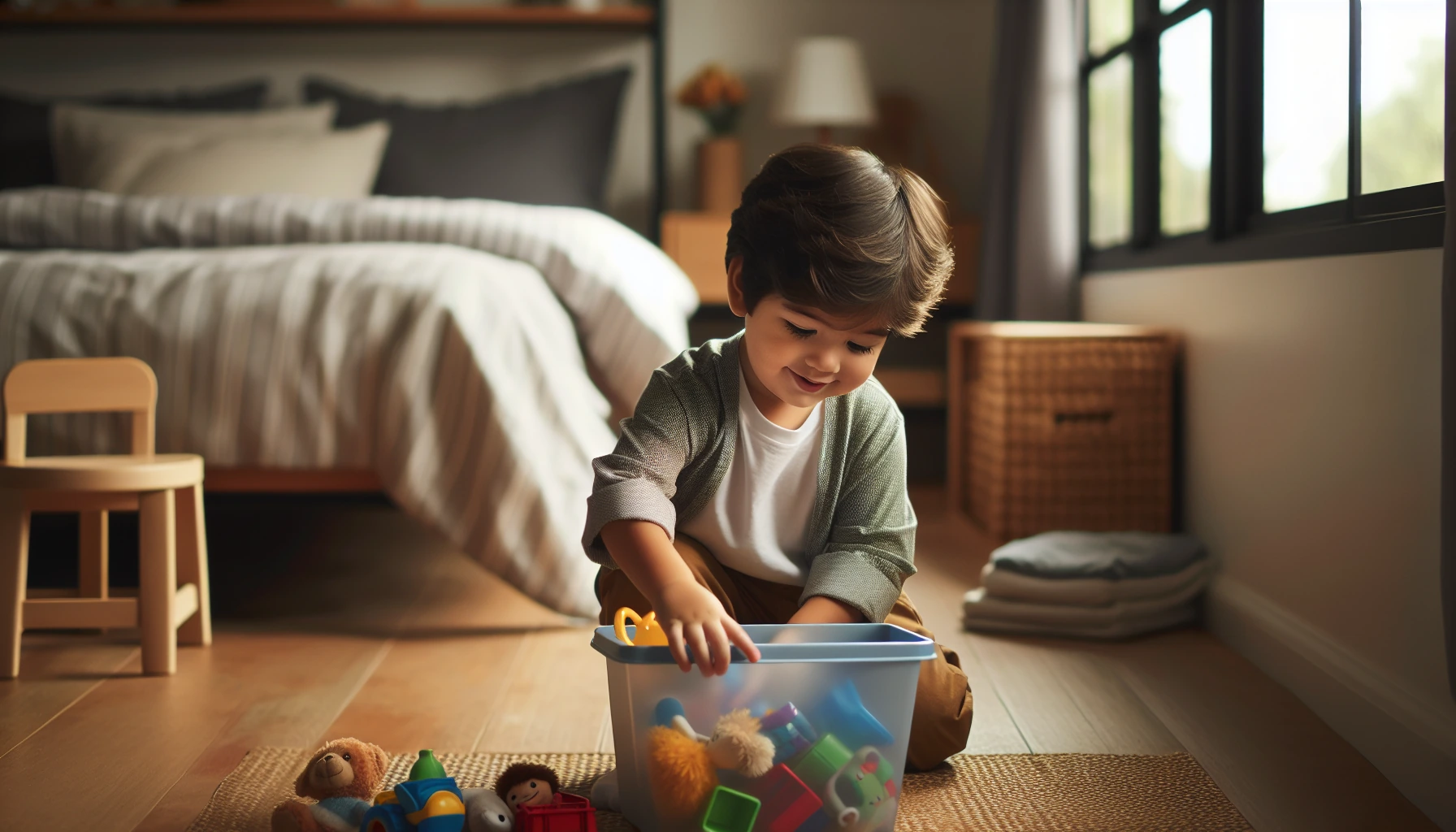
I spread the bedsheet with my hands. It feels soft and smooth.
Purchase to access all pages
Who Is This For?
What's Inside
This social story helps children learn the importance of helping with housekeeping tasks through relatable scenarios.
About This Story
Introduce your child to the joy of helping around the house with our printable social story, Helping Hands: The Housekeeping Friend. This engaging resource encourages children to participate in housekeeping tasks, fostering a sense of responsibility and teamwork.
Key Features:
- Simple, relatable sentences
- Encourages positive behavior
- Promotes teamwork and responsibility
Sample Sentences:
- I see a big bedsheet on my bed. It looks messy. I want to help make it neat.
- I spread the bedsheet with my hands. It feels soft and smooth.
- I feel happy about my tidy room. It looks nice and cozy now.
- Helping hands make my room neat. I did it, and it feels good!
This resource supports learning. It does not replace professional advice.
How to Use This Story
When to use this story
This social story, "Helping Hands: The Housekeeping Friend," is ideal for young children aged 3-5 years, particularly during moments when you want to introduce the concept of helping at home or in a classroom setting. It is especially useful when children are starting to explore responsibilities related to their environment, such as tidying up their rooms or engaging in group activities. Use this story to create a positive and supportive atmosphere around housekeeping tasks, making them feel more approachable and enjoyable for your child.
What's inside
The story begins with a relatable scene: a messy bed that needs tidying up. As the child protagonist expresses their desire to help, readers follow along with simple, engaging actions and sensory experiences. The narrative describes how the child spreads the bedsheet, fits pillow covers, and organizes toys, fostering a sense of accomplishment and teamwork. This interactive approach not only captures attention but also models the joy of contributing to household tasks, reinforcing the idea that everyone can play a part in creating a neat and welcoming environment.
What kids learn
Through "Helping Hands: The Housekeeping Friend," children learn valuable skills such as:
- Responsibility: Understanding that everyone has a role in keeping spaces tidy.
- Teamwork: Recognizing that chores can be a shared experience with family or friends.
- Fine Motor Skills: Practicing actions like spreading bedsheets and putting away toys, which support hand-eye coordination.
- Problem-Solving: Figuring out how to organize items in a way that makes sense.
- Positive Attitude Toward Chores: Associating helping out with fun and accomplishment rather than as a chore to avoid.
Research context
The use of social stories, as popularized by Carol Gray, has been shown to support children in navigating social situations and daily tasks. Research in narrative-based social-emotional learning underscores the power of storytelling in teaching valuable life skills. By presenting relatable scenarios through engaging narratives, stories like "Helping Hands: The Housekeeping Friend" enable children to visualize and practice skills in a safe and supportive context, fostering their independence and confidence.
Tips for parents and educators
- Read the story together and discuss the different actions the child takes to help.
- Encourage your child to act out the chores mentioned in the story, reinforcing the concepts through play.
- Use positive reinforcement when your child helps with housekeeping, making them feel proud of their contributions.
- Create a routine for tidying up that incorporates elements from the story to make it familiar and fun.
- Share your own experiences of teamwork in household chores, highlighting the importance of collaboration.
- Consider using visuals or checklists to support your child in remembering their tasks.
How This Story Lands — Clinical Review & Perspectives
One named clinical review from our co-founder Rajini, plus three composite perspectives summarising how this story tends to land in a classroom, at home, and in therapy. How we write these.

A Practical Tool for Housekeeping Engagement
As a pediatric speech-language pathologist, I often use 'Helping Hands: The Housekeeping Friend' with my young clients. This story effectively encourages kids to participate in housekeeping tasks in an engaging way. The language is simple and age-appropriate, making it easy for preschoolers to understand. I listen for their responses during the reading, noting their enthusiasm and ability to describe their own experiences with chores. This story not only promotes responsibility but also enhances vocabulary related to household tasks.
Supports Chores and Motor Skills Development
OTs often pair this kind of story with practical activities to enhance motor skills and coordination. 'Helping Hands: The Housekeeping Friend' can be used to introduce tasks like folding and organizing items, which are essential for developing fine motor skills. In sensory-regulation work, this story can be used to create a routine around chores, helping children feel more comfortable and engaged with their environment. It's a valuable resource for promoting independence.
Composite perspective synthesised from common feedback patterns — read how.
Sparking Conversations About Chores
Parents reading this with their child often notice that it sparks conversations about household responsibilities. The engaging narrative encourages kids to share their thoughts and feelings about helping around the house. At home, this story tends to motivate children to take part in chores, making the experience fun rather than a chore in itself. It's a wonderful tool for promoting responsibility and teamwork within the family.
Composite perspective synthesised from common feedback patterns — read how.
Great Resource for Inclusive Classrooms
In an inclusive classroom, this story works well because it introduces the concept of teamwork in a relatable manner. Educators using small-group settings will find that the repetitive structure helps reinforce key ideas about responsibility and participation in chores. Visual supports can be paired with the story to enhance understanding, making it accessible for all learners. Overall, it fosters a sense of community and shared effort among students.
Composite perspective synthesised from common feedback patterns — read how.
Frequently Asked Questions
What types of activities are included in the social story?
'Helping Hands: The Housekeeping Friend' includes a variety of activities such as vocabulary building, spelling, comprehension checks, open-ended questions, creative tasks, and role-playing scenarios. These activities not only reinforce the story's themes but also help develop essential skills in a fun and interactive way.
How can 'Helping Hands: The Housekeeping Friend' help my child with chores?
This social story makes housekeeping fun and engaging for your child by turning chores into a playful experience. Through relatable characters and simple language, it encourages teamwork and responsibility, making your little one more inclined to participate in household tasks.
What age is this social story suitable for?
This social story is designed for preschool-aged children.
You May Also Like




Read More
Creating an Inclusive SEL Classroom for Neurodivergent Students
To create an inclusive SEL classroom for neurodivergent students, incorporate anti-masking practices, adapt curricula, and engage culturally responsive methods. Parents can advocate for these changes
Read article →Push-In vs Pull-Out Services: Navigating the Best Approach for Your Child
Push-in and pull-out services are two key approaches in special education. Push-in involves therapists working within the classroom, promoting social skills and reducing stigma. Pull-out offers focuse
Read article →Understanding SEL in Schools: A Parent's Guide to Social Emotional Learning
Social Emotional Learning (SEL) enhances children's emotional and social skills. Programs like Second Step and Sanford Harmony integrate SEL into classrooms. Parents can support SEL by engaging with e
Read article →
This resource supports learning. It does not replace professional advice.