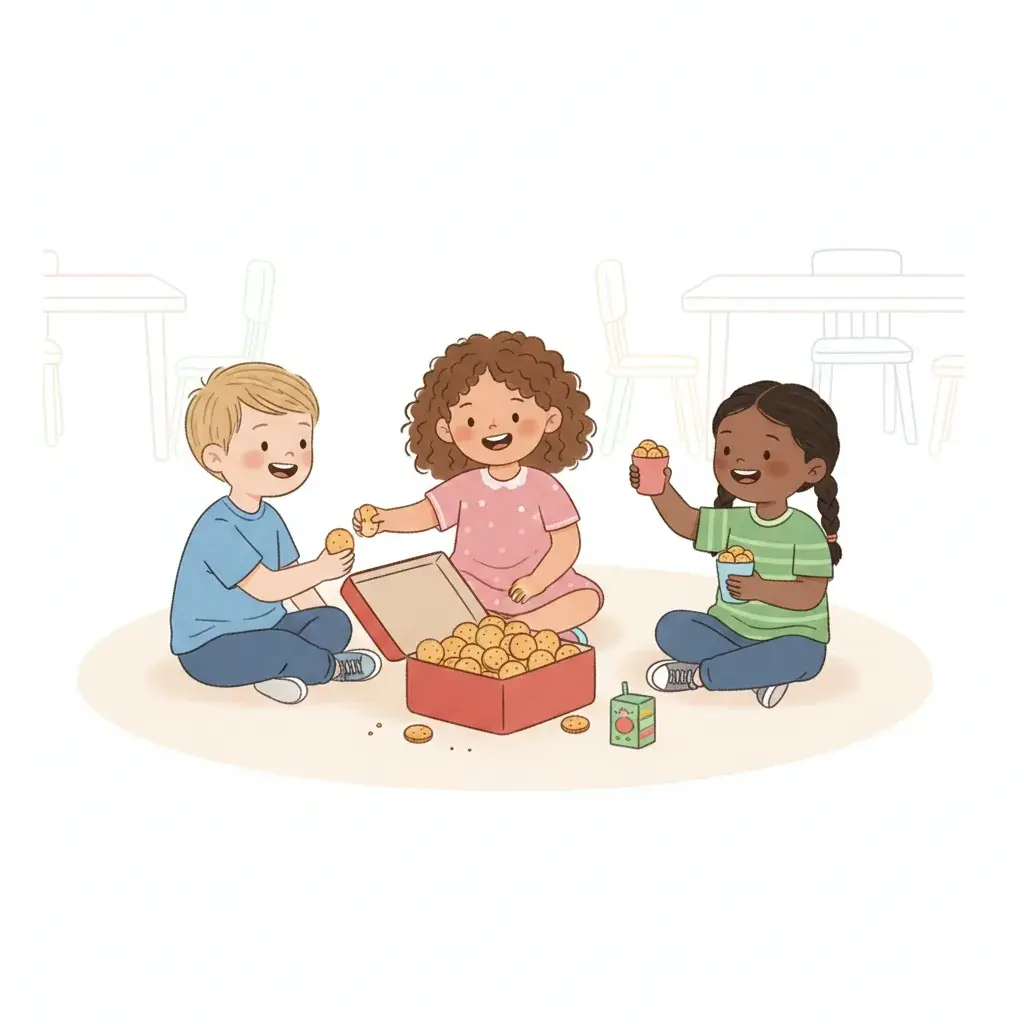
Snack Time at School with Friends - Printable Social Story

Help your child navigate snack time with friends using this engaging printable social story. Perfect for preschoolers, it encourages sharing and friendship.
Story Preview
Snack Time at School with Friends

It's snack time at school.
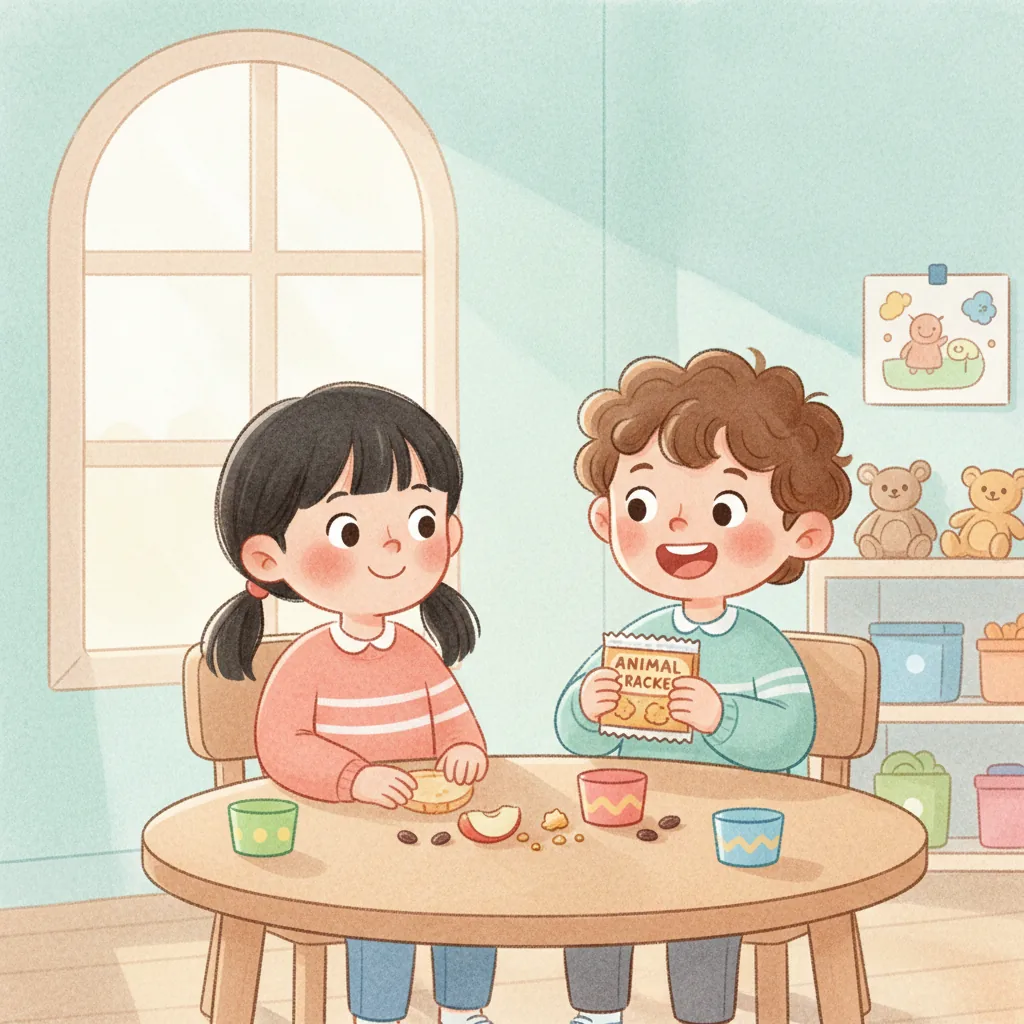
I have my favorite crackers.
Purchase to access all pages
Who Is This For?
What's Inside
This social story includes key phrases about snack time, sharing, and friendship, designed to support preschool learning.
About This Story
Introduce your child to the joys of snack time at school with friends! This printable social story covers:
- What happens during snack time
- Sharing snacks with friends
- Feeling happy and connected
It's a great tool for building social skills and understanding routines. This resource supports learning. It does not replace professional advice.
How to Use This Story
When to use this story
This social story is ideal for preschoolers who are preparing for snack time at school. It can be particularly helpful in settings where children are learning to interact with peers during shared activities. Using this story, parents and educators can support young children as they navigate the social dynamics of sharing food and making friends during snack time.
What's inside
In "Snack Time at School with Friends," children are introduced to a relatable scenario where it's snack time. The story begins with a simple narrative:
- It’s snack time at school.
- I have my favorite crackers.
- I see my friend Luca.
- Luca has an apple.
- I want to sit with Luca.
- I ask, "Can I sit here?"
This engaging narrative encourages children to explore themes of sharing and friendship in a familiar context. The story is designed to be easy to follow, making it accessible for preschoolers. It incorporates vocabulary development, spelling practice, and comprehension exercises, along with creative and role-play activities that bring the story to life.
What kids learn
Through this story, children learn the importance of asking permission to join friends, expressing their wishes, and sharing snacks. They also gain insights into the joy of spending time with friends and the positive feelings that come from sharing experiences. By engaging with the story, children can practice social skills in a supportive way, preparing them to navigate similar situations in real life.
Research context
The use of social stories is well-established within educational practices, particularly for supporting social-emotional learning (SEL) in young children. The tradition of social stories, pioneered by Carol Gray, highlights the value of using narrative to illustrate social situations. Research in narrative-based SEL indicates that stories can effectively foster understanding and empathy in children, helping them to navigate social contexts with greater confidence and ease. This story aligns with these principles, providing a pathway for children to learn through relatable experiences.
Tips for parents and educators
- Read the story together and discuss the events to reinforce understanding.
- Use role-play to practice asking to join friends during snack time.
- Encourage children to share their own snack experiences and feelings.
- Create a snack time routine that includes sharing and taking turns.
- Reinforce positive interactions with praise to build confidence in social settings.
How This Story Lands — Clinical Review & Perspectives
One named clinical review from our co-founder Rajini, plus three composite perspectives summarising how this story tends to land in a classroom, at home, and in therapy. How we write these.

Engaging Resource for Snack Time Skills
As a speech-language pathologist, I find 'Snack Time at School with Friends' to be an excellent tool for enhancing social skills among preschoolers. It effectively illustrates the importance of sharing and asking for permission, which are crucial communication skills. During our sessions, I encourage children to verbalize their thoughts and feelings while reading. It's important to listen for their use of phrases like 'Can I sit here?' This story not only promotes language development but also fosters friendship and cooperation in a relatable setting.
Useful for Social Interaction Guidance
OTs often pair this kind of story with activities that promote social interaction. In sensory-regulation work, this story can be used to set the stage for conversations about sharing snacks and taking turns. The simple, engaging narrative makes it easy for children to relate and connect with their peers during mealtime. This resource can also be used to practice fine motor skills by having children recreate the snack scenes with real food items, reinforcing the concepts in a fun and interactive way.
Composite perspective synthesised from common feedback patterns — read how.
Sparking Conversations About Sharing
Parents reading this with their child often notice that it opens up conversations about sharing and friendship during snack time. The relatable scenarios help children understand how to approach friends, like asking to sit together. They appreciate how the story gives their child the language to express themselves in social situations. It also serves as a gentle reminder of the importance of sharing, making it a useful addition to their home reading routine.
Composite perspective synthesised from common feedback patterns — read how.
Effective for Inclusive Classroom Settings
In an inclusive classroom, this story works well because it addresses common social interactions during snack time. Educators using small-group settings will find that the narrative encourages peer engagement and sharing. The visuals provided can enhance understanding, and the repetitive structure makes it easy for students to follow along. This story can serve as a springboard for discussions about friendship and cooperation, making it a valuable resource for fostering social connections among diverse learners.
Composite perspective synthesised from common feedback patterns — read how.
Frequently Asked Questions
What activities are included in the printable social story?
The social story includes a variety of activities such as vocabulary exercises, spelling challenges, open-ended questions, and role-playing scenarios. These activities are crafted to promote creativity and help your child better understand social interactions during snack time with peers.
How can this social story help my child during snack time at school?
This printable social story is designed to make snack time a fun and enjoyable experience for your child. It teaches important skills like sharing and taking turns with friends, while also providing engaging activities that reinforce vocabulary and comprehension related to snacks and friendship.
What age is this social story suitable for?
This social story is designed for preschool-aged children.
You May Also Like


Read More
Mastering Sharing: Strategies for Parents of Neurodivergent Kids
Teaching sharing to neurodivergent children involves respecting their developmental stage. Approaches like 'when you're done' and using timers foster patience and autonomy. Learn how to support your c
Read article →Understanding the Transition from Pretend Play to Other Forms of Play
As children age, pretend play naturally fades around 9-11 years, making way for structured activities like story-writing, video games, and nuanced role-play in friendships. These new forms of play con
Read article →Fostering Positive Sibling Relationships Through Social-Emotional Learning
Sibling relationships offer a rich context for social-emotional learning (SEL). By focusing on SEL skills like empathy and responsible decision-making, parents can turn sibling rivalry into opportunit
Read article →
This resource supports learning. It does not replace professional advice.