Creating a Calm-Down Corner: A Guide to Supporting Your Child's Emotional Regulation
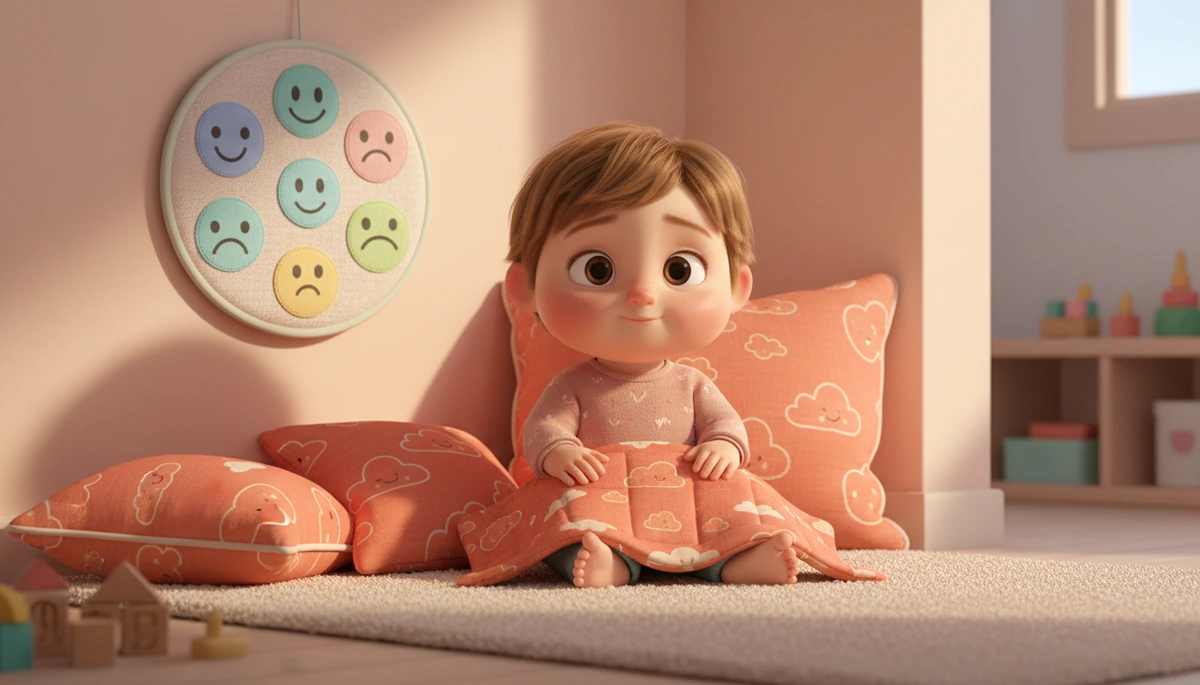
Creating a calm-down corner for your child can be a transformative addition to your home. Unlike time-outs, which can feel punitive, a calm-down corner offers a supportive environment where children can learn self-regulation. This article is part of our complete guide to Self-Regulation in Kids: A Parent's Complete Guide. Let's explore how a calm-down corner can foster your child's emotional growth.
Why a 'Calm-Down Corner' Beats Time-Out (The Research)
Research suggests that traditional disciplinary methods like time-outs can sometimes exacerbate stress and anxiety in children, especially those who are neurodivergent. Instead, creating a calm-down corner allows children to retreat and engage in self-regulation activities. Dr. Stuart Shanker's work on co-regulation highlights the importance of providing children with spaces where they can retreat, reflect, and regulate their emotions 1.
In my practice, I have seen many parents successfully shift from using time-outs to calm-down corners. This change not only helps children feel supported but also fosters a positive parent-child relationship by focusing on emotional understanding rather than punishment. Children learn to understand their feelings and develop the tools to manage them effectively. Self-regulation becomes a skill they carry forward into all areas of life, enhancing their social interactions and academic performance.
Items 1-4: The Sensory Baseline
Every child has a unique sensory profile, which means the items in their calm-down corner should cater to their specific needs. Here are four essential sensory tools:
- Weighted Lap Pad: This provides deep pressure input, which is calming for many children. It's especially helpful for sensory seekers who crave touch.
- Fidgets: These small toys or tools help keep hands busy and focus the mind. They can be particularly beneficial for children who need to release restless energy.
- Noise-Canceling Headphones: For children who are sensitive to sound, headphones can create a personal quiet zone, reducing auditory distractions.
- Adjustable Lighting: Soft, adjustable lighting can help create a calming atmosphere. Consider a lamp with a dimmer or color-changing features to suit different moods.
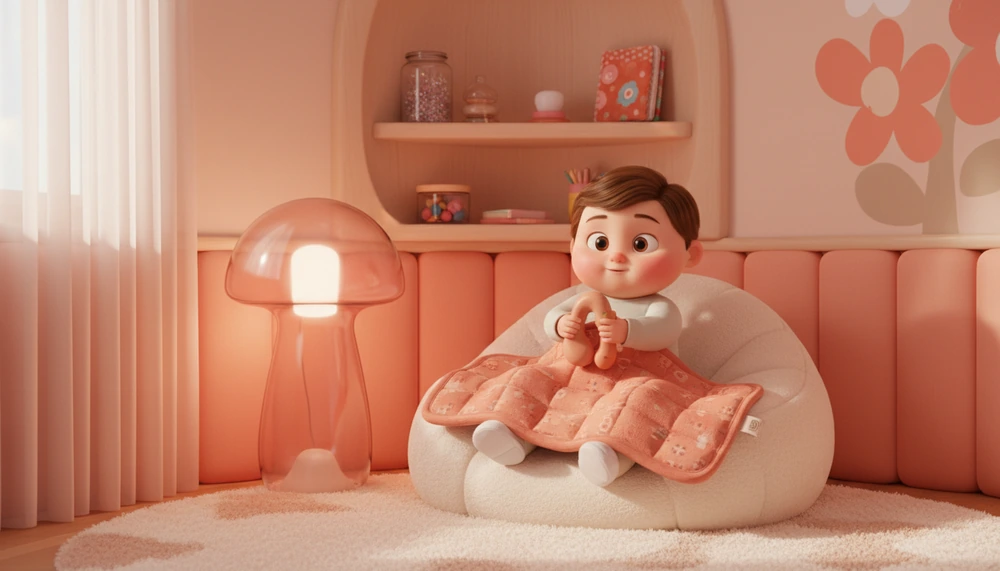
Imagine your child just came home from a noisy day at school. They head to their calm-down corner, put on their noise-canceling headphones, and settle into the weighted lap pad. Within minutes, they begin to unwind, showing how these tools can effectively support self-regulation.
Incorporating sensory tools not only aids in relaxation but also teaches children to identify what their bodies need to feel calm. This awareness is a foundational step in self-regulation, helping them recognize and respond to their sensory needs in various settings, from school to social gatherings.
Items 5-8: Visual Emotion Tools
Visual aids can help children identify and express their emotions, which is a key part of developing self-awareness and self-management.
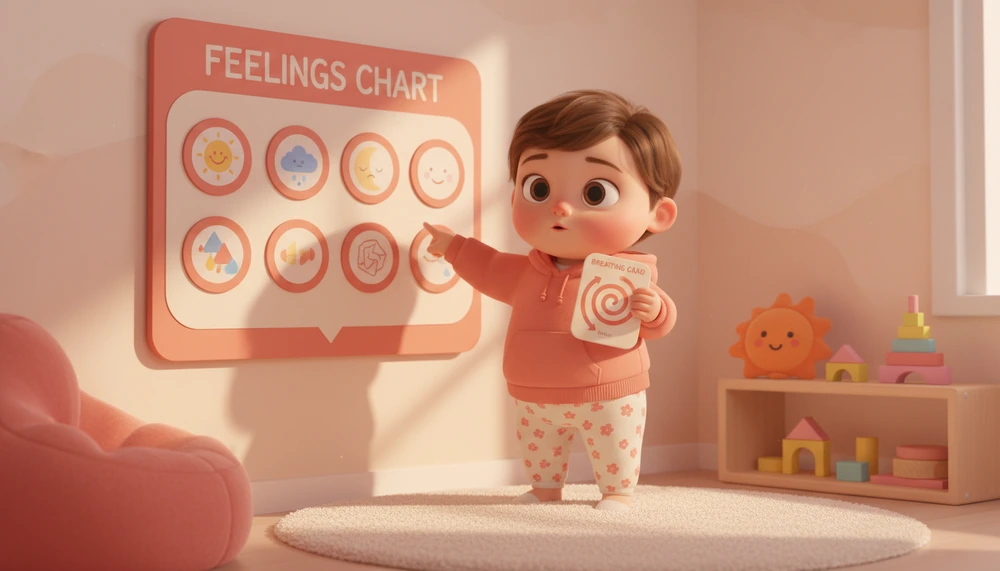
- Feelings Chart: This helps children label their emotions, facilitating communication and self-awareness.
- Breathing Card: These cards guide children through deep breathing exercises, promoting self-management. See our article on Deep Breathing for Kids for more techniques.
- Social Story: Use a social story like Calm Down Steps When I'm Feeling Angry to walk through calming strategies in a relatable way.
- Emotion Wheel: This tool helps children understand the complexity of emotions and how they can change over time.
Using Visual Emotion Tools
A child might feel overwhelmed with anger after a sibling dispute. Using the feelings chart, they point to "angry" and then follow along with the breathing card. This not only helps them calm down but also improves their emotional literacy over time. Visual tools empower children by giving them the vocabulary and strategies to articulate their feelings, reducing emotional outbursts and enhancing communication.
In my practice, introducing visual emotion tools has been transformative for many families. One parent shared how their child began using the emotion wheel independently, which led to more meaningful conversations about feelings at home. Over time, the child became more adept at expressing emotions constructively, leading to fewer tantrums and a more harmonious household.
Items 9-12: The Calming Activities
Incorporating calming activities in the corner encourages children to engage in constructive downtime.
- Coloring Books: These provide a creative outlet and can help ease anxiety.
- Putty or Playdough: Manipulating putty can be soothing and helps with fine motor skills.
- Books: Choose stories that promote relaxation or teach calming techniques, such as Dragon Breaths to Calm Down.
- Music: A playlist of soothing music can transform the atmosphere and assist in emotional regulation.
Real-Life Example
Picture this: your child is feeling anxious before bedtime. They head to their calm-down corner, pick up their favorite coloring book, and listen to a calming playlist. This routine helps them transition smoothly to sleep by reducing anxiety through familiar activities.
Calming activities provide children with the opportunity to engage in self-directed play, which is critical for developing autonomy and self-management. By having a variety of activities available, children can choose what suits their current emotional state, promoting decision-making skills and independence.
Setup: Where to Put It, When to Use It
The calm-down corner should be in a quiet, accessible part of the home. It's important to introduce the corner during a calm moment and explain that it's a place for self-regulation, not punishment.
In My Practice
I've encouraged parents to involve their children in setting up the corner. This can include choosing colors or decorations, which empowers them and ensures the space feels personal. Involving children in the setup process not only personalizes the space but also encourages them to take ownership of their self-regulation journey. This involvement can make them more likely to use the space proactively, rather than being told to use it.
A parent once shared with me how their child chose a favorite theme for their calm-down corner, incorporating elements from their beloved storybook character. This personalization made the space inviting and helped the child feel more connected to it.
What NOT to Put In (And Why)
Avoid items that might overstimulate or distract your child. Electronic devices, for instance, can be counterproductive. Instead, focus on tools that encourage self-reflection and calming.
Distractions such as tablets or TVs can interfere with the calming process by overstimulating the brain. The goal of the calm-down corner is to reduce sensory input and encourage mindfulness, so it's crucial to maintain a simple, uncluttered space.
Free Printable: Shopping List + Setup Diagram
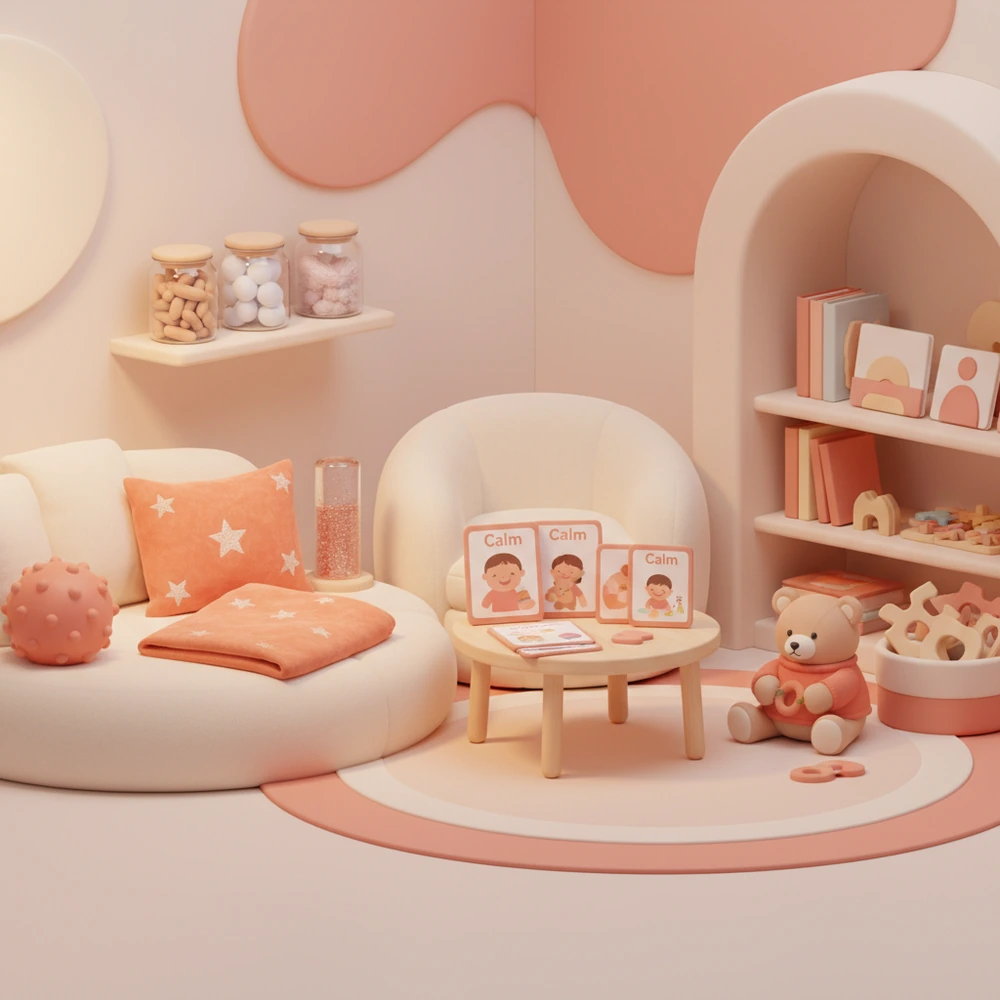
To make it easier for you, we've created a free printable shopping list and setup diagram. This printable includes all the items discussed, along with tips on creating a personalized calm-down corner for your child. Download it and start building a supportive space today!
References
1 Shanker, S. (2016). Self-Reg — co-regulation as the path to self-regulation. Retrieved from https://self-reg.ca/ 2 Greene, R. (2014). The Explosive Child. Retrieved from https://www.explosivechild.com/
Try It This Week
Reading is the easy part. Skills build through small, repeated practice — here's a low-pressure plan you can try with your child.
- 1Create a Sensory SpaceDay 1Set up a calm-down corner with sensory tools tailored to your child's needs to encourage self-regulation.👉 What this looks likeChoose a quiet corner of the living room. Lay down a soft rug and place a weighted lap pad and noise-canceling headphones nearby. Invite your child to help arrange the space. Say, 'Let's create a special spot for you to relax and feel calm when you need it.' This empowers them and makes the space inviting.
- 2Introduce Visual ToolsDay 2-3Use visual aids like emotion charts to help your child articulate their feelings.Deep Breathing for Kids →👉 What this looks likeAfter a playful morning, sit with your child in the calm-down corner. Show them the feelings chart and say, 'This is where you can show me how you're feeling if you don't want to talk.' Point to 'happy' and ask, 'Is this how you feel after playing?' This opens a dialogue about emotions.
- 3Incorporate Calming ActivitiesThis weekendProvide options like coloring books or playdough for self-directed calming activities.Dragon Breaths to Calm Down →👉 What this looks likeSpend a Saturday afternoon in the calm-down corner. Bring out a coloring book and say, 'Let's color together for a while.' As you color, play soft music in the background. This creates a soothing environment that helps reduce stress and encourages creativity.
- 4Practice Co-RegulationDaily, 5 minModel calming techniques by participating in activities with your child.Self-Regulation in Kids →👉 What this looks likeDuring a stressful afternoon, sit with your child in the calm-down corner. Take deep breaths together, saying, 'Let's breathe in deeply and slowly let it out.' This shared practice not only calms your child but also strengthens your connection.
- 5Personalize the SpaceOnce this weekAllow your child to choose decorations or themes for the corner to make it their own.👉 What this looks likeGive your child a few options for decorations like posters or small pillows. Say, 'Which ones do you like for your calm-down corner?' Let them make choices, reinforcing their sense of ownership and making the space more inviting.
Frequently Asked Questions
What is a calm-down corner?
How does a calm-down corner help with emotional regulation?
Can a calm-down corner replace time-outs?
What should I include in a calm-down corner?
How do I introduce a calm-down corner to my child?
References