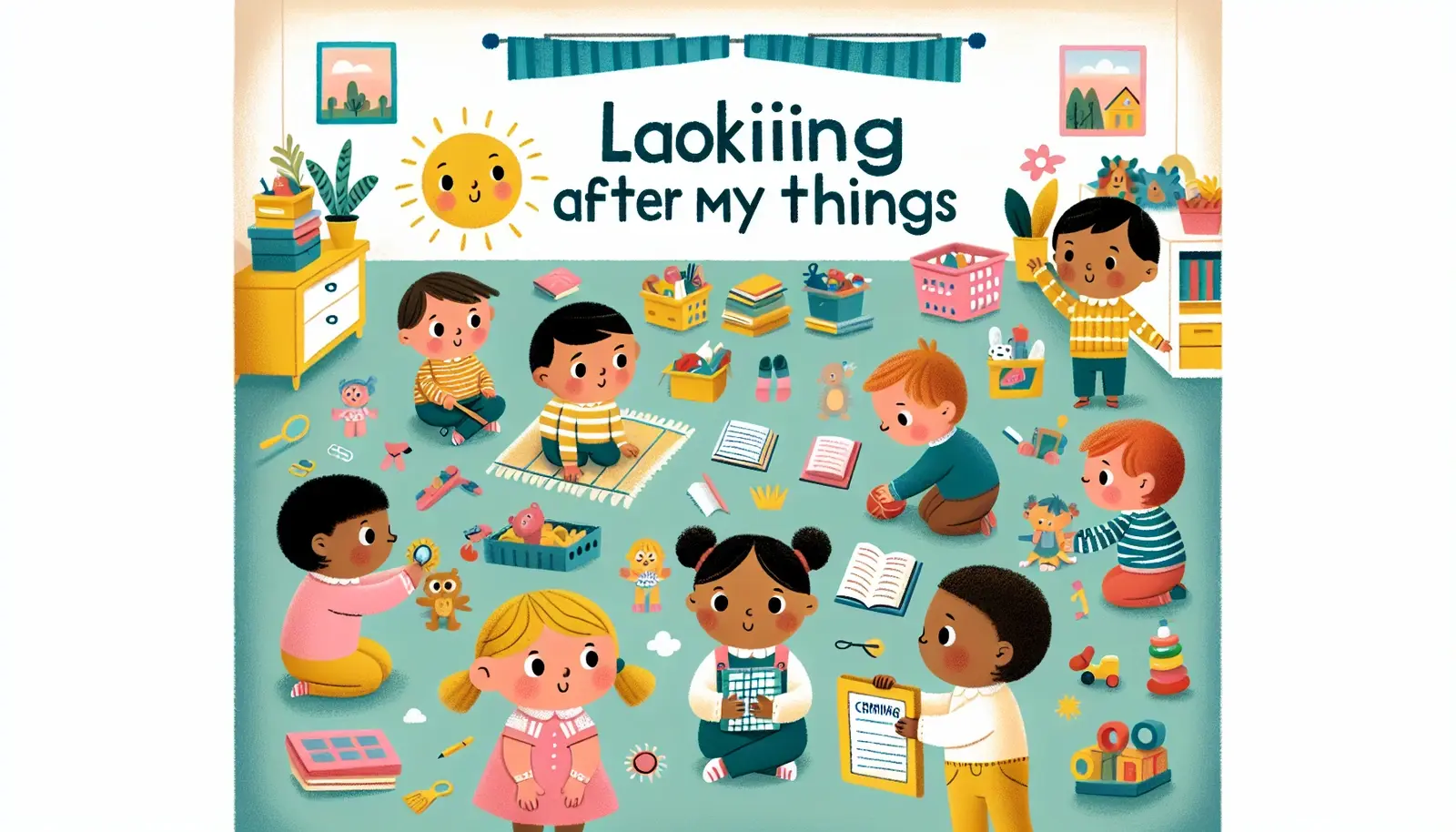
Looking After My Things - Printable Social Story

Help your child learn responsibility with this engaging social story about looking after their belongings. Perfect for preschoolers, it encourages independence and care for personal items.
Story Preview
Looking After My Things

I have many toys and books.
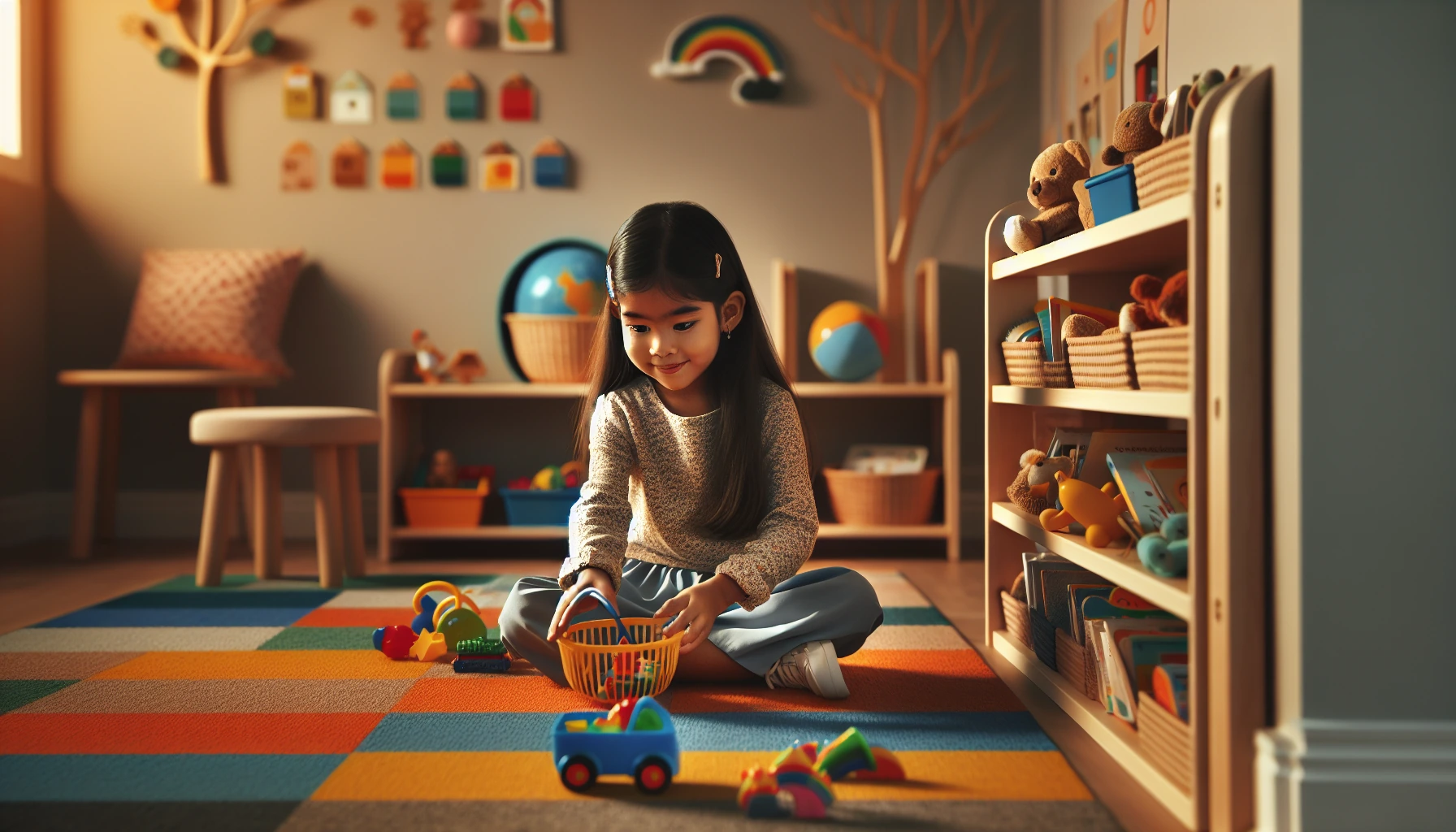
I love playing with them.
Purchase to access all pages
Who Is This For?
What's Inside
This social story includes relatable sentences and engaging visuals to help children learn about responsibility and caring for their belongings.
About This Story
This printable social story teaches children the importance of looking after their belongings. Through relatable sentences and engaging content, kids will learn to appreciate their toys and books while developing responsibility.
Key Features:
- Encourages responsibility
- Supports independence
- Engaging visuals
This resource supports learning. It does not replace professional advice.
How to Use This Story
When to use this story
\n"Looking After My Things" is a wonderful resource for preschoolers who are beginning to explore the concepts of responsibility and organization. This story can be particularly helpful during transitions, such as starting school or moving to a new environment, where children may need extra support in managing their belongings. Use this story during daily routines or as a gentle reminder when your child’s space becomes cluttered, encouraging them to take pride in their possessions and understand the importance of caring for their things.\n\n### What's inside \nIn "Looking After My Things," your child will journey through the experiences of a young child who loves their toys and books but struggles with keeping their space tidy. The story starts by highlighting the joy of playing with various items, emphasizing the feelings of frustration that arise when things are lost in the mess. As the narrative unfolds, your child will learn practical strategies for organizing their belongings, such as putting toys in a box. The story includes engaging illustrations that capture the child's emotions and experiences, making it relatable and enjoyable.\n\n### What kids learn \nThrough the narrative, children will learn valuable lessons about responsibility and the importance of looking after their belongings. They will understand that taking care of their toys not only helps them find what they need but also fosters a sense of independence and pride in their space. Additionally, the story encourages problem-solving skills as children think about ways to maintain a tidy environment. The relatable scenarios within the story help children connect with the material, promoting a positive attitude toward organization and care for personal items.\n\n### Research context \nThe tradition of using social stories to teach social skills and daily routines is well-established, with contributions from notable figures like Carol Gray. Research in the realm of narrative-based social-emotional learning (SEL) supports the idea that storytelling can effectively convey important life lessons to young children. By engaging with stories like "Looking After My Things," children can better understand concepts such as responsibility, empathy, and the value of taking care of their belongings, all of which contribute to their overall development in a supportive and affirming environment.\n\n### Tips for parents and educators \n- Read the story together and discuss the main ideas to reinforce the message of responsibility.
- Create a fun organizing game where your child can practice putting their toys away.
- Use visuals or charts at home or in the classroom to encourage tidy habits.
- Praise your child when they take the initiative to clean up or care for their belongings.
- Incorporate the story into daily routines to establish a consistent practice of responsibility.
How This Story Lands — Clinical Review & Perspectives
One named clinical review from our co-founder Rajini, plus three composite perspectives summarising how this story tends to land in a classroom, at home, and in therapy. How we write these.

A Heartwarming Story for Young Learners
As a speech-language pathologist, I often use 'Looking After My Things' with preschoolers on my caseload. This engaging social story introduces the concept of responsibility in a relatable way. Children love the colorful illustrations and simple text, which makes discussing organization feel achievable. After reading, I encourage kids to share their experiences with their toys, promoting expressive language skills. It’s essential to listen for their emotional reactions during the story, as it helps me understand their feelings about responsibility and care for their belongings.
Great for Teaching Everyday Responsibility
OTs often pair this kind of story with activities that promote organization and responsibility. In sensory-regulation work, this story can be used to help children understand the link between a tidy space and a calm mind. It encourages them to engage in sorting and putting away their belongings, which is vital for developing fine motor skills. The narrative provides a great backdrop for creating hands-on experiences that reinforce the message, making it practical for use in therapy sessions and at home.
Composite perspective synthesised from common feedback patterns — read how.
Sparking Important Conversations at Home
Parents reading this with their child often notice how 'Looking After My Things' encourages discussions about responsibility and organization. The story’s relatable scenarios resonate with young children, prompting them to share their own experiences. At home, this story tends to spark conversations about tidying up and the importance of caring for belongings. Many parents find that it not only engages their child but also helps establish routines around keeping their space organized, making it a valuable tool for everyday life.
Composite perspective synthesised from common feedback patterns — read how.
Effective for Independence Skills in Classrooms
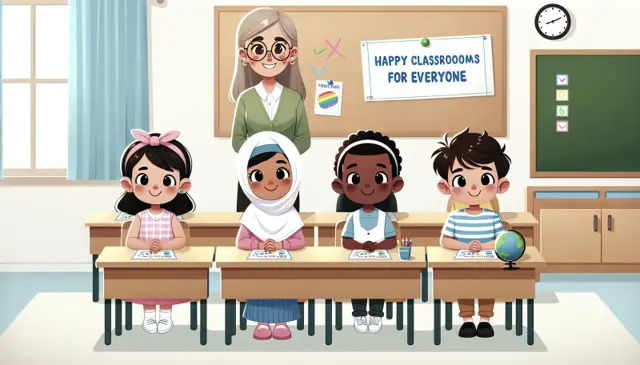
In an inclusive classroom, this story works well because it addresses the concept of taking care of personal belongings in a relatable manner. Educators using small-group settings will find that the repetition of key phrases and the visual supports within the story help reinforce the message of responsibility. It provides a structured way to discuss organization, making it easier for students with diverse needs to understand. This story can spark meaningful conversations about personal space and the importance of looking after one’s own items.
Composite perspective synthesised from common feedback patterns — read how.
Frequently Asked Questions
What age range is this social story suitable for?
This printable social story is designed specifically for preschoolers aged 3 to 5 years. It's an engaging way to help young children learn about responsibility and taking care of their belongings while enjoying fun activities.
How can I use this social story?
Read it with your child to encourage discussions about responsibility and caring for their belongings.
What age is this social story suitable for?
This social story is designed for preschool-aged children.
You May Also Like

Read More
Creating an Inclusive SEL Classroom for Neurodivergent Students
To create an inclusive SEL classroom for neurodivergent students, incorporate anti-masking practices, adapt curricula, and engage culturally responsive methods. Parents can advocate for these changes
Read article →Push-In vs Pull-Out Services: Navigating the Best Approach for Your Child
Push-in and pull-out services are two key approaches in special education. Push-in involves therapists working within the classroom, promoting social skills and reducing stigma. Pull-out offers focuse
Read article →Understanding SEL in Schools: A Parent's Guide to Social Emotional Learning
Social Emotional Learning (SEL) enhances children's emotional and social skills. Programs like Second Step and Sanford Harmony integrate SEL into classrooms. Parents can support SEL by engaging with e
Read article →
This resource supports learning. It does not replace professional advice.