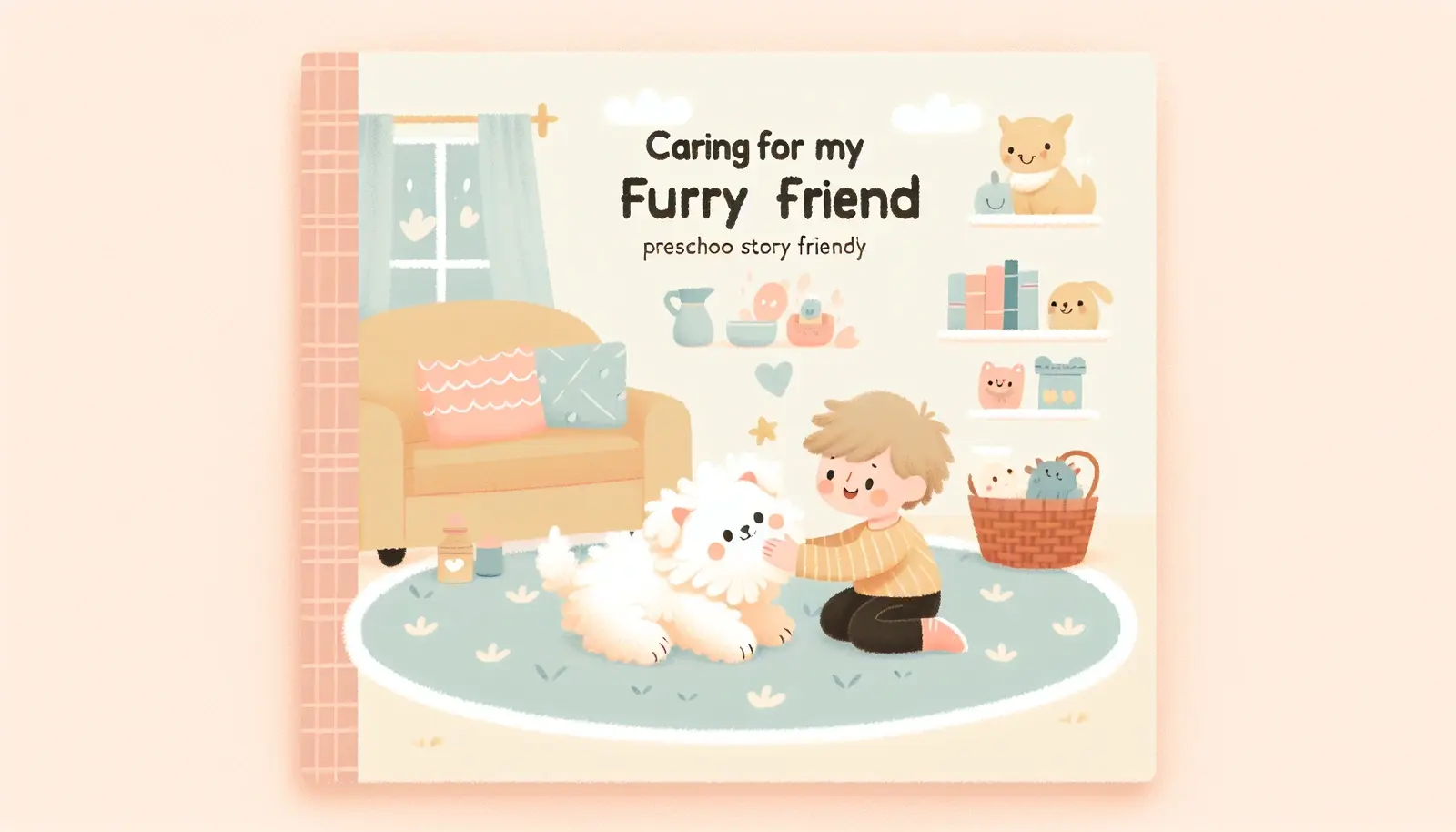
Caring for My Furry Friend - A Social Story

Help your child learn about caring for pets with this engaging social story. Perfect for teaching kindness and responsibility, this printable PDF is a fun way to bond with your furry friend.
Story Preview
Caring for My Furry Friend

I have a pet. My pet is a furry friend.

I love my pet. My pet loves me too.
Purchase to access all pages
Who Is This For?
What's Inside
This social story includes simple sentences and illustrations about pet care, kindness, and responsibility.
About This Story
This printable social story, Caring for My Furry Friend, is designed to help children understand the importance of caring for pets. Through simple sentences and engaging illustrations, your child will learn:
- What it means to have a pet
- How to show love and kindness
- The responsibilities involved in pet care
Each page encourages interaction and reflection, making it a valuable resource for parents and educators alike. This resource supports learning. It does not replace professional advice.
How to Use This Story
When to use this story
This social story, "Caring for My Furry Friend," is designed for preschool-aged children (3-5 years) to help them understand the joys and responsibilities of pet care. It’s a wonderful resource for parents and educators looking to foster empathy and kindness in young learners. Use this story during discussions about pets, as part of a unit on animals, or when introducing the concept of caring for living beings. It can also serve as a comforting tool for children who may be nervous about a new pet or who are learning to share responsibility in a family with pets.
What's inside
The story begins with simple, relatable sentences that introduce children to the concept of having a pet. For example, it starts with, "I have a pet. My pet is a furry friend." This sets a warm tone and personal connection. Other key elements include:
- Daily routines such as feeding and providing water, fostering a sense of responsibility.
- Emphasis on gentle interactions, teaching children the importance of kindness and respect in handling pets.
- Engaging activities like throwing a ball, which highlight play and bonding with their furry friends.
The story also incorporates interactive elements, such as vocabulary-building, spelling, and comprehension exercises, making it not just a reading experience but also an opportunity for active participation. Role-playing activities encourage children to practice what they learn in a playful manner, reinforcing their understanding of care and compassion.
What kids learn
Through "Caring for My Furry Friend," children learn essential lessons about:
- The importance of caring for pets and understanding their needs for food, water, and play.
- Developing empathy and kindness towards animals.
- The joy and companionship that comes with having a pet, fostering a sense of friendship.
- Responsibility through daily actions and routines that are part of pet care.
These lessons help build a foundation for healthy relationships, both with animals and peers, as children learn to appreciate the feelings and needs of others.
Research context
The tradition of using social stories has been grounded in the work of Carol Gray, who emphasized narrative-based approaches to teaching social understanding. Research in social-emotional learning (SEL) supports the idea that stories can effectively convey important lessons about empathy, responsibility, and interpersonal relationships. By using narrative techniques, educators and parents can enhance children's learning experiences, making them more relatable and engaging.
Tips for parents and educators
- Read the story together and encourage your child to express their thoughts and feelings about pets.
- Use role-playing to act out different scenarios from the story, such as feeding or playing with a pet.
- Create a daily pet care checklist together to reinforce the routine discussed in the story.
- Discuss the emotions pets might feel and how children can respond to those feelings.
- Incorporate vocabulary words from the story into daily conversations about pets to strengthen language skills.
- Celebrate small acts of kindness your child shows towards their pets to reinforce positive behavior.
How This Story Lands — Clinical Review & Perspectives
One named clinical review from our co-founder Rajini, plus three composite perspectives summarising how this story tends to land in a classroom, at home, and in therapy. How we write these.

Engaging Social Story for Young Learners
As a speech-language pathologist, I find 'Caring for My Furry Friend' to be a delightful resource for preschool-aged children. The simple, age-appropriate language is perfect for my caseload, helping children practice vocabulary related to pets and daily routines. During and after reading, I encourage kids to express their thoughts about pet care, listening for words like 'food', 'water', and 'play'. This story not only promotes language development but also fosters empathy and responsibility, making it a valuable addition to my sessions.
Useful for Teaching Everyday Tasks
OTs often pair this kind of story with activities that promote daily living skills. In sensory-regulation work, this story can be used to teach children about gentle touch and appropriate interactions with pets. The engaging narrative encourages participation, allowing kids to role-play caring for a pet, which builds fine motor skills through activities like feeding or grooming. This story provides a great platform to discuss routines and responsibilities in a relatable context.
Composite perspective synthesised from common feedback patterns — read how.
Sparking Conversations About Responsibility
Parents reading this with their child often notice an increase in interest around pet care. The simple storyline encourages kids to talk about their own pets, which helps them express their feelings and thoughts. At home, this story tends to spark conversations about kindness and the responsibilities that come with caring for a furry friend. It’s a wonderful way to bond and teach important life skills in a fun and engaging manner.
Composite perspective synthesised from common feedback patterns — read how.
Highly Effective in Inclusive Classrooms
In an inclusive classroom, this story works well because it introduces important concepts of kindness and responsibility towards pets. Educators using small-group settings will find that the repetition of phrases helps reinforce learning. Visual supports can be integrated to enhance understanding, allowing all students to engage meaningfully with the content. This story's relatable themes resonate with children, encouraging discussions and interactions that foster social skills.
Composite perspective synthesised from common feedback patterns — read how.
Frequently Asked Questions
What age range is this social story suitable for?
Caring for My Furry Friend is designed specifically for preschool children aged 3 to 5 years. It's perfect for introducing young kids to the concepts of kindness and responsibility when it comes to caring for pets, making it a great tool for both parents and educators.
How can I use this story?
You can read it together with your child to discuss pet care and kindness.
What age is this social story suitable for?
This social story is suitable for preschool-aged children.
You May Also Like


Read More
Creating an Inclusive SEL Classroom for Neurodivergent Students
To create an inclusive SEL classroom for neurodivergent students, incorporate anti-masking practices, adapt curricula, and engage culturally responsive methods. Parents can advocate for these changes
Read article →Push-In vs Pull-Out Services: Navigating the Best Approach for Your Child
Push-in and pull-out services are two key approaches in special education. Push-in involves therapists working within the classroom, promoting social skills and reducing stigma. Pull-out offers focuse
Read article →Understanding SEL in Schools: A Parent's Guide to Social Emotional Learning
Social Emotional Learning (SEL) enhances children's emotional and social skills. Programs like Second Step and Sanford Harmony integrate SEL into classrooms. Parents can support SEL by engaging with e
Read article →
This resource supports learning. It does not replace professional advice.