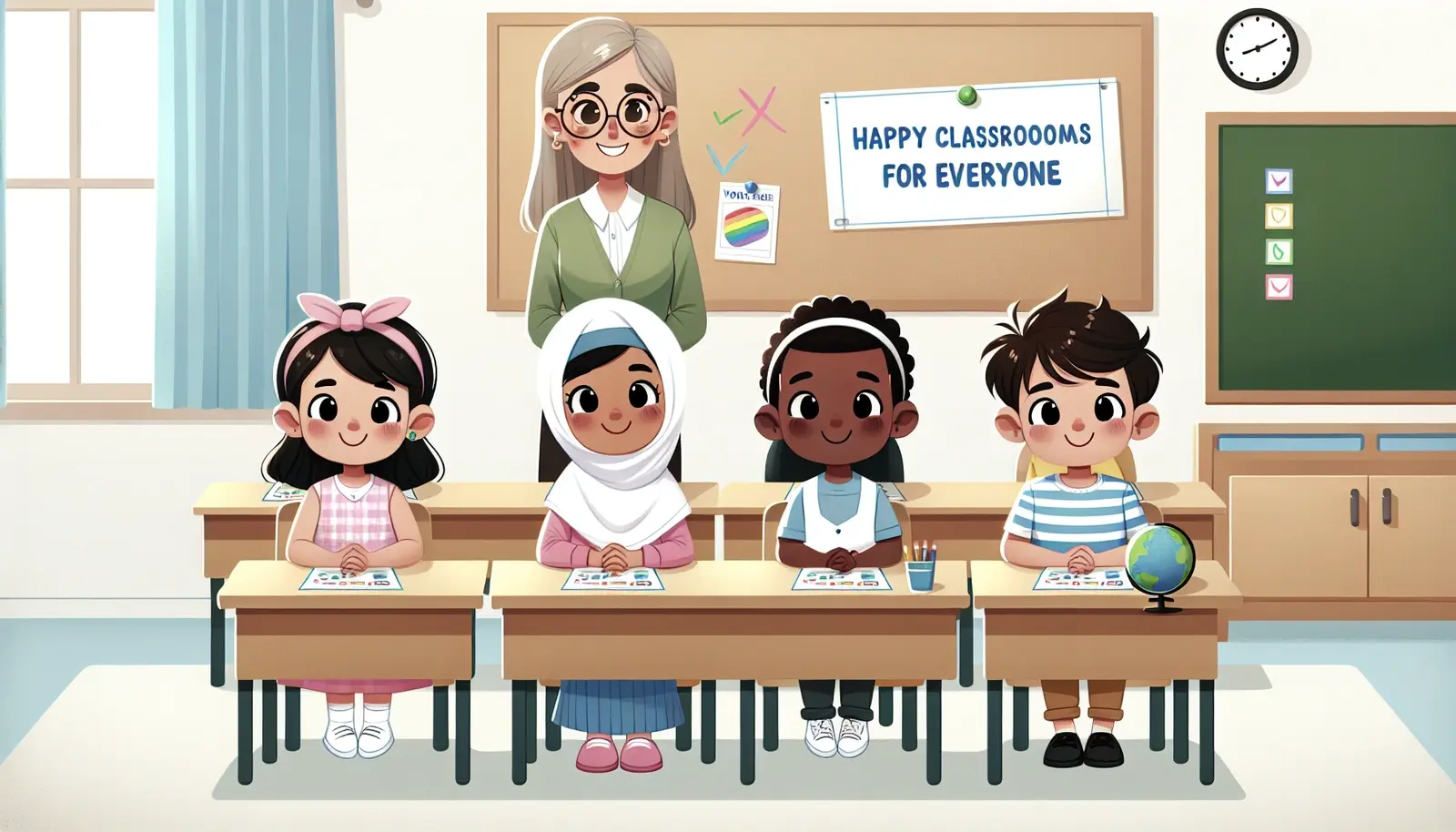
Happy Classroom Rules for Everyone - Printable Social Story

Introduce your child to essential classroom rules with this engaging printable social story. Perfect for preschoolers, it promotes a positive learning environment and helps children feel safe and ready to learn.
Story Preview
Happy Classroom Rules for Everyone

I sit at my desk. I feel ready to learn.

I keep my eyes on Ms. Works. I see her smile.
Purchase to access all pages
Who Is This For?
What's Inside
This printable social story introduces children to essential classroom rules, promoting a safe and happy learning environment.
About This Story
Help your child understand the importance of classroom rules with our printable social story, "Happy Classroom Rules for Everyone." This resource is designed to foster a positive learning environment and encourage children to follow rules that make their classroom a happy place.
- I sit at my desk. I feel ready to learn.
- I keep my eyes on Ms. Works. I see her smile.
- My friends follow the rules too. We all feel safe.
- We make our classroom happy. We learn together!
Disclaimer: This resource supports learning. It does not replace professional advice.
How to Use This Story
When to use this story
This social story is ideal for preschoolers who are beginning their classroom journey. It serves as a gentle introduction to essential rules that create a positive and supportive learning environment. Use it during the first few weeks of school or when transitioning to a new classroom setting. It can also be beneficial whenever you notice your child feeling uncertain about classroom expectations or social interactions with peers and teachers.
What's inside
In "Happy Classroom Rules for Everyone," children are guided through a day in the classroom, where they learn about important behaviors that contribute to a happy and productive learning space. The narrative begins with a sense of readiness, as the child sits at their desk and feels eager to learn. Key moments include:
- Keeping eyes on the teacher and recognizing her smile as a source of encouragement.
- Using a quiet voice to ensure classmates can hear and engage with one another.
- Sitting up straight, which helps them feel confident and strong.
- Raising a hand when they need assistance, fostering communication skills and independence.
- Asking for help when needed, such as using the restroom, reinforcing the importance of expressing needs clearly.
Each page includes engaging illustrations that complement the text, making the story visually appealing and easy to understand for young learners.
What kids learn
Through this social story, children learn the following:
- The importance of following classroom rules to create a positive environment.
- How to communicate effectively with teachers and peers.
- Ways to express their needs and ask for help appropriately.
- The value of attentiveness and respect in a shared learning space.
- Building friendships through shared experiences and understanding classroom etiquette.
Research context
The tradition of using social stories, pioneered by Carol Gray, has a strong foundation in narrative-based approaches to social-emotional learning (SEL). Research suggests that stories can be powerful tools for teaching children about social norms and expectations. By framing lessons within relatable narratives, children can better understand and internalize important concepts, fostering a sense of belonging and connection in group settings.
Tips for parents and educators
- Read the story together and discuss each classroom rule in detail.
- Encourage your child to share their feelings about the classroom environment and rules.
- Role-play scenarios from the story, such as raising a hand or asking for help, to reinforce these behaviors.
- Use visuals or simple charts to remind children of the rules in the classroom.
- Celebrate small successes when your child follows the rules, to build confidence and a sense of accomplishment.
How This Story Lands — Clinical Review & Perspectives
One named clinical review from our co-founder Rajini, plus three composite perspectives summarising how this story tends to land in a classroom, at home, and in therapy. How we write these.

Engaging Story for Preschool Learning
As a pediatric speech-language pathologist, I find 'Happy Classroom Rules for Everyone' an excellent tool for introducing young children to classroom expectations. The language used is age-appropriate and encourages participation. I often read this story with my preschool clients, prompting them to repeat key phrases like 'raise my hand' and 'quiet voice.' This not only aids in comprehension but also reinforces important social skills. Listening for their responses during the reading helps me gauge their understanding and comfort level in a classroom setting.
Supports Sensory Regulation and Routine
OTs often pair this kind of story with activities that promote sensory regulation and understanding of routine. In sensory-regulation work, this story can be used to prepare children for the structure of a classroom environment. The clear and simple language helps children visualize school settings, making it easier for them to adapt. This story serves as a practical resource in helping children feel more secure and confident as they navigate their school day.
Composite perspective synthesised from common feedback patterns — read how.
Sparking Conversations at Home
Parents reading this with their child often notice that it helps spark conversations about classroom behavior. The relatable scenarios encourage children to share their feelings and thoughts about school. Many parents appreciate how the story supports their child's understanding of rules and routines, making transitions to school smoother. It's a great starting point for discussing expectations in a fun and engaging way.
Composite perspective synthesised from common feedback patterns — read how.
Effective for Inclusive Classrooms
In an inclusive classroom, this story works well because it clearly outlines essential classroom rules in a relatable way. Educators using small-group settings will find that the repetitive structure helps reinforce learning. Visual supports can be integrated alongside the story to enhance understanding. Children are more likely to engage and remember these rules when presented in a narrative format, making it a useful resource for establishing a positive learning environment.
Composite perspective synthesised from common feedback patterns — read how.
Frequently Asked Questions
How can I use the 'Happy Classroom Rules for Everyone' social story with my child?
You can use this engaging printable social story at home or in the classroom to introduce your child to essential classroom rules. Read through the story together, discussing each rule and its importance. Incorporate activities like role play or creative exercises to reinforce understanding and encourage your child to express their thoughts about the rules.
How can I use this social story?
You can read it together with your child to discuss classroom rules.
What age group is this social story suitable for?
This social story is designed for preschoolers.
You May Also Like
Read More
Creating an Inclusive SEL Classroom for Neurodivergent Students
To create an inclusive SEL classroom for neurodivergent students, incorporate anti-masking practices, adapt curricula, and engage culturally responsive methods. Parents can advocate for these changes
Read article →Push-In vs Pull-Out Services: Navigating the Best Approach for Your Child
Push-in and pull-out services are two key approaches in special education. Push-in involves therapists working within the classroom, promoting social skills and reducing stigma. Pull-out offers focuse
Read article →Understanding SEL in Schools: A Parent's Guide to Social Emotional Learning
Social Emotional Learning (SEL) enhances children's emotional and social skills. Programs like Second Step and Sanford Harmony integrate SEL into classrooms. Parents can support SEL by engaging with e
Read article →
This resource supports learning. It does not replace professional advice.