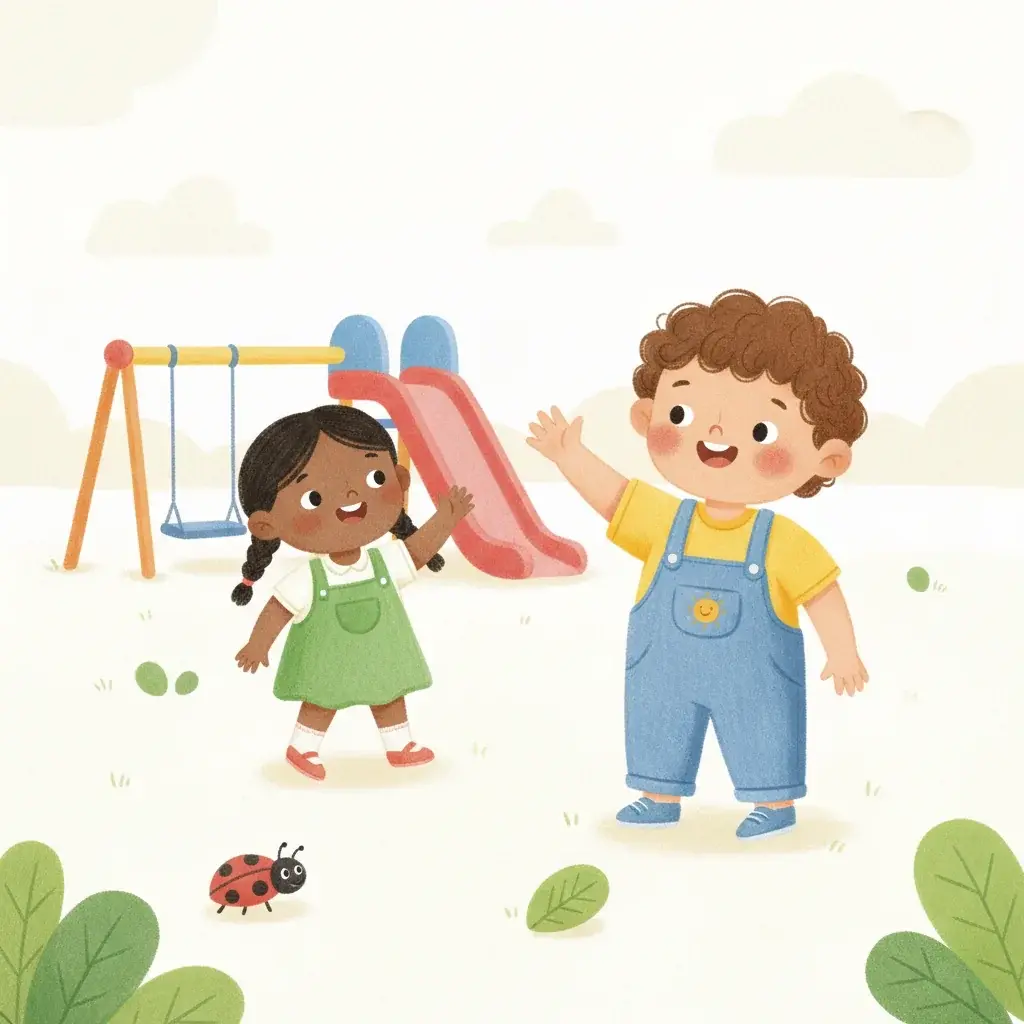
Smiling and Saying Hi! Social Story PDF

Help your child learn the joy of greeting friends with this printable social story. Perfect for preschoolers, it encourages smiling and saying hi in a fun, engaging way.
Story Preview
Smiling and Saying Hi!
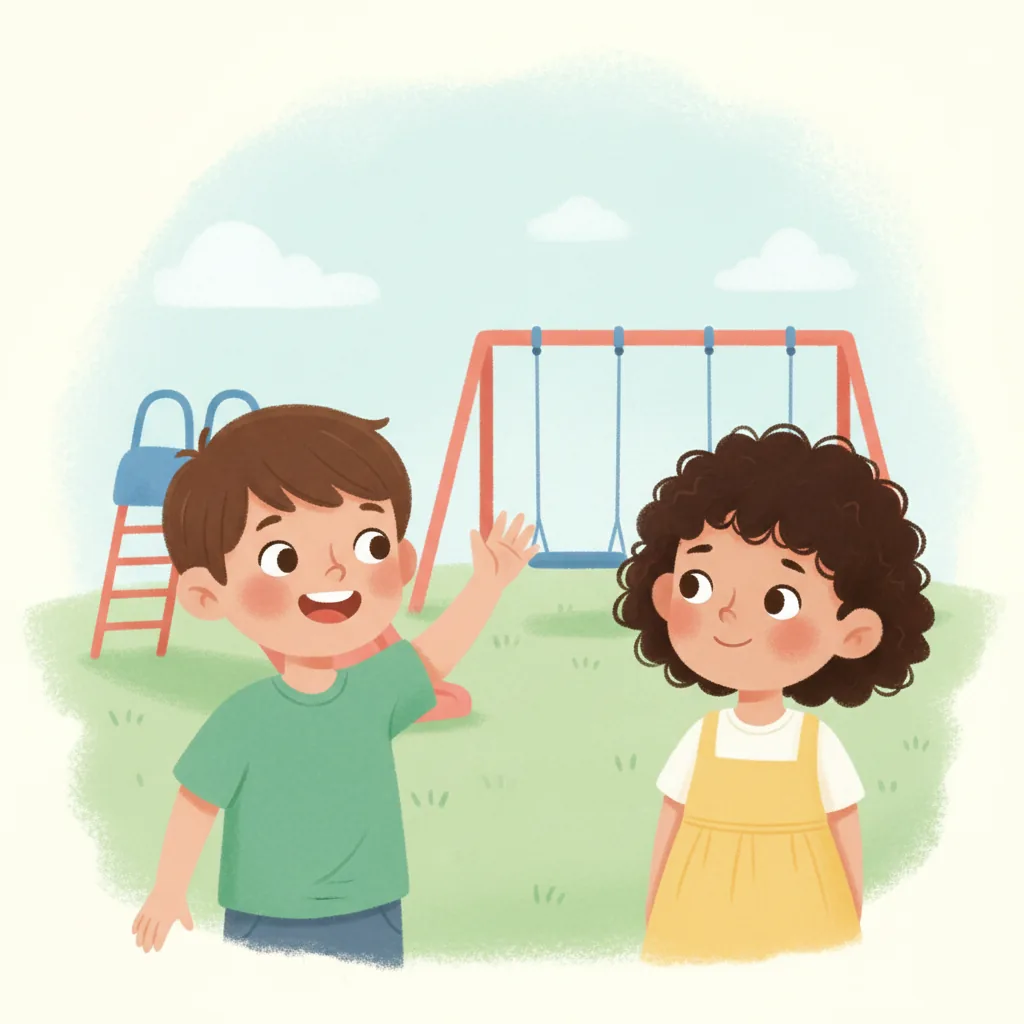
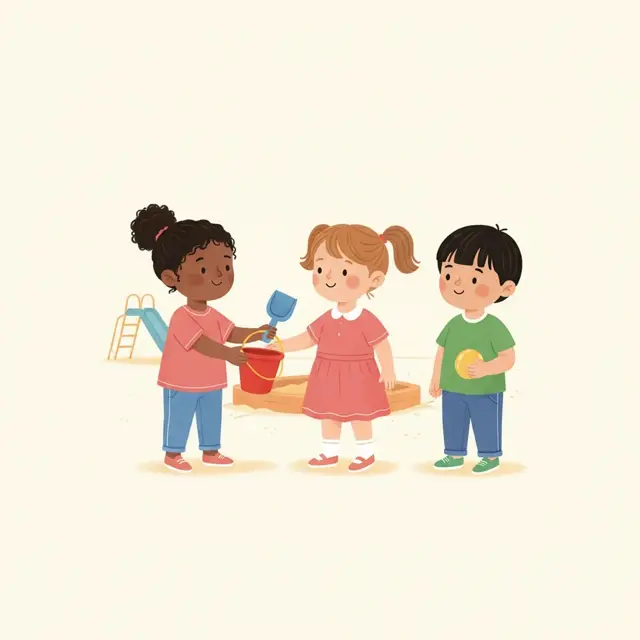
I was at the playground. I saw my friend, Sam.
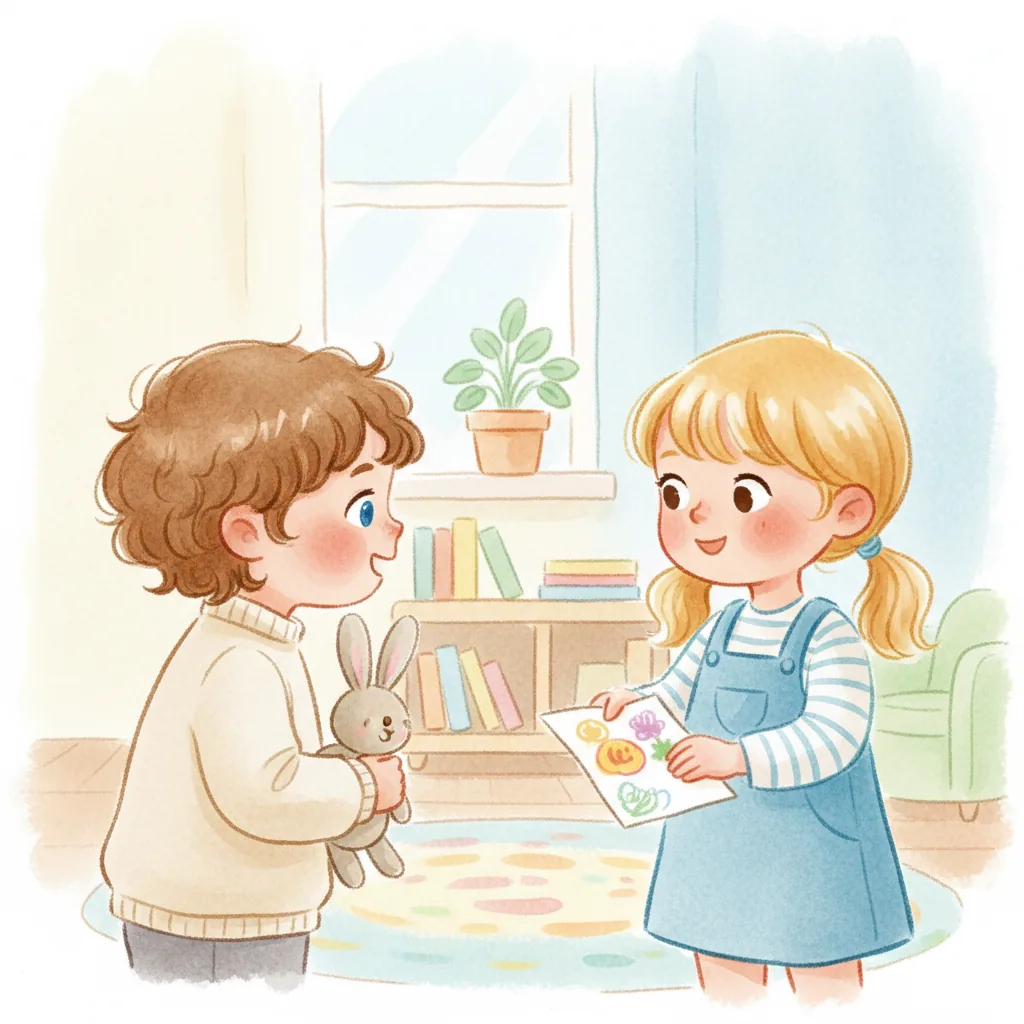
I felt a little shy. I wanted to say hi.
Purchase to access all pages
Who Is This For?
What's Inside
Inside, you'll find engaging scenarios that teach children how to smile and say hi to friends.
About This Story
This printable social story, 'Smiling and Saying Hi!', is designed to help young children understand the importance of greeting friends with a smile. Through relatable scenarios, your child will learn how to express friendliness and build connections.
- Engaging illustrations
- Simple, relatable sentences
- Encourages social interaction
Disclaimer: This resource supports learning. It does not replace professional advice.
How to Use This Story
When to use this story
This social story, "Smiling and Saying Hi!", is ideal for toddlers aged 2-3 years who are beginning to explore social interactions. It can be used during playdates, classroom activities, or family gatherings to encourage little ones to greet their friends with confidence. This story is particularly helpful for children who may feel shy or uncertain about initiating interactions with peers. By providing a simple and engaging narrative, it supports children in understanding the joy that comes from friendly greetings.
What's inside
"Smiling and Saying Hi!" takes young readers on a delightful journey to the playground where they meet a friend named Sam. The story begins with the narrator feeling a bit shy yet eager to say hello. Readers will follow the steps of taking a breath, smiling, and waving, culminating in the joyful exchange of greetings. The narrative reinforces positive social behaviors through relatable scenarios, making it easy for children to see themselves in the story.
The accompanying activities include vocabulary exercises, spelling games, comprehension questions, open-ended prompts, creative tasks, and role-play opportunities. These activities help reinforce the skills introduced in the story, allowing children to practice greeting others in various contexts.
What kids learn
Through this story, children learn:
- The importance of greeting others with a smile.
- How to approach friends with confidence, even when feeling shy.
- That friendly interactions can lead to enjoyable play experiences.
- Basic social skills related to initiating conversations and building friendships.
By practicing these skills, children can enhance their social connections and develop a sense of belonging within their community.
Research context
The principles behind social stories, including the approach taken in "Smiling and Saying Hi!", are grounded in established practices that promote social understanding and emotional learning. Carol Gray's work on social stories emphasizes the importance of narratives in helping children navigate social situations effectively. Research in narrative-based social-emotional learning supports the use of stories to foster essential skills in young learners, encouraging them to express themselves and connect with others in meaningful ways.
Tips for parents and educators
- Read the story together and discuss how the characters feel during their interactions.
- Encourage your child to practice saying hello to family members or friends at home.
- Use role-play with stuffed animals or toys to reinforce the concepts of smiling and greeting.
- Create a routine where your child greets someone new each day, whether at the playground or in the classroom.
- Celebrate small victories when your child successfully greets someone, reinforcing their efforts and progress.
How This Story Lands — Clinical Review & Perspectives
One named clinical review from our co-founder Rajini, plus three composite perspectives summarising how this story tends to land in a classroom, at home, and in therapy. How we write these.

Engaging Story for Social Skills Development
As a pediatric speech-language pathologist, I find 'Smiling and Saying Hi!' to be a delightful resource for my young clients. This story captures the essence of greeting friends in a way that is relatable and enjoyable. I often read it during therapy sessions, encouraging kids to practice saying 'hi' and smiling. During the reading, I listen for their verbal responses and nonverbal cues, which helps reinforce their social interaction skills. The language is age-appropriate, making it accessible for toddlers, and the narrative promotes a positive emotional response.
Supports Social Skills and Regulation
OTs often pair this kind of story with activities focusing on social skills and emotional regulation. 'Smiling and Saying Hi!' can be used to help children practice greetings in a fun and engaging way, which is essential for building their social toolkit. In sensory-regulation work, this story can be integrated with role-playing scenarios that allow children to act out the interactions. This practical approach not only aids in understanding social cues but also promotes positive peer relationships.
Composite perspective synthesised from common feedback patterns — read how.
Sparking Joyful Conversations at Home
Parents reading this story with their child often notice how it sparks joyful conversations about friendship and social interactions. The simple, relatable narrative allows children to understand the importance of greeting others, which is particularly valuable for kids with ADHD or autism. Many families find that discussing the story leads to real-life practice at the playground or during playdates. This encourages their child to express themselves in social settings, fostering confidence and connection with peers.
Composite perspective synthesised from common feedback patterns — read how.
Perfect for Inclusive Classroom Settings
In an inclusive classroom, this story works well because it provides a clear framework for teaching social interactions. Educators can use visual supports alongside the book to reinforce the concept of greeting peers. The repetition of simple phrases helps students internalize the process of saying hello. This story is particularly effective in small-group settings, where educators can model the interactions and encourage students to practice with each other. It's a practical and engaging resource that fosters connection among classmates.
Composite perspective synthesised from common feedback patterns — read how.
Frequently Asked Questions
What age group is the Smiling and Saying Hi! Social Story suitable for?
The Smiling and Saying Hi! Social Story is designed specifically for toddlers aged 2-3 years. It uses engaging language and colorful illustrations to capture their attention and help them learn the joy of greeting friends in a fun way.
How can I use this resource?
You can print it out and read it with your child to encourage social interactions.
What age is this social story suitable for?
This social story is suitable for preschool-aged children.
You May Also Like
Read More
Creating an Inclusive SEL Classroom for Neurodivergent Students
To create an inclusive SEL classroom for neurodivergent students, incorporate anti-masking practices, adapt curricula, and engage culturally responsive methods. Parents can advocate for these changes
Read article →Push-In vs Pull-Out Services: Navigating the Best Approach for Your Child
Push-in and pull-out services are two key approaches in special education. Push-in involves therapists working within the classroom, promoting social skills and reducing stigma. Pull-out offers focuse
Read article →Understanding SEL in Schools: A Parent's Guide to Social Emotional Learning
Social Emotional Learning (SEL) enhances children's emotional and social skills. Programs like Second Step and Sanford Harmony integrate SEL into classrooms. Parents can support SEL by engaging with e
Read article →
This resource supports learning. It does not replace professional advice.