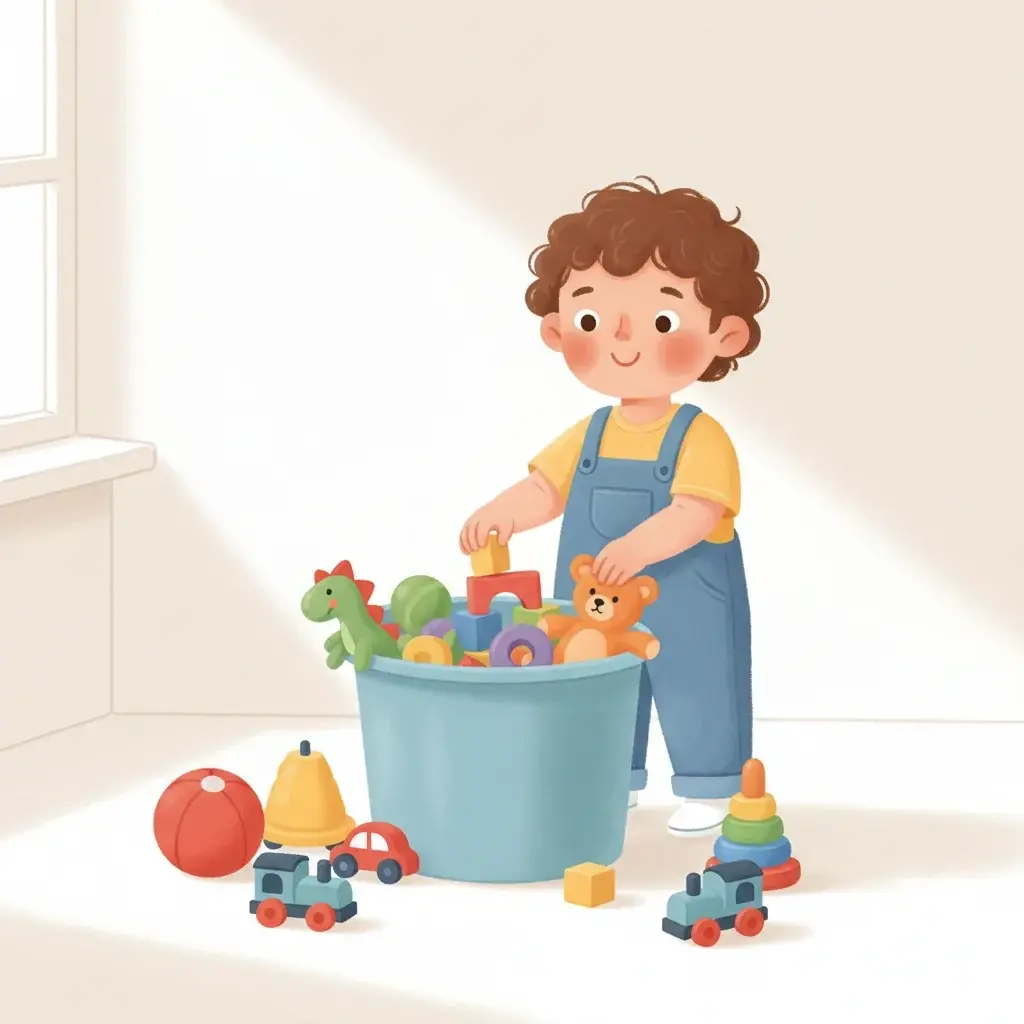
Tidy Up Time: Putting Toys Away - Social Story PDF

Help your child learn the importance of tidying up with this engaging social story. Perfect for preschoolers, it encourages independence and a sense of accomplishment.
Story Preview
Tidy Up Time: Putting Toys Away
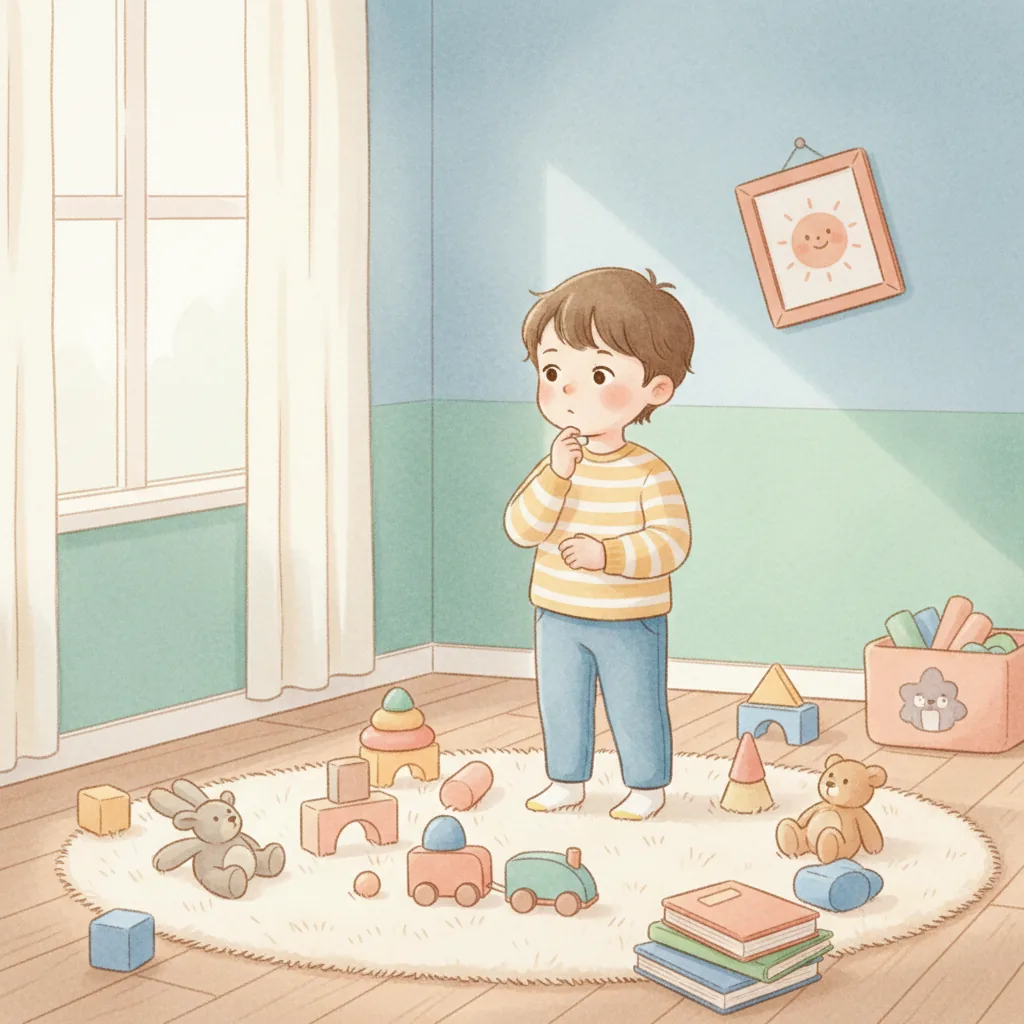
I played with my toys today. I had so much fun. My room was full of colors and shapes.
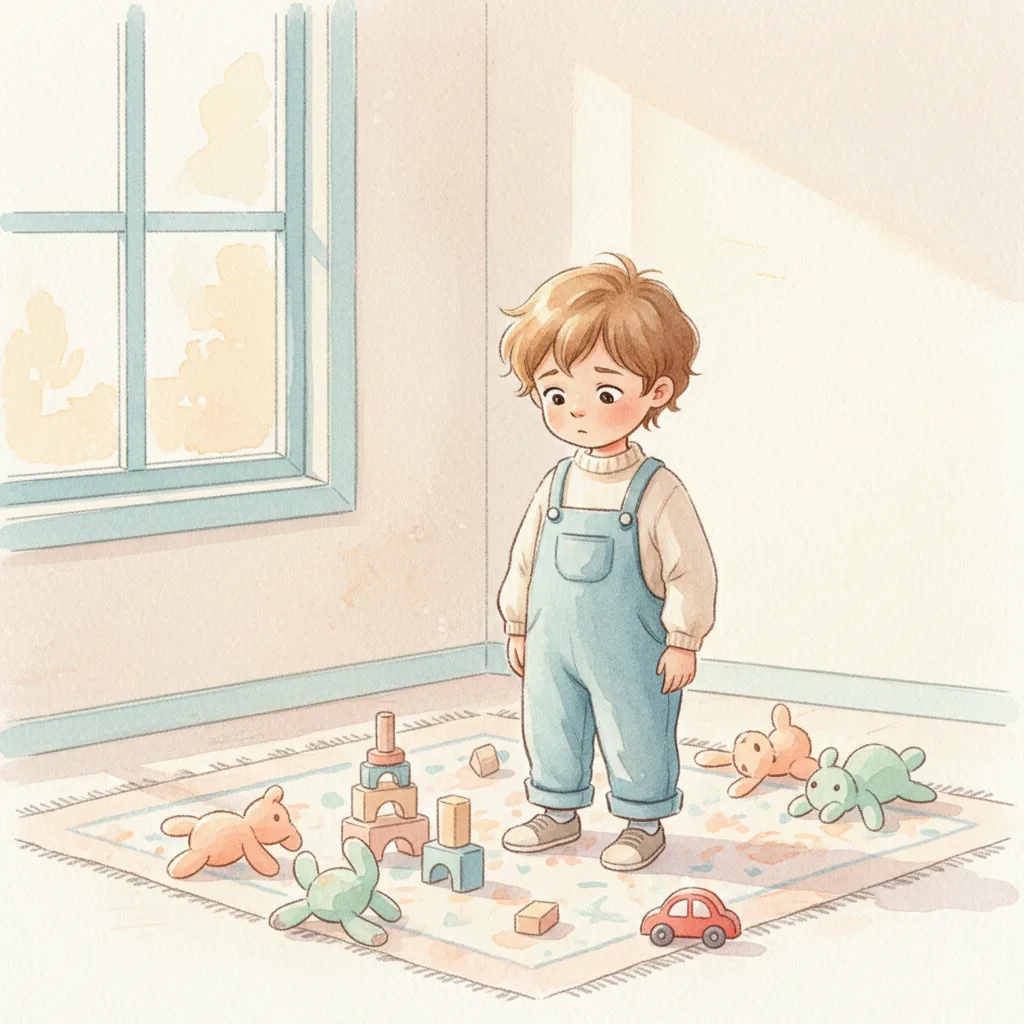
I looked around the room. My toys were everywhere. I felt a little bit messy.
Purchase to access all pages
Who Is This For?
What's Inside
This social story helps children understand the importance of tidying up and encourages them to take pride in their clean space.
About This Story
Introduce your child to the joy of tidying up with our printable social story, 'Tidy Up Time: Putting Toys Away.' This engaging resource helps children understand the importance of keeping their space clean and organized.
Inside, you'll find:
- Simple sentences that resonate with young learners
- Encouraging illustrations to support comprehension
- Activities to reinforce the concept of tidiness
With this story, children will learn to appreciate a tidy space and feel proud of their efforts. This resource supports learning. It does not replace professional advice.
How to Use This Story
When to use this story
"Tidy Up Time: Putting Toys Away" is a gentle and engaging social story designed for toddlers aged 2-3 years. This story is ideal for moments when you wish to instill the value of tidying up in a fun and relatable way. It can be particularly useful at the end of playtime or after a busy day of activities, helping your child transition smoothly into clean-up time. If your little one is starting to explore independence or showing interest in taking care of their space, this story can serve as a helpful guide to make tidying up a positive experience.
What's inside
This social story unfolds through the playful experiences of a child who enjoys a day filled with colorful toys. It starts with the excitement of playtime, where the room is filled with vibrant shapes and colors. However, as the play comes to an end, the child notices that the toys have spread out across the room, creating a sense of messiness.
The story gently introduces the concept of tidying up by showcasing the child’s journey from feeling unsure to taking proud steps toward cleanliness. Each page illustrates various toys, highlighting actions such as picking up a favorite car, stacking blocks, and lovingly placing stuffed animals on a shelf. Through these relatable scenarios, children learn how to approach tidying up with confidence and joy.
What kids learn
Through "Tidy Up Time: Putting Toys Away," children will:
- Understand the importance of tidying up their play area.
- Experience a sense of accomplishment as they participate in cleaning up.
- Develop language skills through the vocabulary associated with everyday objects and actions related to tidying.
- Learn to follow a sequence of actions, enhancing their comprehension and narrative skills.
- Feel empowered to make choices about how they organize their toys, fostering independence.
Research context
Social stories, a technique developed by Carol Gray, have long been a valuable tool for helping children understand social norms and daily routines. By utilizing narrative-based approaches, these stories help children navigate their environments with greater ease. Research in social-emotional learning (SEL) supports the use of storytelling as an effective method to teach life skills, helping children develop awareness and self-regulation in different situations. This aligns with the principles of neurodiversity, recognizing that all children can thrive through tailored, supportive learning experiences.
Tips for parents and educators
- Read the story together multiple times to reinforce the concepts of tidying up.
- Encourage your child to identify their favorite toys and discuss where they belong when it’s time to clean up.
- Use positive reinforcement, praising your child when they help with tidying up.
- Create a tidy-up routine, making it a fun part of your daily activities.
- Incorporate songs or games related to cleaning to make tidying more enjoyable.
- Be patient and provide guidance as your child learns to take responsibility for their space.
How This Story Lands — Clinical Review & Perspectives
One named clinical review from our co-founder Rajini, plus three composite perspectives summarising how this story tends to land in a classroom, at home, and in therapy. How we write these.

Engaging Story for Tidying Skills
As a pediatric speech-language pathologist, I find that 'Tidy Up Time: Putting Toys Away' is a wonderful resource for teaching young children the concept of tidiness. The story captures their attention with relatable scenarios and age-appropriate language. During sessions, I encourage children to articulate their feelings about tidying up, listening for words like 'proud' and 'happy' as they relate to their own experiences. This story not only promotes language skills but also fosters a sense of accomplishment when they engage in cleaning up.
Useful for Developing Organizational Skills
OTs often pair this kind of story with hands-on activities to promote organizational skills. In sensory-regulation work, this story can be used to introduce the idea of tidying up as part of a routine, making it a familiar and comfortable task for young children. The engaging narrative allows therapists to discuss feelings around messiness and accomplishment, helping children connect emotionally with the act of cleaning up. It's a practical addition to any therapeutic approach aimed at fostering independence.
Composite perspective synthesised from common feedback patterns — read how.
Sparking Conversations About Cleanliness
Parents reading this with their child often notice that it sparks meaningful conversations about cleanliness and responsibility. The story presents tidying up as a fun activity rather than a chore, which resonates with young children. Many parents find that their kids become more proactive about cleaning up after playtime, inspired by the characters in the story. It’s a delightful way to encourage positive habits at home while also bonding through shared reading.
Composite perspective synthesised from common feedback patterns — read how.
Effective for Inclusive Classroom Settings
In an inclusive classroom, this story works well because it provides clear, relatable examples of tidying up that resonate with young children. Educators using small-group settings will find that visual supports can enhance understanding, as children can see the toys being put away. The repetitive structure of the story reinforces the concept, making it easier for children, including those with diverse learning needs, to grasp the importance of organization. Overall, it's a practical tool for encouraging independence.
Composite perspective synthesised from common feedback patterns — read how.
Frequently Asked Questions
Is this social story suitable for my child who is just starting to understand routines?
Absolutely! This social story is designed for toddlers aged 2-3 years, making it perfect for little ones who are beginning to grasp routines. The simple language and interactive activities encourage comprehension and role-play, helping your child to connect with the idea of cleaning up in a fun and supportive way.
How can 'Tidy Up Time: Putting Toys Away' help my child learn about cleaning up?
'Tidy Up Time' uses engaging illustrations and relatable scenarios to teach children the importance of tidying up. Through this social story, your child will not only learn vocabulary related to cleaning but also feel a sense of accomplishment as they participate in the activity.
What age is this social story suitable for?
This social story is designed for preschool-aged children.
You May Also Like




Read More
Navigating Sibling Dynamics: An SEL Guide for Parents
Understanding different SEL needs in siblings is essential for fostering harmony at home. This guide explores strategies for managing sibling dynamics, from encouraging parallel play among toddlers to
Read article →Adapting Visual Schedules for Neurodivergent Children
Visual schedules must be customized for each child's needs, especially for neurodivergent children. Autistic kids may thrive on detailed schedules, while neurotypical and ADHD children often benefit f
Read article →Empowering Tweens: The Art of Boundary-Setting through SEL
Tweens are at a key developmental stage where setting boundaries is vital for their social-emotional learning (SEL). Encouraging privacy, body autonomy, and time management helps children develop self
Read article →
This resource supports learning. It does not replace professional advice.