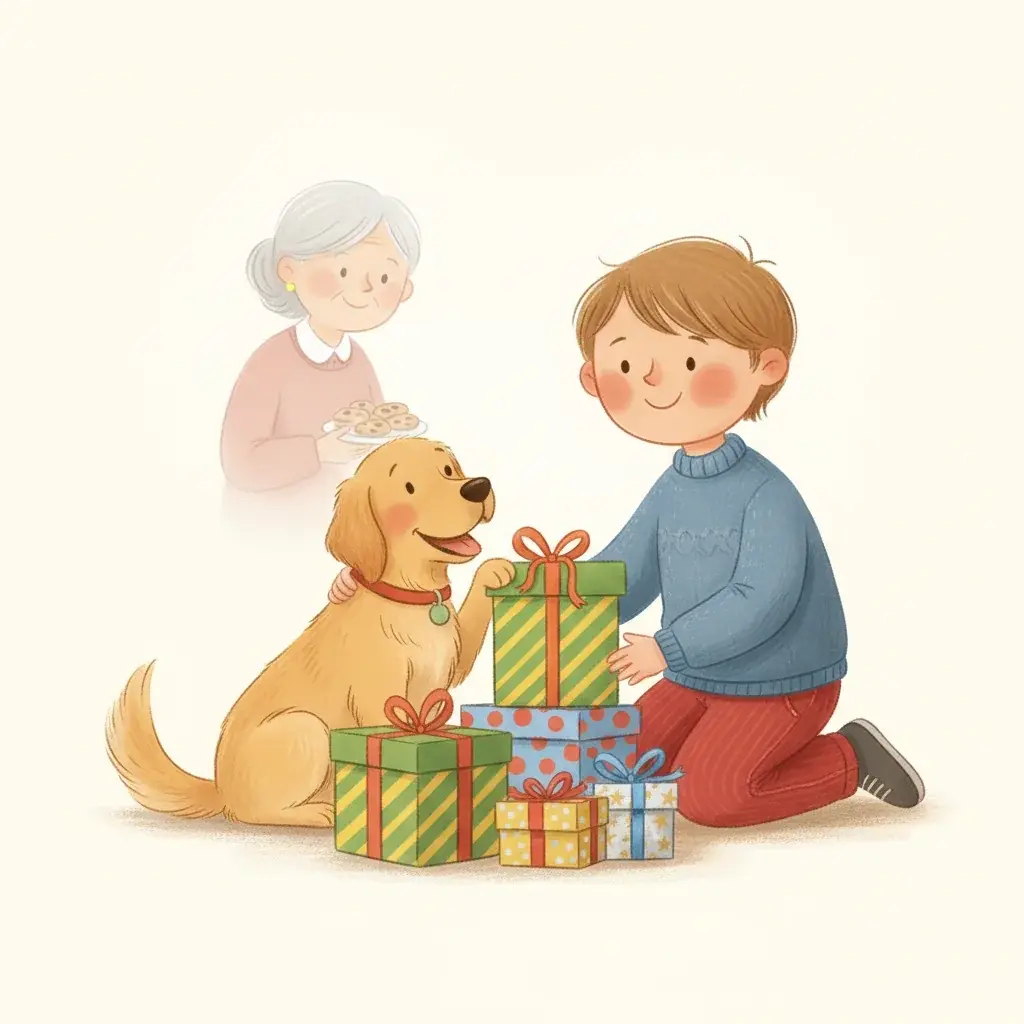
Presents at Nana's House - Social Story PDF

Help your child understand the joy of visiting Nana's house with this printable social story. Perfect for preschoolers, it encourages excitement and sharing during special family moments.
Story Preview
Presents at Nana's House
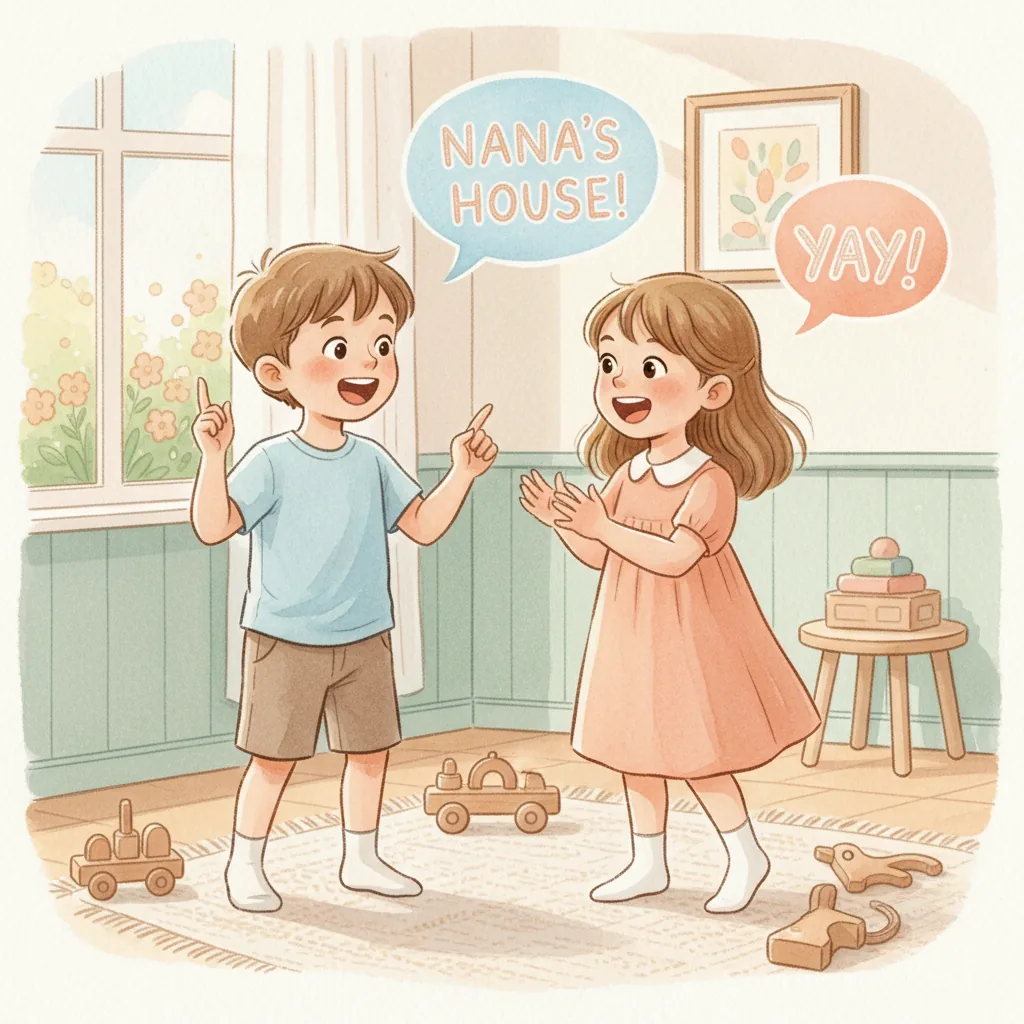
Today, we are going to Nana's house.
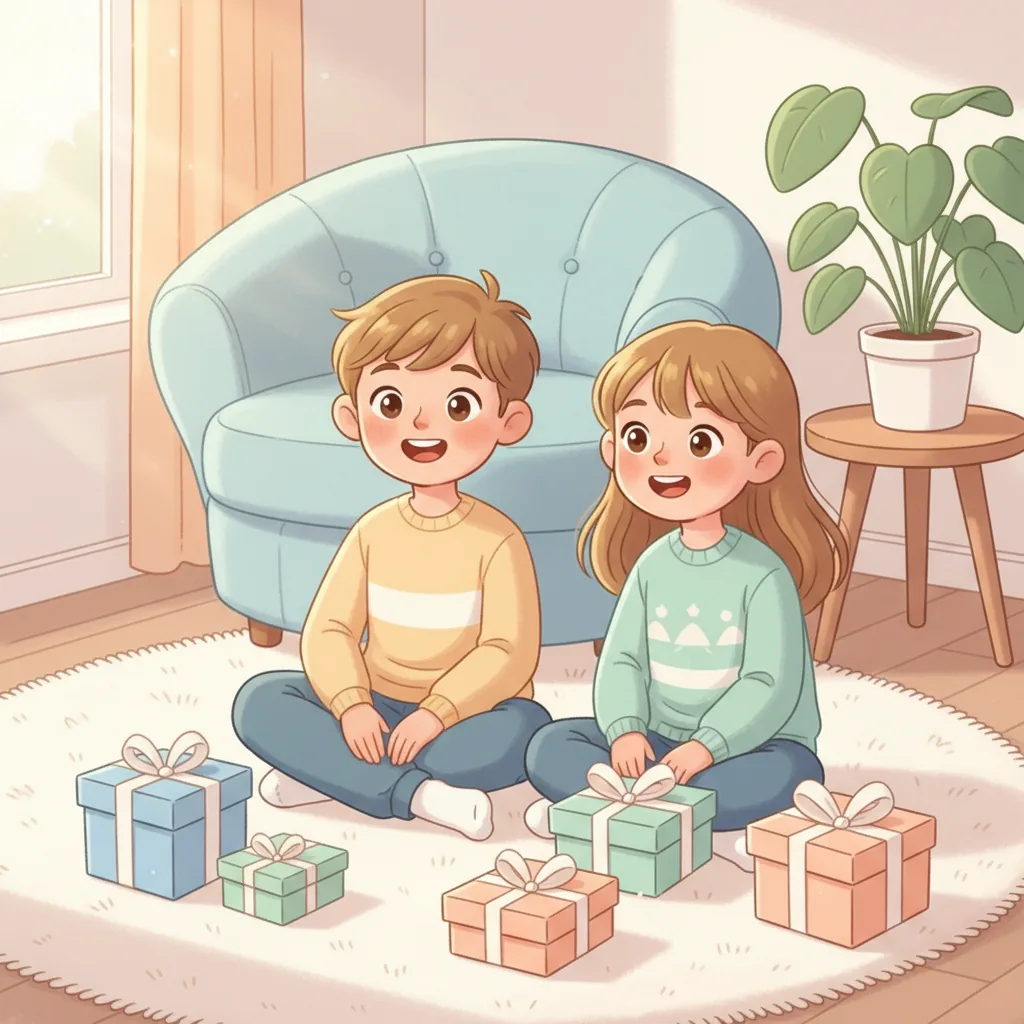
I feel excited because there will be presents.
Purchase to access all pages
Who Is This For?
What's Inside
This social story includes vocabulary and comprehension activities to enhance understanding of family visits and sharing.
About This Story
Explore the joy of visiting Nana's house with this engaging social story. Your child will learn about the excitement of receiving presents and the happiness of sharing special moments with family.
- Encourages positive feelings about family visits
- Promotes sharing and excitement
- Ideal for preschool and early learners
Disclaimer: This resource supports learning. It does not replace professional advice.
How to Use This Story
When to use this story
This social story is ideal for moments when your child is preparing to visit a family member, particularly their Nana. It helps set the stage for a joyful experience, fostering a sense of anticipation for the visit and the excitement of receiving presents. Use this story when discussing upcoming family gatherings, birthdays, or holidays to help your child understand the dynamics of sharing moments with loved ones.
What's inside
"Presents at Nana's House" is designed to engage early elementary children with a delightful narrative about visiting Nana. The story begins with the excitement of going to her house, highlighting the joy of receiving presents. As the story unfolds, children learn about the importance of patience and taking turns when opening gifts. Each page captures the experience of waiting for their turn, expressing gratitude when receiving a present, and appreciating the joy of watching family members, like Willow and Blu, open their gifts as well. The engaging illustrations and simple language make it accessible and relatable for young readers.
The story includes various activities that enhance the reading experience. Children can engage with vocabulary exercises, spelling challenges, comprehension questions, and even open-ended prompts that encourage creativity. Role-playing scenarios related to the story help reinforce social skills in a fun and interactive way.
What kids learn
Through this social story, children learn several valuable lessons:
- The excitement of visiting family and the joy of receiving gifts.
- The importance of patience and taking turns, fostering a sense of fairness.
- Expressing gratitude, which helps build positive social interactions.
- Observing and appreciating the joy of others, promoting empathy and connection.
- Engaging in family traditions, enriching their understanding of social relationships and family values.
Research context
Social stories have a long tradition in supporting social understanding and interaction. Developed by Carol Gray, these narratives have been shown to help children navigate social situations with greater ease. The use of storytelling as a tool for social-emotional learning (SEL) has garnered attention in recent years, with research indicating that narrative-based strategies can enhance children's ability to relate to others and manage their emotions in social contexts. This aligns with the principles of neurodiversity, emphasizing that all children's unique ways of engaging with the world are strengths to be celebrated.
Tips for parents and educators
- Read the story together before the visit to create anticipation and excitement.
- Discuss the importance of saying "thank you" and encourage your child to express gratitude during the visit.
- Role-play the experience of opening presents, helping your child practice patience and taking turns.
- Highlight the experiences of Willow and Blu, encouraging your child to share how they feel while watching others open their gifts.
- Use the vocabulary and comprehension activities to reinforce the concepts learned in the story.
- Encourage your child to share their own experiences of visiting family, fostering connections between the story and their real-life experiences.
How This Story Lands — Clinical Review & Perspectives
One named clinical review from our co-founder Rajini, plus three composite perspectives summarising how this story tends to land in a classroom, at home, and in therapy. How we write these.

A Wonderful Tool for Communication Skills
As a pediatric speech-language pathologist, I find 'Presents at Nana's House' incredibly effective for my young clients. The story's straightforward language and relatable scenario help children express their emotions, particularly excitement and gratitude. While reading, I encourage them to identify their feelings and practice turn-taking by discussing who opens a present next. After the story, I listen for them to use phrases like 'thank you' and share their own experiences about family gatherings. It fosters both language skills and social interaction in a warm context.
Supports Social Skills and Emotional Regulation
OTs often pair this kind of story with sensory-regulation activities to promote emotional understanding. In sensory-regulation work, this story can be used to help children process feelings of excitement and anticipation associated with visiting family. Engaging in role-play after reading can allow children to practice social interactions like waiting for their turn and expressing thanks. This holistic approach not only aids in skill development but also enriches the child's experience during family visits.
Composite perspective synthesised from common feedback patterns — read how.
Sparking Family Conversations at Home
Parents reading this with their child often notice a boost in excitement about family visits. The story's focus on presents and sharing helps children with ADHD or autism relate their feelings to the narrative. At home, this story tends to spark conversations about their own experiences with family gatherings and what they look forward to. It serves as a great springboard for discussing gratitude and patience, making family moments more enjoyable.
Composite perspective synthesised from common feedback patterns — read how.
Effective for Inclusive Learning Environments
In an inclusive classroom, this story works well because it presents a familiar family setting that many children can relate to. Educators using small-group settings will find that the repetitive structure helps reinforce key concepts like sharing and patience. Incorporating visual supports alongside the story can enhance understanding, allowing children to visualize each character's actions. This approach encourages engagement and discussion among peers, promoting social skills in a supportive atmosphere.
Composite perspective synthesised from common feedback patterns — read how.
Frequently Asked Questions
How can I use this social story to prepare my child for visiting family?
You can read the story together before the visit to build excitement and help your child understand what to expect. The activities included also provide fun ways to talk about sharing and the joy of family time, making the experience more familiar and enjoyable for your child.
What specific skills will my child learn from 'Presents at Nana's House'?
This social story helps children develop vocabulary related to family visits and sharing. It also encourages comprehension through engaging activities and promotes creativity through role-play scenarios that reflect joyful moments at Nana's house.
What age is this social story suitable for?
This social story is designed for preschoolers and early learners.
You May Also Like



Read More
Navigating Screen Time with Social-Emotional Learning
Transform screen time from a battle to a co-regulation opportunity by emphasizing predictability, family involvement, and negotiation. Develop routines that foster cooperation and emotional support wh
Read article →Supporting Neurotypical Siblings in Neurodivergent Families: An SEL Perspective
Neurotypical siblings in neurodivergent families often feel overlooked as the focus shifts to siblings with more apparent needs. Using SEL strategies like celebrating achievements, open communication,
Read article →Navigating Sibling Dynamics: An SEL Guide for Parents
Understanding different SEL needs in siblings is essential for fostering harmony at home. This guide explores strategies for managing sibling dynamics, from encouraging parallel play among toddlers to
Read article →
This resource supports learning. It does not replace professional advice.