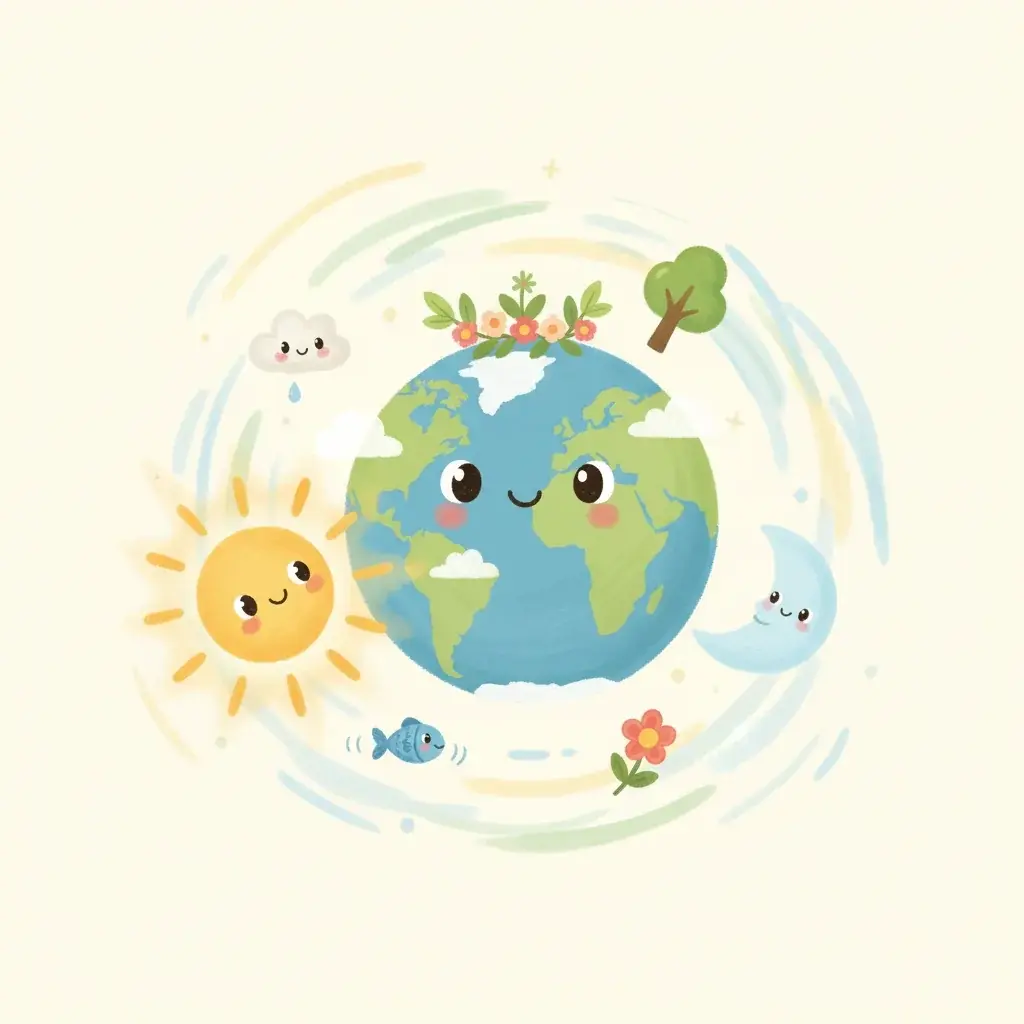
How Our Perfect Earth Came to Be - Social Story

Explore the wonders of our planet with this engaging printable social story. Perfect for young learners, it introduces Earth in a fun and relatable way.
Story Preview
How Our Perfect Earth Came to Be
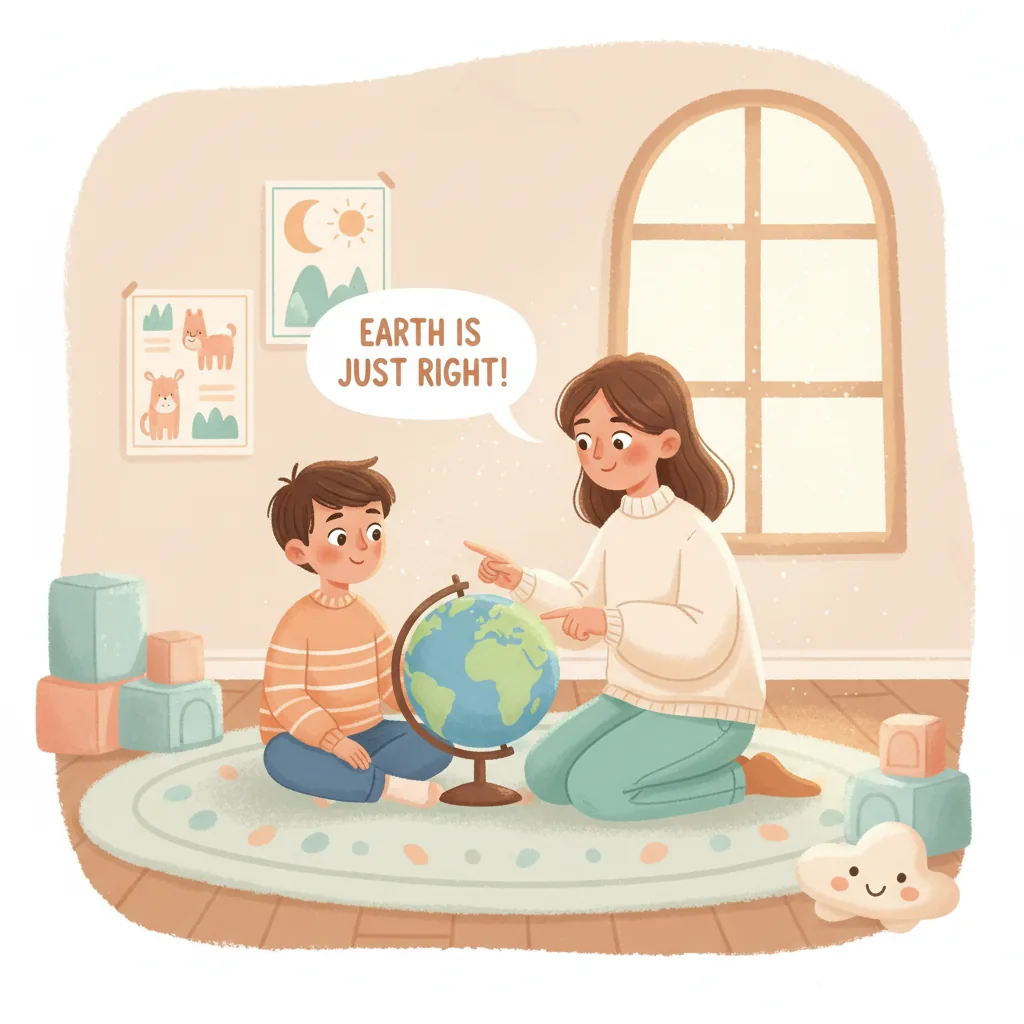
Hi, I'm Earth. I am just right!
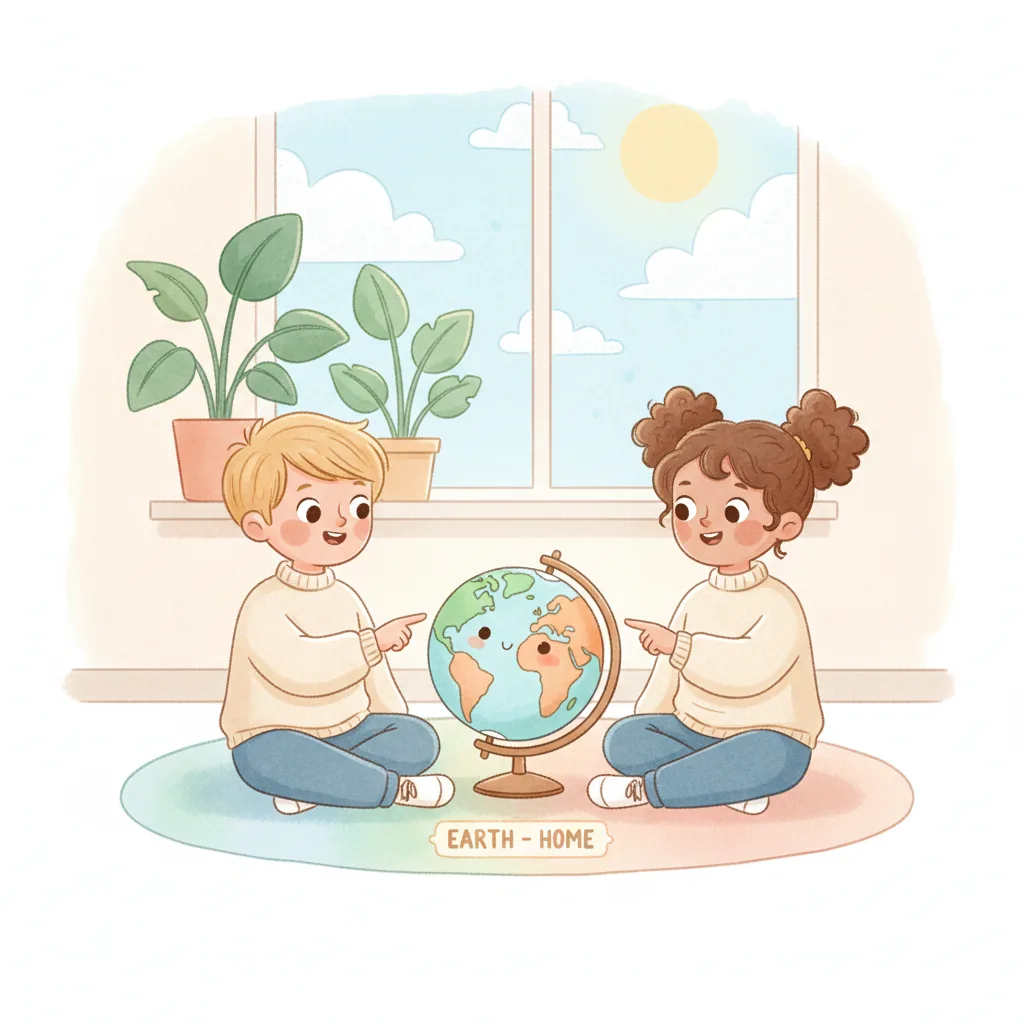
I am close to the Sun, not too hot, not too cold.
Purchase to access all pages
Who Is This For?
What's Inside
This printable social story introduces children to Earth, highlighting its unique features and fostering communication skills.
About This Story
Introduce your child to the beauty of our planet with the printable social story, 'How Our Perfect Earth Came to Be.' This engaging resource features:
- Simple sentences that explain Earth's unique qualities.
- Fun illustrations to captivate young minds.
- Activities to enhance comprehension and creativity.
Perfect for preschool and early learners, this story supports communication and language development. This resource supports learning. It does not replace professional advice.
How to Use This Story
When to use this story
Use "How Our Perfect Earth Came to Be" when you want to engage young learners in understanding the beauty and importance of our planet. This social story is particularly useful during discussions about nature, science, or environmental awareness. It can also serve as a gentle introduction to concepts of temperature, water, and air, making it ideal for storytime in classrooms, homes, or therapy sessions.
What's inside
This social story begins with a friendly introduction from Earth itself, helping children feel a connection to the planet. Through simple and relatable language, kids learn that Earth is perfectly situated close to the Sun, creating a comfortable environment. The story highlights essential elements like water and air, emphasizing their importance for life. Children will also discover how Earth experiences emotions, such as feeling shy when hot and happy when cooled down.
In addition to the narrative, the story includes various engaging activities designed to reinforce the concepts introduced. These activities focus on vocabulary development, spelling, comprehension, and creativity, allowing children to express themselves through role play and open-ended questions.
What kids learn
- Understanding the basic characteristics of Earth, including its position relative to the Sun and the significance of air and water.
- Developing a sense of connection to the environment and fostering curiosity about the natural world.
- Learning to express and identify emotions through the personification of Earth.
- Enhancing communication and language skills through engaging activities that promote vocabulary and comprehension.
Research context
The use of social stories, like "How Our Perfect Earth Came to Be," is rooted in a tradition of narrative-based learning that supports social-emotional understanding. Pioneered by Carol Gray, social stories help children navigate their world in relatable and engaging ways. This approach aligns with research showing that narrative-based social-emotional learning can foster empathy, communication skills, and a better understanding of self and others. By using relatable stories, children can internalize important lessons in a way that feels natural and supportive.
Tips for parents and educators
- Read the story together and encourage children to express their thoughts and feelings about Earth.
- Use the activities provided to reinforce vocabulary and comprehension in a playful manner.
- Discuss the elements of Earth that are introduced in the story and how they relate to children's everyday experiences.
- Encourage children to draw their own version of Earth or create a role play based on the story.
- Explore nature outside together, pointing out different features of the planet that relate to the story.
How This Story Lands — Clinical Review & Perspectives
One named clinical review from our co-founder Rajini, plus three composite perspectives summarising how this story tends to land in a classroom, at home, and in therapy. How we write these.

Engaging Story for Young Learners
As a speech-language pathologist, I appreciate how 'How Our Perfect Earth Came to Be' introduces young children to essential concepts about our planet. The story's age-appropriate language fosters vocabulary development, and I often use it to encourage expressive language. While reading, I listen for children’s responses to questions about Earth’s features, like water and air. It’s delightful to see their excitement and curiosity as they connect with the narrative, which also helps with turn-taking during conversations about the environment.
Useful for Sensory Regulation Activities
OTs often pair this kind of story with sensory regulation activities to help children understand their environment. In sensory-regulation work, this story can be used to discuss feelings associated with temperature changes, such as feeling hot or cool. The concepts of air and water can also be tied into activities involving water play or breathing exercises, which help in calming and focusing children. Overall, it is a practical resource for blending literacy with sensory experiences.
Composite perspective synthesised from common feedback patterns — read how.
Sparks Meaningful Conversations at Home
Parents reading this with their child often notice that it sparks meaningful conversations about nature and our planet. The engaging narrative and relatable concepts make it easier for kids to express their thoughts and feelings. Many families find that discussing Earth’s features like air and water leads to playful exploration outside, enhancing their child’s understanding of the world. This story becomes a fun way to learn and connect.
Composite perspective synthesised from common feedback patterns — read how.
Great for Inclusive Classrooms
In an inclusive classroom, this story works well because it presents complex ideas in a simple, relatable way. Educators using small-group settings will find that the repetitive structures and visuals help reinforce understanding. The illustrations can serve as effective visual supports, allowing students to better grasp concepts like temperature and the importance of water. This story also encourages discussions, making it a valuable tool for promoting social interaction among peers.
Composite perspective synthesised from common feedback patterns — read how.
Frequently Asked Questions
What age group is this social story suitable for?
This social story, 'How Our Perfect Earth Came to Be,' is designed specifically for preschoolers aged 3 to 5 years. It's engaging and relatable, making it a wonderful resource for young learners to explore the wonders of our planet in a fun way.
Can this story be used in classrooms?
Yes, it's perfect for classroom settings to enhance learning.
What age group is this story suitable for?
This story is designed for preschool-aged children.
You May Also Like
Read More
How to Create Social Stories for Children: A Step-by-Step Guide
Learn to write social stories using Carol Gray's method to support your child's social-emotional learning. This guide walks you through each step, from selecting a situation to reading aloud, ensuring
Read article →Understanding Preschool Friendships: A Parent's Guide to SEL
Preschool friendships evolve through stages from 'momentary playmates' to budding reciprocity. Supporting your child's social-emotional development involves understanding these stages, encouraging par
Read article →Supporting Preschoolers' Big Feelings through SEL
Preschoolers often experience intense emotions due to their developing brains. Utilizing tools like Buron's 5-Point Scale and emotion thermometers, parents can help children understand and regulate th
Read article →
This resource supports learning. It does not replace professional advice.